

Colorado justices grapple with unprecedented possibility of disqualifying Trump from ballot
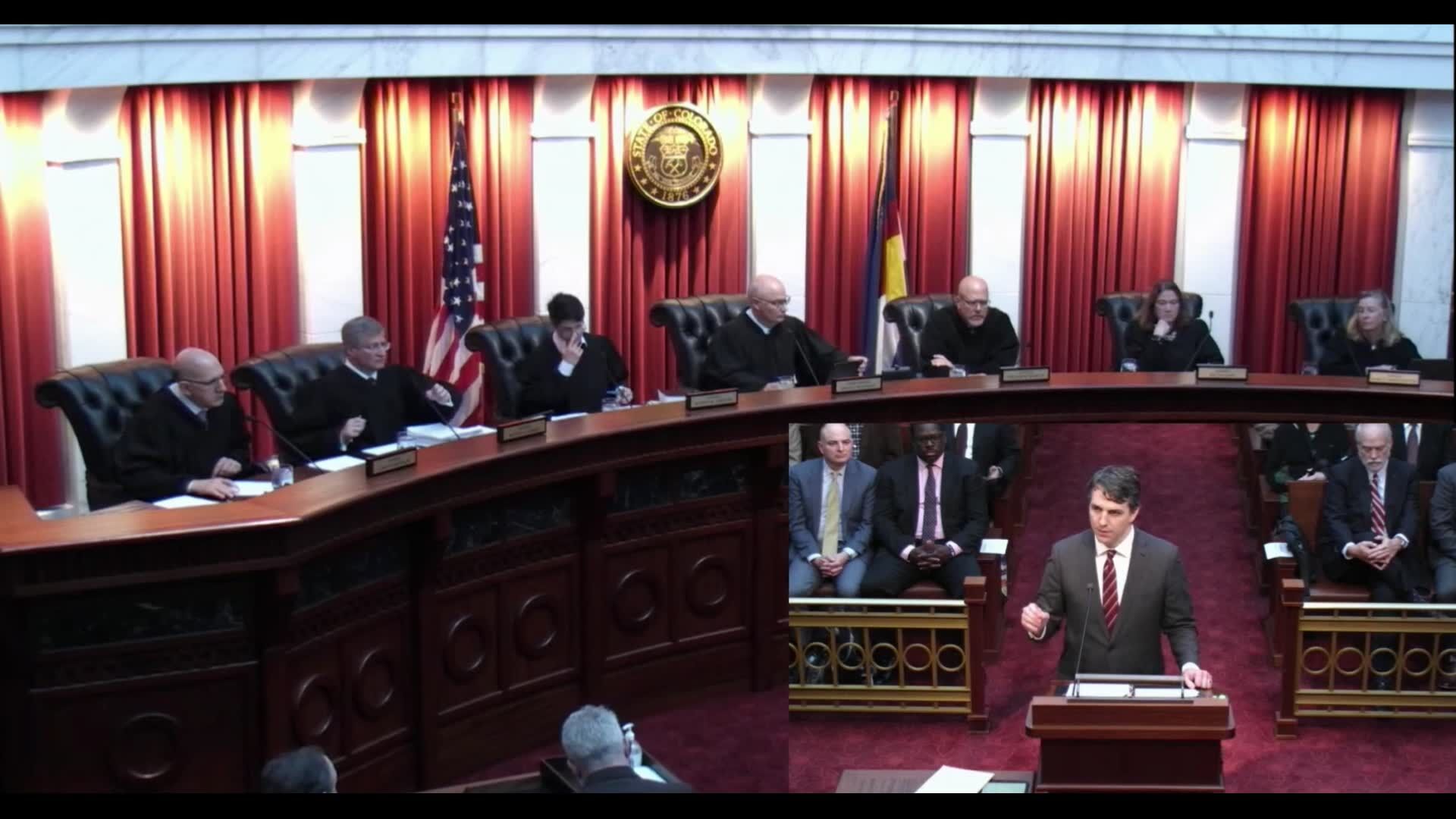
Members of the Colorado Supreme Court on Wednesday appeared hesitant to be the first in the nation to declare Donald Trump ineligible to appear on next year’s ballot under a constitutional provision generally barring insurrectionists from holding office.
At the same time, the justices were critical of Trump’s arguments for keeping him on the ballot, including that the Jan. 6, 2021 attack on the U.S. Capitol did not qualify as an “insurrection.”
“Why isn’t it enough that a violent mob breached the Capitol when Congress was performing a core constitutional function? In some ways, that seems like a poster child for insurrection,” said Justice William W. Hood III.
Last month, a Denver judge concluded Trump did engage in an insurrection when he incited his supporters to interrupt Congress’ certification of President Joe Biden’s 2020 electoral victory. However, she found the disqualification provision within the 14th Amendment did not apply to a president or to presidential candidates, so she ordered him included on the 2024 primary ballot.
While the voters who petitioned for Trump’s disqualification appealed their loss, Trump contested the conclusion that he bore culpability for an insurrection. His attorney, Republican former Secretary of State Scott Gessler, argued an insurrection required more than a “three-hour riot in one building.”
“The goal wasn’t to nullify governmental authority and set up an alternative government,” he told the justices.
“Hmm?” interjected Justice Melissa Hart, prompting multiple glances from other members. Her reaction seemed to acknowledge the trial judge’s finding that the pro-Trump mob’s purpose was to prevent the peaceful transfer of power to the Biden administration.
Insurrection, but no disqualification
The case originated in September, when four Republican and two unaffiliated voters filed a petition to stop Democratic Secretary of State Jena Griswold from placing Trump’s name on any future ballot. Because Trump was disqualified from holding office by virtue of engaging in an insurrection, and it would be detrimental to Republican primary voters to have an ineligible candidate on the ballot, they argued, Colorado’s state courts are empowered through elections law to order Trump’s exclusion.
During a five-day hearing, District Court Judge Sarah B. Wallace heard testimony from more than a dozen witnesses, watched videos of the Jan. 6 riot and reviewed the findings of the bipartisan congressional committee that investigated the attack. In a lengthy order, she detailed her conclusions that Trump intentionally engaged in an insurrection by both egging on his supporters to violence and by doing nothing as the deadly riot unfolded.
However, she determined Trump nonetheless was eligible for the ballot. Section 3 of the 14th Amendment, ratified in the wake of the Civil War, disqualifies senators, U.S. representatives and “an officer of the United States,” among others, from holding future federal or state office if they took an oath to support the Constitution and subsequently “engaged in insurrection.”
“Here, after considering the arguments on both sides, the Court is persuaded that ‘officers of the United States’ did not include the President of the United States,” Wallace wrote on Nov. 17, adding that the absence of the president from the text “may very well have been an oversight.”
Both sides appealed her conclusions to the state Supreme Court, and a flood of academics, political players and advocacy groups submitted briefs in support of one party or the other. Despite the fact that courts in Michigan, Minnesota and New Hampshire have declined to answer the question of Trump’s eligibility, the petitioners argued Colorado’s unique election law and Wallace’s extensive findings meant the justices should break from their counterparts and disqualify Trump.
The Colorado Supreme Court heard from attorneys today arguing for and against the disqualification of Trump from Colorado’s presidential ballot for his role in the Jan. 6, 2021 insurrection.
Courtesy Colorado Judicial Branch
“There simply aren’t gonna be very many proceedings like this because Colorado has chosen to implement this in a unique way. But even if there are, that’s OK,” said attorney Eric Olson. “All Section 3 says is if you take an oath to support the Constitution and turn around to attack the Constitution, you cannot be trusted to take the oath a second time.”
“If what you’re saying is correct,” said Hart, “President Trump will be on the ballot in most states but not here in Colorado. So, effectively the Republican or unaffiliated voter who wants to participate in the Republican primary won’t really be able to because the person who’s on most ballots and appears to be leading in the primary is not an option.”
Who and what does Section 3 cover?
Justice Carlos A. Samour Jr. signaled his discomfort with each state deciding whether a presidential candidate is disqualified, especially when Section 3 is silent about who should enforce the prohibition against insurrectionists holding office.
“Doesn’t it seem odd to list, specifically, representative or senator” in Section 3, he wondered, “and not specify president or vice president?”
Another attorney for the petitioners, Jason Murray, characterized the Reconstruction Congress as taking a “kitchen-and-sink” approach to cover all major positions of government.
“The president holds an office,” he said. “Everybody at the time knew Jefferson Davis couldn’t be president and that ‘any office’ includes the presidency.”
Davis, the president of the Confederacy, surfaced multiple times during the arguments. Justice Monica M. Márquez observed there was a “lot of historical evidence” suggesting the ratifiers of the 14th Amendment believed Davis, as a former federal officeholder, would be ineligible by nature of his high-level participation in the Civil War.
“Can you come up with a rational basis for excluding the office of the presidency, or someone who swore an oath as president, from disqualification?” she asked.
Gessler, the attorney for Trump, did not have an immediate answer. Instead, he advocated for the “rule of democracy,” meaning to let Republican voters choose their candidate, even if there were concerns about his eligibility.
“But there are limits,” interjected Justice Richard L. Gabriel. “The president can’t be under 35 or someone who wasn’t born in this country. If you take your argument to the limit, it would say we can elect Gov. (Arnold) Schwarzenegger or my 27-year-old kid.”
“Could the Democratic Party put President Obama up on the primary ballot?” pressed Justice Maria E. Berkenkotter, referring to the constitutional bar on presidents who already served two terms.
“Conceivably, yes,” answered Gessler.
In addition to disputing the nature of the Jan. 6 attack, Gessler also minimized Trump’s role in encouraging his supporters to halt the electoral count. Gessler said that Trump only used the word “fight” once in his speech to supporters at the White House Ellipse – in fact, it was close to 20 times – and he argued that an “insurrection” must last for a long time and cover a larger space than the Capitol riot.
“Where is all that coming from?” Gabriel asked.
Gessler also argued the oath that Trump took as president to “preserve, protect and defend” the Constitution was not the same oath “to support the Constitution” referenced in Section 3. Some members of the court seemed unconvinced.
“Preserve, protect and defend are specific actions,” Gessler said. “‘Support’ is a general category and is far broader. Support can mean all kinds of things -“
“Like ‘preserve, protect and defend’,” interjected Márquez.
“The president doesn’t have a duty to support. That’s your argument, right?” added Berkenkotter.
Echoing the arguments of the petitioners, Hood wondered whether it would be preferable for the justices to address head-on the question of Trump’s eligibility before the 2024 election, rather than find state courts are powerless without Congress’ authorization.
“It may be better for us to resolve it sooner rather than leave the potential for a constitutional crisis,” he said.
The deadline to certify Colorado’s presidential primary ballot is Jan. 5, 2024. Griswold, the secretary of state, has not taken a position in court on Trump’s eligibility, except to argue that political parties are not the sole arbiters of who is qualified to appear on the ballot.
The case is Anderson et al. v. Griswold.

10th Circuit dismisses woman’s lawsuit following 10-year attempt to undo restraining order
Michael Karlik
michael.karlik@coloradopolitics.com
Updated 2 days ago
The Denver-based federal appeals court rejected a woman’s challenge on Friday to a restraining order imposed on her more than a decade ago, finding that she cannot credibly claim she will be prosecuted for violating the restraining order through her...
10th Circuit dismisses woman’s lawsuit following 10-year attempt to undo restraining order
Michael Karlik
michael.karlik@coloradopolitics.com
Updated 2 days ago
The Denver-based federal appeals court rejected a woman’s challenge on Friday to a restraining order imposed on her more than a decade ago, finding that she cannot credibly claim she will be prosecuted for violating the restraining order through her...
Colorado equal pay law does not require plaintiffs to allege gender-based retaliation, appeals court finds
Michael Karlik
michael.karlik@coloradopolitics.com
Updated 17 hours ago
The 2019 Colorado law aimed at rooting out pay discrimination on the basis of sex does not require a plaintiff to allege their employer retaliated against them for sex- or gender-related reasons, the state’s second-highest court decided on Thursday. Lawmakers...
Hudson faces lawsuit over ICE detention facility
Nicole C. Brambila
nicole-c-brambila@coloradopolitics.com
Updated 2 days ago
A nonprofit organization filed a lawsuit against the Town of Hudson Wednesday, challenging plans to reopen a former federal prison in the town as a U.S. Immigration and Customs Enforcement detention facility. Together Colorado, along with Janet E. Carlson, filed...
Senate committee advances Trump’s 10th Circuit nominee, as Domenico responds to questions about delays
Michael Karlik
michael.karlik@coloradopolitics.com
Updated 2 days ago
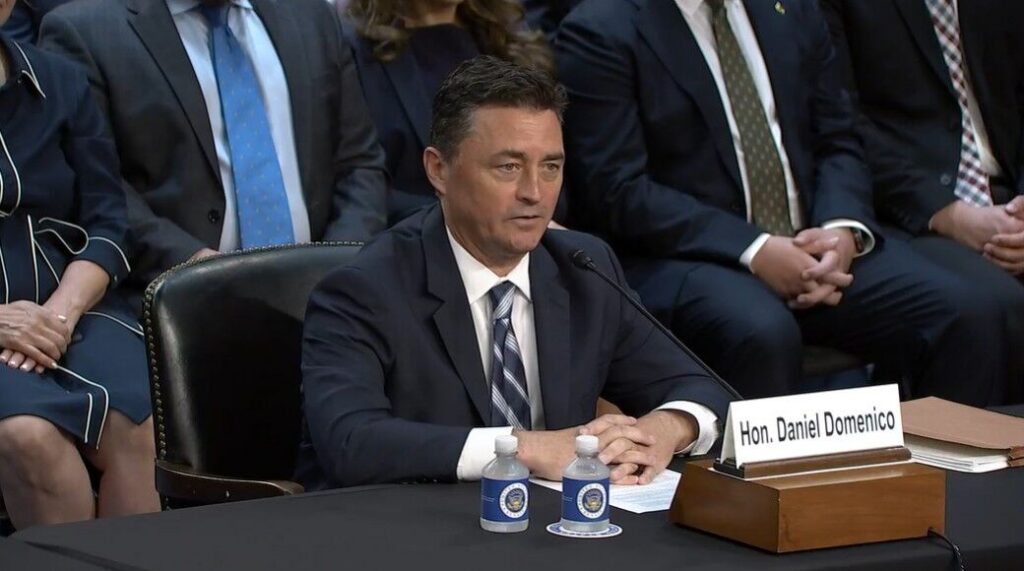
The U.S. Senate Judiciary Committee advanced President Donald Trump’s nominee to the Denver-based federal appeals court on Thursday by a party-line vote of 12-10. U.S. District Court Judge Daniel D. Domenico, who was Trump’s first-term appointee to Colorado’s federal trial...
Colorado justices to hear embryonic donation dispute
Michael Karlik
michael.karlik@coloradopolitics.com
Updated 2 days ago
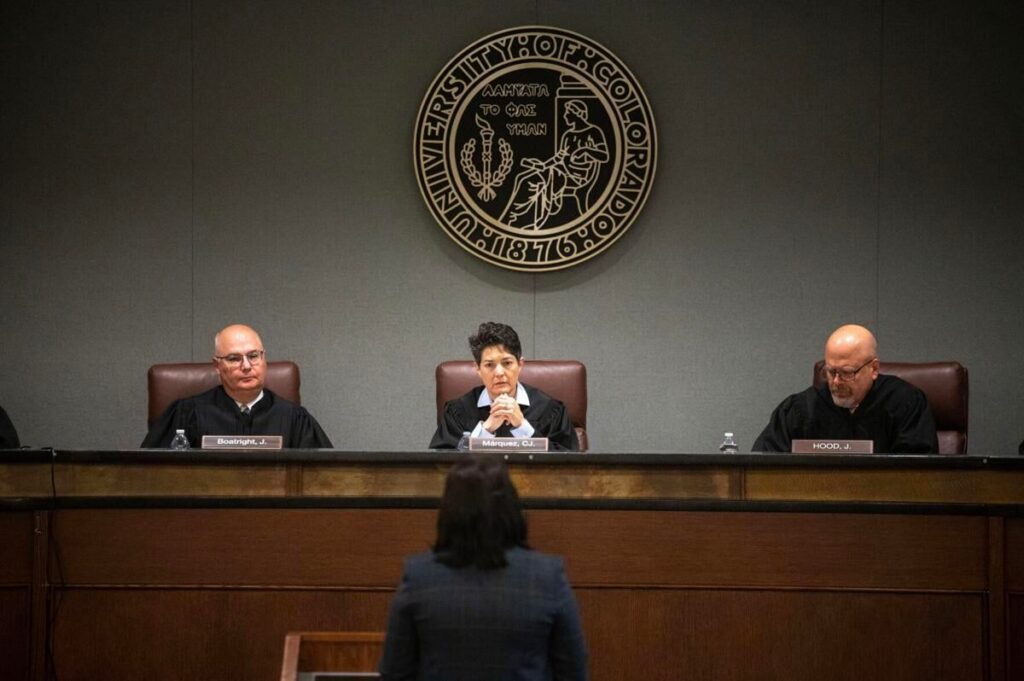
The Colorado Supreme Court announced on Monday that it will decide whether lower court judges properly applied its framework for adjudicating disputes over the fate of pre-embryos, in which one person wants to use them to become a parent and...
Isolation, emotion, persona: Colorado judicial programming prepares people for life on the bench
Michael Karlik
michael.karlik@coloradopolitics.com
Updated 3 days ago
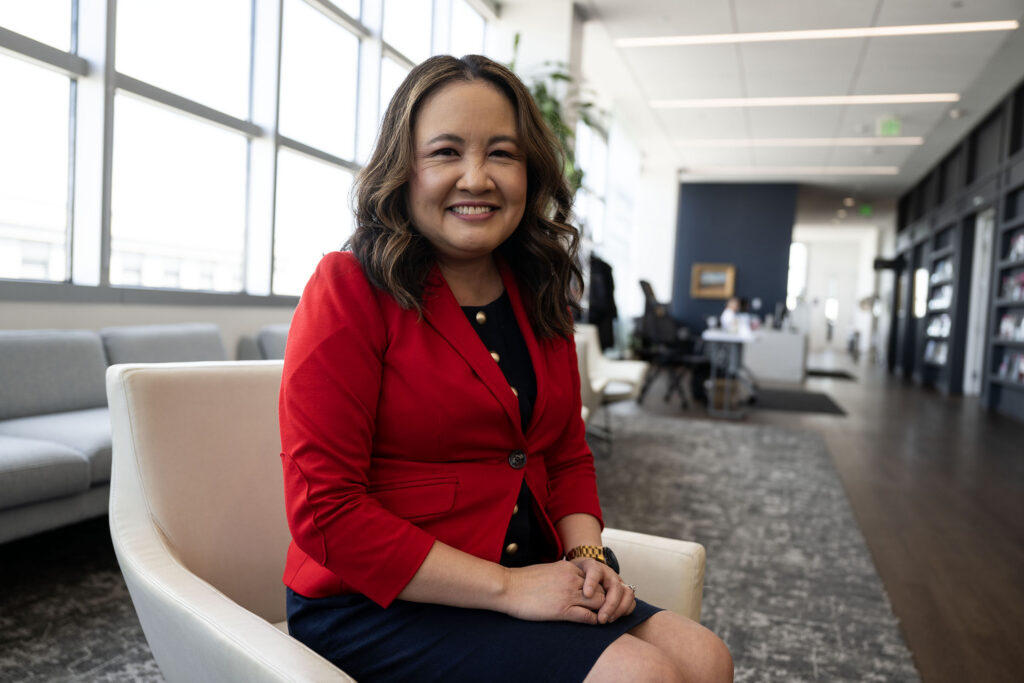
As a trial judge and now as a member of the Colorado Supreme Court, Justice Carlos A. Samour Jr. has heard the view that being a judge is isolating. “In neither court have I felt isolated. I’ve always interacted a...

Federal judge dismisses Colorado county sheriff’s challenge to law limiting immigration cooperation
Michael Karlik
michael.karlik@coloradopolitics.com
Updated 17 hours ago
A federal judge dismissed a challenge from Mesa County Sheriff’s Office leaders last week to a Colorado law limiting public employees’ cooperation with immigration authorities, concluding that the plaintiffs did not allege they engage in any conduct that the law...
10th Circuit raises bar for fraud victims to sue debt collectors over inaccurate information
Michael Karlik
michael.karlik@coloradopolitics.com
Updated 13 hours ago
The Denver-based federal appeals court wiped away a jury’s $500,000 award to a fraud victim on Monday and made it more difficult for consumers to hold companies liable for disseminating inaccurate credit information. The Fair Credit Reporting Act regulates credit...
Montezuma County judge’s censure, suspension approved by discipline panel
Michael Karlik
michael.karlik@coloradopolitics.com
Updated 4 days ago
A three-member disciplinary panel accepted, on Monday, an agreement between a Montezuma County judge and the Colorado Commission on Judicial Discipline that specifies he will receive a censure, a suspension, and additional education for his admitted instances of misconduct. Under...
PREV
PREVIOUS

Who's weighing in on Trump's ballot eligibility before the Colorado Supreme Court?
By the time the Colorado Supreme Court convened on Wednesday to hear arguments about whether Donald Trump remains eligible to appear on the state’s presidential primary ballot next year, the justices had received input from several groups and individuals arguing in favor of or against disqualification. Last month, Denver District Court Judge Sarah B. Wallace […]

House Republicans file Biden impeachment inquiry resolution, setting up vote for next week
House Republicans filed their impeachment inquiry resolution Thursday morning, which is expected to get a vote next week to authorize their investigation into President Joe Biden. The resolution was filed by Rep. Kelly Armstrong (R-ND), and will be marked up on Tuesday, Dec. 12, teeing up a likely vote on Wednesday. The inquiry was first […]