

Tri-State announces plans to shutter final coal plant two years early
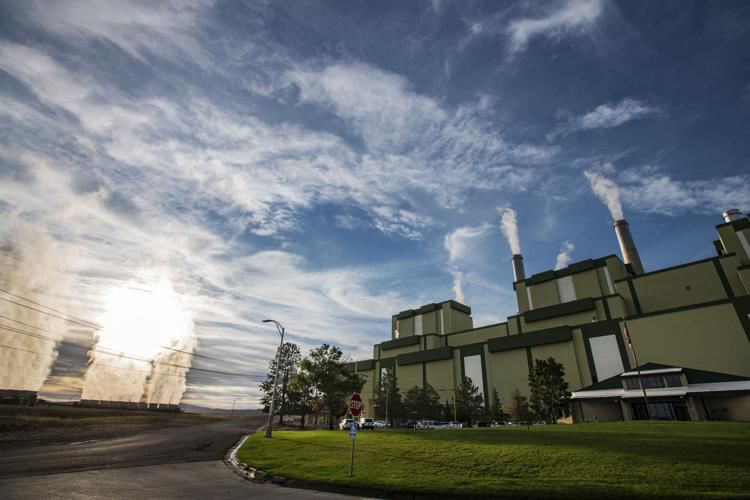
An energy cooperative said it will retire a unit in its coal-fired power station in Craig by the start of 2028, two years ahead of schedule.
Tri-State Generation and Transmission, a cooperative whose members provide power to a million electricity consumers in the West, announced in a filing to the Colorado Public Utilities Commission on Friday that it will shut down Craig Unit 3 by Jan. 1, 2028.
As part of that effort, Tri-State is seeking $970 million through a new program for cooperative electric suppliers through the federal Inflation Reduction Act.
The cooperative said its 2023 electric resource plan, which adds 1,250 megawatts of new renewable energy resources and energy storage through 2031, also includes the addition of a dispatchable natural gas unit in 2028 with carbon capture and sequestration added in 2031. The plan also calls for retiring another coal-fired plant in Arizona by 2031, which would also be ahead of schedule.
Tri-State has three coal-fired plants at Craig, with Units 1 and 2 operated in conjunction with Xcel Energy and other partners. Unit 1 is slated to close by Dec. 31, 2025 and Unit 2 by Sept. 30, 2028. Tri-State is the sole owner of Unit 3.
Lee Boughey, vice-president for communications at Tri-State, told Colorado Politics the filing “details our plans to keep power affordable and have a higher degree of reliability with new metrics, no matter the weather or with higher loads.”
The plan shows Tri-State’s “continued desire to transition, maintain affordability and reliability, further advance the state’s goals for greenhouse gas emission reductions and support additional clean energy investment,” he added.
The company is seeking funding for its resource plan from the U.S. Department of Agriculture’s New Empowering Rural America, a $9.7 billion program that is part of the Inflation Reduction Act. The plan is contingent on that New ERA funding, according to Tri-State.
New ERA program funding through low-interest loans or grants is available to member-owned rural electric cooperatives, which have been the backbone of America’s rural power delivery for nearly a century, according to the USDA.
Obtaining the funding would allow the resource plan to accelerate system-wide emissions reductions, as well as an 89% reduction in greenhouse gas emissions in Colorado by 2030, compared to a 2005 baseline, the company said.
“Our ambitious plan, with federal funding, can accelerate clean energy investment and significant greenhouse gas emissions reductions at a lower cost than alternative scenarios, all while exceeding both industry-standard and heightened extreme weather reliability criteria,” said Tri-State CEO Duane Highley.
Tri-State has struggled in recent years to keep some of its member coops. Three members – Northwest Rural Public Power in Nebraska, and Colorado-based United Power and Mountain Parks Electric – are planning to leave in 2024 and 2025. Boughey, however, said Tri-State’s energy transition has in the works since 2019 and the filing reflects reduced loads with the departures.
“The filing reflects how we’re moving forward in energy transition,” he said. “Our 39 members will have a power supply in 2025 that is 50% clean energy, increasing to 70% by 2030.”
While Tri-State will see a 6.4% average rate increase in 2024, it’s the first in seven years and is not tied to the filing, Boughey said. The preferred resource plan will save members $1.8 billion over the years, along with providing a higher level of reliability, he said.
The move is being cheered by environmental organizations.
The Sierra Club said in a statement that, in 2022, Craig Unit 3 in Colorado emitted over 2.8 million tons of carbon dioxide, more than 1,700 tons of tons of acid rain-causing sulfur dioxide, and more than 2,900 tons of ozone-causing nitric oxide.
“Those emissions have caused an estimated average of over $75 million in increased healthcare costs each year from heart attacks, asthma attacks, and other diseases, according to EPA’s COBRA tool,” the group said in its statement.
“We are thrilled to see Tri-State committing to reduce its pollution by pursuing clean energy solutions and taking advantage of the federal funds available to help move communities toward a healthier future,” said John Clark, mayor of Ridgway, Colo. “Tri-State’s proposal to accelerate its transition away from coal and toward cleaner energy resources will both reduce harmful emissions and save its customers money.”
Western Resource Advocates also weighed in.
“Tri-State should be commended for proposing a transformational electric resource plan, which will reduce carbon pollution across the West and provide economic benefits for its member cooperatives,” said Stacy Tellinghuisen, the group’s deputy director of policy development. “We encourage other utilities to take advantage of this once-in-a-generation opportunity to use federal funds to replace expensive, polluting plants with cleaner resources.”
Gov. Jared Polis and proponents of the transition away from fossil energy argue it’s ultimately good for the earth, and it creates a healthier environment for people, while saving Coloradans money, anticipating that, over the long term, renewable energy would be more economical to produce.
Critics said the transition is happening too quickly, that it would be financially costly to people and businesses alike and that a diverse energy portfolio that incudes fossil-fired and renewable energy is more reliable and sustainable.
A state economic impact analysis, for example, said about 8,000 large building owners statewide face spending more than $3.1 billion by 2050 to comply with a proposed rule that seeks to reduce energy consumption now under consideration by state air pollution authorities. That estimate is based on a state economic impact analysis of the proposed rule that is part of Gov. Jared Polis’ Greenhouse Gas Reduction Roadmap, an ambitious plan that seeks to transition the state away from fossil fuels. The plan is mandated by the General Assembly via House Bill 21-1286, which imposes reductions in energy use of 7% by 2026 and 20% by 2030 below 2021 levels.
The economic analysis puts the energy savings and total benefits from greenhouse gas reductions at nearly $11 billion, with a predicted CO2 emissions reduction of 25.8 million pounds of carbon-equivalent. To get there, however, the analysis predicts it would cost $3.1 billion in building upgrades and associated costs over the next 27 years.
Tri-State is a wholesaler of power to 42 rural coop utilities in four Western states, including 17 in Colorado. The Public Utilities Commission is expected to issue a decision on the resource plan sometime next year.


Trump lowers flags to half-staff for Dolly Parton: ‘The World loves you’
Naomi Lim
naomi-lim@coloradopolitics.com
Updated 14 hours ago
President Donald Trump is honoring the life of country music legend and philanthropist Dolly Parton by ordering federal buildings across the country to lower flags to half-staff for a week. “Very sad to report that Dolly Parton, one of the...
Ted Cruz suggests GOP realignment coming after Trump leaves office
Emily Hallas
emily-hallas@coloradopolitics.com
Updated 14 hours ago
Sen. Ted Cruz (R-TX) on Monday suggested the Republican Party could embrace a directional shift after President Donald Trump leaves office, a transition that promises to leave a gaping hole in the GOP. Cruz is known as a critical ally...

2 Colorado State troopers shot near Woodland Park; suspect killed
DEBBIE KELLEY
debbie-kelley@coloradopolitics.com
Updated 14 hours ago
Two Colorado State Patrol troopers were hospitalized, and a suspect is dead after a shooting during a traffic stop Tuesday. The initial incident happened at about 7:15 a.m., when a resident reported suspicious activity in the area near milepost 286...

Aurora moves forward with data center regulations
Kyla Pearce
kyla.pearce@gazette.com
Updated 14 hours ago
The Aurora City Council approved moving forward with two new regulations on data centers and directed staff to come back at the next study session with others. At a council meeting in early August, council members directed city management to...

Aurora City Council considers stricter food truck regulations
Kyla Pearce
kyla.pearce@gazette.com
Updated 14 hours ago
The Aurora City Council is considering passing laws to limit the number of food trucks on properties in the city and how and when they operate. Councilmember Angela Lawson, who sponsored the ordinance, said she understands the importance of food...

Denver murder conviction reversed for incomplete self-defense instruction
Michael Karlik
michael.karlik@coloradopolitics.com
Updated 12 hours ago
Colorado’s second-highest court reversed a defendant’s murder conviction last week because a Denver judge gave an incomplete instruction to the jury about the man’s right to self-defense. Donald R. Gonzales and Gary McLaughlin met up in a Capitol Hill parking...
Colorado lawmaker, House leaders named in workplace-retaliation lawsuit
Marianne Goodland
marianne.goodland@coloradopolitics.com
Updated 15 hours ago
A former legislative aide has filed a lawsuit alleging she was mistreated, illegally directed to perform campaign work and harmed by a House leadership structure she charged was fragmented, politicized and ineffective at protecting employees. The lawsuit, filed by Jennifer...

Secret Service confirms awareness of Iranian state media video threatening Barron Trump’s life
The Associated Press
the-associated-press@coloradopolitics.com
Updated 19 hours ago
WASHINGTON (AP) — The U.S. Secret Service has confirmed it is aware that Iranian state media has aired a video that appears to threaten the life of Barron Trump, President Donald Trump’s youngest son. “The U.S. Secret Service is aware...
Federal judge hears arguments about Colorado’s 3-day gun purchase waiting period
Michael Karlik
michael.karlik@coloradopolitics.com
Updated 19 hours ago
A federal judge heard arguments on Monday about the constitutionality of a 2023 Colorado law that generally imposes a three-day waiting period on firearm purchases after the initiation of a background check. The test that the U.S. Supreme Court created...
Denver auditor finds oversight failures in $175.6M 16th Street project
Nico Brambila
nico.brambila@denvergazette.com
Updated 14 hours ago
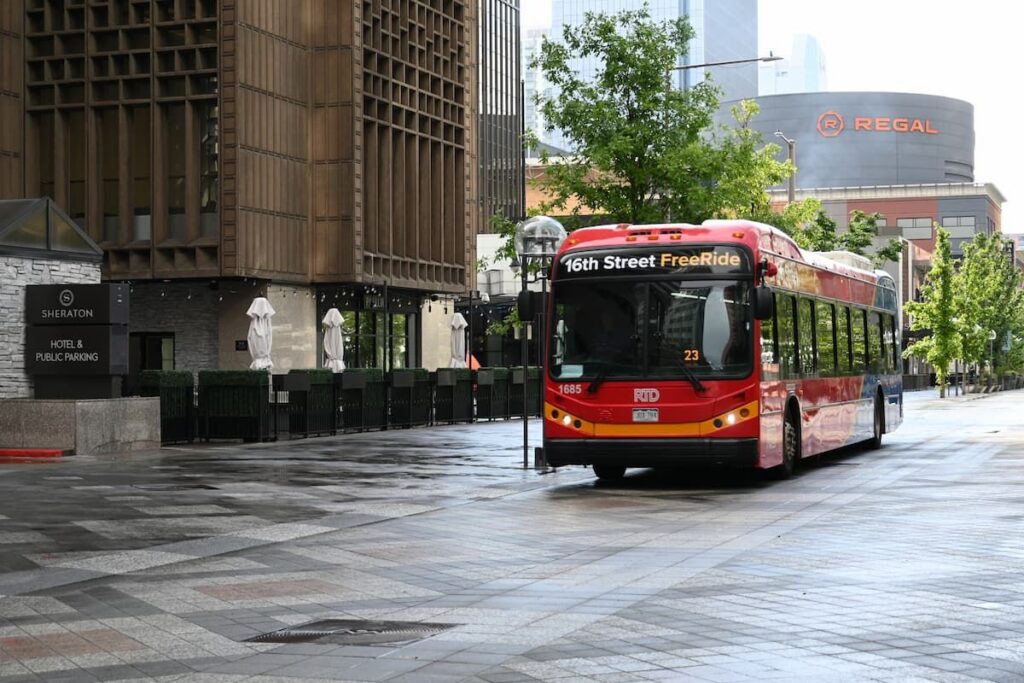
Surprise historic sewer discovery delayed completion a year, cost $18M The Denver Auditor recently found significant oversight and contracting problems with the $175.6 million 16th Street Improvement Project, including an $18 million contract increase and a nearly one-year extension that...
PREV
PREVIOUS

Trump disqualification case set to be argued, ChatGPT results in lawyer discipline | COURT CRAWL
Welcome to Court Crawl, Colorado Politics’ roundup of news from the third branch of government. This week the state Supreme Court will hear arguments in a case of national significance, plus an attorney has been disciplined for the improper use of artificial intelligence for apparently the first time in Colorado. Next step in disqualification case […]

Boebert primary challenger Jeff Hurd wins endorsement from former Colorado Lt. Gov. Jane Norton
Former Colorado Lt. Gov. Jane Norton on Monday endorsed fellow Republican Jeff Hurd, who is challenging U.S. Rep. Lauren Boebert in next year’s primary. Calling the Grand Junction attorney a “principled, conservative leader,” Norton said that Hurd understands rural issues and stands to be an effective champion for the 3rd Congressional District. Boebert is seeking […]