

Democrats ready to fight after Supreme Court strikes down voting rights case
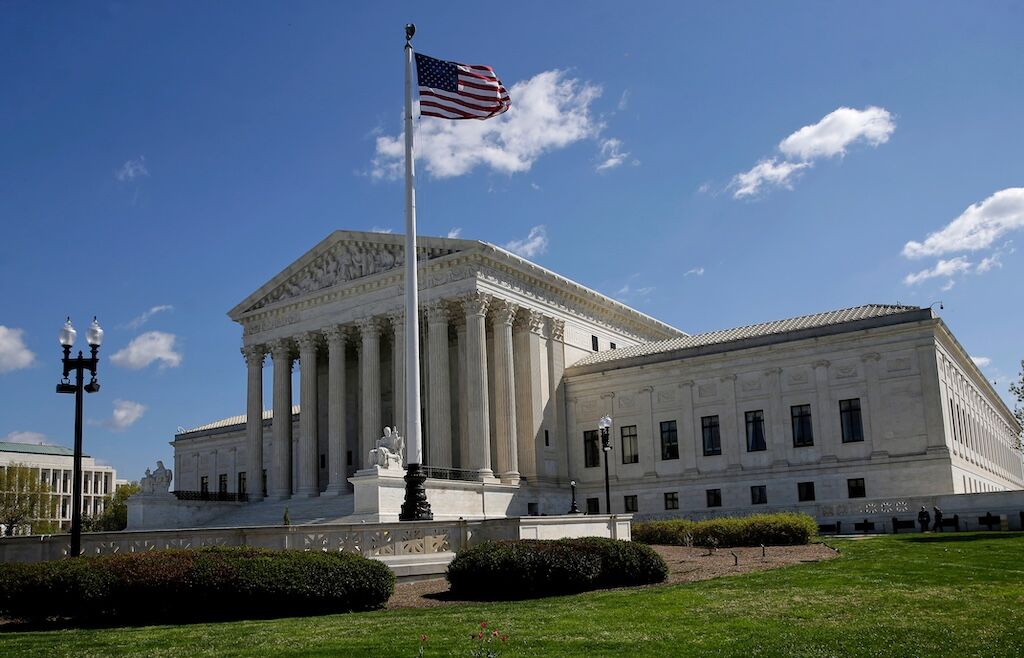
The 2026 House map has been flipped upside down by a massive Supreme Court decision Wednesday to overturn the parts of the Voting Rights Act, as Democrats remain ready to fight.
The Supreme Court dealt a blow to race-based redistricting, finding that Louisiana’s second black-majority congressional district was created in violation of the Constitution, without fully gutting Section 2 of the Voting Rights Act. This ruling could allow more Republican states to redistrict, after redistricting wars have swept across the country and Democrats were poised to take the House in November.
“I wish I could say I’m surprised at what the Supreme Court does, but I’m not,” Rep. Gregory Meeks (D-NY), a member of the Congressional Black Caucus, told the Washington Examiner.
“I know that we in the CBC are going to continue to fight,” Meeks said. “We’re not going to sit down and lay down and die. We’re going to rally our folks together and people and turn them out to vote.”
The court case stems from a challenge by a group of voters who identified as “non-African American” to a 2024 redistricting map adopted after a federal court invalidated the prior map for violating the VRA. While the state’s revised map added a second majority-black district to address those concerns, the court ultimately found, in a 6-3 decision, that the configuration crossed the line, ruling that the new map constituted an unconstitutional racial gerrymander.
“This case may have been brought by those who seek to suppress the votes of millions of Americans, but those schemes will backfire,” Democratic Congressional Campaign Committee Chairwoman Suzan DelBene (D-WA) said in a statement. “Despite this corrupt and targeted assault on the voting rights of Black and Brown Americans from the Supreme Court, Democrats remain poised to retake the House Majority in November – when we will recommit ourselves to the ‘Good Trouble’ of ensuring that every voice is heard and receives fair representation.”
This decision comes as both Democratic and Republican states have been in an all-out, nationwide redistricting war since Texas led a Trump-backed redistricting effort last year, leading other Democratic and Republican states to follow suit.
While many states have already passed the deadlines to alter their maps for the 2026 midterm elections, a handful of states are expected to begin redistricting efforts in response to this decision.
“Many of them may not be able to [redistrict] this late in the game, but I could start imagining several Republican states doing redistricting soon in response to this, but we’re still looking through the decision to see the implications,” Rep. Suhas Subramanyam (D-VA) told the Washington Examiner.
“In Virginia, I feel vindicated that we did mid-decade redistricting because we knew they’re gonna try,” he expressed after Virginia voted last week to redraw the state’s congressional maps to pick up four Democratic seats.
While Democrats have been looking at what this decision means and pledging to fight, Republicans have celebrated.
“For too long, activists have manipulated the redistricting process to achieve political outcomes, dividing Americans instead of bringing them together,” National Republican Congressional Committee Chairman Richard Hudson (R-NC) said in a statement. “This ruling restores fairness, strengthens confidence in our elections, and ensures every voter is treated equally under the law.”
As many as 12 Democratic congressional districts could be redrawn into Republican ones, with the Supreme Court’s 1986 ruling in Thornburg v. Gingles now effectively ended as a legal standard, according to an analysis by the New York Times.
Kaelan Deese contributed to this article.

Democrats and their big roll of the dice | SONDERMANN
Eric Sondermann
eric-sondermann@coloradopolitics.com
Updated 3 days ago
For Republicans on the ballot this fall, the hand they are forced to play is rather set. Even if so many of them had not so meekly submitted to President Donald Trump’s agenda, they would still be largely tethered to...
Luigi Mangione pleads guilty in UnitedHealthcare CEO Brian Thompson murder case
Kaelan Deese
kaelan-deese@coloradopolitics.com
Updated 20 hours ago
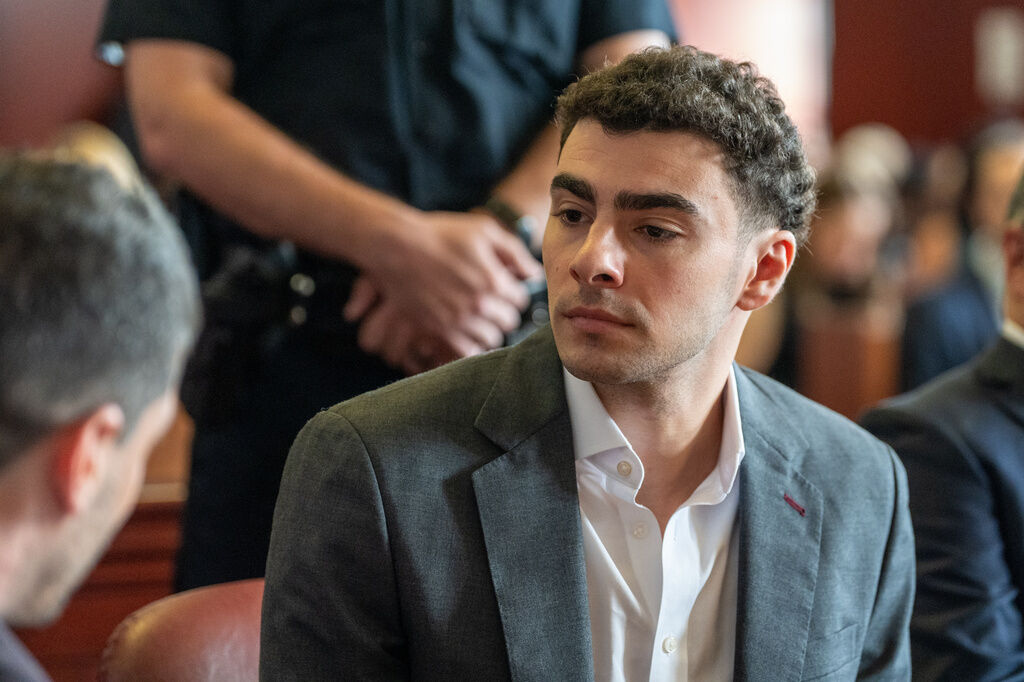
Luigi Mangione pleaded guilty Friday to two federal stalking charges connected to the 2024 killing of UnitedHealthcare CEO Brian Thompson, a major development that could complicate New York prosecutors’ separate murder case against him. Mangione, 28, not only pleaded guilty in Manhattan federal court...

French court blocks Macron’s social media ban for children under 15
Emily Hallas
emily-hallas@coloradopolitics.com
Updated 20 hours ago
France’s top court struck down on Friday a law championed by President Emmanuel Macron that would have made it illegal for children to have social media accounts. The law, approved by lawmakers in July, was set to take effect at...
Voters prefer socialist over MAGA candidate in 2028 matchup: Poll
Mabinty Quarshie
mabinty-quarshie@coloradopolitics.com
Updated 2 days ago
New polling released this week suggests that a socialist candidate would defeat a Make America Great Again candidate in a hypothetical 2028 presidential matchup, a move that implies the reach of progressive leftists isn’t abating despite recent setbacks in Wisconsin....

Trump’s approval rating sinks to new low at 33%
Molly Parks
molly.parks@washingtonexaminer.com
Updated 3 days ago
President Donald Trump’s approval rating has reached a new low, sitting at 33% approval and 62% disapproval, according to the latest YouGov/Economist poll. The one-third approval standing in early August is the lowest net job approval Trump has seen across...
Treasury releases five-step guidance for employers to make contributions to Trump Accounts
Christian Datoc
christian-datoc@coloradopolitics.com
Updated 4 days ago
Treasury Secretary Scott Bessent published new guidance Tuesday outlining the specific steps employers must take to contribute to employee Trump Accounts. The accounts, one of the most popular provisions included in President Donald Trump’s One Big Beautiful Bill Act, are...

Russia frees imprisoned US Marine over health concerns
Brady Knox
brady-knox@coloradopolitics.com
Updated 4 days ago
Russia freed former U.S. Marine Robert Gilman upon the urging of U.S. officials so he could receive medical care in the United States. Gilman, 32, was released after 1,666 days in prison, having been arrested on Jan. 17, 2022. Eric...
White House launches Fraud.gov to track fraud cases
Adisa Hargett-Robinson
adisa.hargett-robinson@washingtonexaminer.com
Updated 1 week ago
The White House launched Fraud.gov on Thursday, a website tracking the administration’s crackdown on fraud across federal agencies. According to the White House, the website serves as a public dashboard that highlights investigations, criminal charges, funding suspensions, recoveries, and enforcement...
Democrats from opposite sides of the party all rally behind a ‘big tent’
Rena Rowe
rena.rowe@washingtonexaminer.com
Updated 1 week ago
Since their losses in the 2024 election, Democrats have struggled to settle on a clear message ahead of the 2026 midterm elections. As the party fights to reclaim control of Congress, primaries in New York, Michigan, and Colorado have exposed...
US Senate panel votes to hold Fauci in contempt of Congress
Reuters
reuters@gazette.com
Updated 1 week ago
By Ahmed Aboulenein WASHINGTON, Aug 6 (Reuters) – A U.S. Senate committee voted on Thursday to hold Dr. Anthony Fauci in contempt of Congress after the former top U.S. infectious disease official refused to answer questions about his handling of...
PREV
PREVIOUS

Blanche says Trump did not direct DOJ to indict Comey a second time
Acting Attorney General Todd Blanche on Wednesday denied that President Donald Trump directed the Justice Department to indict former FBI Director James Comey for a second time, saying the investigation has been ongoing for almost a year. The two-count indictment stems from a May Instagram post by Comey featuring seashells arranged to spell “86 47.” […]

Gorsuch stresses ‘candid conversations’ among justices after Supreme Court leaks
Supreme Court Justice Neil Gorsuch addressed recent leaks from the highest court in the land on Sunday, saying the justices must balance transparency and “room for candid conversations.” “Like everything else, it’s a balance in life,” Gorsuch said on Fox News Sunday. “We want some transparency, but we also have to leave room for candid […]