

Trump disqualification case set to be argued, ChatGPT results in lawyer discipline | COURT CRAWL

Welcome to Court Crawl, Colorado Politics’ roundup of news from the third branch of government.
This week the state Supreme Court will hear arguments in a case of national significance, plus an attorney has been disciplined for the improper use of artificial intelligence for apparently the first time in Colorado.
Next step in disqualification case
? Readers may recall that last month, a Denver judge decided Donald Trump remains eligible to appear on Colorado’s 2024 presidential primary ballot. Even though he engaged in an insurrection as president, the judge ultimately found the 14th Amendment’s disqualification mechanism did not apply to him.
? Both sides appealed to the state Supreme Court and this Wednesday, there will be oral arguments on the issue. While Colorado is not the first state where courts have considered the question of Trump’s eligibility, this case could catch the eye of the U.S. Supreme Court on appeal.
? Remember that in order to keep Trump off the ballot, the Supreme Court would need to find state judges have jurisdiction to enforce the 14th Amendment, that Trump engaged in an insurrection and that the 14th Amendment applies to him, among other things. Arguments will start at 1 p.m. and will be live streamed here.
ChatGPT proves untrustworthy in court
? An attorney, up against a deadline, searched on ChatGPT for cases that supported his client’s position. He inserted the citations into a legal brief without checking them. It turns out, however, that the artificial intelligence generated artificial cases, and the lawyer recently received a suspension for submitting false citations and then lying about it.
? The head of the attorney regulation office told Colorado Politics it was the first such discipline case to her knowledge involving the use of AI in Colorado. The discipline also came shortly after Justice Melissa Hart publicly acknowledged the Supreme Court needs to start thinking about the implications of AI in the legal profession.
Heard on appeal
? Even though a suspect confessed over the phone after detectives assured him they were “not going to look for” him, the state’s Court of Appeals decided police didn’t coerce the confession and his statements could be used at his murder trial.
? Arapahoe County prosecutors crossed the line by suggesting jurors shouldn’t believe the defendant because he invoked his constitutional right to silence upon his arrest, the Court of Appeals concluded in ordering a new trial.
? The Court of Appeals declined to retroactively apply a major Supreme Court decision governing the admission of evidence in criminal cases, finding the decision did not amount to a change in constitutional interpretation.
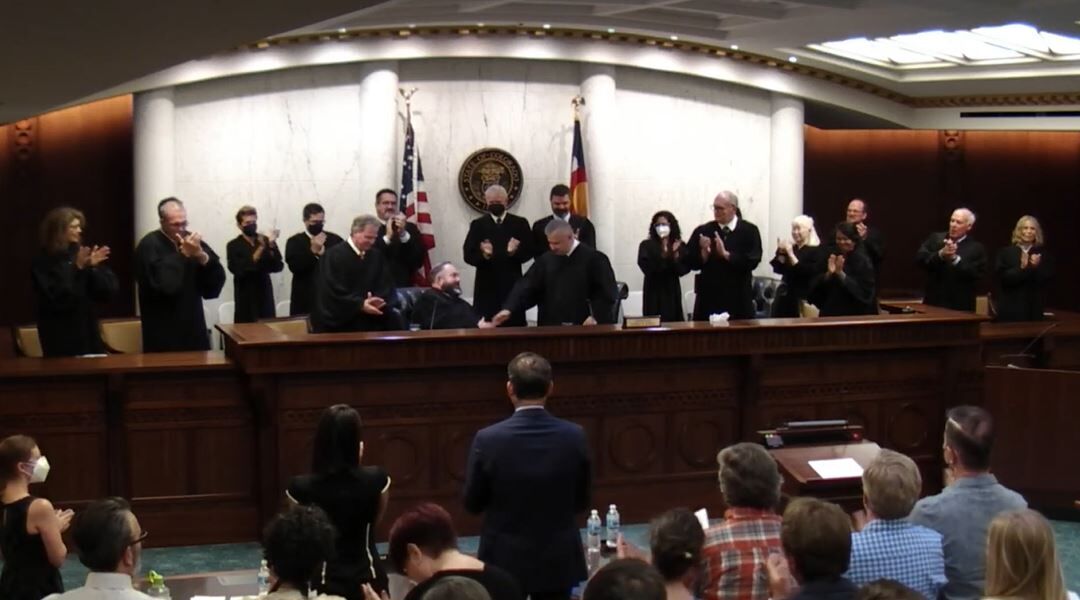
? An Arapahoe County judge seemed intent on embarrassing a defense lawyer in front of the jury, the Court of Appeals conceded, but his conduct did not warrant reversal of the defendant’s convictions.
? A man convicted of murder in Fremont County will receive a new trial because the judge gave the jury an instruction that improperly shifted the prosecution’s burden of proof onto the defendant.
? There was no basis for a Denver judge to convert a mother and father’s jury trial for child neglect to a bench trial simply because they failed to show up at a pretrial hearing, the Court of Appeals decided.
In federal news
? A former Florence city employee may proceed to sue for retaliation, prompted by her decision to blow the whistle on alleged misconduct, a federal judge ruled.
? An incarcerated man had not credibly claimed that corrections officers were aware he faced a substantial risk of harm due to his cellmate’s sexual orientation, a judge concluded.
? Under a new Colorado law enacted at the outset of the COVID-19 pandemic, jurors will decide whether a medical contractor at the La Plata County jail retaliated against a nurse who voiced her concerns about her coworkers’ failure to follow public health orders.
? A Lakewood police sergeant cannot be held liable for shooting and killing a man he was trying to evacuate from a burning basement.
? A federal judge told Centura Health to stop withholding company-wide pay increases to the nurses at a Longmont hospital after they voted to unionize.
? Although Colorado maintained that state law prohibited it from releasing workers’ compensation data to the U.S. Social Security Administration for an audit, a federal judge ordered the state to hand over the information.
Vacancies and appointments
? The governor has appointed Timothy J. Lane, policy analyst and staff attorney with the Colorado District Attorneys’ Council, to the Gilpin County Court, where he will succeed former Judge David Taylor.
? Applications are due by Dec. 22 to succeed part-time Moffat County Court Judge Brittany A. Schneider, who the governor recently appointed to the district court bench.
? The chief justice has appointed District Court Judge Kyle Seedorf to be the new chief judge of the 17th Judicial District (Adams and Broomfield counties). Seedorf has spent almost four years as a judge, and he will succeed retiring Chief Judge Don Quick in January.


Wrongfully deported man to be returned to U.S., Colorado federal judge orders
Michael Karlik
michael.karlik@coloradopolitics.com
Updated 8 hours ago
Colorado’s chief federal judge took the extraordinary step of directing the government on Tuesday to do everything it can to return a man it deported in violation of his order. At the same time, Colorado’s chief magistrate judge has set...
Denver murder, assault convictions reversed due to faulty jury instructions
Michael Karlik
michael.karlik@coloradopolitics.com
Updated 24 hours ago
Colorado’s second-highest court reversed a defendant’s convictions for murder and assault last week after concluding a Denver judge incorrectly omitted key jury instructions that could have affected the verdict and sentencing. Stephen C. Swainson fatally stabbed Israel Casillas in downtown...
‘Understand people for who they are’: 2 federal judges talk about compassion in courtroom
Michael Karlik
michael.karlik@coloradopolitics.com
Updated 1 day ago
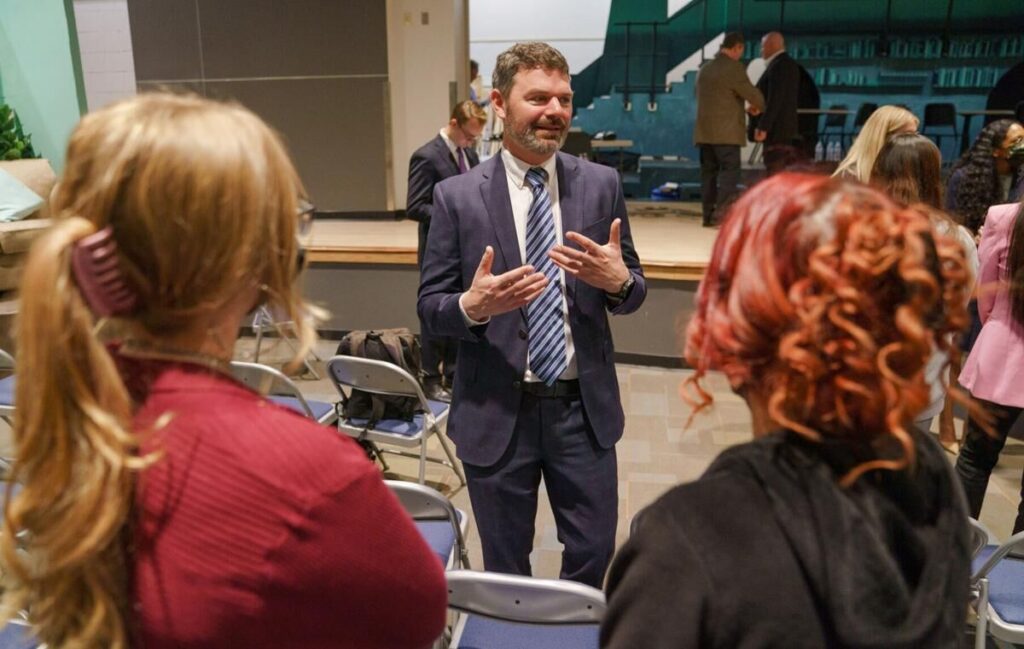
Before taking the bench in 2022, U.S. District Court Judge Charlotte N. Sweeney was an employment discrimination attorney. While the cases could be emotionally charged, they were different from the criminal proceedings she is now handling. “It wasn’t necessarily affecting...
Denver murder conviction reversed for incomplete self-defense instruction
Michael Karlik
michael.karlik@coloradopolitics.com
Updated 2 days ago
Colorado’s second-highest court reversed a defendant’s murder conviction last week because a Denver judge gave an incomplete instruction to the jury about the man’s right to self-defense. Donald R. Gonzales and Gary McLaughlin met up in a Capitol Hill parking...
Colorado lawmaker, House leaders named in workplace-retaliation lawsuit
Marianne Goodland
marianne.goodland@coloradopolitics.com
Updated 2 days ago
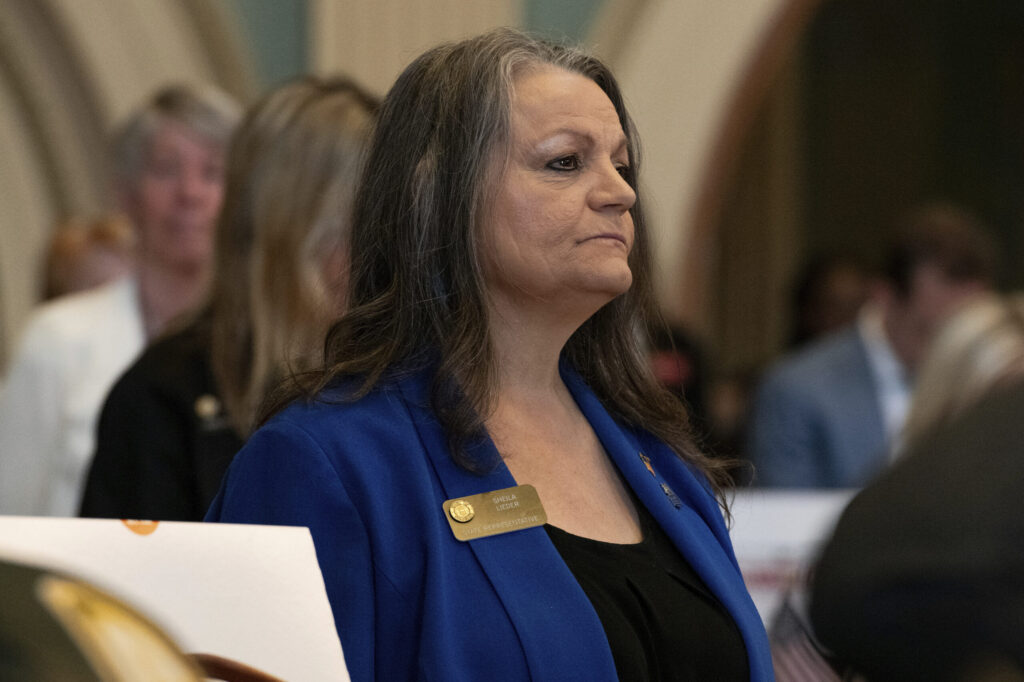
A former legislative aide has filed a lawsuit alleging she was mistreated, illegally directed to perform campaign work and harmed by a House leadership structure she charged was fragmented, politicized and ineffective at protecting employees. The lawsuit, filed by Jennifer...
Federal judge hears arguments about Colorado’s 3-day gun purchase waiting period
Michael Karlik
michael.karlik@coloradopolitics.com
Updated 2 days ago
A federal judge heard arguments on Monday about the constitutionality of a 2023 Colorado law that generally imposes a three-day waiting period on firearm purchases after the initiation of a background check. The test that the U.S. Supreme Court created...
Colorado Supreme Court intervenes in Weld County prosecution dismissed due to Missy Woods misconduct
Michael Karlik
michael.karlik@coloradopolitics.com
Updated 2 days ago
The Colorado Supreme Court ordered a Weld County trial judge last week to respond to the district attorney’s claim that he improperly dismissed a criminal case because of “outrageous” conduct by the Colorado Bureau of Investigation. Daniel Lee Eatinger stood...
Schoolchildren’s presence at child sex-related trial did not harm Arapahoe County defendant, appeals court says
Michael Karlik
michael.karlik@coloradopolitics.com
Updated 5 days ago
Colorado’s second-highest court decided on Thursday that the presence of a group of schoolchildren on the first day of a child sexual exploitation trial did not violate an Arapahoe County defendant’s constitutional right to a fair trial. Prosecutors charged Jerry...
Appeals court cites week-old Colorado law to reinstate child neglect case at child, father’s request
Michael Karlik
michael.karlik@coloradopolitics.com
Updated 5 days ago
Colorado’s second-highest court invoked a new state law for the first time on Thursday and reinstated a child neglect case that both the child and her father wished to reopen. House Bill 1227 took effect on Aug. 12, reversing a...
Colorado Supreme Court names William Hood as next chief justice
Michael Karlik
michael.karlik@coloradopolitics.com
Updated 3 hours ago
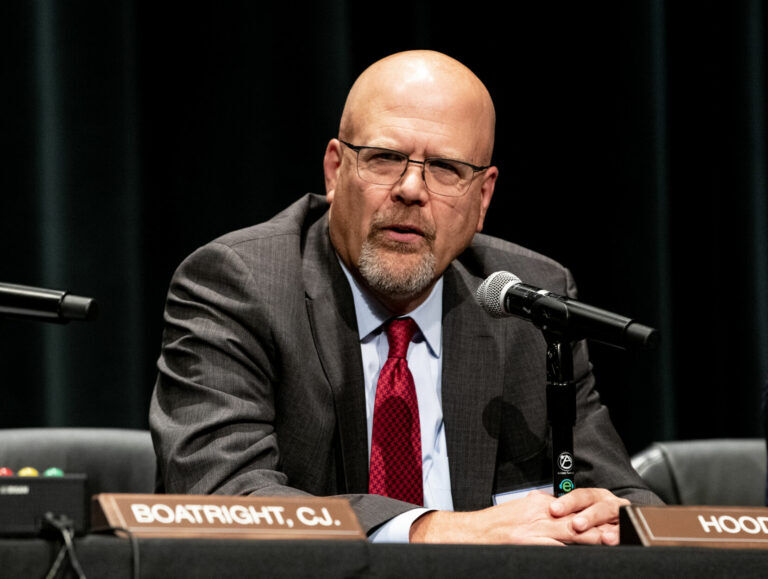
The Colorado Supreme Court has selected Justice William W. Hood III to be the next chief justice, the judicial branch announced on Friday. Hood will succeed Chief Justice Monica M. Márquez, who took over the role in July 2024. “I...
PREV
PREVIOUS

Colorado uninsured population reaches 'historic' low — but there's a catch
The number of uninsured Coloradans reached historic lows in 2023, early results from the Colorado Health Institute’s Colorado Health Access Survey showed. The uninsured rate dropped to 4.6% in 2023, after staying at roughly 6.5% since 2015, the group said, noting it’s the lowest level in the survey’s history. But the survey notably doesn’t reflect the end of […]

Tri-State announces plans to shutter final coal plant two years early
An energy cooperative said it will retire a unit in its coal-fired power station in Craig by the start of 2028, two years ahead of schedule. Tri-State Generation and Transmission, a cooperative whose members provide power to a million electricity consumers in the West, announced in a filing to the Colorado Public Utilities Commission on […]