

Appeals court declines to open door to challenges of already-final convictions
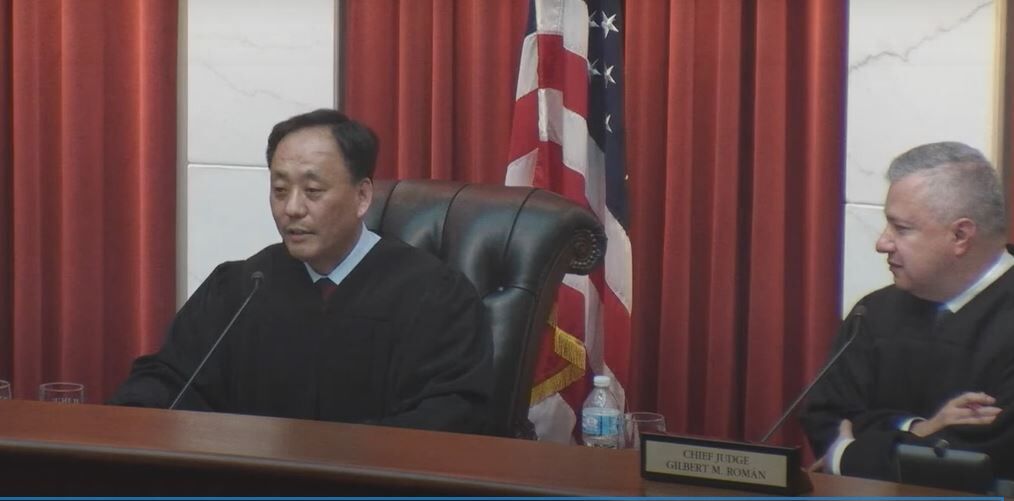
Colorado’s second-highest court on Thursday declined to apply a major state Supreme Court decision retroactively and enable more people to challenge their criminal convictions.
In 2022, the Supreme Court issued Rojas v. People – a decision that eliminated a “troublesome relic” from the rules of evidence. Known as the “res gestae” doctrine, it enabled prosecutors to introduce evidence of a defendant’s other, uncharged misconduct.
The goal of such other-acts evidence was to provide context for a person’s motive or plan to commit the offense they were on trial for. However, the doctrine instead became “a catchall for admitting all sorts of misdeeds and character evidence,” wrote Justice William W. Hood III in the Rojas opinion, with a danger that jurors would convict someone due to their “bad character.”
The question presented recently to the Court of Appeals was whether Rojas laid down a “watershed” rule giving convicted defendants the ability to challenge their convictions from years in the past, now that certain evidence would not be acceptable.
A three-judge appellate panel said no.
Case: People v. Cooper
Decided: November 30, 2023
Jurisdiction: Montrose County
Ruling: 3-0
Judges: David H. Yun (author)
Rebecca R. Freyre
W. Eric Kuhn
Background: COVER STORY | While SCOTUS term rocks country, Colorado Supreme Court racks up quiet accomplishments
Clinton Cooper stood trial twice in Montrose County for sexually assaulting a child. The first trial featured a deadlocked jury and the second resulted in Clinton’s conviction. Jurors heard evidence of Cooper, months after the assault, trying to look at a different child through her bedroom window.
The Court of Appeals originally upheld Cooper’s conviction in 2019, after which it became final. Cooper later filed a motion for post-conviction relief, alleging he received ineffective assistance from counsel. Right before the hearing, the Supreme Court decided Rojas.
Cooper then argued the new rule eliminating res gestae evidence should apply retroactively to his case, and to the testimony about Cooper spying on another child. District Court Judge Keri A. Yoder disagreed, saying the change to the rules of evidence did not amount to “one of the rare and small watershed core rules that call into question the Defendant’s underlying conviction.”
On appeal, Cooper contended the disputed evidence affected his right to a fair trial, and the Supreme Court had done something significant by abandoning a concept that dated to the 19th century. The Colorado Attorney General’s Office, in contrast, called Rojas a “clarification,” not a “landscape-altering groundbreaker.”
The Court of Appeals panel agreed with the government that Clinton could not challenge his already-final conviction under Rojas because the case did not re-interpret constitutional law.
“Our conclusion that Rojas is not a ‘new constitutional rule’ is fatal to Cooper’s claim,” wrote Judge David H. Yun on Nov. 30.
Although Rojas did not bar other-acts evidence entirely going forward, it provided clearer guardrails for when juries should hear it.
Recently, the Supreme Court accepted a pair of cases seeking to clarify whether another of its major decisions amounted to a new constitutional rule that applies retroactively. Two defendants serving lengthy sentences under Colorado’s “three strikes” law are seeking to expand a 2019 decision that directed judges how to evaluate the proportionality of criminal punishments.
Unlike the Rojas decision, the Supreme Court’s ruling on proportionality repeatedly made reference to constitutional requirements.
The case is People v. Clinton.

10th Circuit dismisses woman’s lawsuit following 10-year attempt to undo restraining order
Michael Karlik
michael.karlik@coloradopolitics.com
Updated 2 days ago
The Denver-based federal appeals court rejected a woman’s challenge on Friday to a restraining order imposed on her more than a decade ago, finding that she cannot credibly claim she will be prosecuted for violating the restraining order through her...
10th Circuit dismisses woman’s lawsuit following 10-year attempt to undo restraining order
Michael Karlik
michael.karlik@coloradopolitics.com
Updated 3 days ago
The Denver-based federal appeals court rejected a woman’s challenge on Friday to a restraining order imposed on her more than a decade ago, finding that she cannot credibly claim she will be prosecuted for violating the restraining order through her...
Colorado equal pay law does not require plaintiffs to allege gender-based retaliation, appeals court finds
Michael Karlik
michael.karlik@coloradopolitics.com
Updated 2 days ago
The 2019 Colorado law aimed at rooting out pay discrimination on the basis of sex does not require a plaintiff to allege their employer retaliated against them for sex- or gender-related reasons, the state’s second-highest court decided on Thursday. Lawmakers...
Hudson faces lawsuit over ICE detention facility
Nicole C. Brambila
nicole-c-brambila@coloradopolitics.com
Updated 3 days ago
A nonprofit organization filed a lawsuit against the Town of Hudson Wednesday, challenging plans to reopen a former federal prison in the town as a U.S. Immigration and Customs Enforcement detention facility. Together Colorado, along with Janet E. Carlson, filed...
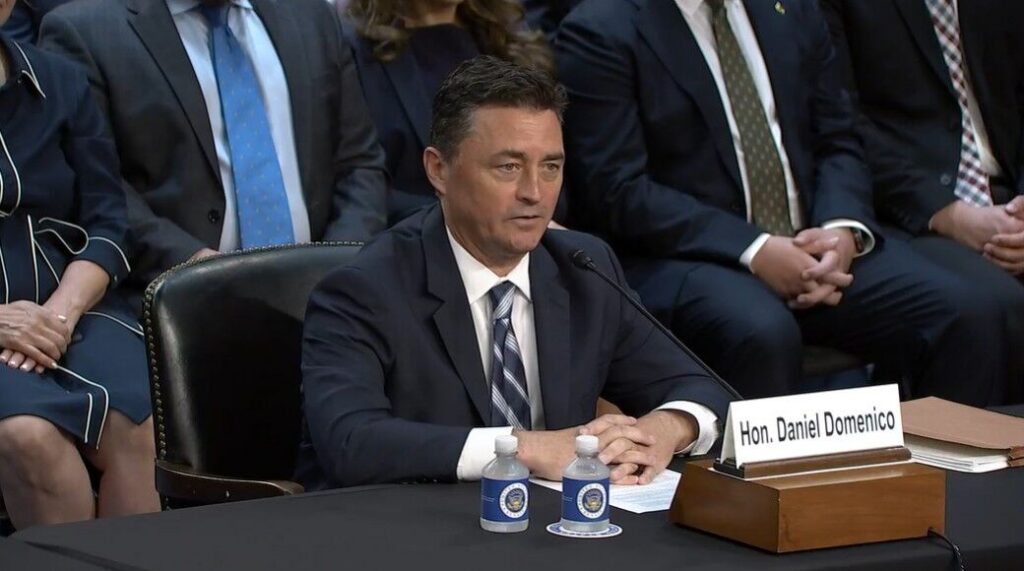
Senate committee advances Trump’s 10th Circuit nominee, as Domenico responds to questions about delays
Michael Karlik
michael.karlik@coloradopolitics.com
Updated 3 days ago
The U.S. Senate Judiciary Committee advanced President Donald Trump’s nominee to the Denver-based federal appeals court on Thursday by a party-line vote of 12-10. U.S. District Court Judge Daniel D. Domenico, who was Trump’s first-term appointee to Colorado’s federal trial...
Colorado justices to hear embryonic donation dispute
Michael Karlik
michael.karlik@coloradopolitics.com
Updated 3 days ago
The Colorado Supreme Court announced on Monday that it will decide whether lower court judges properly applied its framework for adjudicating disputes over the fate of pre-embryos, in which one person wants to use them to become a parent and...

Isolation, emotion, persona: Colorado judicial programming prepares people for life on the bench
Michael Karlik
michael.karlik@coloradopolitics.com
Updated 3 days ago
As a trial judge and now as a member of the Colorado Supreme Court, Justice Carlos A. Samour Jr. has heard the view that being a judge is isolating. “In neither court have I felt isolated. I’ve always interacted a...

Federal judge dismisses Colorado county sheriff’s challenge to law limiting immigration cooperation
Michael Karlik
michael.karlik@coloradopolitics.com
Updated 2 days ago
A federal judge dismissed a challenge from Mesa County Sheriff’s Office leaders last week to a Colorado law limiting public employees’ cooperation with immigration authorities, concluding that the plaintiffs did not allege they engage in any conduct that the law...
10th Circuit raises bar for fraud victims to sue debt collectors over inaccurate information
Michael Karlik
michael.karlik@coloradopolitics.com
Updated 1 day ago
The Denver-based federal appeals court wiped away a jury’s $500,000 award to a fraud victim on Monday and made it more difficult for consumers to hold companies liable for disseminating inaccurate credit information. The Fair Credit Reporting Act regulates credit...
Montezuma County judge’s censure, suspension approved by discipline panel
Michael Karlik
michael.karlik@coloradopolitics.com
Updated 4 days ago
A three-member disciplinary panel accepted, on Monday, an agreement between a Montezuma County judge and the Colorado Commission on Judicial Discipline that specifies he will receive a censure, a suspension, and additional education for his admitted instances of misconduct. Under...
PREV
PREVIOUS

Tension grows as Polis asks local governments to reduce property tax levy
Mere days after signing legislation that provides some respite from soaring property taxes, Gov. Jared Polis went on the offensive, calling on local governments to reduce their mill levies to offer more relief to homeowners. In a letter to local governments on Thursday, the governor effectively said the property tax relief adopted in the special session […]

Arapahoe County murder conviction overturned due to prosecutor misconduct
A teenager convicted of murder will receive a new trial after Colorado’s second-highest court determined on Thursday that Arapahoe County prosecutors inappropriately used the defendant’s constitutional right to silence as evidence of his guilt. Jurors convicted Marquez Woodruff in 2019 of fatally shooting Terry Capler in the latter’s Aurora home. Woodruff, who was 16 at the time […]