

Colorado Republicans, Democrats chart paths for delegates to 2024 national conventions | TRAIL MIX
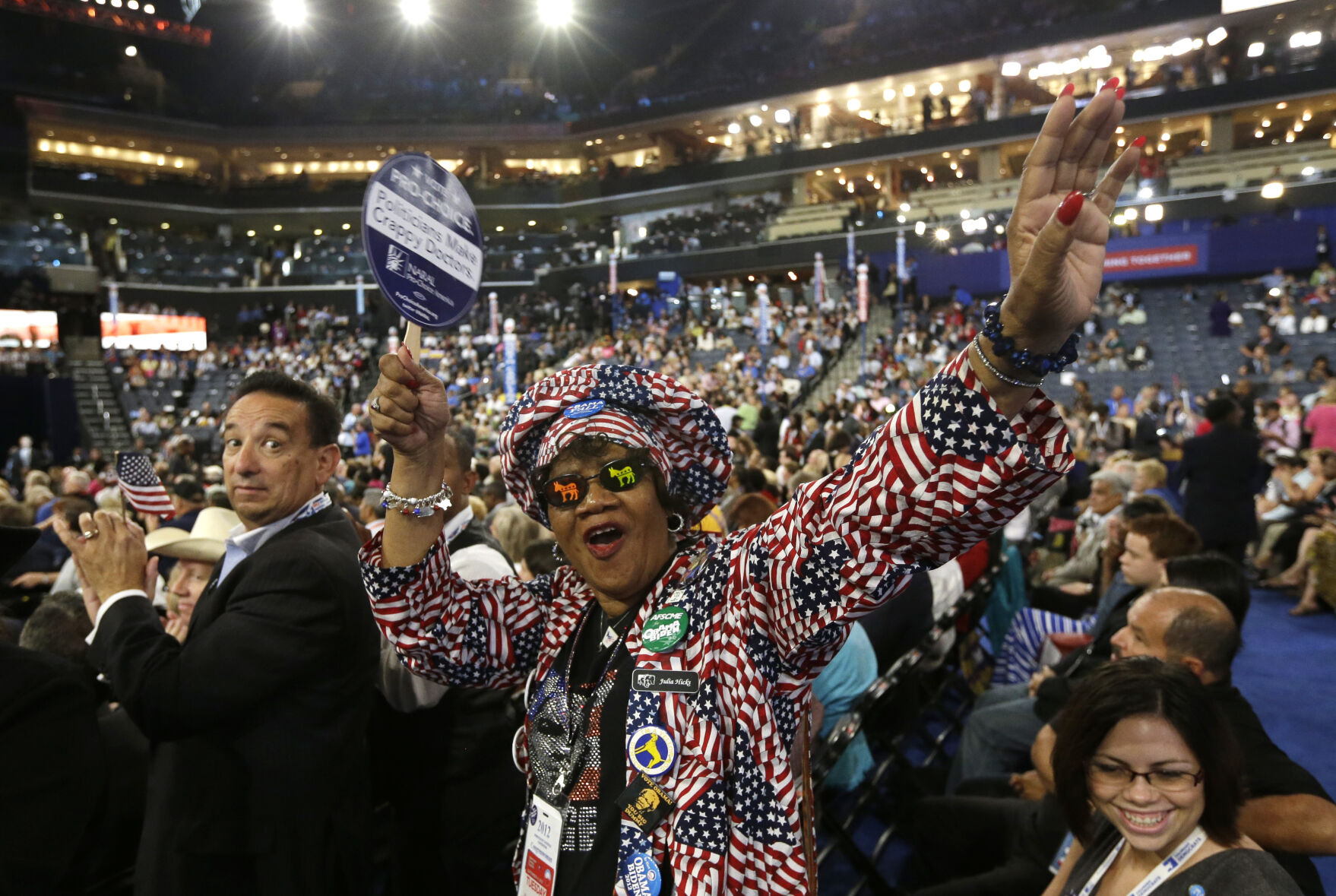
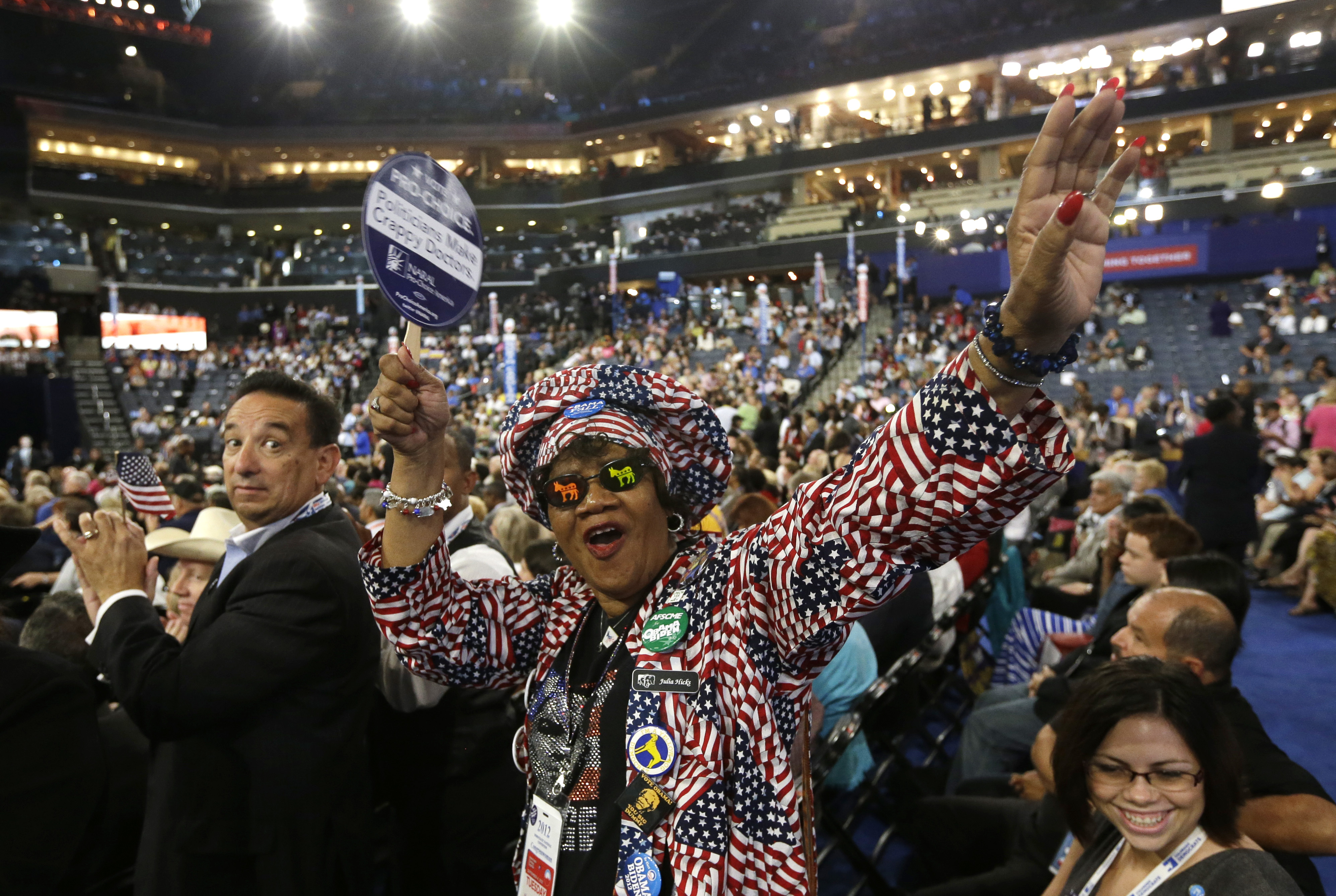
Even though the major parties’ national conventions don’t gavel in for almost eight months, it isn’t too early for Colorado’s most avid Democrats and Republicans to start thinking about traveling across the country to nominate their 2024 presidential tickets.
The formal process to pick Colorado’s convention delegates begins in the first week of March, but, by then, hundreds of partisans will already be campaigning for the dozens of coveted spots – and a chance to influence the country’s direction for the next four years.
“Not to be too sentimental about it, but for a lot of the folks who become delegates, this is a highlight of their life,” said Colorado Democratic Party Chairman Shad Murib. “This is an opportunity to be a part of history.”
His GOP counterpart, Dave Williams, said his fellow Republicans are champing at the bit to play their part in setting up next fall’s election.
“It’s going to be an exciting 2024,” he told Colorado Politics. “I don’t know that anyone knows what to expect, and that’s saying something since it looks like it’ll be a rematch of the 2020 election. I know Colorado Republicans are exited for the adventure.”
At this point, both parties’ White House nominations look like slam dunks for the current and previous president, with both Democrat Joe Biden and Republican Donald Trump leading their respective fields of challengers by seemingly overwhelming margins. That’s despite polls showing the prospect of the 2020 nominees going head-to-head again leaving a majority of voters dissatisfied and unenthused – suggesting the possibility that the contest could look different by next summer.
After the parties’ scaled-down, partly remote national conventions in 2020, next year’s productions will mark the first chance in eight years for the party faithful to take over an entire metro area for the better part of a week. They’ll dominate the news, cavort with thousands of politicos, adopt a party platform and send their presidential picks to the November ballot – many while cheering themselves hoarse and wearing funny hats.
The GOP is scheduled to descend on Milwaukee from July 15-18, with the Democrats convening a month later – traditionally, the party that occupies the White House goes second – in Chicago, from Aug. 19-22.
The Republicans are slated to send 2,469 delegates to their national convention, with 104 of them unpledged, while the Democrats have an estimated 4,532 delegate slots, including 744 awarded based on elective and party positions, sometimes referred to as superdelegates.
Colorado’s share of those totals amounts to 37 delegates on the Republican side and 87 delegates for the Democrats.
State Republicans plan to elect 24 delegates at congressional district conventions – three from each of Colorado’s eight districts – plus 10 at-large delegates at the state convention. Another three go to the RNC by virtue of their positions – Williams, as state party chair, plus the party’s two elected members of the Republican National Committee.
It’s more complicated on the Democratic side, with the party picking 47 national delegates at congressional district conventions, 16 at-large delegates at the state convention, and nine delegates filling what are called Party Leader & Elected Official slots, open to Democrats who fit those bills, which are also elected at the state convention.
Another 15 delegates are automatic, including Murib and other statewide party officials, plus the state’s federal delegation, governor, secretary of state, and Roy Romer, a former governor who qualifies because he’s a former Democratic National Committee chair. Under the party’s’ rules, those automatic delegates only get to vote for a presidential nominee at the DNC if the process goes beyond a first ballot.
In Colorado, the quadrennial delegate selection process kicks off with next year’s March 5 presidential primary, held on what’s known as Super Tuesday. Colorado shares the pivotal date with 14 other states, including delegate-rich California and Texas, on the largest multi-state election day on the nominating calendar.
According to delegate selection rules, Colorado’s parties will apportion their pledged national convention delegates based on the primary results, but other than the general framework – starting at precinct caucuses and concluding at state conventions – the two major parties differ in nearly every particular along the way.
“My primary goal has been to increase access and participation to the process and make sure that every Democrat feels they have an opportunity to become a delegate to state and county convention, or go help nominate our presidential nominee in Chicago,” Murib said.
Toward that end, state Democrats put together what they’re calling a toolkit for aspiring delegates, spelling out the steps at every point. The party has also been holding a series of virtual forums to go over the process.
“It’s eye-opening to see all the different mechanics that have to move in some fluid motion to make this all work,” Murib said with a chuckle, adding, “Too often, the parties are seen as a black box, but we’re laying it out there, so there’s no sense of backroom dealings. This is a very public process.”
Williams said he plans to offer something similar for Republicans, outlining important dates and procedures they can follow to start out at precinct caucuses and work their way up to national delegate, if that’s their goal.
While state law allows the parties to schedule precinct caucuses any time between the first Tuesday and first Saturday in March in presidential years, the two parties are taking different approaches next year.
The Democrats are leaving it up to each county to decide when to set their caucuses, within that range, and are also letting counties opt to hold their caucus in-person, virtually, or with a hybrid of the two.
“I think counties should be able to do whatever works,” Murib said. He noted that some rural counties are jumping at the chance to let at least some Democrats join their caucuses online, saving travel time and increasing access for those who haven’t traditionally been able to attend. “That’s been my guiding focus.”
On the Republican side, all precinct caucuses must be held in-person, with the default date of Thursday, March 7, unless counties ask to hold theirs on Saturday, March 9.
“We wanted to have a good, uniform date that we could market to everyone, but also wanted to have a safety valve for any county that needed to do it another day,” Williams said, noting that so far just two of Colorado’s 64 counties – Fremont and Weld – have picked the Saturday date.
Prospective Republican national delegates first must win election at their precincts to higher assemblies, starting with county assemblies held later in March. Those feed into the state assembly and convention, set for April 6 at the State Fairgrounds in Pueblo, which elects the state’s 10 at-large delegates.
“It’s a good location, especially given the gains our party is making in that area,” said Williams. “It’s also a big population center for the 3rd Congressional District, and we want to make sure we’re highlighting that to our statewide members, that this is a district we want to protect.”
Republican U.S. Rep. Lauren Boebert, who represents the GOP-leaning 3rd CD, won reelection last year by the slimmest margin in any congressional district in the country. Rated a toss-up, the seat could determine which party wins control of the House after next year’s election.
In parallel, Republicans can advance to their respective congressional district meetings, which each elect three RNC delegates.
That’s when the primary results come into play.
“If Trump gets 50% of the vote, he’s getting 50% of the delegates,” Williams said. “And so on.”
New this cycle, Republican presidential candidates who clear 20% of the vote statewide on Super Tuesday can furnish the state party with a list of “preferred delegates,” which will be distributed at the state and congressional district conventions as recommendations.
If a GOP candidate takes at least 50% of the vote in Colorado’s primary, however, that candidate’s campaign gets to designate a slate of delegates that gets an up-or-down vote at the various conventions, significantly boosting the chances of those Republicans making it to the RNC.
Although the Democrats also apportion delegates according to the primary results, the party handles nearly everything else differently at every stage, including requiring gender balance and representation for various groups, from Black and Latino voters to union members and veterans.
“We’ve held ourselves to some aspirational goal-making,” Murib said, “to be sure we are seeking out and encouraging members from those parts of the big rainbow that makes up the Democratic Party.”
The party is letting counties decide whether to meet in person or virtually, with a hybrid option, but will hold its April 13 state assembly and convention entirely online next year.
Murib said the party chose that route to make it easier for Democrats to take part.
“We’ve seen way more participation in our virtual events from rural folks, working Coloradans, people who are younger and can’t afford to travel,” he said. “I’m excited that we’ve been able to do it in a way that is definitely welcoming more people into the fold than in previous years.”
Ernest Luning has covered politics for Colorado Politics and its predecessor publication, The Colorado Statesman, since 2009. He’s analyzed the exploits, foibles and history of state campaigns and politicians since 2018 in the weekly Trail Mix column.


DeGette challenger Melat Kiros trounces 15-term Democratic incumbent in Denver delegate vote
Ernest Luning
ernest.luning@coloradopolitics.com
Updated 3 days ago
The 28-year-old, first-time candidate challenging Democratic U.S. Rep. Diana DeGette in this year’s primary soundly defeated the 15-term incumbent in a delegate preference poll conducted Saturday at a county party assembly in Denver. Melat Kiros, the daughter of Ethiopian immigrants...
Army veterans Jessica Killin, Joe Reagan qualify for Democratic primary ballot in Colorado’s 5th CD
Ernest Luning
ernest.luning@coloradopolitics.com
Updated 2 days ago
Democratic congressional candidates Jessica Killin and Joe Reagan secured spots Saturday in Colorado’s June primary to decide who will run against Republican U.S. Rep. Jeff Crank in a district that’s only ever sent GOP lawmakers to Congress. The two Democrats,...

Boebert challenger Eileen Laubacher joins lawsuit aimed at blocking her from Democratic assembly
Ernest Luning
ernest.luning@coloradopolitics.com
Updated 4 days ago
A Denver District Court judge on Thursday permitted Democratic congressional candidate Eileen Laubacher to join a lawsuit filed by one of her primary opponents seeking to prevent Laubacher from participating in the party’s assembly process in a bid to qualify...
Colorado GOP chair Brita Horn says she’ll resign next month, points to ‘divide within our party’
Ernest Luning
ernest.luning@coloradopolitics.com
Updated 5 days ago
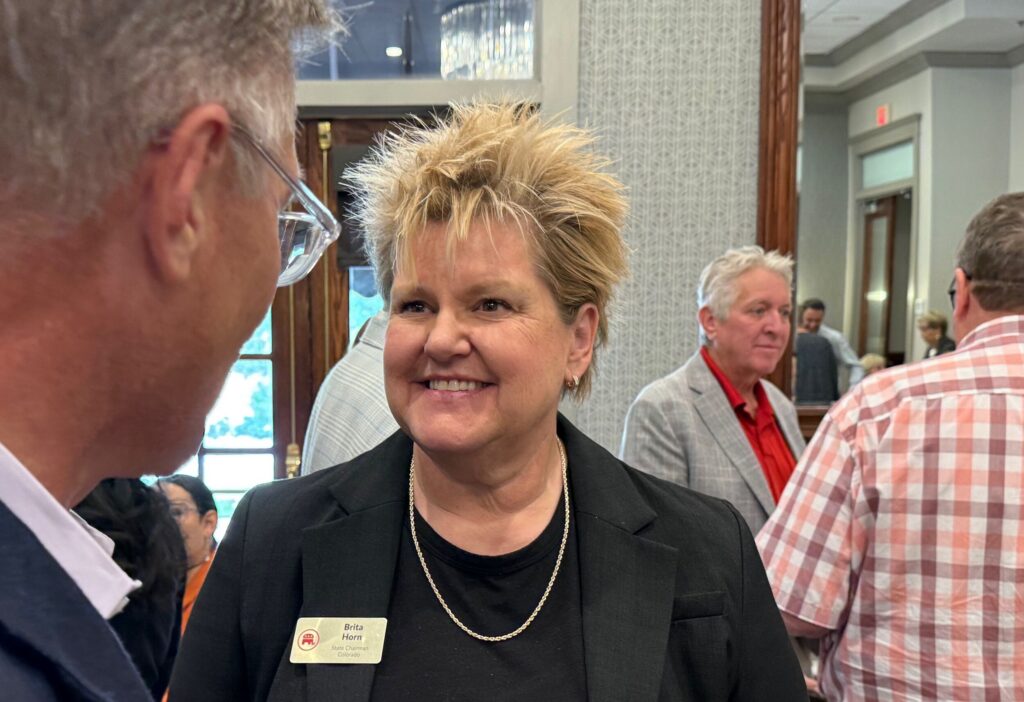
Colorado Republican Party Chair Brita Horn said Thursday that she will resign her position next month following the GOP’s state assembly, citing what she described as an “enduring divide” within the party “marked by vitriol and hostility.” Horn’s announcement came...
Senate committee moves forward with Colorado ballot measure to redirect TABOR refunds to schools
Marianne Goodland
marianne.goodland@coloradopolitics.com
Updated 4 days ago
A Senate panel on Thursday voted along party lines to move forward with a bill that would ask voters for permission to eliminate Taxpayer’s Bill of Rights refunds and redirect those dollars to K-12 public education. The 6-3 vote in...

Colorado committee recommends rejecting alcohol, marijuana tax hike to fund mental health care
Marissa Ventrelli
marissa.ventrelli@coloradopolitics.com
Updated 1 day ago
In a rare move, Colorado’s Capital Development Committee unanimously recommended that another legislative committee reject a bill asking voters to approve higher excise taxes on alcohol and marijuana to fund a new mental health hospital in Aurora. Sponsored by Rep....

Republican Jeff Crank, Democrat Jessica Killin qualify by petition for Colorado’s 5th CD primary
Ernest Luning
ernest.luning@coloradopolitics.com
Updated 6 days ago
Republican U.S. Rep. Jeff Crank and Jessica Killin, one of the Democrats challenging the first-term incumbent, have both qualified for the primary ballot in Colorado’s 5th Congressional District after turning in a sufficient number of petition signatures, state election officials...
Split vote by Colorado Title Board stops ballot push to privatize Pinnacol Assurance
Marianne Goodland
marianne.goodland@coloradopolitics.com
Updated 3 days ago
The Colorado Title Board, a three-member panel that sets the language for ballot measures, recently reversed a prior decision and blocked a proposal to privatize Pinnacol Assurance from moving forward. The main issue decided by the title board is whether...
Colorado joins multi-state call to keep ICE away from polling locations
Jacob Mauk
jacob.mauk@denvergazette.com
Updated 1 week ago
Colorado Secretary of State Jena Griswold announced Monday that the state has formally requested written confirmation from the Department of Homeland Security that ICE agents will not be stationed at polling locations during the 2026 election cycle, according to a...

Can deliberation save democracy? | Vince Bzdek
Vince Bzdek
vince.bzdek@gazette.com
Updated 1 week ago
In September 2019, 523 Americans traveled to Dallas for an experiment called “America in One Room.” The gathering was designed to test a theory: Could representative citizens deliberate productively even in an era of intense polarization? The event focused on...
PREV
PREVIOUS

State trains judges about financial disclosure requirements weeks after dozens found not complying with law
Colorado’s Judicial Department last week offered two days of training to its more than 350 judges statewide on how to file personal financial disclosure reports, as well as asked the attorney general whether senior judges must also file the public documents just weeks after The Denver Gazette stories disclosed dozens had not. The training and […]

The path to the Democratic and Republican conventions, appeals court weigh in on involuntary medication | WHAT YOU NEED TO KNOW
Today is Nov. 24, 2023, and here’s what you need to know: In his latest Trail Mix column, Ernest Luning explores the path to the Democratic and Republican national conventions: Even though the major parties’ national conventions don’t gavel in for almost eight months, it isn’t too early for Colorado’s most avid Democrats and Republicans […]