

Colorado committee recommends rejecting alcohol, marijuana tax hike to fund mental health care

In a rare move, Colorado’s Capital Development Committee unanimously recommended that another legislative committee reject a bill asking voters to approve higher excise taxes on alcohol and marijuana to fund a new mental health hospital in Aurora.
Sponsored by Rep. Bob Marshall, D-Highlands Ranch, and Sen. Judy Amabile, D-Boulder, House Bill 1301 proposes that all excess funds generated through the tax increase would go toward a new mental health hospital in Aurora. Construction and operation of the hospital would be the top priority for funds collected, with any remaining funds directed to a yet-to-be-constructed long-term civil commitment facility in Mesa County.
Under TABOR, any tax increase must be approved by voters.
Funding for mental health care has been a long-standing issue in Colorado, as several members of the Capital Development Committee attested.
A bipartisan, bicameral committee, the Capital Development Committee is responsible for reviewing funding requests for capital projects across state agencies, most often public colleges and universities. It is extremely rare, if not unprecedented, for the committee to request another committee vote a certain way on a bill.
In a committee hearing on Thursday, Marshall told members his intention with HB 1301 and the corresponding ballot measure was to increase mental health care for the most severe cases, such as those on civil commitment or in need of residential care. Those individuals are at the top of the mental health care “pyramid,” Marshall said.
“This is a dire need that we’ve identified for years, and no one’s ever just pulled the trigger and moved forward,” he said.
According to Marshall, the additional tax revenue would amount to about 3 cents per six-pack of beer, bringing in about $44 million each year.
Colorado has some of the lowest excise taxes on alcohol in the nation, Marshall said, adding that representatives from the alcohol and marijuana industries have told him they would accept a tax increase if it were approved by voters rather than imposed as a fee through an enterprise, which is a proposal outlined in another bill this session.
While committee members agreed that more funding was needed, they expressed concerns about the bill.
Sen. Kyle Mullica, D-Thornton, the committee chair, noted that taxes typically go to a “system,” rather than specific projects, as the bill proposes.
Marshall argued that it was easier for voters to know exactly where their money was going than to say it would go toward mental health in general.
“When we can point to something that’s more concrete, it’s a lot easier for the voters to get their head around that,” he said.
Sen. Nick Hinrichsen, D-Pueblo, agreed with Mullica, saying that he did not want to start a precedent of creating standalone funding sources for capital development projects.
“I absolutely support the goals that we’re trying to get at here, but I have heartburn with the bill itself and the mechanism,” he said.
Rep. Tammy Story, D-Conifer, said she was also concerned about the funding’s longevity, especially since alcohol consumption is decreasing nationwide.
“I just don’t feel like that’s necessarily a stable or appropriate way to fund this structure of a mental health facility and the ongoing maintenance in perpetuity.”
Committee members voted 5-0 to submit a letter to the House Health and Human Services Committee, which is scheduled to hear testimony on the bill on March 18.
Committee Chair Rep. Lindsay Gilchrist, D-Denver, said she looked forward to hearing the bill in committee.
“I think this is a critically important issue we should address in Colorado,” she told Colorado Politics. “We desperately need more appropriate placements for individuals experiencing acute mental illness. I think Rep. Marshall is bringing forward a creative solution that has the potential to help the problem.”

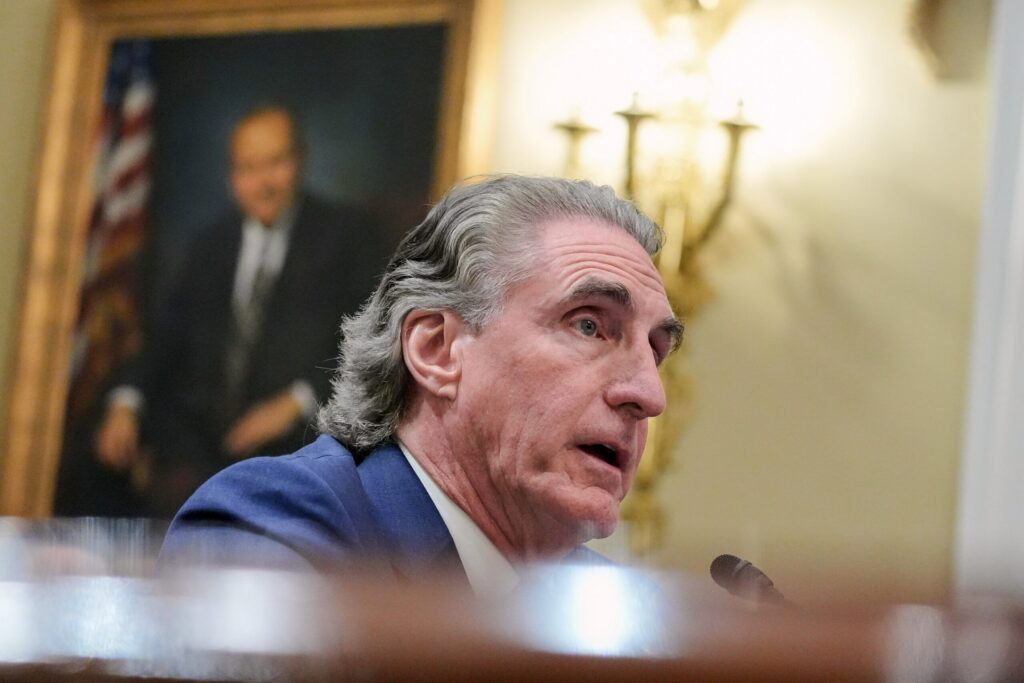
Colorado joins lawsuit challenging changes to Endangered Species Act
Marissa Ventrelli
marissa.ventrelli@coloradopolitics.com
Updated 12 hours ago
Colorado once more joined a coalition of states challenging the Trump administration — this time on proposed rules regarding the Endangered Species Act. The pair of lawsuits challenge new rules made under Interior Secretary Doug Burgum, who earlier said the...

Boebert challenger Eileen Laubacher says she’ll ‘break through the noise’ in Democrat’s 1st TV ad
Ernest Luning
ernest.luning@coloradopolitics.com
Updated 9 hours ago
Democratic congressional candidate Eileen Laubacher says she’ll take a different approach than her opponent in a campaign ad released Wednesday that opens with a cacophonous series of videos featuring Republican U.S. Rep. Lauren Boebert. “Eileen’s had enough of the noise...

Colorado congressman asks DOJ to investigate violent student ICE walkout
Nico Brambila
nico.brambila@denvergazette.com
Updated 12 hours ago
U.S. Rep. Jeff Crank is asking the Justice Department to investigate violence at last week’s anti-ICE student walkout in Denver, including whether outside organizations helped organize, fund, or influence the demonstration. Crank sent a letter Tuesday requesting the investigation to...

Two more wolves killed by Colorado wildlife staff
Marianne Goodland
marianne.goodland@coloradopolitics.com
Updated 1 day ago
Two yearling wolves from the Copper Creek and Three Creeks packs in Pitkin and Rio Blanco counties, respectively, were killed by Colorado Parks and Wildlife staff on Monday. That brings to 19 the number of wolves that have died under...

Federal judge dismisses Douglas County’s challenge to collective bargaining law
Nicholas Fogleman
nicholas.fogleman@denvergazette.com
Updated 20 hours ago
A federal judge dismissed claims brought by the Douglas County Board of Commissioners alleging that a state law granting county employees the right to organize and join labor unions violates free speech protections and conflicts with federal labor law. Douglas...

U.S. Rep. Lauren Boebert calls Trump’s 90-day wolf-delisting review ‘real progress’
Marianne Goodland
marianne.goodland@coloradopolitics.com
Updated 1 day ago
President Donald Trump has directed Interior Secretary Doug Burgum to launch a 90-day review on whether gray wolves and Mexican wolves should be removed from Endangered Species Act protections. The order drew mixed reactions for Colorado’s wolf-reintroduction effort, with ranchers...

Jeffco Public Schools eliminated 350 jobs as part of budget cuts
Matt Kyle
matt.kyle@denvergazette.com
Updated 20 hours ago
Jeffco Public Schools eliminated 350 full-time positions as part of ongoing budget cuts between last school year and this school year. The district has operated in a budget deficit in the range of tens of millions of dollars over the...
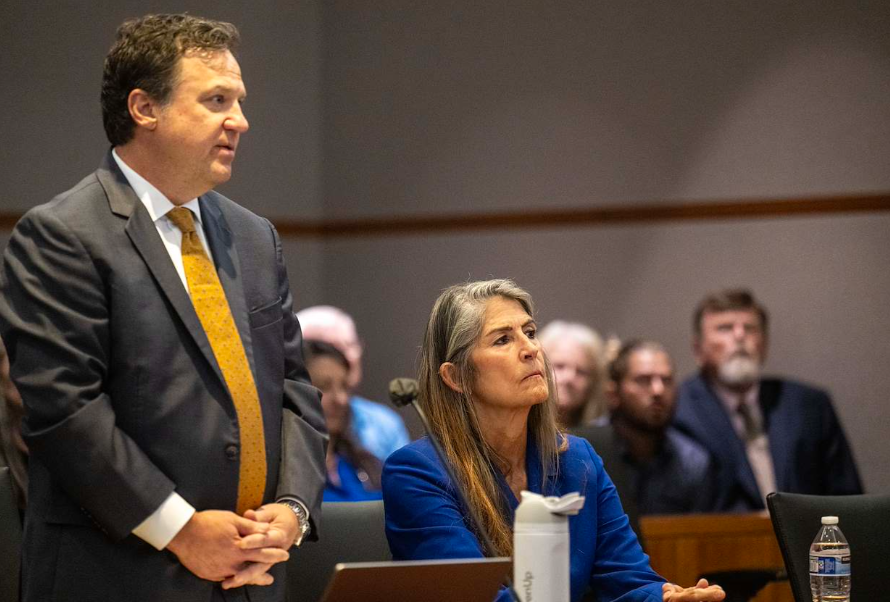
Disgraced ex-CBI analyst Missy Woods sentenced to prison in DNA scandal
Jenny Deam
jenny.deam@gazette.com
Updated 2 days ago
A Jefferson County district court judge on Tuesday sentenced a disgraced former Colorado Bureau of Investigation DNA analyst to a decade in prison for altering and deleting data in scores of criminal cases over several years. Jefferson County District Judge...

Jason Crow endorses Democrats up and down Colorado’s ballot, chips in $100K for campaign efforts
Ernest Luning
ernest.luning@coloradopolitics.com
Updated 2 days ago
Democratic U.S. Rep. Jason Crow on Tuesday formally endorsed more than 60 Democrats running up and down Colorado’s ballot and said he’s putting $100,000 into statewide and county campaigns and organizing programs to drive turnout in the fall election. Crow,...

With its water source dry, a southeast Colorado town’s clock is ticking
Savannah Eller
savannah-eller@coloradopolitics.com
Updated 2 days ago
The Cucharas is not a mighty river, but the people of La Veta knew they had a problem brewing when it ran dry at the beginning of June. “We’re getting by,” said La Veta Mayor Doug Brgoch. “It’s not great.”...
PREV
PREVIOUS

Colorado Supreme Court lifts curtain on decision-making at legal event
Members of the Colorado Supreme Court sat down with lawyers on Wednesday to answer questions about behind-the-scenes topics, including what happens immediately after an appeal is argued, why they might intervene in an ongoing case, and the consequence of a majority flipping from one side to the other. “This is what happens when the court […]

U.S. intelligence report suggests Iranian regime is not at risk of imminent collapse
Washington Examiner Recent U.S. intelligence reports have assessed that after nearly two weeks of Operation Epic Fury, Iran’s government leadership is not in danger of imminent collapse. The evaluation comes after 12 days of regular military strikes by United States and Israeli forces, which led to the deaths of Iran’s Ayatollah Ali Khamenei, his wife, […]