

Split vote by Colorado Title Board stops ballot push to privatize Pinnacol Assurance

The Colorado Title Board, a three-member panel that sets the language for ballot measures, recently reversed a prior decision and blocked a proposal to privatize Pinnacol Assurance from moving forward.
The main issue decided by the title board is whether a ballot measure meets the state’s constitutionally mandated single-subject law and whether its content fits the title.
Last month, the title board voted unanimously to approve measure No. 218, submitted by Colorado Succeeds, an organization of business leaders.
The ballot measure would allow Pinnacol Assurance, the state’s largest provider of workers’ compensation insurance, to completely separate from the state and become a stand-alone mutual insurance company. Currently, Pinnacol is a political subdivision of the state.
As a political subdivision, it cannot provide workers’ compensation insurance outside of Colorado, the primary factor in the company’s desire to separate from the state. Pinnacol has lost market share over the past decade, and becoming a standalone mutual insurance company would allow it to provide workers’ compensation insurance to Colorado companies with employees outside the state.
Ballot Measure 218 would require Pinnacol to put $150 million into a workforce development fund as part of that separation and to buy out its employees’ share of the state pension plan.
The ballot measure would also require the commissioner of insurance to establish a risk plan that provides workers’ compensation coverage to employers unable to procure coverage in the voluntary market.
Pinnacol is currently the insurer of last resort: Employers who cannot find workers’ compensation insurance from any other provider can be covered under Pinnacol.
The company has previously said it would not abandon the last resort market and would bid for that business.
The request for a rehearing came from Stephanie Tucker, president of the Workers’ Compensation Education Association, a nonprofit association of attorneys who represent Colorado employees injured on the job.
In a statement after the hearing, Tucker said a proposal “that
fundamentally restructures that role raises serious questions about access to coverage and protections for workers. Today’s decision ensures those issues receive the careful review they deserve.”
The title board split 2-1 on the single-subject issue. Kurt Morrison, representing the Attorney General’s Office, said the issue for him was requiring the commissioner of insurance to develop the risk plan, which he claimed was not related to the measure’s overall goal.
Theresa Conley, representing the Secretary of State’s Office, had a different view: She said the creation of the workforce development fund appeared to be unrelated to the measure’s title.
The third member of the panel, Christy Chase, who represents the General Assembly’s Office of Legislative Legal Services, disagreed with both of them and said she thought the risk plan and workforce fund both fit under the title.
Attorney Trey Rogers, representing Colorado Succeeds, pointed out that past ballot measures have created funding sources unrelated to the title, such as the 2024 sports gaming measure, which took profits from sports gambling and devoted them to water projects. He also noted the 2008 ballot measure that allowed casinos in three mountain towns, with profits going to community colleges.
Rogers argued there is a connection between the ballot measure’s main purpose and both the risk plan and workforce fund.
But Conley said both of those previous ballot measures were generating new revenue, and to her, that was the difference.
The vote by the title board does not spell the end of the ballot measure, however. Colorado Succeeds filed two more, with one scheduled for a hearing with the title board on March 18. While both included the workforce fund, one left out the risk plan language, and it’s that measure, Initiative 249, that the title board will review next week.
At the March 4 hearing’s conclusion, Conley gave the proponents hope, or possibly suggestions, for the future.
“It’s a close call,” she said. “I could be persuaded that maybe single subject could be reached, but today I’m concerned about the sale, creating money, and then creating the risk plan and workforce fund.”
But “I’m definitely persuadable on it,” she added.
Time is growing short for proponents of ballot measures to get their time before the title board. Its final meeting for the 2026 election season is on April 15.


Democrats confront shift as socialist-aligned candidates win races in Colorado
Thelma Grimes
thelma.grimes@coloradopolitics.com
Updated 7 hours ago
Democratic socialists’ recent electoral gains — punctuated by Melat Kiros’ victory on Tuesday over U.S. Rep. Diana DeGette, the dean of Colorado’s congressional delegation — are the result of a movement that has been taking shape in metro Denver for...
Cherry Creek spent $65K on investigation, but invoices remain secret, records show
Nico Brambila
nico.brambila@denvergazette.com
Updated 2 days ago
After previously refusing to disclose the cost associated with the investigation into the former superintendent and his wife, the former human resources chief, Cherry Creek School District officials partially released records showing the cost to taxpayers: $65,054.85. The Denver Gazette...
10th Circuit agrees Colorado satisfied jury award after intercepting money for restitution
Michael Karlik
michael.karlik@coloradopolitics.com
Updated 2 days ago
The Denver-based federal appeals court agreed last week that Colorado satisfied its obligations by not paying a man directly for violating his rights, but rather crediting the jury’s multimillion-dollar award toward the crime victim restitution he still owed in his...

Colorado business confidence improves but still pessimistic
Bernadette Berdychowski
bernadette.berdychowski@denvergazette.com
Updated 2 days ago
Halfway into the year, business confidence across Colorado has improved but is still negative, a new report found. The Leeds Business Confidence Index, a measurement of how business leaders across Colorado feel about the future of the national and state...
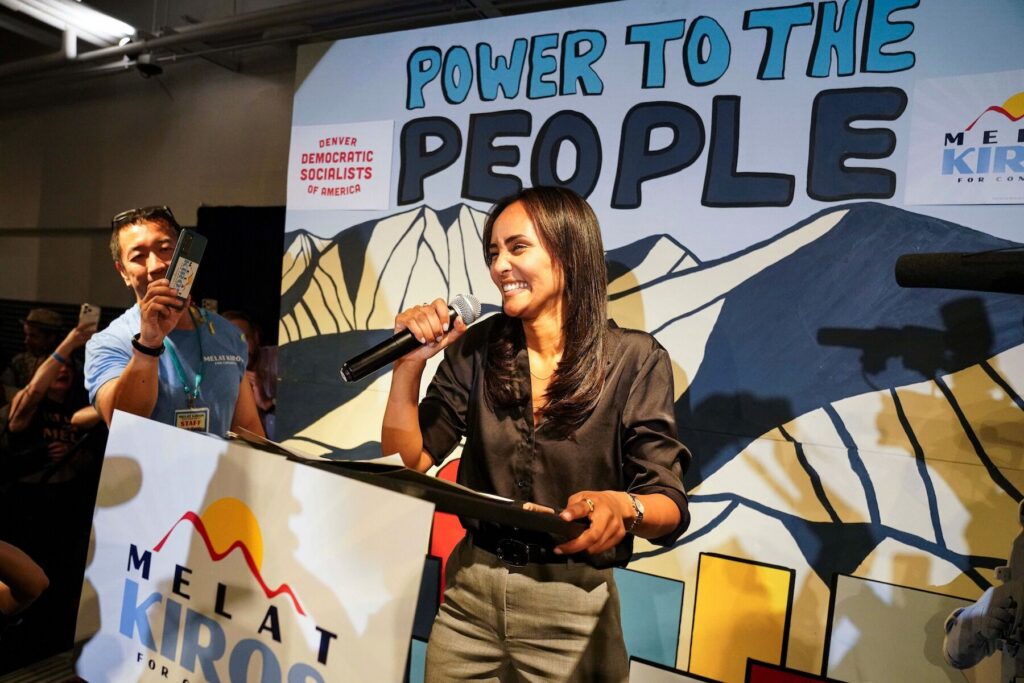
How Melat Kiros pulled Democratic Party left in upset win over Diana DeGette
Ernest Luning
ernest.luning@coloradopolitics.com
Updated 2 days ago
“It’s time for change,” Democratic congressional candidate Melat Kiros, a political newcomer and self-described democratic socialist, said in her campaign’s TV ad. On Tuesday night, primary voters in Denver agreed, giving the nomination to the 29-year-old, while at the same...

Victor Marx’s lead sits outside of recount threshold in Republican race for Colorado governor
Luige DelPuerto
luige.delpuerto@gazette.com
Updated 3 days ago
Ministry leader Victor Marx on Wednesday night overtook state Sen. Barb Kirkmeyer in the Republican primary for Colorado governor, securing enough votes that — for now — put the race beyond the mandatory recount threshold. The Republican primary race between Kirkmeyer...

Large Colorado counties hunker down to count ballots as Republican race for governor tightens
Marissa Ventrelli
marissa.ventrelli@coloradopolitics.com
Updated 3 days ago
Nearly 24 hours after ballot boxes closed for Colorado’s 2026 primary election, the Republican nominee for governor remained undecided as counties hunker down to tally more ballots. As of 3 p.m. Wednesday, several counties were still processing tens of thousands...
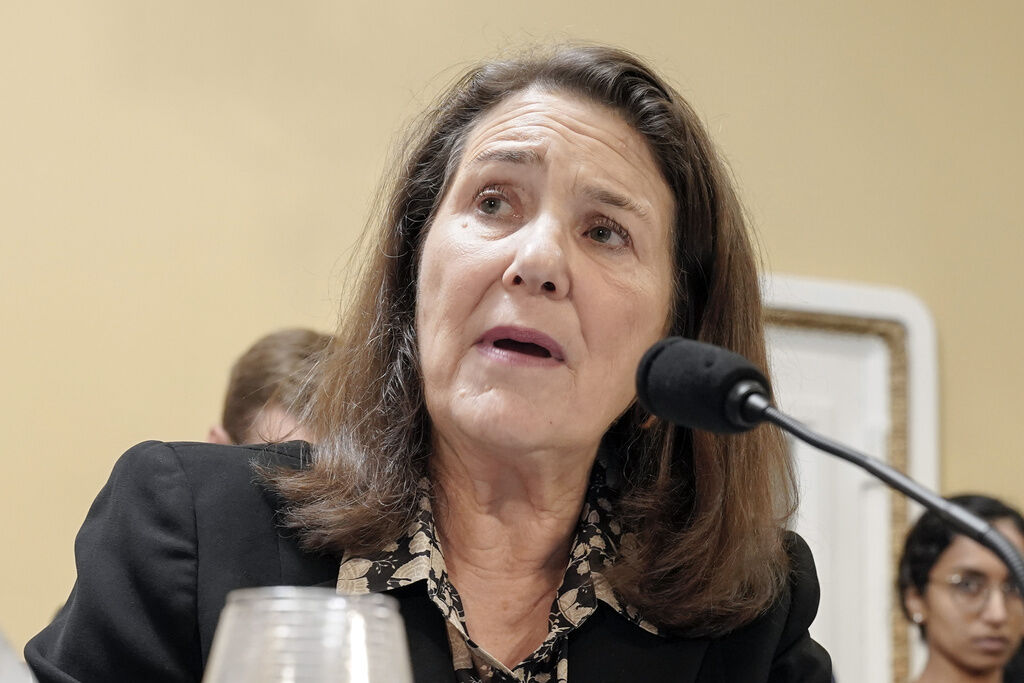
Colorado’s Diana DeGette concedes defeat to Democratic socialist Melat Kiros
Ernest Luning
ernest.luning@coloradopolitics.com
Updated 3 days ago
U.S. Rep. Diana DeGette — the dean of Colorado’s congressional delegation — conceded defeat in the race for the 1st Congressional District a day after losing to Democrat rival Melat Kiros in their party’s primary contest. “I want to congratulate...

Progressive Democrats, traditional Republicans secure state House victories in Colorado
Marianne Goodland
marianne.goodland@coloradopolitics.com
Updated 3 days ago
With ballots still being counted, results from Tuesday’s primary election remained up in the air for several candidates for the Colorado General Assembly. Still, the preliminary results as of Wednesday morning showed progressive Democrats had a good night, as did...

5 takeaways from Colorado’s shocker of a 2026 primary election
Ernest Luning
ernest.luning@coloradopolitics.com
Updated 3 days ago
Voters in Colorado’s Democratic primary on Tuesday night mostly let their elected officials know that they’re fed up with the party’s Washington politicians and ready to back the most aggressive fighters they can find. At the same time, the voters...
PREV
PREVIOUS

Trump appoints Erika Kirk to Air Force Academy board
President Donald Trump has appointed Erika Kirk, the widow of conservative activist Charlie Kirk, to fill a seat on the Air Force Academy’s Board of Visitors. Charlie Kirk, the founder of conservative group Turning Point USA, was a member of the Board of Visitors and attended a meeting before his assassination in September. His wife, […]

U.S. energy secretary warns Colorado's energy policies could drive up prices, deter businesses
U.S. Energy Secretary Chris Wright on Monday warned that Colorado’s energy policies could lead to higher electricity prices and deter businesses, such as data centers, from locating in the state. Wright, a former executive of a Colorado-based energy company tapped by the Trump White House to lead the energy department, urged state policymakers to focus […]