

Federal judge reflects on 2 years in office, professor explains Trump disqualification issue | COURT CRAWL
Welcome to Court Crawl, Colorado Politics’ roundup of news from the third branch of government.
One of the newer federal judges in Colorado spoke to an audience of lawyers about her first two years on the bench, while a constitutional law professor broke down the major issues in the various attempts to disqualify a former president under the 14th Amendment’s insurrection clause.
Words of advice from the bench
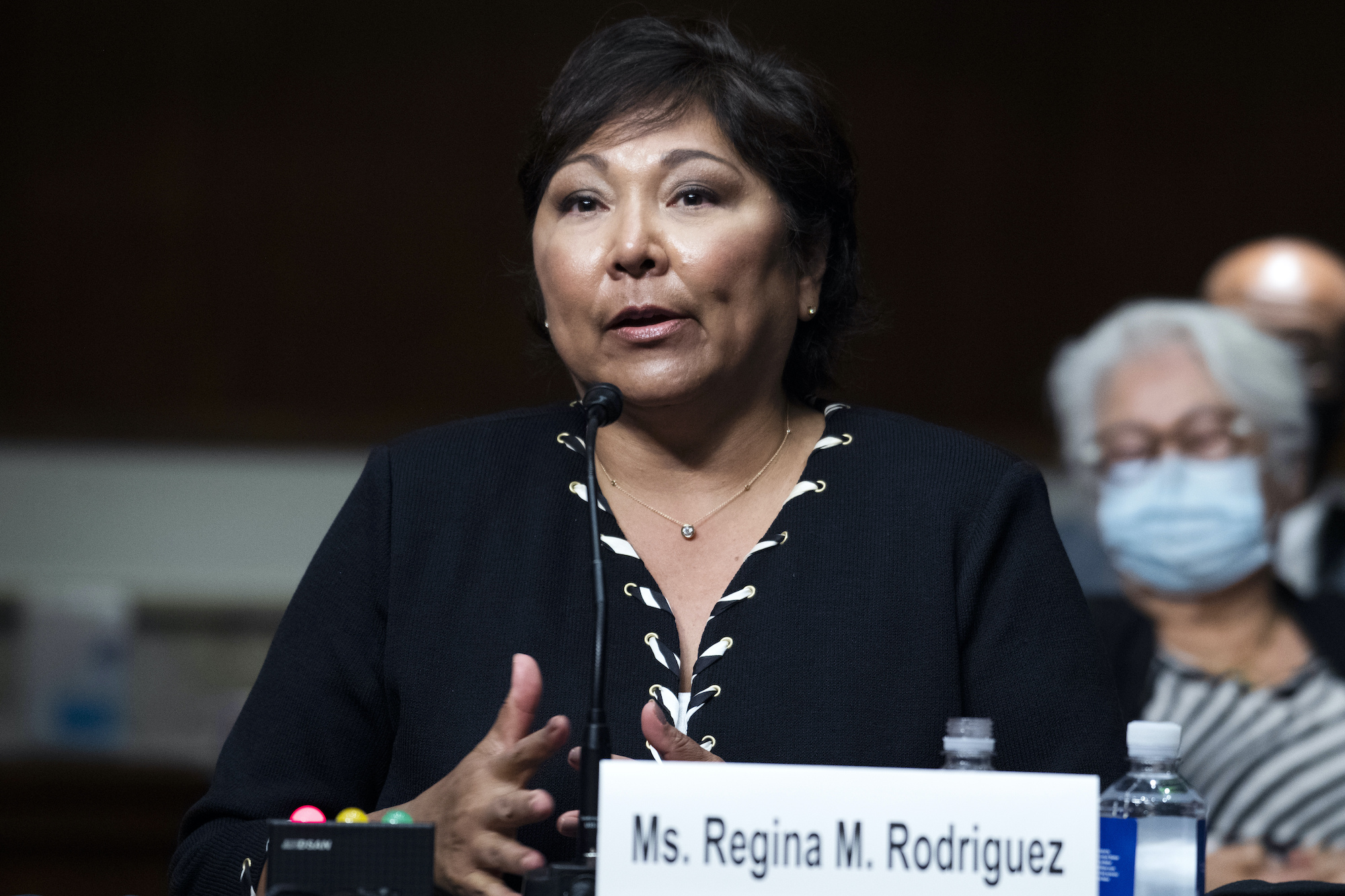
? U.S. District Court Judge Regina M. Rodriguez is the third-most senior district judge on Colorado’s federal trial court, even though she’s only been there for two years. Rodriguez was the first appointee of President Joe Biden in a wave of new additions to the court, and last week she spoke to a group of lawyers about what she has seen from the bench.
? “Facts are beautiful things. When presented well, they don’t need a ton of embellishment, explanation or argument,” she said. “I find it often happens that lawyers confuse argument for facts.”
? Rodriguez has implemented a new protocol for summary judgment, which allows judges to resolve a case without a trial if the key, undisputed facts lead to only one outcome under the law. She requires attorneys to list their facts in a chart, noting whether anything is disputed. As a result, Rodriguez has reduced the time it takes her to get a decision to the parties.
? On her philosophy about moving the docket along: “I can tell you I personally don’t like to keep things hanging out there for a long time because I was a practitioner for over 30 years. I know the struggle that it is when the case kind of gets bogged down or you’re not getting orders on your motions. So I personally try to keep things moving. That being said, I’m not prefect at it.”
Jan 6., the Constitution and the presidency
? Later this week, a Denver judge will likely decide whether Donald Trump is ineligible to appear on Colorado’s 2024 presidential primary ballot, and all future ballots, under Section 3 of the 14th Amendment. The post-Civil War provision disqualifies candidates from holding state or federal office if they previously took an oath to the U.S. Constitution but subsequently “engaged in insurrection.” Andrea Katz, an associate professor of constitutional law at Washington University, spoke to Colorado Politics about all of the considerations for disqualifying a former president from office. Here is an excerpt:
Colorado Politics: One of the questions in the Colorado case is whether courts can enforce Section 3’s disqualification provision. As a practical matter, if courts cannot exclude a candidate from the ballot because they engaged in insurrection, why would they have the authority to exclude someone who is, for example, not 35 years or old? Or not a natural-born citizen? Or served two terms already?
Andrea Katz: This is a good question. It’s easier to see those decisions as clerical and mechanical – just consult a person’s birth certificate – than the question of whether someone has “engaged” in an “insurrection,” which is more technical, interpretive, bound up with values.

CP: More than a decade ago, a naturalized citizen named Hassan wanted to run for president and the federal appeals court based in Denver, the 10th Circuit, agreed Colorado’s secretary of state could keep him off the ballot because he didn’t meet the constitutional qualifications. Judge Neil Gorsuch wrote at the time that “a state’s legitimate interest in protecting the integrity and practical functioning of the political process permits it to exclude from the ballot candidates who are constitutionally prohibited from assuming office.”
Neil Gorsuch is now a Supreme Court justice, appointed by Trump. If this question of presidential disqualification were to reach the Supreme Court, would you anticipate Gorsuch to decide the case the same way he did in 2012?
AK: This is hard to say. It depends on whether Justice Gorsuch reads Section 3 of the 14th Amendment in the same way he does Section 1 of Article 2, the text that was at issue in Hassan. Article 2 says, “No Person except a natural born Citizen … shall be eligible to the Office of President; neither shall any person be eligible to that Office who shall not have attained to the Age of thirty five Years, and been fourteen Years a Resident within the United States.”
It’s true, at least, that the two are similarly phrased (“No person shall…”). Such language gave the Hassan court reason to treat the language as self-executing, and therefore gives at least a facial reason to think that the two passages should be applied the same way. That said, Hassan turned on the more “mechanical” question of a candidate’s citizenship, and not the definition of an insurrection.
State Supreme Court returns
? This week, the Colorado Supreme Court will hold oral arguments in six cases beginning on Tuesday. Here is what’s on the docket:
Scholle v. Ehrichs et al.: The justices will examine whether a jury’s $9.3 million award to a medical malpractice victim should be lowered to the $1 million allowed by state law.
Essentia Insurance Company v. Hughes: The Supreme Court has previously said that vehicle insurance policies cover people – not vehicles – who are injured by uninsured or underinsured motorists. Does this mean a woman can use her classic car insurance policy to receive benefits for her injuries on the road, even though she wasn’t driving her classic car at the time?
Hice et al. v. Giron et al.: If an officer is in pursuit of a vehicle and doesn’t have his lights and sirens on the entire time he is exceeding the speed limit, could that make him liable for any injuries he causes?
In the Matter of Kennedy: This is a discipline case involving a lawyer who was disbarred in the District of Columbia, which in turn triggered disbarment in Colorado.
People in the Interest of J.G.: The justices will evaluate the constitutionality of school officials’ warrantless search of a student who had a “safety plan” due to his prior criminal activity.
People v. Smith: When a defendant petitions for postconviction relief and he receives an appointed attorney, do judges need to consider all of the claims the defendant made when he originally represented himself, or just those the attorney chooses to pursue?

? In other Supreme Court news, the justices accepted a question sent by the U.S. Court of Appeals for the 10th Circuit. A man who was 15 at the time of his sex offenses was convicted as an adult, leading him to challenge the constitutionality of his potential lifetime sentence. The state Supreme Court has agreed to look at whether Colorado’s sex offender law meets the requirements of the Eighth Amendment.
? Justice Melissa Hart and Attorney General Phil Weiser spoke at a democracy summit in Denver about the dangers posed by artificial intelligence, digital privacy and speech, and some of the U.S. Supreme Court’s recent decisions.
Heard on appeal
? Two media organizations are entitled to receive limited, high-level data about reports to the child abuse hotline from three residential facilities, as long as no identifying information is released, the state’s Court of Appeals ruled by 2-1.
? The Colorado Attorney General’s Office attempted to narrow a recent Supreme Court decision about the award of restitution to crime victims, arguing non-compliant restitution orders should only be voided if they harm the defendant. The Court of Appeals countered that all non-compliant restitution orders harm defendants.
In federal news
? The 10th Circuit found that a trial judge misunderstood the facts and failed to analyze all the relevant circumstances, leading the court to grant qualified immunity to a Rifle officer who shot a suicidal suspect in the back.
? A Black Hawk casino’s insurance policy didn’t entitle it to hundreds of millions of dollars for the COVID-19 shutdowns of 2020, the 10th Circuit ruled.

? A high-profile U.S. Supreme Court case from last term, 303 Creative v. Elenis, quietly reappeared in Colorado’s federal trial court, where the parties agreed to work on language for a judge to block the state from enforcing its anti-discrimination law against a Christian website designer, to the extent SCOTUS’ decision requires it.
? A Larimer County sheriff’s deputy isn’t liable for an assault in the county jail because he wasn’t aware of the specific threat a detainee posed to his cellmate, a judge concluded.
? A jury will decide whether Colorado’s state health department discriminated against a Black employee by choosing to promote a potentially less qualified White candidate over her.
Vacancies and appointments
? The governor has appointed two new members to the Court of Appeals: Denver Juvenile Court Judge Pax Moultrie and Assistant Solicitor General Grant T. Sullivan. Moultrie will be the first Black member of the 22-person court after a four-year span in which no Black judges sat on the Court of Appeals. The two appointees will succeed retiring Judges John Daniel Dailey and David Furman.
? There are three finalists to succeed retiring District Court Judge Sandra H. Gardner in the 14th Judicial District (Grand, Moffat and Routt counties): Billy-George Hertzke, Moffat County Court Judge Brittany A. Schneider and Routt County Court Judge Erin M. Rowe Wilson.
? The governor has three more finalists for the seat of retiring District Court Judge Thomas K. Kane in the Fourth Judicial District (El Paso and Teller counties): Magistrate Hilary Gurney, Theodore “Ted” P. McClintock and Magistrate Amanda Philipps.
Miscellaneous proceedings
? Adams County jurors acquitted an Aurora police officer for the 2019 death of Elijah McClain, weeks after another jury acquitted a second officer and convicted a third.
Thanksgiving break
? Court Crawl will return the week after Thanksgiving.


Federal judge green-lights civil trial against ex-Fort Collins DUI officer
Michael Karlik
michael.karlik@coloradopolitics.com
Updated 19 hours ago
A federal judge ruled on Thursday that Fort Collins’ former “DUI officer” will face a civil trial for allegedly investigating a motorist for impaired driving without any reasonable suspicion to do so. In recent years, several people arrested by Officer...

Colorado Supreme Court suspends Mesa County judge pending misconduct investigation
Michael Karlik
michael.karlik@coloradopolitics.com
Updated 22 hours ago
The Colorado Supreme Court suspended Mesa County Court Judge Michael J. Grattan on Thursday amid a misconduct investigation. The court’s Sept. 10 order gave Grattan 21 days to explain why his paid suspension should not continue through the end of...
Colorado Supreme Court changes course, dismisses case about special district bonds
Michael Karlik
michael.karlik@coloradopolitics.com
Updated 18 hours ago
The Colorado Supreme Court declined on Friday to decide a dispute between a large-scale Commerce City development and the various districts financing it, after initially showing interest in the ongoing case. Colorado has roughly 2,800 special districts, which are local...
10th Circuit tosses GEO Group’s pretrial appeal in human trafficking lawsuit
Michael Karlik
michael.karlik@coloradopolitics.com
Updated 2 days ago
The Denver-based federal appeals court dismissed an attempt by The GEO Group on Wednesday to appeal a trial judge’s non-existent decision two months before the company is scheduled to face a civil trial over alleged trafficking violations at the Aurora...
Denver sues Trump to block armed ICE agents from polling sites
Deborah Grigsby
deborah.smith@denvergazette.com
Updated 2 days ago
The city of Denver, along with several groups, sued the Trump administration Thursday, seeking to block U.S. Immigration and Customs Enforcement officers who are armed from polling sites during the upcoming midterm elections. In fact, there are no official orders...
Federal judge takes no action against ICE in Colorado after hearing about mistakes, not ‘blatant violations’
Michael Karlik
michael.karlik@coloradopolitics.com
Updated 16 hours ago
A federal judge declined to take action against U.S. Immigration and Customs Enforcement on Thursday after hearing that a pattern of alleged lawbreaking amounted to mistakes and a misunderstanding of the government’s position in court. For nearly a year, Colorado’s...
Colorado doctors, dentists challenge state law on gender‑transition services in new federal lawsuit
Marissa Ventrelli
marissa.ventrelli@coloradopolitics.com
Updated 13 hours ago
A group of Christian doctors and dentists has filed a federal lawsuit challenging a Colorado law they say requires them to provide gender‑transition services that conflict with their religious and ethical beliefs. The lawsuit, filed by the Christian Medical and...
Federal judge directs plaintiff to revise complaint alleging Denver officers’ constitutional violations
Michael Karlik
michael.karlik@coloradopolitics.com
Updated 17 hours ago
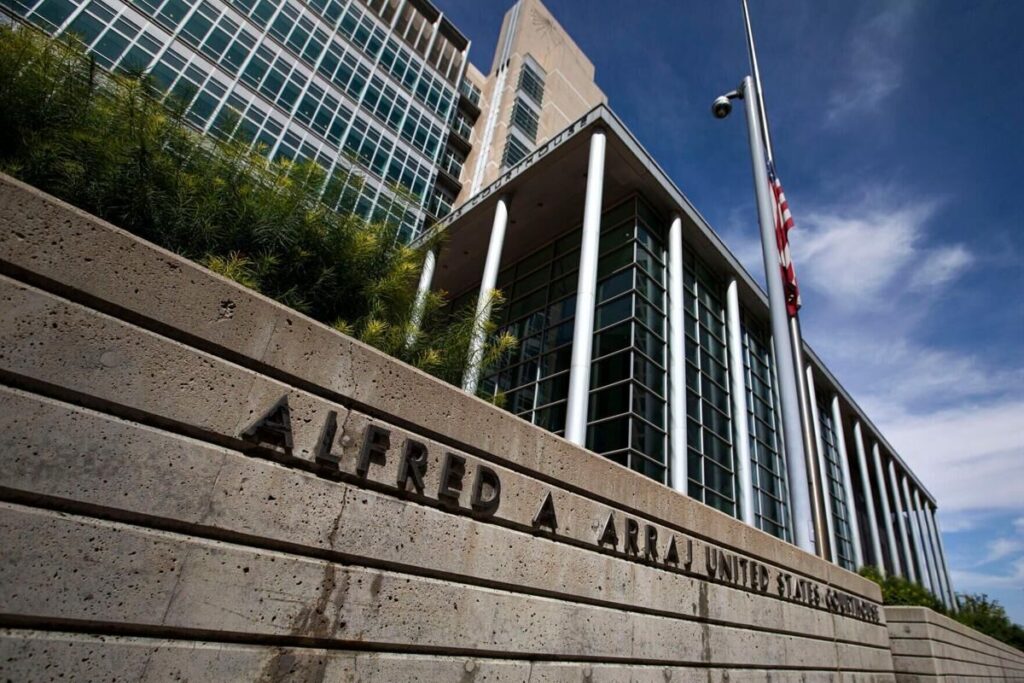
A federal judge directed a plaintiff to revise his allegations on Wednesday to more precisely state what two Denver officers and the city itself allegedly did to violate his constitutional rights by facilitating his prosecution for murder until prosecutors dropped...
Lawsuit challenges Douglas County commissioners’ ballot actions
Nicholas Fogleman
nicholas.fogleman@denvergazette.com
Updated 2 days ago
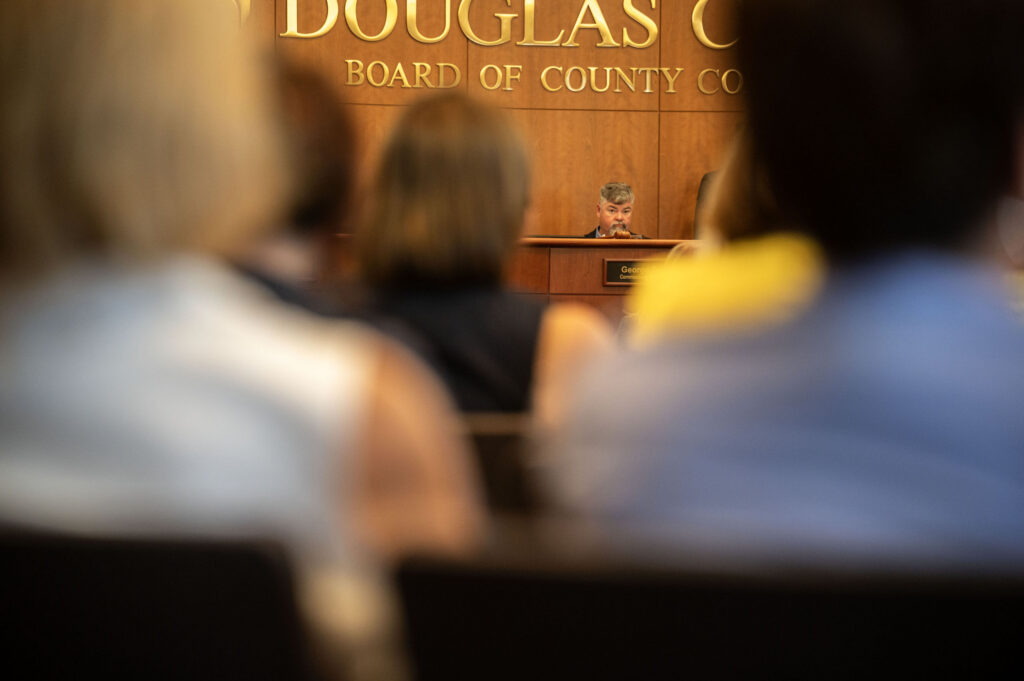
A new lawsuit against Douglas County commissioners seeks to invalidate the board’s intervention in efforts to expand the commission from three members to five and restore the original ballot language approved by more than 20,000 petition signers. The suit marks...
Federal judge explores new sanctions against ex-Colorado judicial discipline director
Michael Karlik
michael.karlik@coloradopolitics.com
Updated 2 days ago
A federal judge on Wednesday directed Colorado’s former judicial discipline director, for the third time this year, to explain why she should not sanction him for his latest conduct in his litigation against the state’s judiciary. Christopher S.P. Gregory, who served...
PREV
PREVIOUS
JeffCo Schools hacker demands money, threatens to release stolen data
The hacker group SingularityMD threatened to upload sensitive employee and student information to the dark web if JeffCo Public Schools didn’t pay a $15,000 ransom in cryptocurrency, The Denver Gazette has learned. “Your overall approach to cyber security is too relaxed,” Anihi Blep, likely an alias, wrote in an Oct. 31 email to several district […]

Aurora's 'strong mayor' proposal faces uncertain future
Aurora’s “strong mayor” ballot initiative faces an uncertain future, even after Mayor Mike Coffman, one of the initiative’s proponents, easily defeated a challenge to his reelection bid. “At this point, we have not made a decision if we will be moving forward with this,” Natela Manuntseva, who speaks for the strong mayor campaign, told The Denver […]