

Appeals court overturns organized crime conviction, finds no constitutional violation
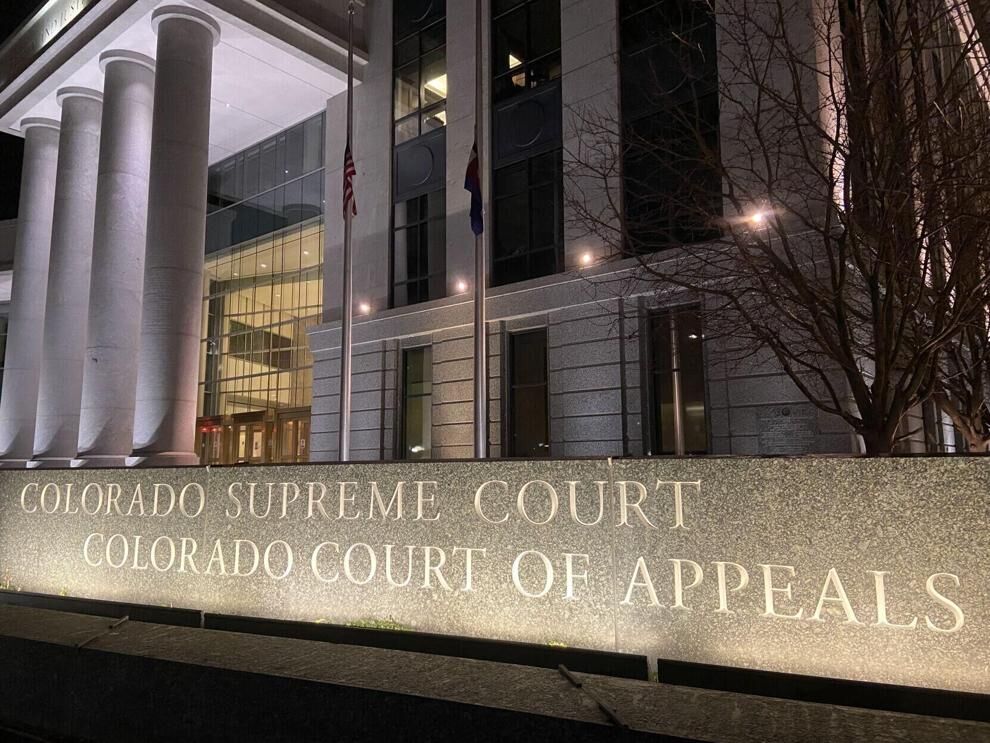
Colorado’s second-highest court on Thursday reversed a man’s organized crime conviction in Douglas County in the wake of the Supreme Court’s recent directive about how a criminal “enterprise” must be proven.
At the same time, a three-judge panel for the Court of Appeals rejected Chauncey Price’s argument that his dual convictions for child pimping and patronizing a prostituted child violated his constitutional rights because they prohibit “essentially the same conduct.”
Price is serving a 304-year sentence after a jury convicted him in 2019 of multiple offenses related to prostitution and forgery. Price facilitated the prostitution of multiple victims, provided them with security and transportation in exchange for money, and manufactured counterfeit bills to use in purchases.
Case: People v. Price
Decided: October 19, 2023
Jurisdiction: Douglas County
Ruling: 3-0
Judges: Rebecca R. Freyre (author)
David H. Yun
W. Eric Kuhn
Background: State Supreme Court clarifies organized crime law, overturns conviction
Among his convictions was one count of violating the Colorado Organized Crime Control Act.
While Price’s appeal was pending, the state Supreme Court clarified that convictions under the law require prosecutors to prove the existence of a criminal enterprise with an ongoing structure, beyond the mere fact that people committed crimes together.
Because Price’s jury did not receive that instruction at the time they convicted him, the appellate panel overturned his organized crime conviction. It permitted the prosecution to retry him for that charge.
The panel rejected Price’s other challenges, including to the constitutionality of his child prostitution convictions.
Under the state constitution, it violates a defendant’s right to equal protection under the laws when two criminal statutes forbid identical conduct, but one carries a harsher penalty. The key in assessing constitutionality is whether a “person of average intelligence” can distinguish between the two prohibitions.
Price received a conviction for patronizing a prostituted child, which involves facilitating a child’s performance of sex acts in exchange for money. The law provides a sentence of four years to life in prison.
Pimping, on the other hand, criminalizes living off of the money generated by child prostitution. The penalty is four to 12 years in prison.
“Both crimes prohibit essentially the same conduct,” wrote defense attorney Lauretta A. Martin Neff. “No reasonable distinction exists between the two offenses as applied to Price who allegedly took money from and for the prostitution of a child.”
Addressing the issue for the first time ever, the appellate panel disagreed. Judge Rebecca R. Freyre noted pimping does not require that someone interact with a prostituted child in the first place.
“Here, the prosecutor relied on different evidence than that related to patronizing to argue that Price committed pimping,” she wrote in the Oct. 19 opinion. Specifically, there was evidence Price used his share of the prostitution money to pay for rent and basic needs, which was conduct specific to pimping.
Because Price’s pimping and patronizing convictions did not involve the same conduct punished differently, the panel found no constitutional violation.
The case is People v. Price.

Colorado board permits state to appeal injunction against arthritis drug price cap
Marissa Ventrelli
marissa.ventrelli@coloradopolitics.com
Updated 9 hours ago
A Colorado board voted Friday to allow the Attorney General’s Office to fight an injunction against a price cap on a drug that treats arthritis. A U.S. district court judge had granted the company Amgen a preliminary injunction, temporarily blocking...

Federal judge rejects constitutional claims, ‘expressions of hatred’ by Club Q defendant
Michael Karlik
michael.karlik@coloradopolitics.com
Updated 8 hours ago
A federal judge rejected a defendant’s claims that he received constitutionally ineffective assistance of counsel while facing federal hate crime and firearms charges for murdering five people at a Colorado Springs LGBTQ nightclub in 2022. Anderson Lee Aldrich is serving...

Divided 10th Circuit upholds Colorado congestion fee on car rentals
Michael Karlik
michael.karlik@coloradopolitics.com
Updated 5 hours ago
The Denver-based federal appeals court concluded on Monday that a 2024 “congestion impact fee” that lawmakers imposed on short-term vehicle rentals did not conflict with a federal prohibition on certain airport-related charges. Beginning in the 1970s, Congress began limiting the...
10th Circuit dismisses woman’s lawsuit following 10-year attempt to undo restraining order
Michael Karlik
michael.karlik@coloradopolitics.com
Updated 3 days ago
The Denver-based federal appeals court rejected a woman’s challenge on Friday to a restraining order imposed on her more than a decade ago, finding that she cannot credibly claim she will be prosecuted for violating the restraining order through her...
10th Circuit dismisses woman’s lawsuit following 10-year attempt to undo restraining order
Michael Karlik
michael.karlik@coloradopolitics.com
Updated 3 days ago
The Denver-based federal appeals court rejected a woman’s challenge on Friday to a restraining order imposed on her more than a decade ago, finding that she cannot credibly claim she will be prosecuted for violating the restraining order through her...
Colorado equal pay law does not require plaintiffs to allege gender-based retaliation, appeals court finds
Michael Karlik
michael.karlik@coloradopolitics.com
Updated 3 days ago
The 2019 Colorado law aimed at rooting out pay discrimination on the basis of sex does not require a plaintiff to allege their employer retaliated against them for sex- or gender-related reasons, the state’s second-highest court decided on Thursday. Lawmakers...
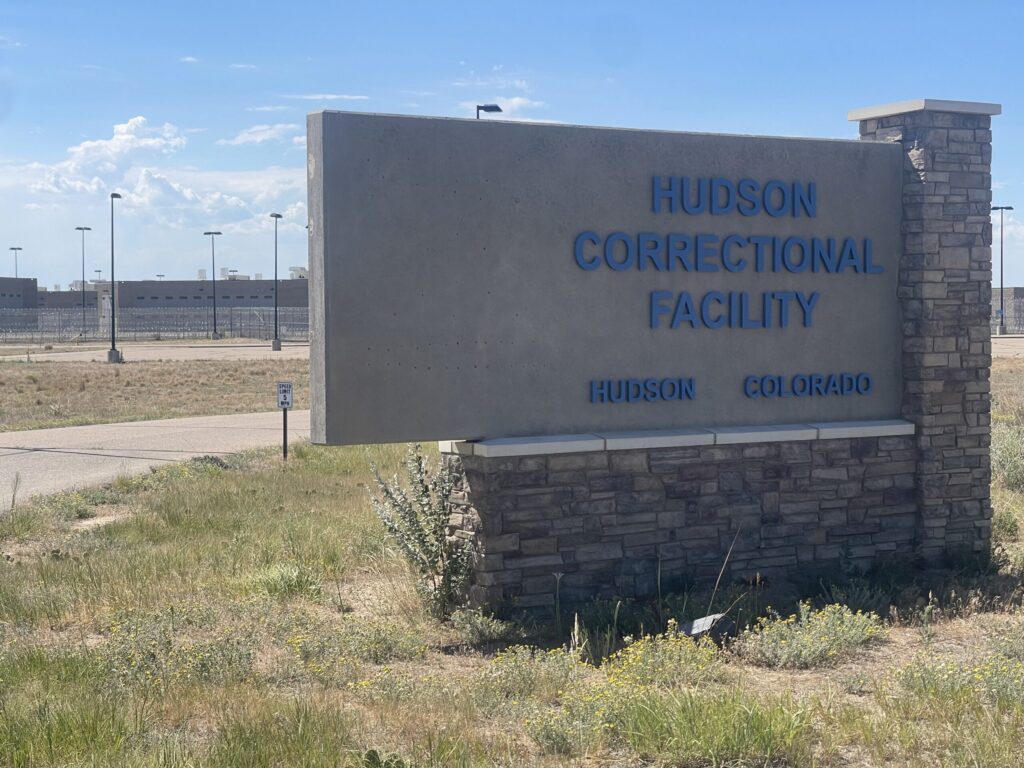
Hudson faces lawsuit over ICE detention facility
Nicole C. Brambila
nicole-c-brambila@coloradopolitics.com
Updated 4 days ago
A nonprofit organization filed a lawsuit against the Town of Hudson Wednesday, challenging plans to reopen a former federal prison in the town as a U.S. Immigration and Customs Enforcement detention facility. Together Colorado, along with Janet E. Carlson, filed...
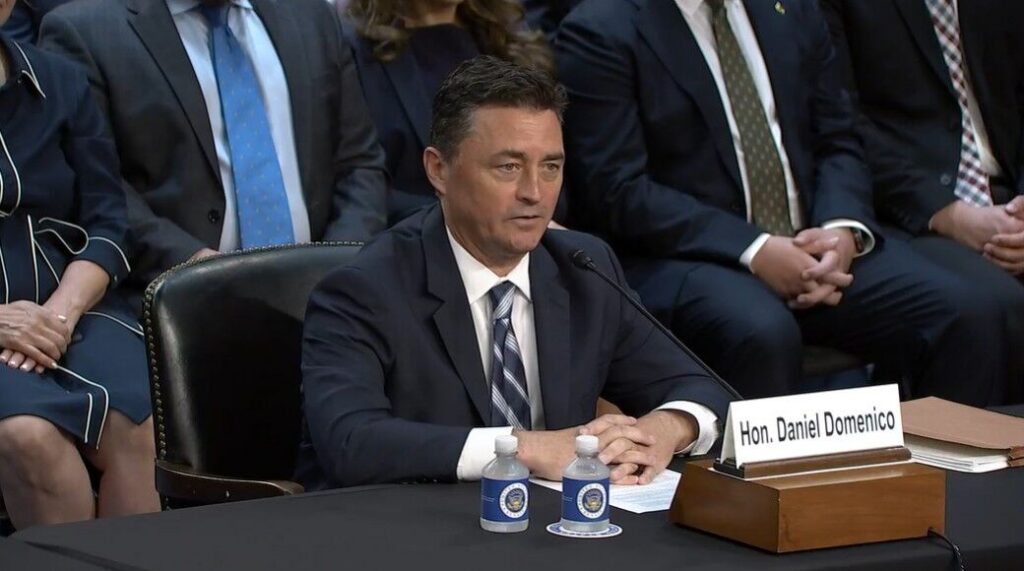
Senate committee advances Trump’s 10th Circuit nominee, as Domenico responds to questions about delays
Michael Karlik
michael.karlik@coloradopolitics.com
Updated 4 days ago
The U.S. Senate Judiciary Committee advanced President Donald Trump’s nominee to the Denver-based federal appeals court on Thursday by a party-line vote of 12-10. U.S. District Court Judge Daniel D. Domenico, who was Trump’s first-term appointee to Colorado’s federal trial...
Colorado justices to hear embryonic donation dispute
Michael Karlik
michael.karlik@coloradopolitics.com
Updated 4 days ago
The Colorado Supreme Court announced on Monday that it will decide whether lower court judges properly applied its framework for adjudicating disputes over the fate of pre-embryos, in which one person wants to use them to become a parent and...
Isolation, emotion, persona: Colorado judicial programming prepares people for life on the bench
Michael Karlik
michael.karlik@coloradopolitics.com
Updated 4 days ago
As a trial judge and now as a member of the Colorado Supreme Court, Justice Carlos A. Samour Jr. has heard the view that being a judge is isolating. “In neither court have I felt isolated. I’ve always interacted a...
PREV
PREVIOUS

Denver on track to spend almost $40 million on influx of immigrants, analysis says
The influx of immigrants to Denver has now cost the city more than $29 million, and an independent analysis says the city is on track to spend almost $40 million by the end of the year. That scenario could mean crowding out the city’s financial priorities or compel the local government to increasing its operational […]

Judge blocks Colorado from enforcing non-discrimination policy against Christian preschool
A federal judge has blocked the state from “expelling, punishing, withholding funds from, or otherwise disciplining” a Christian preschool in Chaffee County, even though its policies appear to violate the non-discrimination requirements of Colorado’s universal pre-K program. U.S. District Court Judge Daniel D. Domenico last week granted Darren Patterson Christian Academy a preliminary injunction based […]