

Denver judge wrongly barred witness testimony, appeals court rules in reversing 64-year sentence

A Denver judge incorrectly blocked a key witness from testifying at a man’s trial, prompting Colorado’s second-highest court to overturn the defendant’s convictions and 64-year prison sentence last week.
Jurors convicted Amos Rogers in 2020 of assaulting a police officer, drug possession and carrying a prohibited large-capacity gun magazine, among other offenses. Rogers did not dispute that he pointed a semiautomatic pistol at an officer, but he defended himself at trial by claiming he was involuntarily intoxicated.
Specifically, Amos’ friend allegedly put LSD into his drink, which caused him to hallucinate.
However, Amos’ jurors never got a chance to hear from the friend, as then-District Court Judge Edward D. Bronfin barred the witness from taking the stand. The man intended to invoke his Fifth Amendment right against self-incrimination in response to questioning, as drugging Amos may have amounted to a crime itself.
But a three-judge panel of the Court of Appeals deemed Bronfin’s decision a mistake, and an obvious one at the time. Amos’ trial took place four years after his arrest – beyond the statute of limitations for his friend’s potential crime. Therefore, there was no reason to invoke the Fifth Amendment and no reason to block the testimony.
“Moreover, no one but (the friend) could have identified the amount of LSD Rogers allegedly ingested – a detail that would have been crucial to determining whether Rogers was so incapacitated by LSD that he could not be criminally culpable for his actions,” wrote Judge Matthew D. Grove in the panel’s Oct. 5 opinion.
Case: People v. Rogers
Decided: October 5, 2023
Jurisdiction: Denver
Ruling: 3-0
Judges: Matthew D. Grove (author)
Anthony J. Navarro
Alex J. Martinez
In April 2016, Rogers and his friend went to a house where some people were partying. At one point, someone brought him a drink. After departing with a woman, Rogers began to hallucinate. The woman left Rogers with a backpack with a gun inside and, for reasons he could not recall, he wound up near South Broadway in Denver the next day.
An officer responded to a 911 call of suspicious behavior, only to see Rogers point a semiautomatic pistol at him and appear to pull the trigger. The gun did not fire and Rogers eventually surrendered. Police recovered two guns and methamphetamine from Rogers.
Rogers did not stand trial until four years later. He testified that his friend had dropped acid in his drink and at the time Rogers encountered the officer, he believed a “spaceship” was chasing him and “lizard people” were saying they would eat him.
The defense attempted to call Rogers’ friend to testify. The friend allegedly had admitted to a defense investigator that he did put LSD in Rogers’ drink.
Concerned about the friend’s Fifth Amendment right against self-incrimination, the prosecution asked Bronfin to appoint an attorney to advise him. Outside the jury’s presence, the friend then declined to answer questions about giving Rogers LSD.
Because the friend could face criminal charges and was exercising his constitutional right not to testify, Bronfin ruled the man need not take the witness stand at all.
On appeal, Rogers argued there was no need to shield the friend from testifying, as he could not possibly face charges due to the statute of limitations. The prosecution countered that even if a mistake happened, no one objected at the time so the problem was not obvious.
The appellate panel concluded the mistake was both obvious and likely affected the jury’s verdict.
“It was undisputed that Rogers was heavily intoxicated when he was arrested, but,” wrote Grove, “the source of that intoxication was the linchpin of his defense.”
Rogers was unable to question the friend about his admission to drugging Rogers’ drink. Consequently, the jury never heard the “powerful evidence” supporting Rogers’ claim of involuntary intoxication, Grove concluded.
The panel reversed the convictions.
The case is People v. Rogers.


Colorado Supreme Court intervenes in 3 ongoing cases
Michael Karlik
michael.karlik@coloradopolitics.com
Updated 6 hours ago
The Colorado Supreme Court recently intervened in the prosecution of a juvenile defendant and will decide whether he is entitled to have prosecutors demonstrate probable cause at a hearing after a grand jury already determined probable cause existed. The justices...
Appeals court clarifies meaning of ‘at-risk’ victim based on breathing disability
Michael Karlik
michael.karlik@coloradopolitics.com
Updated 14 hours ago
Colorado’s second-highest court clarified last month that victims qualify as “at-risk” under state law if they required mechanical assistance to breathe on the date of the offense against them. El Paso County prosecutors charged Jon Claude Crow with third-degree assault,...
Ex-attorney cannot remain anonymous while suing Colorado judicial branch, says 10th Circuit
Michael Karlik
michael.karlik@coloradopolitics.com
Updated 1 day ago
The Denver-based federal appeals court concluded last month that a former attorney cannot mask her identity while suing the Colorado Judicial Department for alleged improprieties in her disability and disbarment proceedings. “Jane Roe,” representing herself, sued the Judicial Department and...
Appeals court reverses convictions after judge blocked defendant’s character witnesses
Michael Karlik
michael.karlik@coloradopolitics.com
Updated 2 days ago
Colorado’s second-highest court reversed a defendant’s convictions for forgery and attempting to influence a public servant last month because a Boulder County judge improperly blocked him from calling witnesses who could testify about his truthfulness. A three-judge Court of Appeals...
Colorado Supreme Court accepts child neglect, unlawful search appeals
Michael Karlik
michael.karlik@coloradopolitics.com
Updated 1 day ago
The Colorado Supreme Court recently announced that it will decide whether a series of missteps led an El Paso County judge to improperly terminate a father’s parental rights, and whether a police officer defendant bears the burden of proving that...

Colorado Attorney General sues HUD over changes to homeless funding
Matt Kyle
matt.kyle@denvergazette.com
Updated 2 days ago
Colorado Attorney General Phil Weiser on Tuesday joined the attorneys general of several other states to sue the federal government over an attempt to cap funding for permanent housing projects. The change would result in tens of thousands of people...

10th Circuit upholds dismissal of ex-Teller County fire chief’s First Amendment lawsuit
Michael Karlik
michael.karlik@coloradopolitics.com
Updated 1 day ago
The Denver-based federal appeals court agreed on Tuesday that the former chief of the Florissant Fire Protection District could not prevail on the claim that his 2023 firing was retaliation for his First Amendment-protected activity. Erik Holt alleged the Teller...

10th Circuit agrees Colorado Springs paramedic, officer not liable for constitutional violations in man’s death
Michael Karlik
michael.karlik@coloradopolitics.com
Updated 2 days ago
The Denver-based federal appeals court decided on Monday that a Colorado Springs paramedic and police officer could not be held liable for constitutional violations for their roles in restraining a man in a mental health crisis, leading to his death....
Prosecutor plans to enter physical abuse evidence in Barry Morphew murder trial
Carol McKinley, Special to The Denver Gazette
carol.mckinley@gazette.com
Updated 3 days ago
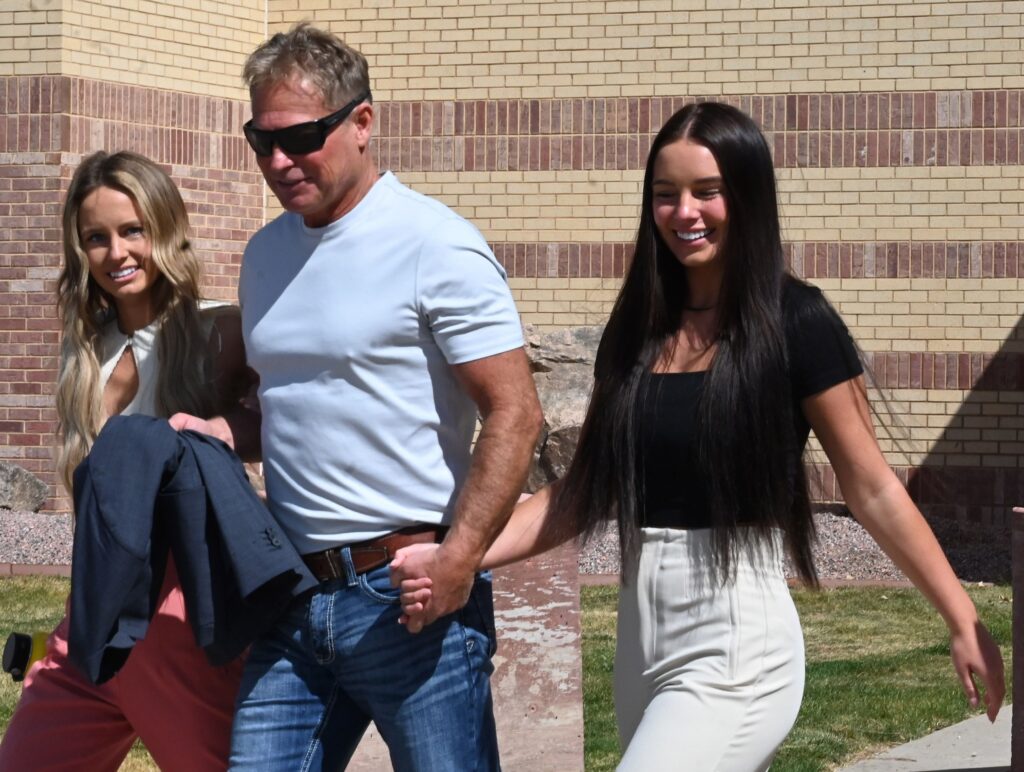
The prosecutor in the Barry Morphew murder trial told a judge on Monday that she plans to introduce evidence of physical abuse in the couple’s marriage, which ended when Suzanne Morphew disappeared on Mother’s Day in 2020. Morphew has been...
10th Circuit revives Colorado voter intimidation lawsuit due to judge’s error
Michael Karlik
michael.karlik@coloradopolitics.com
Updated 3 days ago
The Denver-based federal appeals court on Monday reversed a trial judge’s finding that the leaders of an “election integrity” effort had not illegally intimidated Colorado voters through an organized door-to-door canvassing project to search for election fraud in the wake...
PREV
PREVIOUS
10th Circuit agrees ex-Cherry Creek schools teacher failed to prove discrimination
The federal appeals court based in Denver agreed last month that the Cherry Creek School District ended the contract of a veteran elementary school teacher because of her performance, not because she expressed discomfort with racial equity trainings. Leslie Shannon, who is Black and Native American, came to Highline Community Elementary School in 2016 after many […]

Return to Nature Funeral Home investigation: Remains transferred to El Paso, Douglas counties
The El Paso County Coroner’s Office confirmed its involvement as officials continue to work the scene of the Return to Nature Funeral Home, where at least 115 bodies were discovered improperly stored Oct. 4, according to Tuesday morning news release. El Paso County Coroner Dr. Leon Kelly released a statement confirming remains from the scene […]