

Coloradans should cheer as SCOTUS reaffirms Constitution | SENGENBERGER
Last Friday, the U.S. Supreme Court (SCOTUS) wrapped up its 2022-2023 term with a series of landmark decisions concerning crucial, controversial and significant issues. Overall, the Court signaled its intent to reaffirm the U.S. Constitution and its limits on government – bucking a century-long trend of permitting unconstitutional growth in government power and overreach.
This isn’t the same as a sharp jolt to the right, however. “Both the right and the left won some important victories in the Supreme Court this year,” Ilya Somin, a law professor at George Mason University, told me on 710KNUS radio Monday. “Perhaps more importantly, with one or two exceptions, the Supreme Court got all the big cases right – which is, to my mind, more important than whether the right won or the left won.”
The political left won key election and immigration cases, among others. Yet, on the big-ticket cases where the right was victorious, SCOTUS clearly made the right calls – especially on the cases regarding President Joe Biden’s student loan forgiveness scheme and the free speech rights of artists and businessowners in Colorado.
Let’s start with the student loan case of Biden v. Nebraska, concerning Biden’s plan to grant up to $20,000 in student loan cancellation per borrower. An estimated 20 million student loan debtors would have their slates wiped clean altogether. This would actually have worsened the student loan and higher education cost crises while costing at least $430 billion – all because the executive branch did it unilaterally.
Stay up to speed: Sign-up for daily opinion in your inbox Monday-Friday
Congress passed no law granting forgiveness for student loan borrowers, so the Biden administration attempted to use the HEROES Act of 2003 as a basis.
“I think the court’s decision to strike down my student loan program was a mistake, was wrong,” Biden told reporters. “I think the court misinterpreted the Constitution.”
On the contrary, by ruling on two issues – the law (HEROES Act) and the Constitution – the Court got it precisely right.
First, as Somin explains, SCOTUS “ruled that what Biden did went far beyond the power that was delegated to him by that Act. Forgiving $430 billion of student loans goes way beyond what the terms ‘waive or modify’ allow.” The law provided emergency powers for narrow circumstances, but Biden “abus(ed) emergency powers as leverage for a massive policy change the president couldn’t get through Congress.”
Somin points out – as I’ve written about before concerning Sen. Michael Bennet – this is precisely the kind of thing then-President Donald Trump did in using a national emergency declaration to divert funds for his border wall. “But the amount of money here is 40 times greater, approximately, than what Trump did,” he said, calling it “Trumpian tactics on a much larger scale than even Trump himself did.”
The Court affirmed the power of the purse belongs to Congress – not the president. If the president intends to spend money, it must be authorized by Congress. “In this case, he had nowhere near the level of authorization needed to spend on such a massive, enormous scale,” Somin said.
Let’s be clear: On both the law Biden used to justify his actions as well as the Constitution, the Supreme Court properly struck it down in a 6-3 vote.
On the same day SCOTUS ruled against Biden on student loans, they voted 6-3 to uphold freedom of speech in the Colorado-based case of 303 Creative v. Elenis. This involved Lorie Smith, a web and graphic design artist and founder of 303 Creative in Denver (I’ve previously interviewed Smith).
Colorado’s “Anti-Discrimination Act” could compel Smith to create projects conflicting with her personal beliefs by prohibiting her from refusing customer requests, such as designing same-sex wedding websites – thereby violating her First Amendment right to artistic expression. Smith and her attorneys from Alliance Defending Freedom preemptively sued the state of Colorado.
“Colorado seeks to force an individual to speak in ways that align with its views but defy her conscience about a matter of major significance,” Colorado’s own Justice Neil Gorsuch wrote for the majority. This is noteworthy since Gorsuch previously ticked off conservatives in the Bostock decision expanding employment protections based on sexual orientation and gender identity.
“As this Court has long held,” Gorsuch continued, “the opportunity to think for ourselves and to express those thoughts freely is among our most cherished liberties and part of what keeps our Republic strong.”
Somin agreed. “I think there’s a long history of Supreme Court precedent which shows that you cannot compel people to speak messages that they object to,” he said. “I’ve been a longtime supporter of same-sex marriage since long before it was popular, but, as the saying goes, freedom of speech must be freedom of speech for the thought that we hate, otherwise it doesn’t work effectively at all.”
Importantly, the Court’s decision only applies in situations where the service is “expressive,” not in purely transactional situations like selling a car or renting out an apartment. The hair-on-fire reactions literally are overblown.
Compelled speech is not free speech. This case was an unequivocal win for liberty – not the contraction of gay rights claimed by opponents.
The U.S. Supreme Court decided a lot more than just these two cases, yet both are prime demonstrations of a court guided more by Constitutional limits on government power than we’ve seen in decades. For that, every Coloradan should cheer.
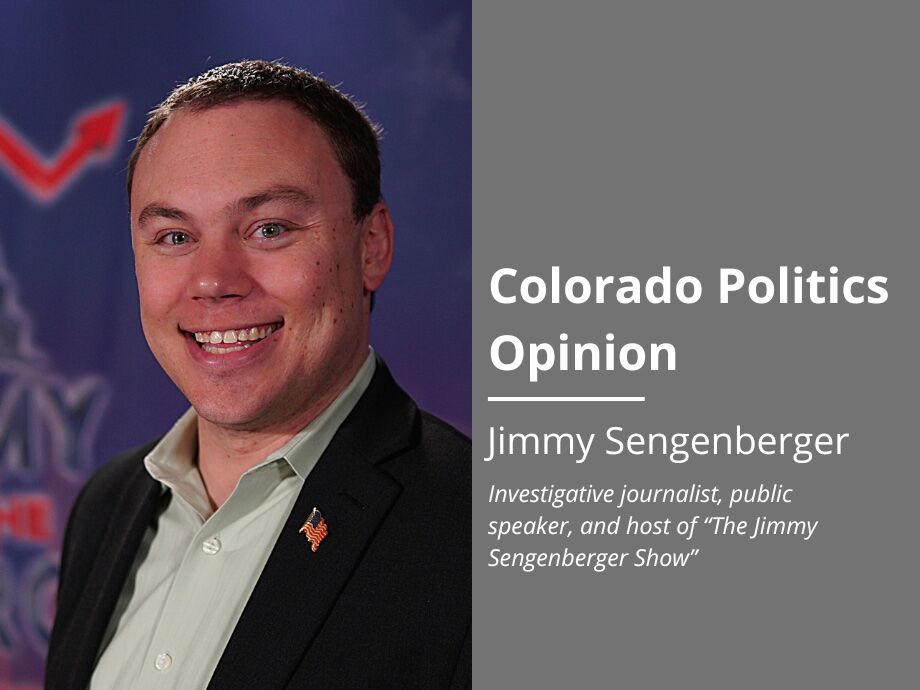
Jimmy Sengenberger is an investigative journalist, public speaker, and host of “The Jimmy Sengenberger Show” Saturdays from 6 a.m. to 9 a.m. on News/Talk 710 KNUS. Reach Jimmy online at JimmySengenberger.com or on Twitter @SengCenter.

Pueblo board violates Open Meetings Law | Dennis Maes
Dennis Maes
dennis-maes@coloradopolitics.com
Updated 15 hours ago
By Dennis Maes I recently witnessed two serious violations of the Colorado Open Meetings Law by the Pueblo Urban Renewal Authority (PURA) board. Both were brought to the attention of the board in an open meeting and entered on the...
Legislation would undermine educational opportunity | OPINION
Colorado Politics
colorado-politics@coloradopolitics.com
Updated 1 day ago
By Norton Rainey and Weston Kurz New legislation under consideration by Colorado lawmakers could have far-reaching consequences for Colorado students and families looking for new educational options. HB26-1292, currently under consideration by the Colorado General Assembly, would severely limit the...

Medicaid cuts for critical care hurts providers, reduces access to the best care for patients | OPINION
Colorado Politics
colorado-politics@coloradopolitics.com
Updated 1 day ago
By Gurdev Rai This year, the legislative session started with one thing on everyone’s minds: the state budget, and the major hole created by Congress’ HR 1 law. Costs, including for health care, have ballooned across the board, and we...
Not-so-public comment in Douglas County | Paula Noonan
Paula Noonan
paula-noonan@coloradopolitics.com
Updated 2 days ago
Let’s do some high and low history. First, the high history. England’s King George III didn’t like the complaining he heard from the American colonies, so he went to war to shut the people up. President Donald Trump doesn’t like...
Why Colorado should stop charging swipe fees on sales taxes | OPINION
Colorado Politics
colorado-politics@coloradopolitics.com
Updated 2 days ago
By William Lindstedt, Iman Jodeh, Julie McCluskie and Monica Duran Small businesses across Colorado are working harder than ever right now to keep their doors open, hire local workers and serve their communities. But every day, they are forced to...

Colorado can be a gamechanger in regulating GLP-1 weight loss drugs | OPINION
Colorado Politics
colorado-politics@coloradopolitics.com
Updated 2 days ago
By Nancy Glick “As goes California, so goes the nation” is a phrase reflecting California’s reputation as a bellwether in setting regulations that often become a precedent for national policy. Now, Colorado can play this role, setting new safety standards...
Colorado can be a gamechanger in regulating GLP-1 weight loss drugs | OPINION
Colorado Politics
colorado-politics@coloradopolitics.com
Updated 2 days ago
By Nancy Glick “As goes California, so goes the nation” is a phrase reflecting California’s reputation as a bellwether in setting regulations that often become a precedent for national policy. Now, Colorado can play this role, setting new safety standards...

The public health hazards in sports betting | PODIUM
Colorado Politics
colorado-politics@coloradopolitics.com
Updated 2 days ago
By Brandon Zelasko As Colorado lawmakers revisit sports betting policy this session, the state has an opportunity to widen the lens. Beyond revenue projections and regulatory frameworks lies a critical question: Are we fully reckoning with the human effect of...
Colorado’s public lands are not for sale | OPINION
Colorado Politics
colorado-politics@coloradopolitics.com
Updated 3 days ago
By Jonathan Houck Our state is defined by its public land. It shapes our communities, our economy and our Colorado way of life. Just driving through Gunnison County, where I have lived for more than 30 years, sometimes I can’t...

The real impact of regulations on businesses, employees and Colorado’s way of life | OPINION
Colorado Politics
colorado-politics@coloradopolitics.com
Updated 4 days ago
By Loren Furman and Steve Swinney Every day in Colorado, business owners are faced with decisions most people never see, shaped by rising costs and a regulatory environment that has grown more complex over time. Those choices eventually reveal themselves...
PREV
PREVIOUS
Why representation in higher ed is vital to us all | NOONAN
Paula Noonan The Supreme Court’s decision to take affirmative action off the table for college admission decisions was expected. Affirmative action helped relieve the original stain of slavery and the numerous other insults to people, democracy, equality and opportunity for all, but its basis was insecure from the get-go. There’s another way to achieve some […]
Weiser deserves scrutiny in wake of SCOTUS session | BRAUCHLER
George Brauchler You could be forgiven if you thought Colorado Attorney General Phil Weiser played for our Rockies. Last week with the Supreme Court of the United States (SCOTUS) was a particular disaster, but the former law school dean’s performance throughout the entire SCOTUS session seems better suited to Coors Field than a courtroom – […]