

Not-so-public comment in Douglas County | Paula Noonan
Let’s do some high and low history. First, the high history. England’s King George III didn’t like the complaining he heard from the American colonies, so he went to war to shut the people up. President Donald Trump doesn’t like to hear from the U.S. Congress when he can have his own way without their input or any other elected officials’ official input. So we’re in another Middle East War.
Now to the low history: Douglas County Commissioners Abe Laydon, George Teal, and Kevin Van Winkle don’t like to hear from Dougco’s residents. A couple of years ago Teal and Laydon pushed public comment to the end of the county’s business agenda and often, conveniently, ran out of time, leaving testifiers in the lurch. Now these two commissioners plus their newish chum Van Winkle have completely eliminated public comment on non-agenda topics.
According to former legislator and current commissioner Van Winkle, the public gets plenty of opportunity to comment on items up for a vote. In his recent newsletter he avers that “everyone who wishes to be heard has the opportunity to do so “relative to the business at hand.” He adds, “What has changed is we have moved the prior ‘open topic’ segment at the end of our business meetings to the more appropriate setting of town hall meetings. That’s it. We focus on business during business meetings and facilitate open comment during meetings where official business does not and cannot occur.” In this way, the public’s comments are never “official” or on the record.
Lora Thomas is a former Dougco county commissioner who objected to deflecting public comment when she was on the county commission board. She gives a civics lesson in her always entertaining newsletter. Confining public comment to official legislative agenda items, she says, eliminates the public’s opportunity to address commissioner’s official executive actions.
Two Dougco state House representatives from different parties, Bob Marshall, D-HD43, and Brandi Bradley, R-HD39, wrote a letter to the commissioners objecting to their removal of public comment from official business meetings. The state representatives agree “public comment is not a mere procedural formality. It is a core component of transparent government and a vital safeguard against the perception that decisions are made without public accountability.”
Bradley faces a GOP primary challenge from Deborah Mulvey that is uncommon for an incumbent’s seat. Bradley is a transparency hawk and public engagement enthusiast. She called out GOP Rep. Ron Weinberg for misusing campaign funds, sexual harassment and unauthorized entry into fellow legislators’ offices. These assertions will receive further examination by the House Ethics Committee and the Secretary of State. Voters may strongly disagree with Bradley’s very conservative political stands on social issues but she’s stand-up on these transparency concerns.
As further proof of the current commissioners’ disregard for public process and transparency, they recently disregarded the appointment process to the Dougco library board. The library board needed a new member. An open application period ensued with 10 applicants receiving interviews. Three candidates were recommended to the commissioners who tossed out the list to appoint an unvetted person who apparently had commissioner connections.
The commissioners’ anti-official public comment decision is now at odds with the City of Aurora’s very recent settlement of a federal court case over public comment rules at city council meetings. The city council, disturbed by disturbing comments, moved its meetings to online and eliminated public comment. That decision is now turned on its head. Its agreement with the plaintiff requires in-person council sessions and one hour of public comment at three minutes per commenter.
Court cases on these and similar issues have become common. Rep. Marshall will no doubt attend an appeal of his court case against the Dougco commissioners related to the state’s Open Meetings Act. The appeal is scheduled for March 10. The case relates to Marshall’s assertion of inadequate notice of the business meeting during which commissioners voted to put a “local control” initiative on the ballot in a special election. Voters apparently agreed with Marshall local control for these three men was not a good idea as they defeated the measure with a 70% NO vote.
Marshall is a dogged critic of the current Dougco board. He is sponsoring legislation to allow county voters to decide every 10 years whether to have a five-commission board with three districts and two at-large members or a three-commission board with district-only commissioners. HB26-1203, Modifications of County Commission Elections, passed its first committee hearing.
This controversial bill kicks up lots of issues related to allocation of seats at the table. The bill particularly affects large counties with populations over 70,000 individuals. Dougco is in this group.
The bill’s premise is county board composition with three members elected by all county voters diminishes minority party opportunity to control at least one seat. When commissioners must represent a district or when there are five commissioners, minority party voters have a greater chance for representation. From Marshall’s perspective, Dougco is the poster child for support of his bill.
This year is the fourth time this bill has come up. Passage is uncertain.
Paula Noonan owns Colorado Capitol Watch, the state’s premier legislature tracking platform.

Colorado joins lawsuit challenging changes to Endangered Species Act
Marissa Ventrelli
marissa.ventrelli@coloradopolitics.com
Updated 2 hours ago
Colorado once more joined a coalition of states challenging the Trump administration — this time on proposed rules regarding the Endangered Species Act. The pair of lawsuits challenge new rules made under Interior Secretary Doug Burgum, who earlier said the...
Boebert challenger Eileen Laubacher says she’ll ‘break through the noise’ in Democrat’s 1st TV ad
Ernest Luning
ernest.luning@coloradopolitics.com
Updated 59 minutes ago
Democratic congressional candidate Eileen Laubacher says she’ll take a different approach than her opponent in a campaign ad released Wednesday that opens with a cacophonous series of videos featuring Republican U.S. Rep. Lauren Boebert. “Eileen’s had enough of the noise...
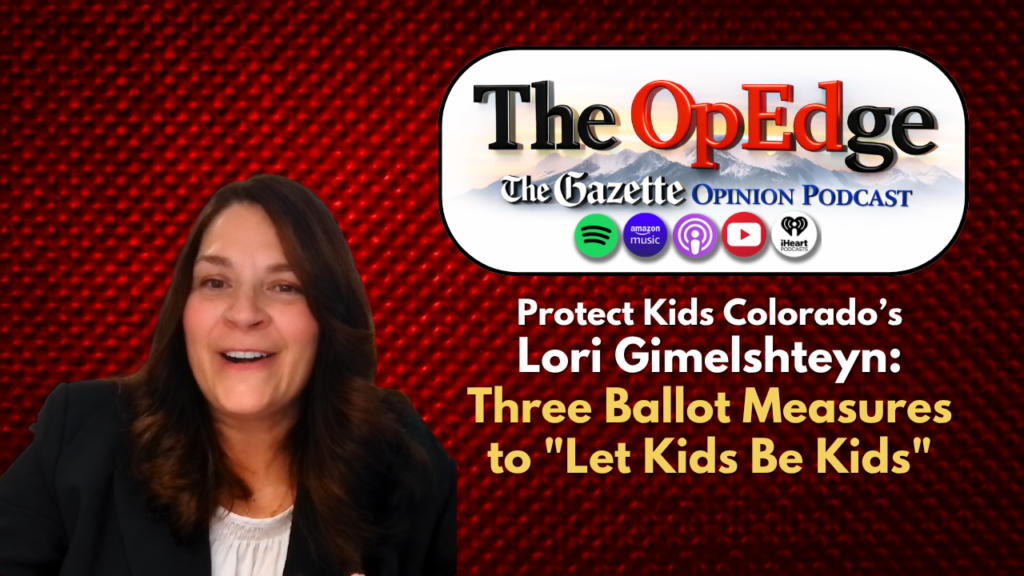
Lori Gimelshteyn on 3 ballot measures to ‘let kids be kids’ | The OpEdge Podcast
Tony Olivero
tony.olivero@gazette.com
Updated 6 hours ago
Lori Gimelshteyn — board member of Protect Kids Colorado and executive director of the Colorado Parent Advocacy Network — joins The OpEdge to discuss three measures headed to Colorado voters this November. Gimelshteyn tells host and investigative columnist Jimmy Sengenberger...
A path toward justice and public safety | PODIUM
Anthony Hartsook
ahartsockop@gmail.com
Updated 20 hours ago
Strangulation can be one of the most dangerous forms of assault; despite the lack of visible ailments it is accompanied by. Though strangulation leaves no broken bones, bruises or visible wounds, it is one of the strongest predictors of future...
From moving people to managing them | GUEST COLUMN
Michael Hancock
michael-hancock@coloradopolitics.com
Updated 21 hours ago
Transportation policy used to have a fairly uncomplicated purpose: move people safely, efficiently and reliably. Build roads where people drive. Maintain bridges before they fail. Add capacity where growth overwhelms the system. Provide transit where it makes sense. Infrastructure was...
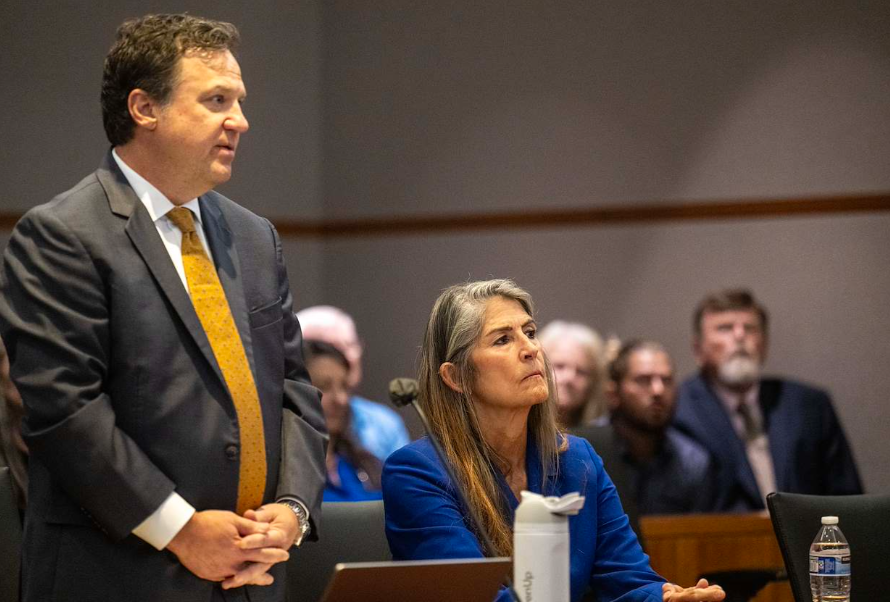
Disgraced ex-CBI analyst Missy Woods sentenced to prison in DNA scandal
Jenny Deam
jenny.deam@gazette.com
Updated 1 day ago
A Jefferson County district court judge on Tuesday sentenced a disgraced former Colorado Bureau of Investigation DNA analyst to a decade in prison for altering and deleting data in scores of criminal cases over several years. Jefferson County District Judge...
Jason Crow endorses Democrats up and down Colorado’s ballot, chips in $100K for campaign efforts
Ernest Luning
ernest.luning@coloradopolitics.com
Updated 1 day ago
Democratic U.S. Rep. Jason Crow on Tuesday formally endorsed more than 60 Democrats running up and down Colorado’s ballot and said he’s putting $100,000 into statewide and county campaigns and organizing programs to drive turnout in the fall election. Crow,...
Trumpicans thumb their nose at the Constitution | Hal Bidlack
Hal Bidlack
hal-bidlack@coloradopolitics.com
Updated 2 days ago
As is all too often the case, there are again too many interesting things appearing in Colorado Politics for me to comment on all of them. So let me tell you what I won’t be talking about before I get...

CoComandering? | Miller Hudson
Miller Hudson
miller-hudson@coloradopolitics.com
Updated 3 days ago
At 8 a.m., Friday morning, Aug. 28, 70 or 80 mostly bleary-eyed visitors to the Transportation Technology Center outside Pueblo packed a conference room to attend the Front Range Passenger Rail District’s (FRPRD) Board meeting. With the exception of those...
Even Dem court couldn’t abide theft of GOP seats | Dick Wadhams
Dick Wadhams
dick-wadhams@coloradopolitics.com
Updated 3 days ago
Thanks to the Colorado Supreme Court, Colorado voters will be able to reaffirm their support for the Independent Congressional Redistricting Commission after the court struck down the Democratic scheme to steal three Republican congressional seats. Billionaire-funded national Democratic groups from...
PREV
PREVIOUS
Why Colorado should stop charging swipe fees on sales taxes | OPINION
By William Lindstedt, Iman Jodeh, Julie McCluskie and Monica Duran Small businesses across Colorado are working harder than ever right now to keep their doors open, hire local workers and serve their communities. But every day, they are forced to pay costly, hidden fees on money that was never theirs to begin with. It’s time […]

Colorado legislators eye changes to credit card 'swipe fees'
Colorado legislators are proposing to eliminate “swipe fees” on sales taxes, a move that proponents say would save businesses tens of thousands of dollars a year but which will likely revive counter-arguments that those fees help create a stable and environment for financial transactions. Also known as interchange fees, swipe fees refer to the 2% […]