

Legislation would undermine educational opportunity | OPINION

By Norton Rainey and Weston Kurz
New legislation under consideration by Colorado lawmakers could have far-reaching consequences for Colorado students and families looking for new educational options.
HB26-1292, currently under consideration by the Colorado General Assembly, would severely limit the ability of nonpublic schools — particularly faith-based schools — to participate in the new Education Freedom Tax Credit created by Congress in 2025.
This program would provide federal income tax credits for taxpayers who donate to nonprofit scholarship-granting organizations providing educational scholarships to students in states that choose to participate in the program. These scholarships can be used by both public and private school students. Gov. Jared Polis has indicated he intends to opt Colorado into participation in the program.
HB-1292 would impose new regulations related to admissions and hiring at private schools that go far beyond those required by current state or federal law. These regulations are extensive and would, in many cases, require faith-based schools to violate their sincerely held religious beliefs.
The bill also creates requirements related to special needs services that are financially infeasible for most private schools because they lack the enormous budgets or guaranteed resources of public school districts to properly serve those students’ needs.
The result of these requirements? The vast majority of private schools in Colorado would find themselves stuck between the choice of surrendering their First Amendment rights and assuming potentially catastrophic financial liabilities or forgoing participation in a promising federal program specifically designed to help students access new educational options — public or private. In practice, this means most private schools in Colorado would be effectively excluded from participation in the program.
Excluding private schools means fewer options for students, fewer opportunities for families, and a direct undercutting of the purpose of the federal scholarship program itself. That exclusion would not punish institutions. It would punish families. Colorado kids would lose millions of dollars in federally supported education funding that comes at zero cost for the state.
The Education Freedom Tax Credit was designed to expand access to education, not limit it. Its purpose is straightforward: harness the power of charitable contributions to fund scholarships that empower families to choose the learning environment that best meets their child’s needs. Colorado is home to a diverse education ecosystem that includes district schools, charter schools, private schools and faith-based schools. Families seek out these options for many reasons: specialized learning environments, academic rigor, values-based education, safety, smaller class sizes, or mission-driven communities.
HB26-1292 would narrow that ecosystem.
For thousands of low- and middle-income Colorado students, scholarship access may be the only way to attend a school that meets their academic, cultural, or spiritual needs. Restricting participation means restricting opportunity. It denies families access to the full range of Colorado’s educational landscape — precisely what the federal program was created to provide.
There is also a significant constitutional problem.
Colorado is already entangled in federal litigation over nearly identical issues in its Universal Preschool Program. In Darren Patterson Christian Academy v. Roy and St. Mary Catholic Parish v. Roy, private faith-based providers have challenged the state’s attempt to impose provisions that conflict with their religious beliefs. Those cases are ongoing, and the constitutional questions are serious enough they have found their way to the U.S. Supreme Court.
SCOTUS has repeatedly made clear when states create generally available public benefit programs, they cannot exclude institutions simply because they are religious. In Trinity Lutheran Church v. Comer, the court held religious status cannot be the basis for exclusion from a public benefit. In Espinoza v. Montana Department of Revenue, the court struck down a state effort to bar religious schools from a scholarship program. And in Carson v. Makin, the court reaffirmed states cannot condition participation on the abandonment of religious character.
If enacted, HB26-1292 appears poised to repeat the same constitutional mistake. Colorado taxpayers will foot the bill for years of costly litigation on constitutional issues that have already been settled in other cases. At a time when public resources are scarce and education funding remains a perennial challenge, it is difficult to justify legislation that invites expensive legal battles over questions the Supreme Court has already addressed.
There is yet another legal complication: federal preemption.
The Education Freedom Tax Credit is a federal creation. Final rules and regulations governing its implementation have not yet been issued. By attempting to preemptively regulate this federal program through state law — and potentially impose conditions that conflict with federal rules scheduled to be issued later this year — HB26-1292 risks creating a legal collision between state and federal authority.
In general, when federal and state law conflict, federal law controls. Passing a state statute that may be superseded by forthcoming federal rules creates uncertainty for schools, families, donors and scholarship-granting organizations alike. It also increases the likelihood of further litigation over preemption and statutory priority.
Colorado can do better. This moment should not be about narrowing opportunity or escalating legal conflict. It should be about thoughtful collaboration for the benefit of all Colorado students. Private schools, faith leaders, scholarship organizations, policymakers and families all have a stake in ensuring the Education Freedom Tax Credit is implemented in a way that expands opportunity while respecting constitutional boundaries.
HB26-1292 moves Colorado in the opposite direction.
Colorado lawmakers should step back from this legislative push and instead convene a diverse group of stakeholders — including private schools — to develop a workable path forward. The goal must remain clear: expand opportunity, respect constitutional rights, and ensure Colorado families have access to the full education ecosystem our state has to offer.
Our students deserve nothing less.
Norton Rainey is chief executive officer at ACE Scholarships, Colorado’s largest K-12 nonprofit scholarship-granting organization. Weston Kurz is executive director of the Colorado Association of Private Schools, a statewide association representing both faith-based and non-faith-based nonpublic schools.

Colorado’s role in Spirit Airlines’ demise should not be ignored | GUEST COLUMN
Colorado Politics
colorado-politics@coloradopolitics.com
Updated 5 hours ago
By Robin Rossenfeld At a time when Colorado families are already struggling with rising transportation costs, the collapse of Spirit Airlines could not come at a worse moment. According to the U.S. Bureau of Labor Statistics, prices in the Denver-Aurora-Lakewood...

Unaffiliated voters have a growing influence on Colorado elections, research shows
Marissa Ventrelli
marissa.ventrelli@coloradopolitics.com
Updated 8 hours ago
Unaffiliated voters now make up more than half of Colorado’s registered electorate, and for the first time, more primary ballots are going to voters without a party affiliation than to registered Democrats or Republicans. Colorado began allowing unaffiliated voters to...

Bennet campaign finance case delayed again as Colorado Elections Division amends complaint
Marianne Goodland
marianne.goodland@coloradopolitics.com
Updated 8 hours ago
A campaign‑finance complaint alleging that U.S. Sen. Michael Bennet’s Senate committee improperly paid for travel tied to his gubernatorial bid won’t get a public hearing until after the June 30 primary. The latest development followed months of delays and a...
How would Weiser, Bottoms, Bennet, Kirkmeyer address Colorado’s affordability problem? | Paula Noonan
Paula Noonan
paula-noonan@coloradopolitics.com
Updated 13 hours ago
It’s decision time in Colorado as primary election ballots hit mailboxes this week. Democrats will pick their candidates in every statewide race, and Republicans select candidates for governor and Attorney General. GOP operatives wanted to exclude unaffiliated voters from their...
The new Trustees Report is a wake-up call for Congress | GUEST COLUMN
Colorado Politics
colorado-politics@coloradopolitics.com
Updated 15 hours ago
By Sara Schueneman Every year, the Social Security Trustees Report provides an important snapshot of the long-term outlook for one of America’s most popular and important initiatives. This year’s report sends a clear message: Congress needs to act. The latest...
Flat or graduated income tax? Colorado groups push dueling measures for November election
Marissa Ventrelli
marissa.ventrelli@coloradopolitics.com
Updated 20 hours ago
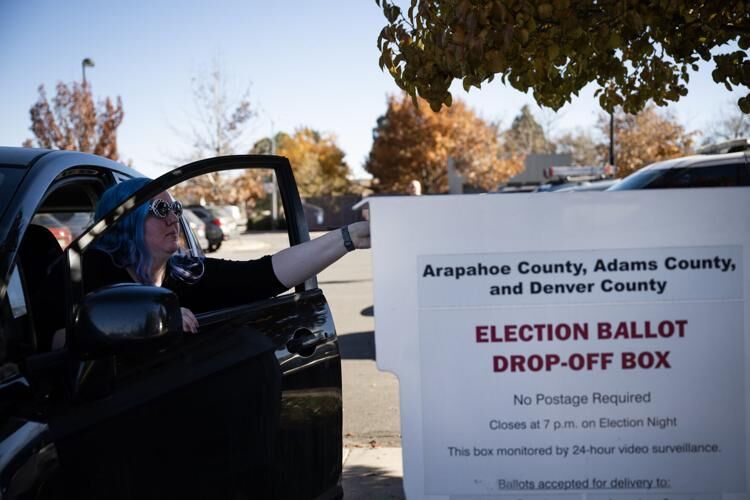
Colorado voters could face two opposing income-tax measures on the November ballot, with the dueling campaigns seeking to advance proposals that would take the state in sharply different fiscal directions. One initiative seeks to replace Colorado’s flat income tax with...

Backers of Colorado road-funding initiative reject withdrawal deadline
Marissa Ventrelli
marissa.ventrelli@coloradopolitics.com
Updated 12 hours ago
The standoff over a road‑funding initiative in Colorado persisted after supporters declined state lawmakers’ request to withdraw the measure, while both sides signaled they are willing to pursue a broader agreement ahead of the fall deadline. Initiative No. 175, backed...
Colorado lupus patients can’t afford ‘most favored nation’ drug pricing | PODIUM
Colorado Politics
colorado-politics@coloradopolitics.com
Updated 14 hours ago
By Kristy Kibler When you live with lupus, you learn quickly waiting is not an option. Lupus is unpredictable: flares can escalate overnight, organs can be damaged quickly, and access to the right treatment at the right time can determine...

Mental Health Colorado names 2026 legislators of the year
Marissa Ventrelli
marissa.ventrelli@coloradopolitics.com
Updated 2 days ago
Six state lawmakers have received recognition from the advocacy organization Mental Health Colorado for their work during the 2026 legislative session. “Mental Health Colorado’s work to pass laws, change practices, and build a movement depends on courageous advocates and bipartisan...
Geo Group sues Colorado over new immigration detention facility inspection law
Marissa Ventrelli
marissa.ventrelli@coloradopolitics.com
Updated 2 days ago
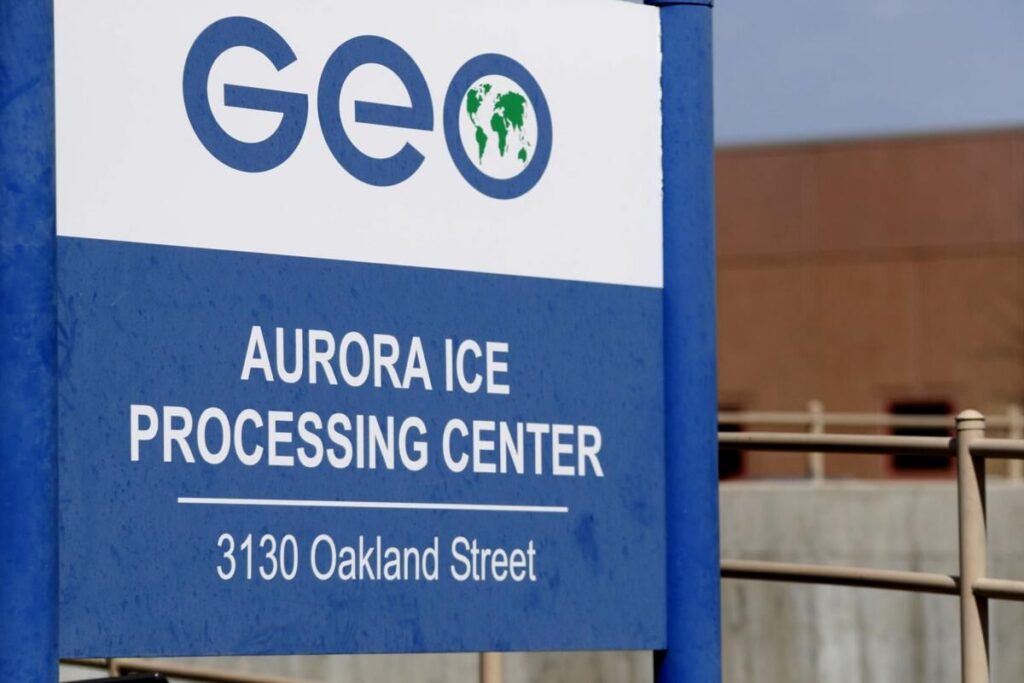
The private prison company that operates the U.S. Immigration and Customs Enforcement center in Aurora has filed a lawsuit against Colorado to stop the enforcement of a new law requiring additional health and safety inspections of immigration detention facilities. The...
PREV
PREVIOUS

Medicaid cuts for critical care hurts providers, reduces access to the best care for patients | OPINION
By Gurdev Rai This year, the legislative session started with one thing on everyone’s minds: the state budget, and the major hole created by Congress’ HR 1 law. Costs, including for health care, have ballooned across the board, and we know state leaders are looking for solutions. However, as a practicing physician, I find it […]

Pueblo board violates Open Meetings Law | Dennis Maes
By Dennis Maes I recently witnessed two serious violations of the Colorado Open Meetings Law by the Pueblo Urban Renewal Authority (PURA) board. Both were brought to the attention of the board in an open meeting and entered on the record. What is astonishing is the intentional violations were initiated by Heather Graham, the mayor […]