

Pueblo board violates Open Meetings Law | Dennis Maes
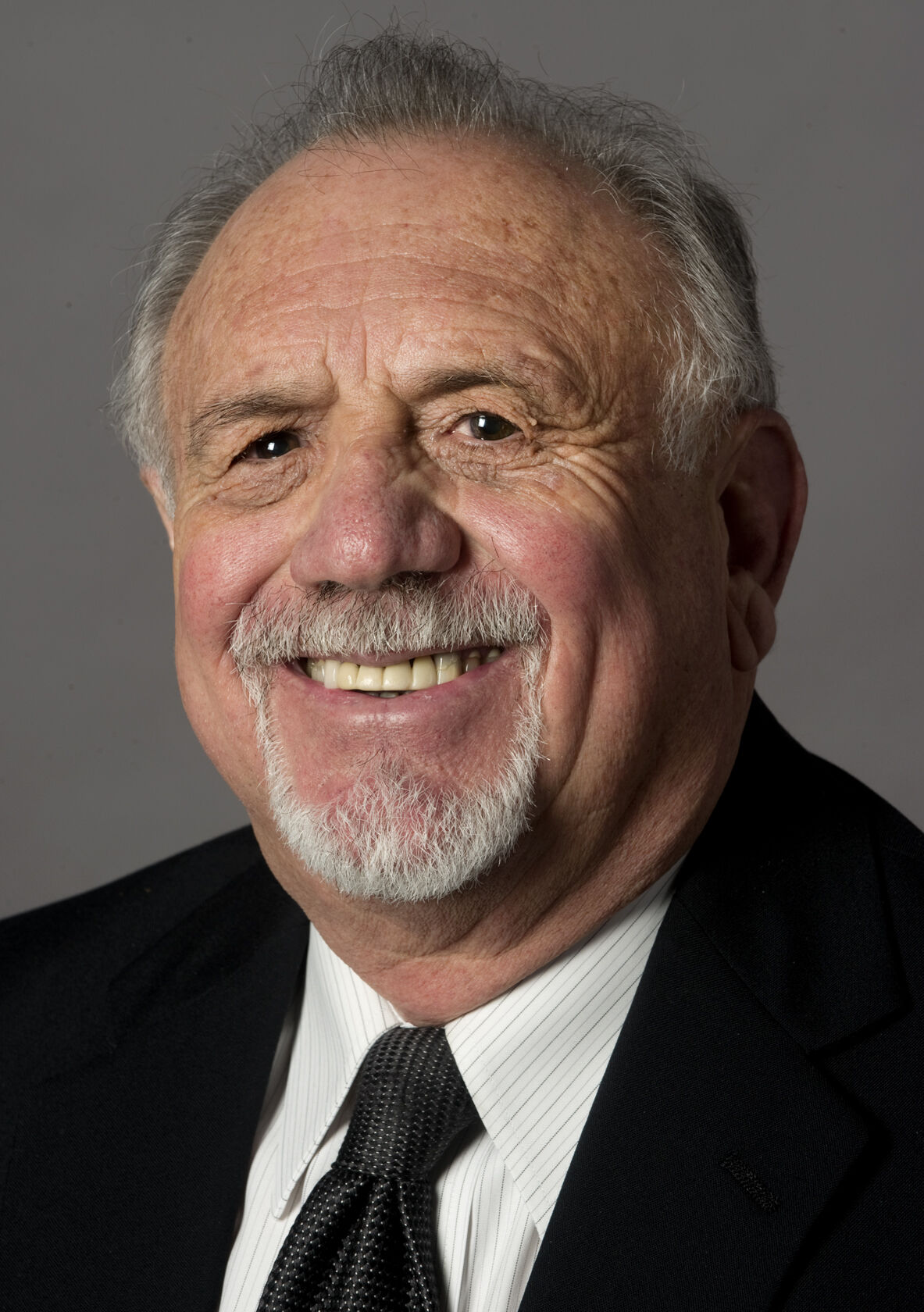
By Dennis Maes
I recently witnessed two serious violations of the Colorado Open Meetings Law by the Pueblo Urban Renewal Authority (PURA) board. Both were brought to the attention of the board in an open meeting and entered on the record.
What is astonishing is the intentional violations were initiated by Heather Graham, the mayor of Pueblo.
Meanwhile, due to the violations, the public has been shut out of what is, by rights, the public’s business. That is the reason we have a state open meeting law — and it is why it is so important all of us public officials comply with it.
I am a member of the Pueblo District 60 Board of Education as well as the board of PURA. I do not have the authority to speak on behalf of either organization and do not do so. I am simply sharing my own observations.
The Colorado Urban Renewal Law was created primarily to authorize the formation of an urban renewal authority (URA) to prevent and eliminate blight in a community. PURA is a local public body subject to the Colorado Open Meetings Law.
The PURA Board of Commissioners is composed of 13 commissioners. Ten of the commissioners are appointed by the mayor and are subject to approval by the Pueblo City Council. One of the appointees may be an official of the municipality. Recently, Mayor Graham appointed herself to be a voting member on the PURA board in her capacity as an official of the municipality.
Two essential requirements for the electorate to have confidence and trust in their elected and appointed public servants are transparency and a belief in and commitment to the rule of law.
The Colorado Open Meetings Law specifically provides, “It is declared to be a matter of statewide concern and the policy of this state that the formation of public policy is public business and may not be conducted in secret.”
Public meetings are defined as “all meetings of a quorum of three or more members of any local public body, whichever is fewer, at which any public business is discussed or at which any formal action may be taken are declared to be public meetings open to the public.”
This past Feb. 10, Graham sent the following email: “Good morning Executive Team and Mrs. Deeg, (the current interim executive director of PURA), as a board member and someone who deals with legal ramifications daily, after our meeting on Tuesday I believe, we may need to look for an alternative to our legal counsel. I found it very troubling that (attorney name redacted) could not give direction when asked on legal procedure and policy questions for something as important and (sic) executive session. This is a very important role, and I am concerned this is not the first time, and I am concerned it will not be the last. I am not sure what needs to happen, but I think a discussion is minimum. Heather Graham, Mayor of Pueblo.”
On the same day, Fallon Miller, treasurer and member of the PURA board responded as follows, “I also voiced this same concern following the meeting on Tuesday. I do believe it is important for the entire board and staff to discuss further on concerns and next steps to make a change with regards to legal counsel.” Miller copied Mrs. Deeg and Jim Valenzuela, board chair on the email. Valenzuela did not engage in the exchange.
Deeg responded, “All. Thank you for this discussion and I will add discussion to the Thursday Feb. 10 agenda regarding legal representation. Cherish”
Graham, Miller and Valenzuela are all members of the PURA board constituting a quorum and public meeting of the board as defined by law. The law requires public notice prior to said meeting.
The required notice was not given, hence, a violation of the Open Meetings Law.
Legal counsel from Denver confirmed on the record that the exchange was, indeed, a violation of the Open Meetings Law.
The exchange was exacerbated by discussing a personnel matter that should have been discussed in executive session rather than subjecting the employee to a public discussion concerning his competence. Common decency required no less.
Equally astonishing that the violation was initiated by the mayor was the cavalier attitude of the commission members toward the violation. Not a single member challenged the participants about their involvement in an illegal act.
When a governmental body acts in violation of the law, the integrity and transparency of each board member is subject to scrutiny. It is my hope my colleagues on the PURA board share the same sentiment and commit to following the law by acknowledging its violation in a public meeting. If we, as a public body, believe following the law is unimportant the public should demand our removal.
Dennis Maes served 24 years as a 10th Judicial District judge in Pueblo and was chief judge for 17 of those years. He previously served as director of Pueblo County Legal Services, Inc.; as a public defender and as an attorney in private practice.

The outrages mount | Hal Bidlack
Hal Bidlack
hal-bidlack@coloradopolitics.com
Updated 4 hours ago
My kindly and forgiving editors understand that, from time to time, I can’t help myself from leaping atop my rickety soapbox to vent. And, like many other political commentators have already done, I could easily fill this entire missive with...
Rural Colorado deserves a tax holiday | GUEST COLUMN
Eric Mulder
jstooksberry@gmail.com
Updated 4 hours ago
Spend enough time in Colorado’s Eastern Plains, the San Luis Valley, or the Western Slope, and you’ll see boarded-up storefronts, schools consolidating classrooms, and small rural communities stretching every dollar to keep basic services afloat. Once the backbone of Colorado’s...
Colorado board permits state to appeal injunction against arthritis drug price cap
Marissa Ventrelli
marissa.ventrelli@coloradopolitics.com
Updated 8 hours ago
A Colorado board voted Friday to allow the Attorney General’s Office to fight an injunction against a price cap on a drug that treats arthritis. A U.S. district court judge had granted the company Amgen a preliminary injunction, temporarily blocking...

Colorado schools receive $24 million for free meals program
Marissa Ventrelli
marissa.ventrelli@coloradopolitics.com
Updated 8 hours ago
The Colorado Department of Education is providing Colorado schools with nearly $24 million in grant funding to implement a free lunch program. Approved by voters in 2022, the Healthy School Meals for All provides free breakfast and lunch to all...
‘Be prepared to march in the streets’ | Miller Hudson
Miller Hudson
miller-hudson@coloradopolitics.com
Updated 3 days ago
It was early in 1974 when I first met Tim Wirth as he announced his candidacy for Congress, challenging Republican incumbent Don Brotzman. Although I had only resided in Colorado two years, I was drafted to serve as a Democratic...

Colorado districts prepare for school year amid mental health cuts. But will less cellphone distractions help?
Marissa Ventrelli
marissa.ventrelli@coloradopolitics.com
Updated 4 days ago
The signs of a new school year are everywhere — buses in the shop, teachers unpacking boxes, families ticking through supply lists — but behind the familiar rituals, Colorado districts are preparing for a year defined less by routine than...
Surprise candidate Shimon Blau cleared to face off against Melat Kiros in November
Ernest Luning
ernest.luning@coloradopolitics.com
Updated 3 days ago
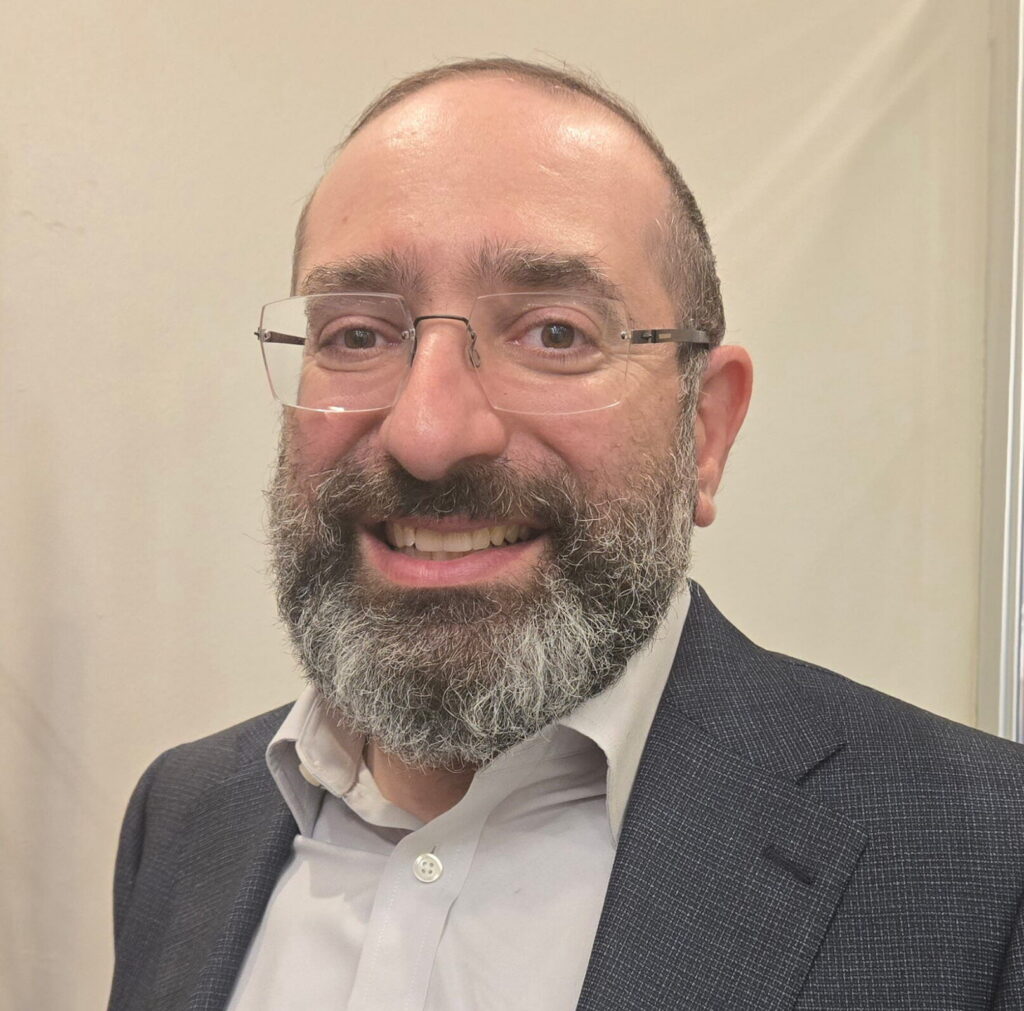
Unaffiliated congressional candidate Shimon Blau, a Denver doctor, has qualified by petition for the general election in Colorado’s 1st District, where Democrat Melat Kiros defeated 15-term U.S. Rep. Diana DeGette in last month’s primary, the Colorado Secretary of State’s Office...

UNC opens College of Osteopathic Medicine
Marissa Ventrelli
marissa.ventrelli@coloradopolitics.com
Updated 3 days ago
The University of Northern Colorado held a grand opening for its new College of Osteopathic Medicine on Friday, with Gov. Jared Polis in attendance to celebrate the culmination of a two-year, $127.5 million project. The project was funded through legislation...
Victor Marx, GOP candidate for governor, faces 100-plus campaign finance complaints
Marianne Goodland
marianne.goodland@coloradopolitics.com
Updated 8 hours ago
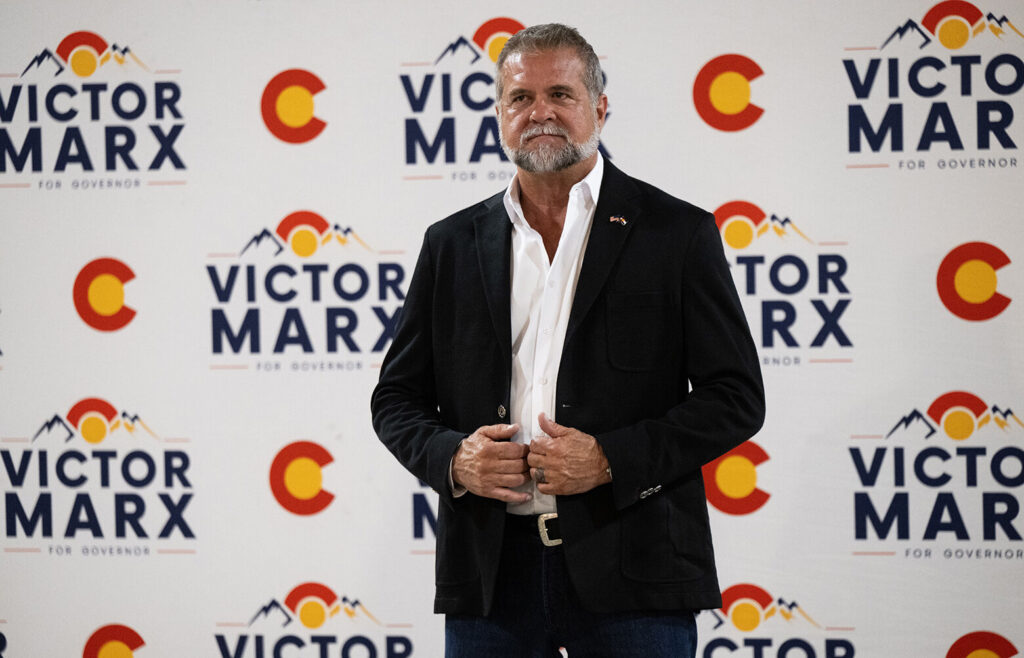
Victor Marx’s gubernatorial campaign has been hit with more than 140 campaign finance complaints, although most have been consolidated by the state’s election office because they follow similar alleged violations. Marx faces Attorney General Phil Weiser, who won the Democratic...
Primary voters rejected big money in politics | Paula Noonan
Paula Noonan
paula-noonan@coloradopolitics.com
Updated 3 days ago
While we’re in an election campaign lull between now and Labor Day, we have time to consider the impact of $102 million in campaign contributions in the primary. In the general election, more money will fill candidate campaign coffers, and...
PREV
PREVIOUS

Legislation would undermine educational opportunity | OPINION
By Norton Rainey and Weston Kurz New legislation under consideration by Colorado lawmakers could have far-reaching consequences for Colorado students and families looking for new educational options. HB26-1292, currently under consideration by the Colorado General Assembly, would severely limit the ability of nonpublic schools — particularly faith-based schools — to participate in the new Education […]

Democrat Dwayne Romero jumps in primary to challenge Republican Jeff Hurd in Colorado’s 3rd CD
The Democrat who has been running for nearly a year to unseat Republican U.S. Rep. Jeff Hurd in Colorado’s 3rd Congressional District got some company in the primary this week. Dwayne Romero, a Snowmass Village business owner and decorated Army combat veteran, announced his candidacy on Tuesday, the same day precinct caucuses kicked off the […]