

Federal judge dismisses developer’s challenge to Denver affordable housing ordinances
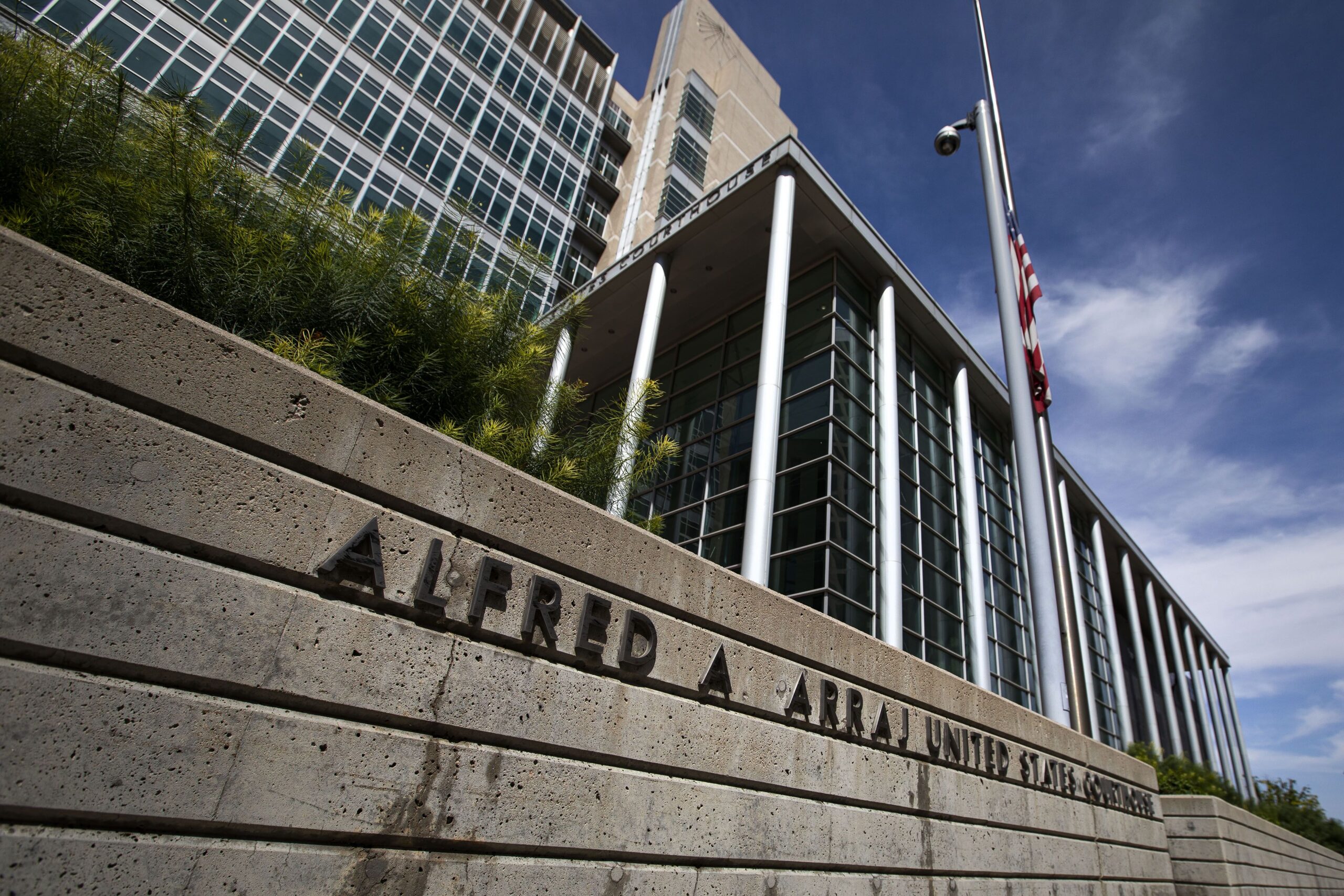
A federal judge dismissed a homebuilder’s constitutional challenge on Tuesday to a pair of Denver ordinances that impose obligations on developers related to the affordable housing demands created by new construction.
Two related companies, redT Homes and redT Capital Partners, sued the city last year over the fees they would incur to construct six homes across two sites. The financial obligation stems from Denver’s linkage fee ordinance, which imposes a fee per square foot on new housing developments with fewer than 10 units.
“The extraordinary housing cost increases in Denver are driven, in part, by the pace of population and job growth in the city, resulting in a situation where demand for housing has far outpaced supply, especially for persons who may find jobs in Denver’s growing economy but are employed at low or moderate income levels,” the city council wrote in the ordinance’s declaration.
It elaborated that new residences lead to job growth, and a corresponding need for housing for people with lower incomes. Although the council, in establishing a fee framework, recognized the imposition on developers cannot exceed the financial impacts of the development itself, the fees “fall far below the amount of revenue that would actually be necessary to meet the demand for new affordable housing driven by the job growth that is associated with new development.”
Alternatively, developers of smaller-scale projects may comply with the city’s mandatory affordable housing ordinance by designating a portion of their units as affordable. The ordinance also permits developers to propose alternative options to meet the legislation’s goals.
The plaintiffs wrote in their complaint that they are facing linkage fees of approximately $25,000 and $45,000 for their two proposed developments. They sought to declare the affordable housing ordinances unconstitutional under the “takings clause,” which permits governments to take private property for public use in exchange for compensation. However, there must be a connection between the impact the housing development causes and the fees that are charged, and the fee must be “roughly proportionate.”
“Denver reached the remarkable conclusion that its housing shortage is caused by building more homes. Thus, it refuses to issue development permits until homebuilders like redT — the very people resolving housing affordability issues, adding much-needed supply — pay a fee into Denver’s affordable housing fund,” wrote the plaintiffs’ lawyers.
In a March 3 order, U.S. District Court Judge Philip A. Brimmer granted Denver’s motion to dismiss the lawsuit. He initially agreed with the plaintiffs that the proportionality of the linkage fees would need to be explored at a later stage of the case, based on Denver’s findings on housing affordability.
However, he concluded that the mandatory affordable housing ordinance provided an alternative, constitutional method of compliance.
“The Court finds that the Mandatory Affordable Housing Ordinance, by requiring income restrictions on certain units and requiring the recording of a deed, does not constitute a physical invasion of property,” he wrote.
Brimmer added that courts elsewhere have found that local governments’ similar conditions on affordable housing do not constitute a “taking” of private property for public use.
The case is redT Homes, LLC et al. v. City and County of Denver.


Judge approves injunction for Colorado Springs counselor after SCOTUS rules in conversion therapy case
Michael Karlik
michael.karlik@coloradopolitics.com
Updated 18 minutes ago
A federal judge last week blocked Colorado from enforcing its restriction on conversion therapy for LGBTQ children against a Colorado Springs counselor, after both sides agreed that the state will not pursue professional disciplinary action while the case proceeds. The...
Colorado Supreme Court to decide whether out-of-state defendant may be prosecuted for in-state crime
Michael Karlik
michael.karlik@coloradopolitics.com
Updated 3 hours ago
The Colorado Supreme Court recently announced that it will decide whether Douglas County prosecutors had grounds to pursue criminal charges against a woman in New York whose conduct occurred outside of Colorado. Erin Brennan and her children lived in New...
Colorado justices, 4-2, say defendant cannot be retried after judge rejected jury’s partial acquittal
Michael Karlik
michael.karlik@coloradopolitics.com
Updated 4 hours ago
If a jury clearly indicates that it has acquitted a defendant of certain charges while remaining deadlocked on others, judges must accept that partial acquittal verdict, a divided Colorado Supreme Court ruled on Monday. Justice William W. Hood III, in...

After prison release, Tina Peters faces tight parole limits, ongoing legal troubles
Marianne Goodland
marianne.goodland@coloradopolitics.com
Updated 3 days ago
Released from prison this week, former Mesa County Clerk Tina Peters now begins a parole term that outlines strict limits on her movements and conduct, while separate ethics and campaign‑finance cases continue to move forward. Peters’ parole, as first reported...

Paramedics’ convictions tossed in Elijah McClain’s death
9News
9news@coloradopolitics.com
Updated 4 days ago
AURORA, Colo. — Two former Aurora Fire Rescue paramedics convicted in connection with the 2019 death of Elijah McClain will be retried following a ruling by the Colorado Court of Appeals. In September 2021, a statewide grand jury indicted Cooper and fellow...

Arvada woman charged with murder after her teen daughter dies from alcohol abuse
Matt Kyle
matt.kyle@denvergazette.com
Updated 5 days ago
An Arvada woman has been charged with murder after authorities said she supplied her 16-year-old daughter with alcohol for a prolonged period, leading up to her death. Arvada Police Department officers were called at about 8:15 a.m. on March 9...

Colorado Democrats slam Tina Peters’ release, while Republicans cheer
Ernest Luning
ernest.luning@coloradopolitics.com
Updated 7 days ago
Tina Peters, the former Colorado county clerk convicted of breaching her county’s secure voting equipment, drew cheers from fellow Republicans upon her release from prison Monday after Democratic Gov. Jared Polis commuted her sentence. Other state Democrats, however, said remarks...

‘I thought I was gonna die;’ JeffCo teen shot in face recounts shooting during trial
Matt Kyle
matt.kyle@denvergazette.com
Updated 1 week ago
A Jefferson County teen who was shot in the face when he and his friend were seeking a spot to take homecoming photos said he believed he was going to die as he recounted the shooting during trial testimony on...

Legislature overrules state Supreme Court decisions, federal judges contend with violations of orders | COURT CRAWL
Michael Karlik
michael.karlik@coloradopolitics.com
Updated 2 weeks ago
Welcome to Court Crawl, Colorado Politics’ roundup of news from the third branch of government. The Colorado legislature overruled two recent state Supreme Court decisions in this year’s session, plus federal judges are addressing the government’s violations of their orders...
Appeals court reinstates murder case despite ex-DA Linda Stanley’s conduct
Michael Karlik
michael.karlik@coloradopolitics.com
Updated 2 weeks ago
Colorado’s second-highest court reinstated the murder and child abuse charges on Thursday against a Fremont County defendant, reasoning that the former district attorney’s misconduct did not warrant dismissal of the charges. A judge previously dismissed the criminal case against defendant...
PREV
PREVIOUS

Another TABOR fight: Democrats plan to redirect residents' refunds to K-12 spending
Colorado voters could decide this fall whether billions of dollars that would otherwise be returned as refunds under the Taxpayer’s Bill of Rights should instead go to public schools under a ballot measure unveiled Thursday by Democrats. Supporters say the proposal would address chronic underfunding in K-12 education, while critics argue it takes money away […]

Hopes and fears: Colorado Iranians speak out on widening war
Group talks about young people protesting against the Islamic Republic, and Reza Pahlavi and the monarchy When Denver area real estate agent Fara Novin dined out for her birthday Friday night, Feb. 27, she blew out a candle on a cake and made a wish. Early next morning, news broke that a joint U.S.-Israeli strike […]