

Coloradans react to Supreme Court rejection of Biden’s student debt forgiveness plan
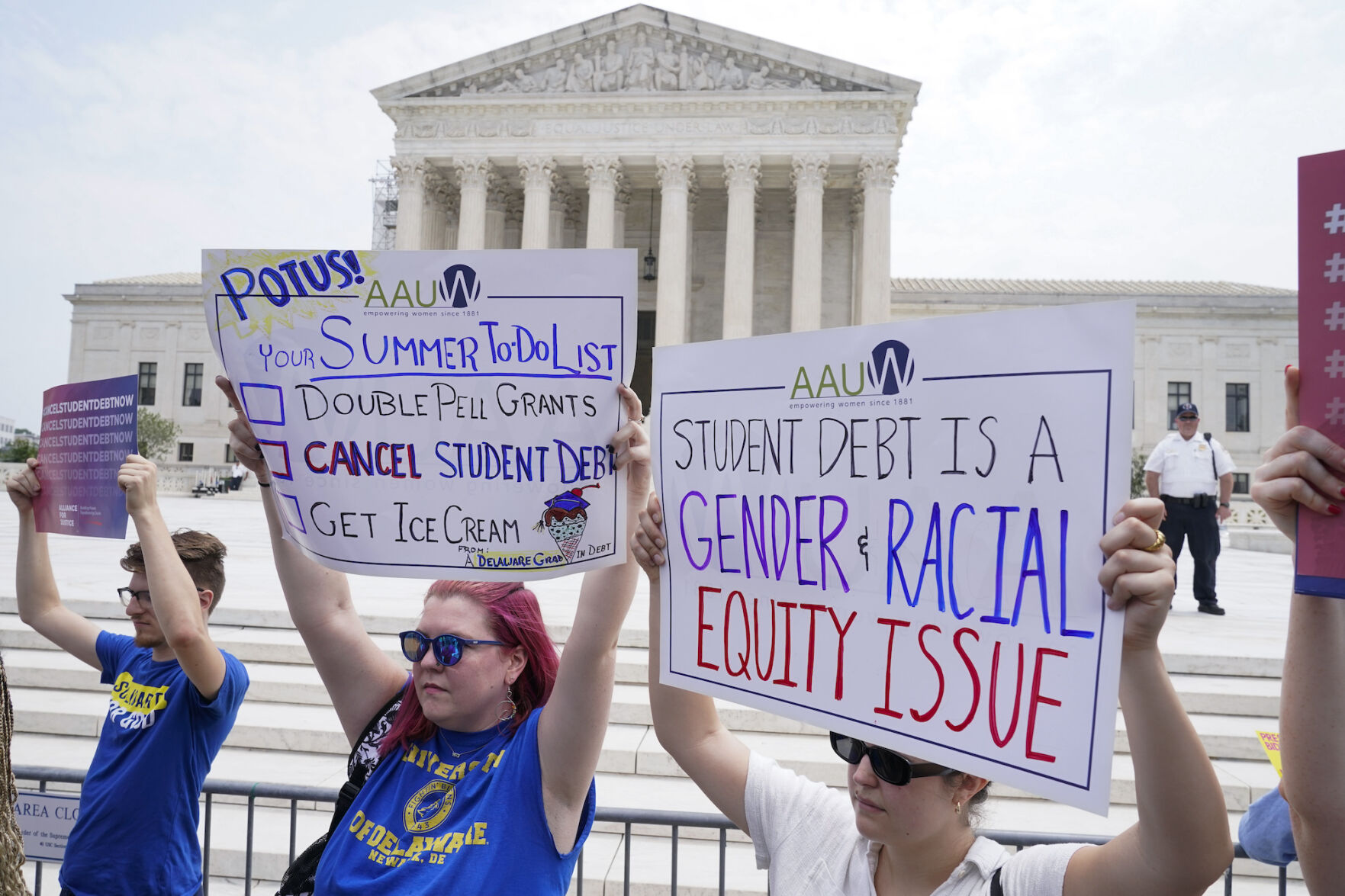
Republican members of Colorado’s congressional delegation applauded Friday’s U.S. Supreme Court decision blocking President Joe Biden’s plan to forgive student loan debt, while elected Democrats assailed the ruling as “deeply disappointing” and vowed to work toward making higher education more affordable.
State advocacy organizations split along the same lines, with a conservative group calling the rejected plan unfair to borrowers who repaid their loans and a nonprofit, which organizes young Coloradans, decrying the ruling as confirmation that the higher education system “was and is not for everyone.”
In a 6-3 decision with the court’s conservative justices in the majority, the court killed the administration’s $400 billion plan to cancel up to $20,000 in debt for students who borrowed money to fund their higher education.
The justices concluded that a 2003 law does not authorize the Biden administration to establish such a massive forgiveness program that wipes out $430 billion in student debt, affecting nearly all borrowers. The opinion, penned by Chief Justice John Roberts, said the magnitude of the cancellation program is something Congress would likely have intended for itself to do.
“However broad the meaning of waive or modify,'” the opinion said, referring to the education secretary’s authority to “waive or modify” existing statutory or regulatory provisions that deal with financial assistance programs, “that language cannot authorize the kind of exhaustive rewriting of the statute that has taken place here.”
“Why must a farmer who chose to forgo college be responsible for paying the tuition of the wealthy elite?” asked U.S. Rep. Ken Buck, a Windsor Republican.
Moments after the court’s ruling was released, Buck posted a quote from U.S. Rep. Nancy Pelosi, a California Democrat and the former House speaker, appearing to agree with critics of Biden’s plan, followed with a “bullseye” emoji.
“As [Pelosi] once said, ‘People think that the President of the United States has the power for debt forgiveness. He does not. He can postpone. He can delay. But he does not have that power. That has to be an act of Congress.’ ?”
U.S. Rep. Diana DeGette, a Denver Democrat, ripped the ruling and called on Congress to come to the aid of debt-laden students.
“The cruelty of this Supreme Court knows no bounds. At a time when Americans are struggling to make ends meet, they take away the relief provided to millions of student loan borrowers,” DeGette tweeted. “We can’t let this be the end of this fight. We must act now to help student loan borrowers.”
U.S. Rep. Lauren Boebert, a Silt Republican, posted a statement agreeing with the court’s majority.
“Forcing hard-working taxpayers to foot the bill for people that took out students loans knowing they would have to be repaid is UNCONSTITUTIONAL!” Boebert tweeted, adding, “A college education is a choice, not a requirement.”
U.S. Rep. Brittany Pettersen, a Lakewood Democrat, took to Twitter to denounce several court rulings that have been handed down this week, including the one involving student debt, another that overturned some higher education institution’s affirmative action policies and a third siding with a Colorado web designer who wanted to be able to refuse a request to build a site for a gay wedding on religious grounds.
“We’re watching conservative extremists destroy decades of progress,” Pettersen said. “This week alone, the #SupremeCourt denied educational opportunities for students of color, legalized discrimination against the LGBTQ+ community, & struck down Biden’s plan to eliminate $400mil in student debt.”
In a joint statement issued with fellow co-chairs of the Future Forum Congressional Caucus, which includes lawmakers age 50 and under, Pettersen said its members consider investments in education crucial to keeping the U.S. competitive in the world economy.
“Today’s Supreme Court decision is deeply disappointing for the millions of Americans who were counting on this targeted relief. For too long, student borrowers – who are overwhelmingly young people – face increasingly higher costs of getting the degree or training they need to get a good-paying job,” wrote Pettersen and fellow Democratic U.S. Reps. Colin Allred of Texas, Darren Soto of Florida and Haley Stevens of Michigan.
“Congress must now prioritize expanding access and making tuition at our universities, colleges, community colleges and other job training institutions more affordable. This includes investing in programs that help support lower-income students, like Pell Grants.”
They added: “There is broad agreement that America cannot give up on investing in our young people. This is a priority not only for our students but for our entire economy as we compete with other nations to lead the industries of the future.”
U.S. Rep. Doug Lamborn, a Colorado Springs Republican, cheered the ruling.
“The Supreme Court has struck down the Biden administration’s reckless student loan forgiveness bailout. As a result, the 87% of hard-working American taxpayers who are debt-free will no longer have to cover for the remaining 13%,” Lamborn tweeted, adding, “Pleased to see SCOTUS stand for accountability.”
Colorado Secretary of State Jena Griswold, a Democrat, however, blasted the high court with a reference to recent reporting about previously undisclosed luxury travel and other gifts received by some conservative justices.
“I have over $200k of education debt because I grew up poor and believed in the American Dream,” Griswold tweeted. “This country profits from selling poor kids high interest rate edu loans.”
Added Griswold: “Corrupt justices who accept lavish gifts sided with the rich and powerful over hard-working Americans.”
Colorado Attorney General Phil Weiser, a Democrat, said in a statement that his office is committed to “protecting borrowers from unfair and predatory loan servicing practices and holding accountable predatory schools that defrauded Coloradans.”
Asserting that “many hardworking students” have been saddled with “worthless degree” by unscrupulous institutions, Weiser said, “Today’s ruling hurts those borrowers, along with many other Coloradans who earn low incomes who would have benefited from the administration’s student debt relief plan.”
He called the ruling a “troubling development that promises to further erode trust in the Court,” citing what he termed the plaintiffs’ “highly questionable” standing.
“In the face of this unfortunate decision, we will continue to prepare Coloradans for the restart of student loan payments, which have been paused since the COVID-19 pandemic began in March 2020,” Weiser said, adding that his office houses a student loan ombudsperson who can address complaints filed by student loan borrowers.
The Centennial Institute, the Christian conservative public policy-oriented nonprofit housed at Lakewood’s Colorado Christian University, agrees with the ruling and believes there are “better ways” to approach the high cost of higher education, according to a statement issued on behalf of the organization.
“The Biden administration’s student loan forgiveness plan to wipe away broad amounts of student loan debt was fraught with problems from the beginning,” said Donald Sweeting, the school’s chancellor. “It is unfair to every American who has ever worked, saved or paid off their college loan. It contributes to inflation, which continues to be one of America’s biggest worries, and it sets up unrealistic expectations that if you sign a loan agreement of any kind, you don’t necessarily have to pay it back. The rising cost of higher education is a legitimate concern, but there are better ways to deal with it.”
The executive director of New Era Colorado, a nonpartisan group devoted to encouraging younger Coloradans to participate in the political process, warned members of the state’s congressional delegation that young voters want results.
Declaring that a string of recent court decisions – starting with last summer’s ruling to overturn Roe v. Wade – suggest that the Supreme Court “does not care about young people or our future,” Nicole Hensel framed her argument in stark terms.
“In light of our draconian Supreme Court, young people need and deserve federal champions fighting for a more equitable education system now more than ever,” she said. “We have yet to see our Colorado elected officials step up to the plate to defend student debt and young people are reeling from the impacts. May we remind our federal elected officials who the real decision-makers are here: the voters, of which young people currently constitute as one-third of and our numbers, keep growing. We’re committed to organizing in powerful numbers until Youth Agenda champions who are committed to canceling student debt are in positions of power across the country.”
Christina Soliz, the group’s deputy director, said millions of young people are being forced to confront “the reality that our higher education system was and is not for everyone.”
“The decisions uniquely impact Black, indigenous, and other students of color by blocking a major path to build generational wealth,” she said in a statement, referring to the court’s recent rulings on student loan debt and affirmative action.
“However, these decisions have revealed the truth that students of color have known for centuries: the American tale of education as the great equalizer is a myth. These institutions were never designed to provide opportunities for poorer, Black and brown students; they are gated communities for the white and wealthy to systematically solidify their power. But we know we are a multi-racial future and we won’t stop until we have a Supreme Court that actually represents the wills of our diverse communities.”

Colorado Supreme Court upholds police search of car based on arm movements
Michael Karlik
michael.karlik@coloradopolitics.com
Updated 6 hours ago
The Colorado Supreme Court decided last week that Denver officers’ search of a vehicle was constitutional, based on their perception of the occupants’ arm movements that a trial judge found to not be credible. Officers Keegan Grubb and Richard Eberharter...

10th Circuit tosses Pueblo County sheriff defendants’ appeal in fatal shooting lawsuit
Michael Karlik
michael.karlik@coloradopolitics.com
Updated 13 hours ago
The Denver-based federal appeals court rejected an attempt from Pueblo County sheriff’s employees on Wednesday to rely on their own version of the facts to escape liability for fatally shooting an unarmed man outside a middle school. A trial judge...
Colorado justices uphold strict interpretation of consumer protection law against debt collector
Michael Karlik
michael.karlik@coloradopolitics.com
Updated 9 hours ago
The Colorado Supreme Court concluded last month that a debt collector failed to comply with state law by suing a woman for an unpaid credit card debt without documentation that it owned her account. Portfolio Recovery Associates, LLC filed a...
Colorado justices say judges can nearly eliminate parenting time without it being a ‘restriction’
Michael Karlik
michael.karlik@coloradopolitics.com
Updated 1 day ago
The Colorado Supreme Court concluded last month that judges can reduce the number of days a parent spends with their child post-divorce to just above zero without it rising to the level of a “restriction” that requires more rigorous justification...

Colorado Springs may be sued for faulty intersection, state Supreme Court rules
Michael Karlik
michael.karlik@coloradopolitics.com
Updated 2 days ago
The Colorado Supreme Court decided last month that Colorado Springs can be sued over a collision that occurred as a result of traffic lights that were functioning normally in one direction, but were inoperative in the perpendicular direction. The question...
Internal appeals of parole revocation must come before judicial review, Colorado justices conclude
Michael Karlik
michael.karlik@coloradopolitics.com
Updated 2 days ago
The Colorado Supreme Court ruled last month that criminal defendants whose parole is revoked must appeal the decision internally to the state’s parole board before seeking review by a judge. The process for returning someone to incarceration for violating the...
Judge approves injunction for Colorado Springs counselor after SCOTUS rules in conversion therapy case
Michael Karlik
michael.karlik@coloradopolitics.com
Updated 9 hours ago
A federal judge last week blocked Colorado from enforcing its restriction on conversion therapy for LGBTQ children against a Colorado Springs counselor, after both sides agreed that the state will not pursue professional disciplinary action while the case proceeds. The...
Colorado Supreme Court to decide whether out-of-state defendant may be prosecuted for in-state crime
Michael Karlik
michael.karlik@coloradopolitics.com
Updated 1 day ago
The Colorado Supreme Court recently announced that it will decide whether Douglas County prosecutors had grounds to pursue criminal charges against a woman in New York whose conduct occurred outside of Colorado. Erin Brennan and her children lived in New...
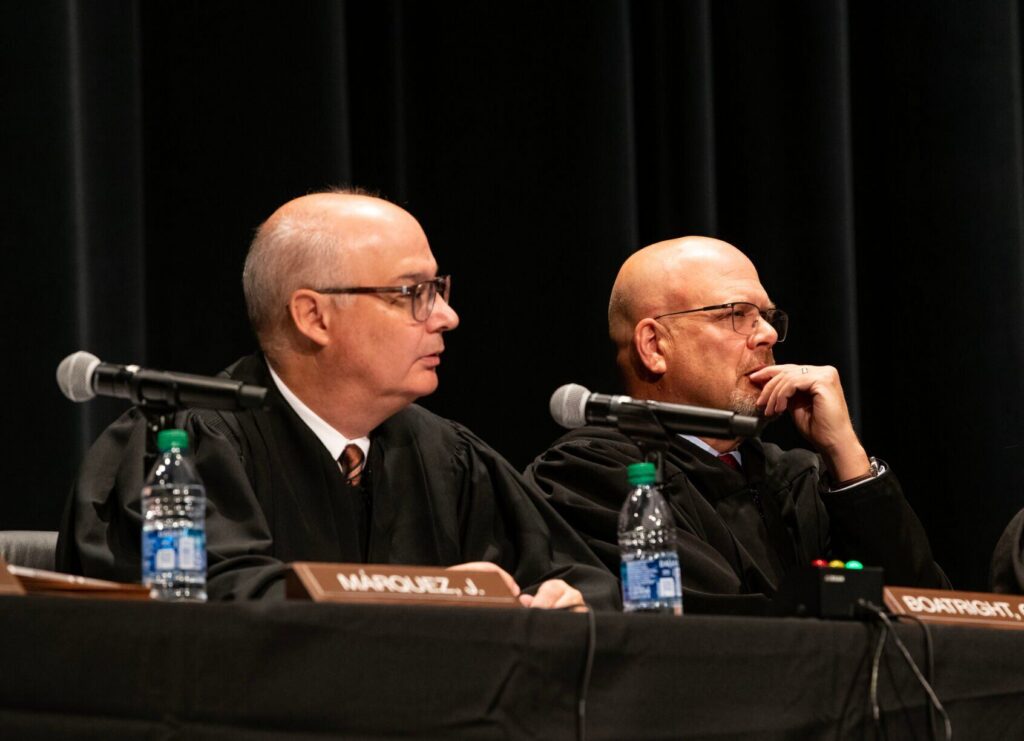
Colorado justices, 4-2, say defendant cannot be retried after judge rejected jury’s partial acquittal
Michael Karlik
michael.karlik@coloradopolitics.com
Updated 2 days ago
If a jury clearly indicates that it has acquitted a defendant of certain charges while remaining deadlocked on others, judges must accept that partial acquittal verdict, a divided Colorado Supreme Court ruled on Monday. Justice William W. Hood III, in...
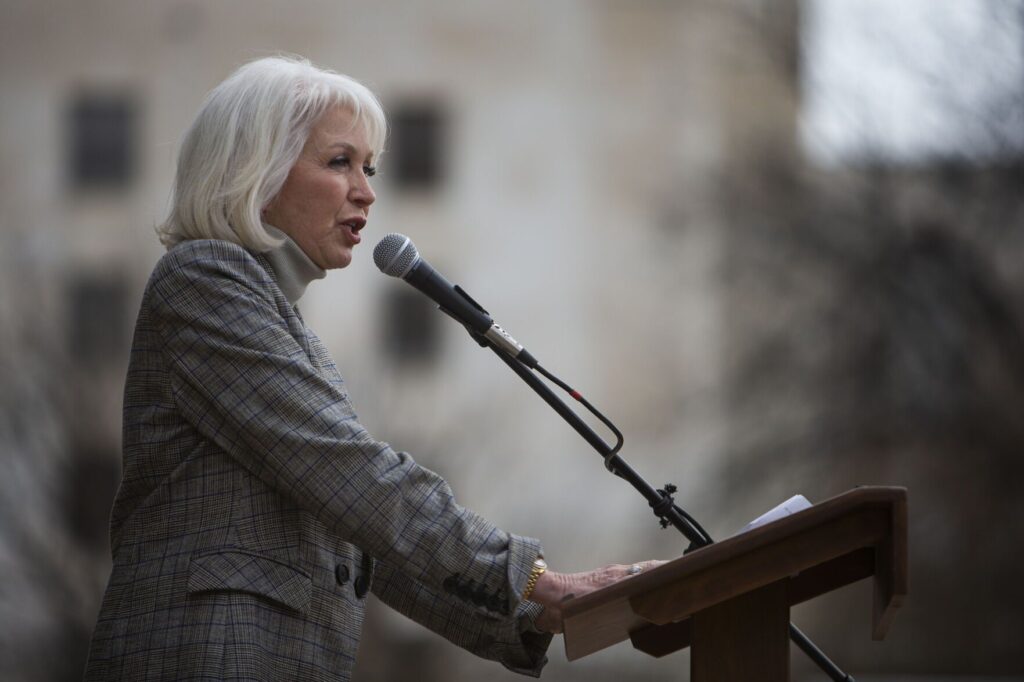
After prison release, Tina Peters faces tight parole limits, ongoing legal troubles
Marianne Goodland
marianne.goodland@coloradopolitics.com
Updated 5 days ago
Released from prison this week, former Mesa County Clerk Tina Peters now begins a parole term that outlines strict limits on her movements and conduct, while separate ethics and campaign‑finance cases continue to move forward. Peters’ parole, as first reported...
PREV
PREVIOUS
Colorado appeals court expands ability for defendants to have postconviction claims investigated
Colorado’s second-highest court clarified last month that defendants who have at least one credible claim for postconviction relief are entitled to have appointed attorneys consider and investigate all other claims, without a judge imposing restrictions. A three-member panel for the Court of Appeals agreed a judge in El Paso County was wrong to screen a […]

Denver Public Schools safety plan includes mental health emphasis, training
Denver Public Schools Superintendent Alex Marrero released the final draft of the district’s comprehensive safety plan Friday. The plan is chock-full of acronyms and education buzz words, but short on goal-oriented details. “This was never going to be addressed on the granule level,” Marrero told The Denver Gazette Friday. In the aftermath of a shooting […]