

Time to repeal Section 232 tariffs | OPINION
However you may choose to look at them, tariffs are a damaging economic tool, one of the most misguided economic policies a free economy can pursue. Tariffs are a tax, one that hinders free trade, distorts markets and ultimately artificially increases costs for consumers. The argument for the imposition of tariffs is often made under the euphemistic guise of “protection,” but in reality, as Milton Friedman wrote in Free to Choose “‘protection’ really means exploiting the consumer.”
The Section 232 tariffs imposed under the Trump administration are no different. President Donald Trump may have accomplished a lot of things, including reasonable deregulation and a more sane domestic tax policy, but one thing he got very wrong economically was his love affair with tariffs. The 232 tariffs were imposed on a number of commodities, including aluminum and steel, under the auspices of “national security.” But all imposing a tax on these imports has done is contribute to their soaring costs.
Take aluminum for example. Before 2018, the year the 232 tariffs were put in place, aluminum was trading at roughly $1,600 per ton. Now it is trading at $2,300 per ton. Some of that is a factor of the general inflation that profligate public spending has caused, but a large percentage is directly due to taxation of aluminum imports. Indeed, a report by the U.S. International Trade Commission found the tariffs caused domestic aluminum prices to climb by 1.6%, while reducing imports by 31%.
The problem with this is we simply do not produce enough aluminum domestically to meet demand. No amount of taxation on imported aluminum is going to change that. Since we do not produce enough domestically, a tariff on imported aluminum merely reduces the supply even further, causing the price to go up. This does two things: adds to the financial burdens of manufacturers and businesses that need to buy aluminum, and further compounds our already problematic supply chain constrictions.
Though businesses of all sizes are impacted by this, it is small businesses that bear the brunt of the economic pain. It is hard enough for large businesses to have to figure out how to shoulder these cost increases, delays and supply restrictions; but small businesses are the ones that can least afford to absorb any of these added costs and shortages. Generally, of course, it is the consumer who ultimately pays, but there are those businesses out there that are small enough, or just starting out, that are not afforded the ability to readily pass along costs by increasing their prices, and still stay in business.
The increased costs imposed by tariffs have a downstream impact on industries that rely heavily on aluminum. The primary one that comes to mind is the beverage industry. The Beer Institute reports aluminum represents the single largest input for American beer manufacturers; in 2020 alone, U.S. brewers purchased more than 41 billion cans and bottles. The Institute conducted a study which found that since they were imposed in 2018, the American beverage industry has paid $1.8 billion directly in Section 232 tariffs on aluminum imports.
Stay up to speed: Sign-up for daily opinion in your inbox Monday-Friday
This impact is not isolated to major manufacturers. Every small brewery, like the ones we find dotting the Denver metro area and towns all across the state, is affected by this. These are businesses that have already had to fight to survive, first through the pandemic restrictions, then with the crippling costs of inflation, worker shortages and supply chain chokeholds. Adding an extra cost by taxing their most significant input makes no more economic sense than any other free market restriction.
It is not just breweries and beer who are impacted. Dozens of industries, including agriculture, construction, aerospace and defense, are facing increased costs and decreased production due to tariffs. This is a huge cross section of Colorado’s economy.
Milton Friedman once wrote “ever since Adam Smith there has been virtual unanimity among economists, whatever their ideological position on other issues, that international free trade is in the best interest of the trading countries and the world.” Congress needs to repeal these tariffs which are doing far more economic harm than good. Senator Mark Warner, a Virginia Democrat, teamed up with Sen. Pat Toomey, a Pennsylvania Republican, last year to advance a bill to do just that, and return the authority for imposing tariffs from the executive to the legislative branch. Colorado’s Congressional delegation should get behind a similar effort this year, for the good of our state, our country and the free world.
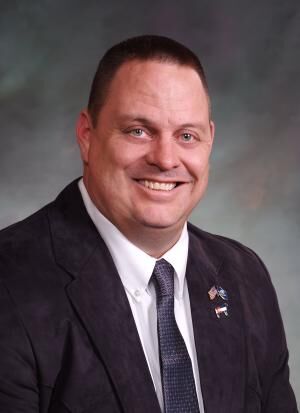
Byron Pelton is Colorado State Senator representing Senate District 1 comprising several rural northeast Colorado counties.


A daring and fearless rescuer — is afraid of a debate | Dick Wadhams
Dick Wadhams
dick-wadhams@coloradopolitics.com
Updated 2 days ago
Victor Marx, the Republican nominee for governor who says he can exorcize demons and who claimed he has fearlessly rescued 45,000 women and children during 150 “high-risk” missions around the world, appears to be intimidated by the notion of debating...

Colorado’s ballot-initiative process again a battleground for deep pockets, special interests — not the people | Miller Hudson
Miller Hudson
miller-hudson@coloradopolitics.com
Updated 6 hours ago
The Oxford English Dictionary defines a constitution as, “The set of fundamental principles according to which a state is constituted and governed, a body of rules prescribing the major elements of the structure and activities of any organization.” Somewhere in...

Proposed EPA changes could save truckers billions | Rachel Gabel
Rachel Gabel
rachel-gabel@coloradopolitics.com
Updated 2 days ago
Agriculture is in distress across nearly every segment across much of the nation, and certainly to a more dire degree in the western United States. If it were not a historic drought, some pressures could be eased. Others can be...

Colorado Democrats, your time is coming | Jon Caldara
Jon Caldara
jon-caldara@coloradopolitics.com
Updated 2 days ago
Hey, Colorado Democrats! All the fun you’ve had watching Republican dysfunction in Colorado for the last 20 years was just a preview of what is about to happen to you. The Colorado Republican Party no longer exists as a competitive...

Perspective: Hunters and anglers are pushing back
Chris Dorsey
chrisd@gmail.com
Updated 4 hours ago
For generations, Coloradans hunted elk, caught trout and managed wildlife without consulting a constitutional attorney. That was before wildlife management became a recurring statewide election issue, replete with consultants, national pressure groups and enough political mail to denude an aspen...
The relevance of Watergate more than a half-century later | SONDERMANN
By Eric Sondermann
by-eric-sondermann@coloradopolitics.com
Updated 5 days ago
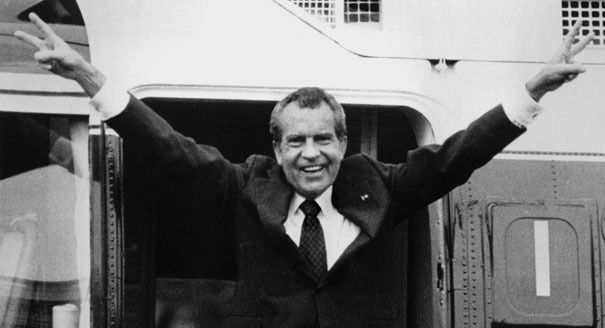
It was the scandal for which all other scandals are now named. In June 1972, a small group of Cuban burglars with high-level connections broke into the headquarters of the Democratic National Committee. Those headquarters were located in the Watergate...

Colorado must continue finding common ground on wildfire policy | GUEST COLUMN
Colorado Politics
colorado-politics@coloradopolitics.com
Updated 4 days ago
By John Herrick Colorado has never lacked for opinions about wildfire policy. We debate forest management, climate change, prescribed burns, land use, air quality and budgets. Those debates are familiar territory, but a new discussion is beginning to happen around...

Proposition NN is the best investment for Colorado’s students and schools | GUEST COLUMN
Colorado Politics
colorado-politics@coloradopolitics.com
Updated 4 days ago
By Justin Ogden Colorado families know what it means to make difficult budget decisions. Inflation has driven up the cost of groceries, housing, utilities and just about everything else. Families like mine work hard to stretch every dollar while still...

Were the primaries a preview for consequential general election? | Paula Noonan
Paula Noonan
paula-noonan@coloradopolitics.com
Updated 5 days ago
Colorado’s political future will go the way of this election. Historically, the state has not had both chambers controlled by a supermajority. This election may change that. The primaries suggest how the general election may play out. Democrats had solid...

Disagreement doesn’t have to mean disrespect | GUEST COLUMN
Colorado Politics
colorado-politics@coloradopolitics.com
Updated 5 days ago
By Vincent Atchity These days, it doesn’t take long to feel overwhelmed by politics. Turn on the news, scroll through social media or read the comments on almost any political post and you’ll find anger, outrage and personal attacks. For...
PREV
PREVIOUS

Expand access to charter schools in Colorado | OPINION
Pam Benigno Thirty years ago, on June 3, the bi-partisan Colorado Charter School Act was signed into law by Democratic Gov. Roy Romer. It was a victorious day when the bill passed both of Colorado’s legislative chambers, allowing thousands of children to choose public charter schools where they could succeed academically. Charter school supporters, including […]

Location, location, location | BIDLACK
Hal Bidlack Did you ever wonder why so much of the space program is based in Houston, Texas? Well, back in the Apollo days, the folks at the actual launch site in the Kennedy Space Center at Cape Canaveral controlled the launch of spacecraft until the launching rocket cleared the launch tower. At that point, […]