

Critics: Polis’ property tax plan guts TABOR refunds
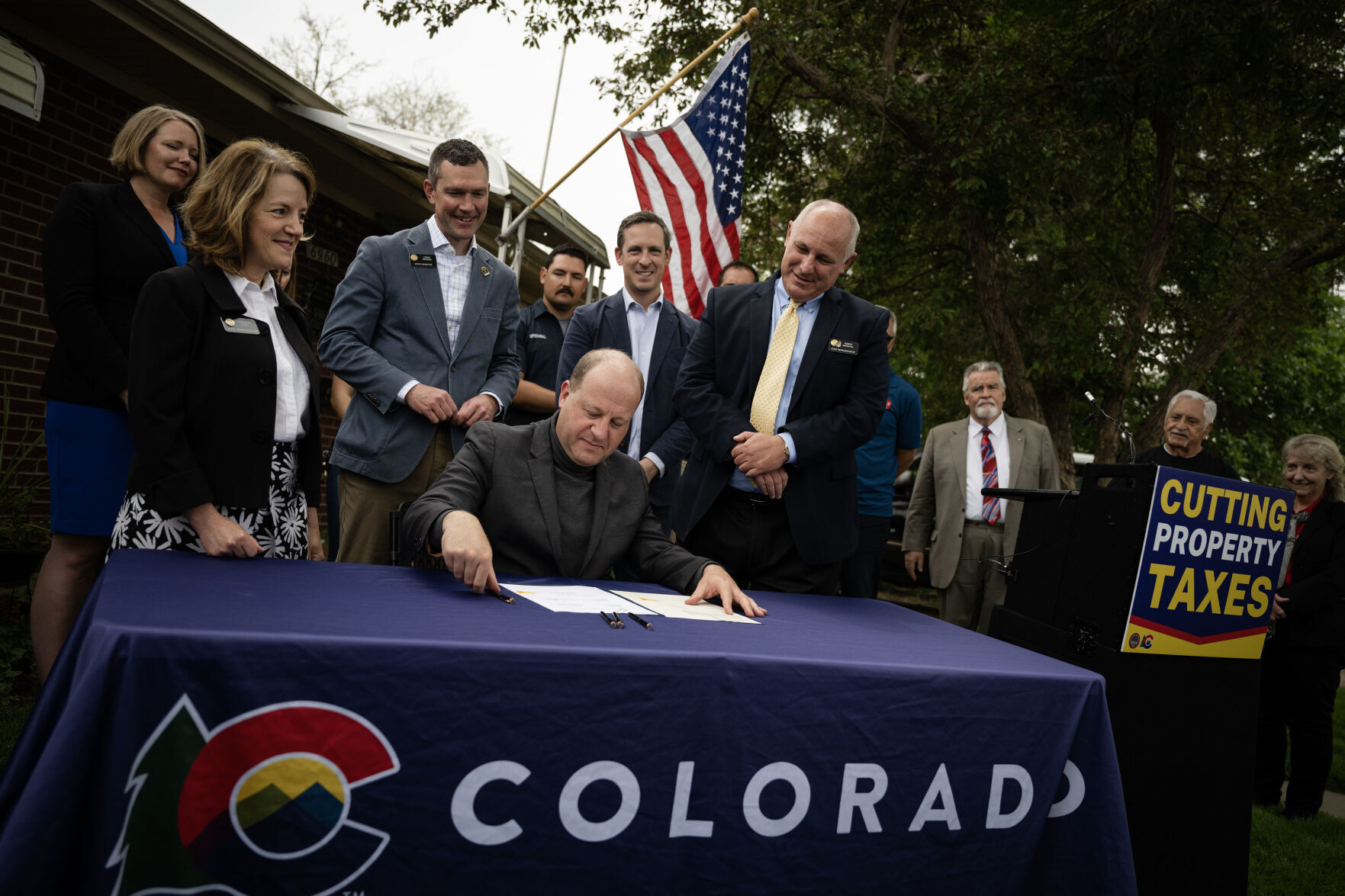
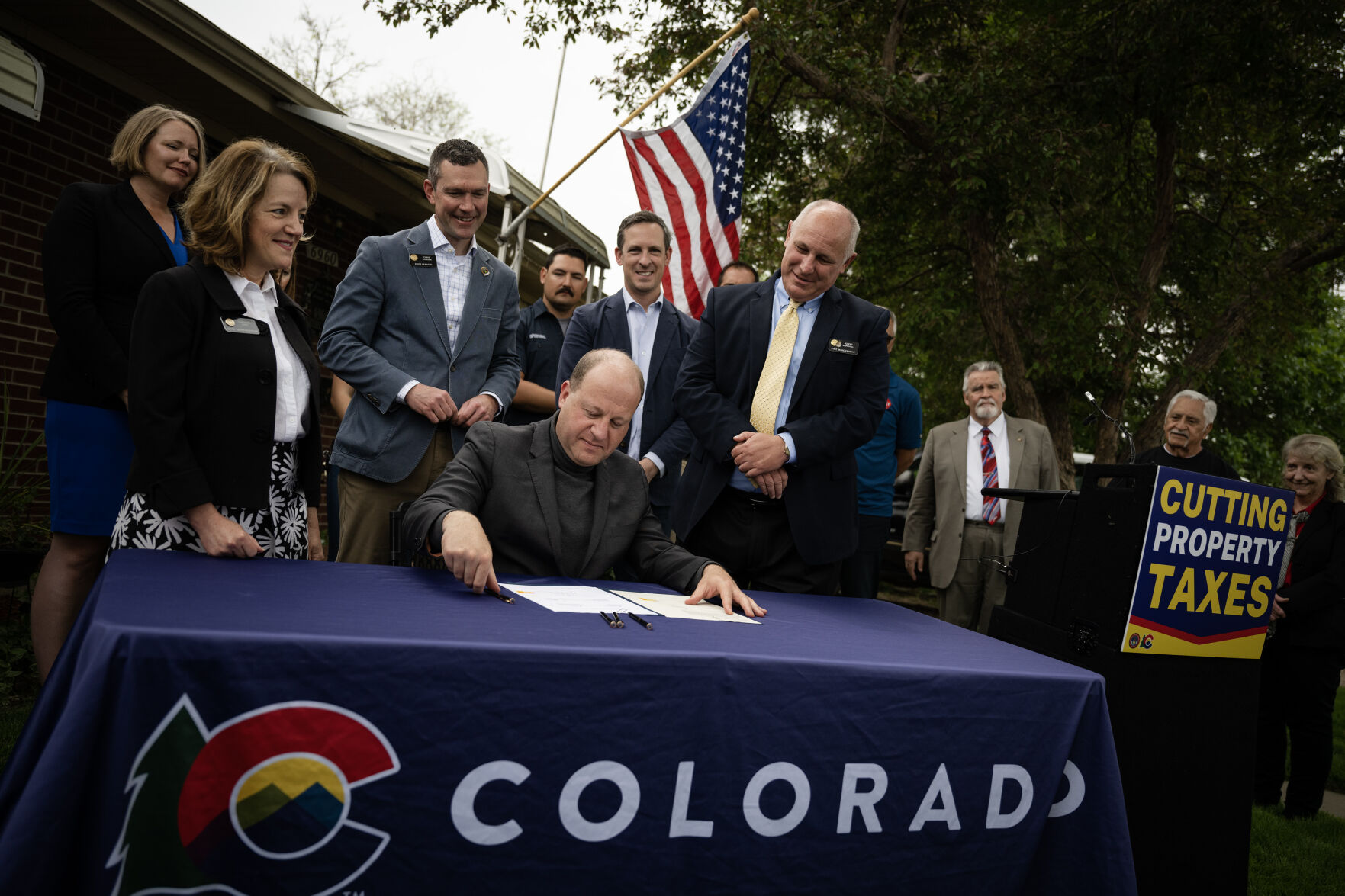
Gov. Jared Polis’ plan to offer relief to property taxpayers effectively guts refunds from the Taxpayer’s Bill of Rights by compounding the amount the state is allowed keep and spend each year, exponentially shrinking the money that Coloradans get and potentially eliminating it altogether at some point, according to critics of the proposal.
Critics charged that Senate Bill 303 is the Democrats’ “backdoor” attempt to siphon off TABOR refunds away from people’s pockets and funnel them into the majority party’s spending priorities – without expressly telling the public precisely because the checks are politically popular among Coloradans.
Such rhetoric of vanishing TABOR refunds, supporters of the plan countered, is “off the hook.”
Voters will have the opportunity to reject or approve the proposal in November. Already, battle lines are forming and both sides have begun to pitch narratives that will likely play out during the campaign.
Critics recently formed a coalition to fight the proposal, promising an “aggressive effort” that includes paid advertisements. Supporters are also expected to form a “yes” campaign.
Polis and Democrats argued that the property tax plan offers tangible respite to Coloradans facing soaring valuations in property taxes, which, in some areas, rose as high as 50%.
The governor said under the proposal, the average homeowner would save more than $1,000 over the next two years and roughly $3,500 over the next five years, while a business with $1 million in property value would see $4,300 in relief over the next two years and about $12,400 over the next five years.
They also seek to curb property tax hikes by also enacting legislation to equalize TABOR refunds at $661 per person or $1,322 for joint filers, a one-time change from the current system that bases the TABOR refund on income levels. But the measure would not take effect if voters do not approve what will be known as Proposition HH, which implements the provisions of SB 303.
Critics describe the plan as a sleight of hand – taking money already owed to people and then calling it tax relief.
“It takes $10 billion from TABOR refunds over the next 10 years and makes it unlikely that Coloradans get TABOR refunds at all in the long run,” said Michael Fields, a conservative activist spearheading a lawsuit against Senate Bill 303.
The lawsuit, filed in Denver District Court this month, claims the legislation violates the constitution’s single subject rule, arguing it has four subjects instead of one: it reduces property tax assessment rates; asks voters so the state can retain and use the funds for other expenditures, notably on the “politically appealing” subject of education; allocates money for tenant rent; and, it permanently changes – and “eventually eliminates” – TABOR refunds.
That last claim arose of Senate Bill 303’s Section 3, which raises what’s called the Referendum C cap by 1% and keeps that additional revenue for a 10-year period, generating about $167 million in the first year, which, in turn, would be funneled to local governments to hold them harmless from reductions in property tax revenue.
Approved by voters in 2005, the Ref C cap allowed the state to retain and spend all revenue collected between FY 2005-06 and FY 2009-10. Afterwards, it permits the state to retain and spend all revenue collected up to the cap, which grows annually by inflation plus population growth. Surplus revenue in excess of the cap is then refunded to Colorado taxpayers.
Critics said SB 303 also increases the cap by 1 percentage point each year for the next nine years.
Ben Murrey, who serves as Independence Institute’s director of fiscal policy, said that, under the governor’s plan, taxpayer refunds “will go away entirely.”
“By year 5, you’re giving up over $1B/year,” he said in a tweet. “By year 10, it’s over $2B.”
Fields said this means if Coloradans were to continue receiving TABOR refunds in the long run, the state’s revenue growth would have to outpace inflation plus population – plus 10% every year.
That, he said, “would never happen.”
A forecast by legislative analysts says under the plan, TABOR refunds would decrease by $167 million in fiscal year 2023-24 and by $358.6 million in the next year. Analysts did not provide an estimate for the out years, but they noted, in a separate forecast, a predictably more stable economic outlook in the next few years.
Scott Wasserman, president of the Bell Policy Center, which advocated for SB 303’s passage, did not dispute a scenario under which rebates won’t land in Coloradans’ mail boxes, such as in a recessionary economy when the revenue dips below the cap.
But there’s a lot of unknown about future TABOR surpluses, he said.
“Because all of this is based on the economy,” Wasserman told Colorado Politics, “we have no way of knowing if we’ll be above or below the TABOR cap 10 years from now. We also don’t know how large surpluses will be.”
“Five years ago, I would have dismissed the idea that we’d be looking at $2 billion plus surpluses. Today, that’s being taken for granted and treated likes it’s a given,” he said.
And the rebates, he said, “have never been a given.”
“In fact, they’re a pretty recent phenomenon. We’ve had a great many years under the existing cap in which none occurred,” he said.
Wasserman also raised another point: Under a recessionary scenario, that one percentage point increase in the cap would look a lot different than in a growing economy.
“That’s why,” he said, “I don’t think we should assume year over year compounding like you’re describing with that 10% figure. Over the next 10 years, we’ll definitely see at least one recession, and that will change what 1% of the previous year’s spending means.”
Wasserman said from 2000 to 2010, the country had two recessions, one small and one big, significantly altering states’ spending and revenues.
Wasserman also pushed back at the points raised by Fields and Murrey.
“The rhetoric on the conservative side is off the hook,” he said. “Rebates are not disappearing any time soon, if at all. In fact, many people will be seeing property tax relief AND TABOR rebate checks.”
Fields agreed that actual revenue could go up or down in future years.
“So, it’s impossible to say when it will totally eat it up,” Fields said, referring to worries that SB 303’s cap would swallow TABOR refunds. “But it is certain that it will eat it up at some point.”


Fifty years later, women reflect on first coed class at the Air Force Academy, struggle for equality
Mary Shinn
mary-shinn@coloradopolitics.com
Updated 18 hours ago
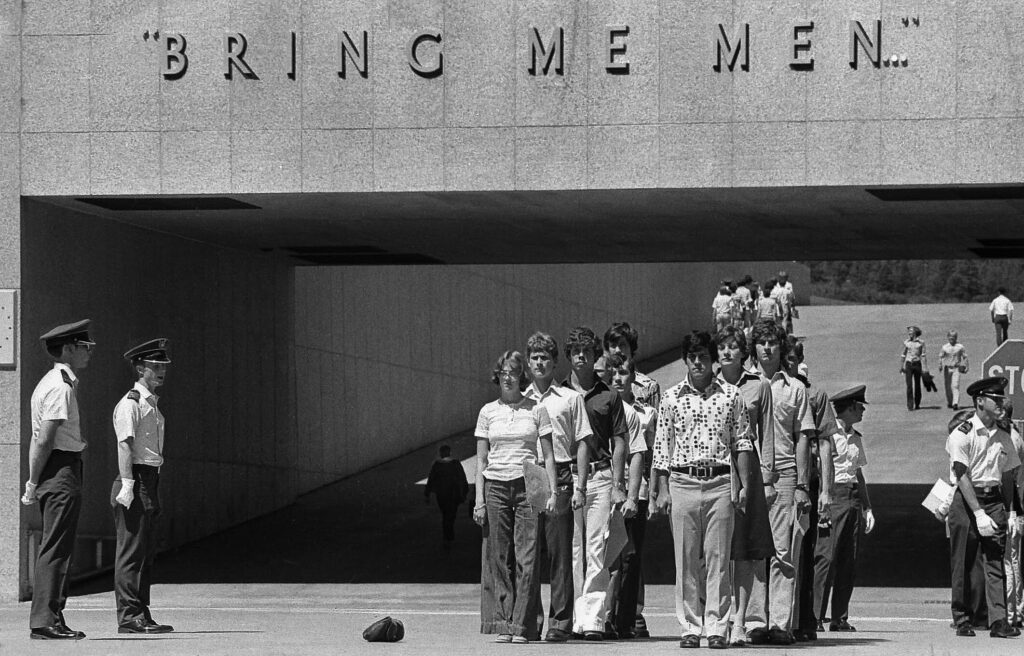
When the first female Air Force Academy cadets arrived 50 years ago this summer, they stood in front of an enormous sign on campus that read “Bring me men.” In the shadow of that sign, Kathleen Utley Kornahrens, one of...

As Lake Powell shrinks, marinas are having to adapt to dwindling water levels | OUT WEST ROUNDUP
The Associated Press
the-associated-press@coloradopolitics.com
Updated 4 days ago
ARIZONA Reservoirs near record lows PAGE — The Colorado River’s Lake Powell, the second largest reservoir in the U.S., is shrinking. A record-dry winter and extreme heat — as well as decades of overuse, chronic drought and climate change —...

A new day? Colorado’s troubled guardianship office pursues ‘cultural reset’
Marianne Goodland
marianne.goodland@coloradopolitics.com
Updated 3 days ago
Colorado’s guardianship program, long criticized for mismanagement and high staff attrition, is undergoing a “cultural reset,” as its new director works to repair partnerships and prepare for a major expansion under recent legislation. Created by lawmakers in 2017, the Office...

U.S. Senate OKs funding bill to avoid government shutdown
Wire Services
wire-services@coloradopolitics.com
Updated 23 hours ago
Hemp provision became point of contention WASHINGTON • The U.S. Senate in an overnight vote Saturday approved a short-term measure to fund federal agencies into early December and avoid a government shutdown during the middle of campaign season. The late-summer...

The relevance of Watergate more than a half-century later | SONDERMANN
By Eric Sondermann
by-eric-sondermann@coloradopolitics.com
Updated 4 days ago
It was the scandal for which all other scandals are now named. In June 1972, a small group of Cuban burglars with high-level connections broke into the headquarters of the Democratic National Committee. Those headquarters were located in the Watergate...

Wirth downplays Social Security disaster talk | A LOOK BACK
Rachael Wright, Special to Colorado Politics
rachael.wright@coloradopolitics.com
Updated 3 days ago
Forty-five years ago this week: “As time goes on,” said Democratic U.S. Rep. Tim Wirth, of the 2nd Congressional District, “we are finding that the safety net, which was proposed earlier this year, has some very large holes in it,”...
Colorado Politics Calendar Aug. 10-16
Rachael Wright, Special to Colorado Politics
rachael.wright@coloradopolitics.com
Updated 3 days ago
CoPo’s weekly political calendar will help you find political and public-policy events throughout Colorado. It includes candidate and issue campaign events, public policy meetings, court hearings, state and local party conventions, assemblies, debates, rallies, parades, speaking engagements, traveling dignitary appearances,...

Democratic group aims Spanish-language TV ad at Gabe Evans in Colorado’s battleground 8th CD
Ernest Luning
ernest.luning@coloradopolitics.com
Updated 2 days ago
A national group tied to House Democratic leadership launched a six-figure Spanish-language TV ad in Colorado this week targeting Republican U.S. Rep. Gabe Evans and the GOP’s signature budget legislation. The 30-second spot is part of $15 million in new...

Colorado School of Mines lands major share in Trump’s $100M mining-education plan
Thelma Grimes
thelma.grimes@coloradopolitics.com
Updated 2 days ago
President Donald Trump on Friday named the Colorado School of Mines among roughly a dozen institutions that will share in a $100 million commitment “to train the next generation of American miners.” Paul Johnson, the university’s president, said he is...
Local party leaders, incoming judge among members of judicial performance commission that violated law
Michael Karlik
michael.karlik@coloradopolitics.com
Updated 17 hours ago
A local Democratic leader and 2024 presidential elector. A legislative aide and leader in the Young Republicans. An incoming county court judge freshly appointed by the governor. They are among the eight members of the northeastern Colorado judicial performance commission...
PREV
PREVIOUS

Colorado regulators consider new towing requirements
State regulators are seeking the public’s feedback on revisions to towing rules, the result of legislation from last year that seeks to protect Coloradans when companies tow their vehicles without their consent. The Public Utilities Commission, which lawmakers tasked with crafting the new rules, will hold the virtual public hearing on May 30 via Zoom. […]

Leaky Colorado orphan oil wells being sealed through public-private partnership
U.S. Sen. John Hickenlooper met with oil industry and environmental officials Thursday at an “orphan” oil well to kick off a remediation program for 42 abandoned oil and gas wells in Adams County. Adams County Commissioner Lynn Baca said there are more than 300 orphan wells in the county, and more than 1,100 statewide. “Orphan […]