

Council forces inclusion into exclusive resolution | Colorado Springs Gazette

The Gazette editorial board crusades against needless division. That’s why we wrote, in March of 2022, that “public libraries are not special interest bookstores. We need them to stand as objective archives without political agendas – left or right – forced by activists in management.”
Then-Pikes Peak Library District Director John Spears had spent six years transitioning the district’s 17 libraries to advocate political ideologies, namely Critical Race Theory, Diversity, Equity and Inclusion, and identity agendas by other names.
Spears commissioned a system-wide “Organizational Audit on Diversity, Equity & Inclusion.”
The study found too many district employees were white. It warned employees and board members to “add more visibility of Latinx (their fake word, not ours), Indigenous, and trans communities …” That’s right. The report flat out said to enhance “visibility” of minorities, which sounds exploitative.
Stay up to speed: Sign-up for daily opinion in your inbox Monday-Friday
The report urges staff to “be aware of potentially sensitive holidays,” such as “Thanksgiving.”
The identify-and-stereotype variety of anti-intellectualism homogenizes unique, autonomous individuals. By doing so, it deemphasizes the need to respect intellect, personality and character without regard to race, religion, ethnicity, gender, sexual orientation or creed. It is a disguised twist on the old lunacy of making genetic lineage a higher concern than any individual’s unique qualities. By now, we should have moved on.
Libraries should always stand as institutions chartered to enhance and nourish human knowledge for anyone willing to read. The capacity of a human brain has no relation to the body’s visible traits.
Sadly, the library district’s political agenda survived Speers’ departure. As reported April 6 by Gazette reporter Debbie Kelley, the district – under new Board President Aaron Salt – has a new strategic plan that outlines the institution’s vision, mission, and core values through 2025.
Top priorities include “promoting diversity, equity and inclusion.” Though it sounds nice, these are poorly defined buzzwords for conveniently stereotyping individuals to fit group molds.
The library should promote nothing other than unobstructed access to books and media promoting limitless ideas and viewpoints. It should no more emphasize and spotlight a woke political agenda than the beliefs of Christianity or Islam.
The fixation on modern identity politics showed up in a proposed resolution, sent to council by the library district to honor National Library Week. Seven of eight councilors rejected and rewrote the district’s proposed resolution.
One paragraph mentioned a list of groups libraries tolerate, including those defined by “sexual orientation” or “gender identity.” It said our libraries serve “places of worship,” “active-duty military,” “small business owners,” etc. No one doubted this.
There’s no mention of “biker gangs,” or “large business owners.” What about “atheists,” “political extremists, “people experiencing homelessness” or “pacifists”? If they are specifying groups, they had best name them all. Otherwise, the statement appears politically exclusive.
The City Council wisely changed the graph to libraries serve “as trusted institutions for all members of the community.” It’s hard to get more inclusive than that.
The council changed a passage that said libraries develop and maintain “diverse” and “equitable” programs. Their version says libraries develop and maintain programs and collections that offer “high-quality, research-based materials” that foster the “development and improvement of the knowledge and skills needed for employment and personal fulfillment.”
The Council changed libraries are “inclusive” to “libraries promote a sense of local connection, advancing understanding, civic engagement, and shared community goals.” This makes them inherently inclusive.
Identity politics lump individuals into groups, creating zones of separation. The progressive identity movement fabricates labels such as “Latinx,” wokesplaining to Latin Americans how they should identify with a word unknown in the Spanish language.
We should stop politicizing libraries and other public institutions with words and phrases that foment division by stereotyping individuals who merely want to read. Give thanks that our City Council gets it.
Colorado Springs Gazette Editorial Board



A daring and fearless rescuer — is afraid of a debate | Dick Wadhams
Dick Wadhams
dick-wadhams@coloradopolitics.com
Updated 2 days ago
Victor Marx, the Republican nominee for governor who says he can exorcize demons and who claimed he has fearlessly rescued 45,000 women and children during 150 “high-risk” missions around the world, appears to be intimidated by the notion of debating...

Colorado’s ballot-initiative process again a battleground for deep pockets, special interests — not the people | Miller Hudson
Miller Hudson
miller-hudson@coloradopolitics.com
Updated 9 hours ago
The Oxford English Dictionary defines a constitution as, “The set of fundamental principles according to which a state is constituted and governed, a body of rules prescribing the major elements of the structure and activities of any organization.” Somewhere in...

Proposed EPA changes could save truckers billions | Rachel Gabel
Rachel Gabel
rachel-gabel@coloradopolitics.com
Updated 2 days ago
Agriculture is in distress across nearly every segment across much of the nation, and certainly to a more dire degree in the western United States. If it were not a historic drought, some pressures could be eased. Others can be...

Colorado Democrats, your time is coming | Jon Caldara
Jon Caldara
jon-caldara@coloradopolitics.com
Updated 2 days ago
Hey, Colorado Democrats! All the fun you’ve had watching Republican dysfunction in Colorado for the last 20 years was just a preview of what is about to happen to you. The Colorado Republican Party no longer exists as a competitive...
Perspective: Hunters and anglers are pushing back
Chris Dorsey
chrisd@gmail.com
Updated 7 hours ago
For generations, Coloradans hunted elk, caught trout and managed wildlife without consulting a constitutional attorney. That was before wildlife management became a recurring statewide election issue, replete with consultants, national pressure groups and enough political mail to denude an aspen...
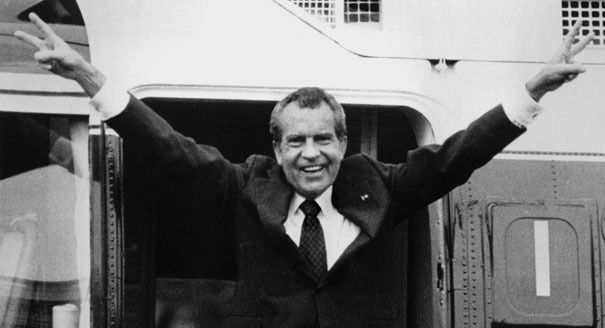
The relevance of Watergate more than a half-century later | SONDERMANN
By Eric Sondermann
by-eric-sondermann@coloradopolitics.com
Updated 5 days ago
It was the scandal for which all other scandals are now named. In June 1972, a small group of Cuban burglars with high-level connections broke into the headquarters of the Democratic National Committee. Those headquarters were located in the Watergate...
Colorado must continue finding common ground on wildfire policy | GUEST COLUMN
Colorado Politics
colorado-politics@coloradopolitics.com
Updated 4 days ago
By John Herrick Colorado has never lacked for opinions about wildfire policy. We debate forest management, climate change, prescribed burns, land use, air quality and budgets. Those debates are familiar territory, but a new discussion is beginning to happen around...
Proposition NN is the best investment for Colorado’s students and schools | GUEST COLUMN
Colorado Politics
colorado-politics@coloradopolitics.com
Updated 4 days ago
By Justin Ogden Colorado families know what it means to make difficult budget decisions. Inflation has driven up the cost of groceries, housing, utilities and just about everything else. Families like mine work hard to stretch every dollar while still...
Were the primaries a preview for consequential general election? | Paula Noonan
Paula Noonan
paula-noonan@coloradopolitics.com
Updated 5 days ago
Colorado’s political future will go the way of this election. Historically, the state has not had both chambers controlled by a supermajority. This election may change that. The primaries suggest how the general election may play out. Democrats had solid...
Disagreement doesn’t have to mean disrespect | GUEST COLUMN
Colorado Politics
colorado-politics@coloradopolitics.com
Updated 5 days ago
By Vincent Atchity These days, it doesn’t take long to feel overwhelmed by politics. Turn on the news, scroll through social media or read the comments on almost any political post and you’ll find anger, outrage and personal attacks. For...
PREV
PREVIOUS

Colorado better off after bipartisan 2023 legislative session | POINT
Lisa LaBriola Is Colorado better off now than at the start of the 2023 legislative session? Though the most controversial and partisan bills generally make the news and grab people’s attention, it is the smaller, bipartisan bills that have the most impact. Outside of the larger divisive issues of 2023, the General Assembly got to […]
Cops, metal detectors for Denver schools | Denver Gazette
Smaller class sizes and better working conditions for teachers are worthy priorities for Denver Public Schools. But they’ll do little to make the city’s schools safer from armed attack – despite the “findings” of a survey by the local teachers union. As reported by The Gazette this week, the Denver Classroom Teachers Association says it […]