

Federal judges provide peek at pathways to bench, appellate records under scrutiny | COURT CRAWL

Welcome to Court Crawl, Colorado Politics’ roundup of news from the third branch of government.
A group of Colorado’s federal judges gave an inside look at what it’s like to apply for and serve on the trial court bench, plus an investigation of state appellate court decisions revealed some trial judges have unusually high rates of reversal.
‘Roadways’ and expectations
? In 2019, the federal judiciary began its “Roadways to the Bench” program, initially focused on educating lawyers who might want to become bankruptcy judges. Last week, it held another “Roadways” event, expanded to include those who are interested in becoming magistrate judges, who assist with the workloads of the federal trial courts. A livestreamed panel interview was beamed to courthouses across the country, followed by in-person discussions with local judges.
? Several of Colorado’s district, magistrate and bankruptcy judges were on hand to talk to the room of mostly young attorneys. Among the pieces of advice: Don’t plan your lives around being appointed to a district judgeship, because that’s a largely random occurrence. If you’re between the ages of 45 and 55, you’re in the “sweet spot” and should apply for judgeships. And remember that it’s a lot of work.
? “The hours are long, but they’re a lot more flexible,” said U.S. Magistrate Judge Scott T. Varholak.
? Although there has already been a lot of turnover on Colorado’s federal trial court, there are additional vacancies expected. U.S. Magistrate Judge S. Kato Crews is currently a nominee for a district judgeship, so his seat would come open if he is confirmed. Also, a part-time magistrate judgeship based in Grand Junction is on the horizon (see below), and the district court is assembling a selection panel to recommend candidates.

Appellate reversals of trial court judges
? Although the state’s appellate courts routinely reverse the decisions of trial judges, an individual judge’s record of being reversed doesn’t factor into their judicial performance evaluation for voters, an investigation by The Gazette discovered. Moreover, some judges have unusually high rates of reversal on appeal.
? Some legal experts cautioned that reversals are a product of many factors, but The Gazette found multiple judges whose rulings on appeal were reversed more than 40% of the time.
A recap of oral arguments
? The Colorado Supreme Court heard oral arguments in six appeals last week. In a consequential civil case, the justices will decide whether the legislature acted in accordance with the state constitution by opening a three-year window for survivors of childhood sex abuse – whose deadline to sue over their injuries has long passed – to now hold their perpetrators or the institutions that enabled them liable. The justices didn’t provide a clear window into the direction of the case, acknowledging there are compelling public policy reasons for both upholding and striking down the law.
? In contrast, the justices were pretty unenthused about permitting prosecutors to present misleading narratives of defendants’ conduct without allowing juries to hear the entire context.
? Even though Colorado law doesn’t say that an acquittal in another country bars a defendant from being prosecuted for the same conduct in Colorado, the Supreme Court considered whether a man’s Mesa County murder conviction is valid given his prior acquittal in Mexico.
? Would your average juror know what “universal malice” means without a definition? The justices must decide whether a man’s conviction for attempted murder required the trial judge to give a definition to jurors, even though they didn’t ask for one.
? Whether juries, not judges, should decide if a crime amounts to domestic violence hinges on whether the Supreme Court says domestic violence treatment imposed after a conviction is “punishment,” or if it’s simply a non-punitive feature of the defendant’s conviction.
Heard on appeal
? The state’s Court of Appeals decided a Pueblo County judge wrongly withheld a police officer’s misconduct records from the defense, even as the officer committed more misconduct during the actual trial.
? A Denver prosecutor stepped over the line by referencing the defendant’s constitutional right against self-incrimination during her trial. The Court of Appeals reversed the conviction.
? The Court of Appeals agreed with a Weld County judge who concluded he violated the defendant’s right to a speedy trial and was obligated to dismiss the criminal charges.
? The ACLU of Colorado has appealed a ruling out of Teller County that approved of the sheriff’s cooperation with federal immigration authorities.
In federal news
? A federal judge ordered the Logan County sheriff and his subordinates to transport a suicidal detainee with a gaping wound to the hospital immediately. But that did not happen. Now, the sheriff might be held in contempt of court.
? Once again, a judge is allowing an inmate to proceed with his lawsuit against the federal government for an alleged prison yard stabbing that guards failed to prevent or intervene in.
? A Westminster police officer is not entitled to qualified immunity for pushing a 78-year-old man to the ground and tasing him inside a Walmart, a judge ruled.
? A Denver woman’s lawsuit is proceeding to trial on her claims that police officers violated her constitutional rights by destroying her home in search of a suspect.
Vacancies and appointments
? The governor has appointed Magistrate Monica O. Haenselman to the Boulder County Court, where she will succeed the late Judge Kristy Martinez.
? Applications are due by April 25 for those looking to succeed District Court Judges Jeffrey K. Holmes, who is retiring, and Peter Michaelson, who is resigning, in the 18th Judicial District (Arapahoe, Douglas, Elbert and Lincoln counties).
? With the elevation of former U.S. Magistrate Judge Gordon P. Gallagher to a presidentially-appointed district judgeship, Colorado’s federal trial court is assembling a panel to screen candidates for Gallagher’s old job in Grand Junction. Lawyers and nonlawyers will serve on the committee and they must reside on the Western Slope. Those willing to participate should email their cover letter and resume to cod_magistratejudgepanel@cod.uscourts.gov.

Miscellaneous proceedings
? On April 21, there will be a clinic on landlord/tenant law and evictions at the Alamosa Combined Court from 3-5 p.m. Interested attendees should register by Friday by emailing 12selfhelp@judicial.state.co.us.
? Applications are due by April 28 for organizations that handle eviction defense to receive a portion of $1.9 million in available grant money.
? Also on April 28, applications are due for organizations that offer legal services to those experiencing family violence. $2 million in grant money is available for this fiscal year.


Federal judge dismisses ex-Colorado judicial discipline director’s conspiracy lawsuit
Michael Karlik
michael.karlik@coloradopolitics.com
Updated 7 hours ago
A federal judge dismissed a lawsuit from Colorado’s former judicial discipline director on Tuesday, finding that he failed to adequately state claims for conspiracy or constitutional violations. Christopher S.P. Gregory, who served as the executive director of the Colorado Commission on Judicial...
Federal judge allows retaliation claims to proceed against prison officials
Michael Karlik
michael.karlik@coloradopolitics.com
Updated 6 hours ago
A federal judge agreed last week that a man incarcerated at Sterling Correctional Facility had credibly alleged that employees retaliated against him for filing grievances, including by taking away his disability accommodations and turning off his electricity. Louis Peoples Jr.,...

U.S. Rep. Lauren Boebert’s son arrested, faces charges of sexual exploitation of minor
Matt Kyle
matt.kyle@denvergazette.com
Updated 1 day ago
U.S. Rep. Lauren Boebert’s son Tyler Jay Boebert has been arrested and accused of recording and sharing a video depicting himself having intercourse with a minor, according to court records. The case originated in Garfield County in Western Colorado and...
Adams County water district may proceed with cost-recovery lawsuit against Denver for contamination
Michael Karlik
michael.karlik@coloradopolitics.com
Updated 18 hours ago
A federal judge rejected Denver’s arguments last week for pausing or dismissing a lawsuit brought by an Adams County special district seeking to recover its costs for addressing water contamination as a result of Denver firefighting activities. In January, the...
Federal judge declines to dismiss First Amendment retaliation claim against prison official
Michael Karlik
michael.karlik@coloradopolitics.com
Updated 17 hours ago
A federal judge agreed last month that an incarcerated Native American woman may pursue her claim of First Amendment retaliation against a prison official who allegedly interfered with her religious exercise. Yvonne Peterson resided at Buena Vista Correctional Facility for...

Colorado’s troubled guardianship office pursues ‘cultural reset’
Marianne Goodland
marianne.goodland@coloradopolitics.com
Updated 1 day ago
Colorado’s guardianship program, long criticized for mismanagement and high staff attrition, is undergoing a “cultural reset,” as its new director works to repair partnerships and prepare for a major expansion under recent legislation. Created by lawmakers in 2017, the Office...
Local party leaders, incoming judge among members of judicial performance commission that violated law
Michael Karlik
michael.karlik@coloradopolitics.com
Updated 3 days ago
A local Democratic leader and 2024 presidential elector. A legislative aide and leader in the Young Republicans. An incoming county court judge freshly appointed by the governor. They are among the eight members of the northeastern Colorado judicial performance commission...

Judge dismisses lawsuit seeking records from Colorado Democratic group
Marianne Goodland
marianne.goodland@coloradopolitics.com
Updated 4 days ago
A lawsuit seeking to obtain records from Democratic lawmakers affiliated with a caucus has been thrown out by a Denver District Court judge. On July 17, Judge Ericka Englert dismissed the April lawsuit filed by progressive activist Derrick Blanton, who...
Colorado Springs mother Deborah Nicholls’ murder conviction overturned
Nick Smith
nick-smith@coloradopolitics.com
Updated 5 days ago
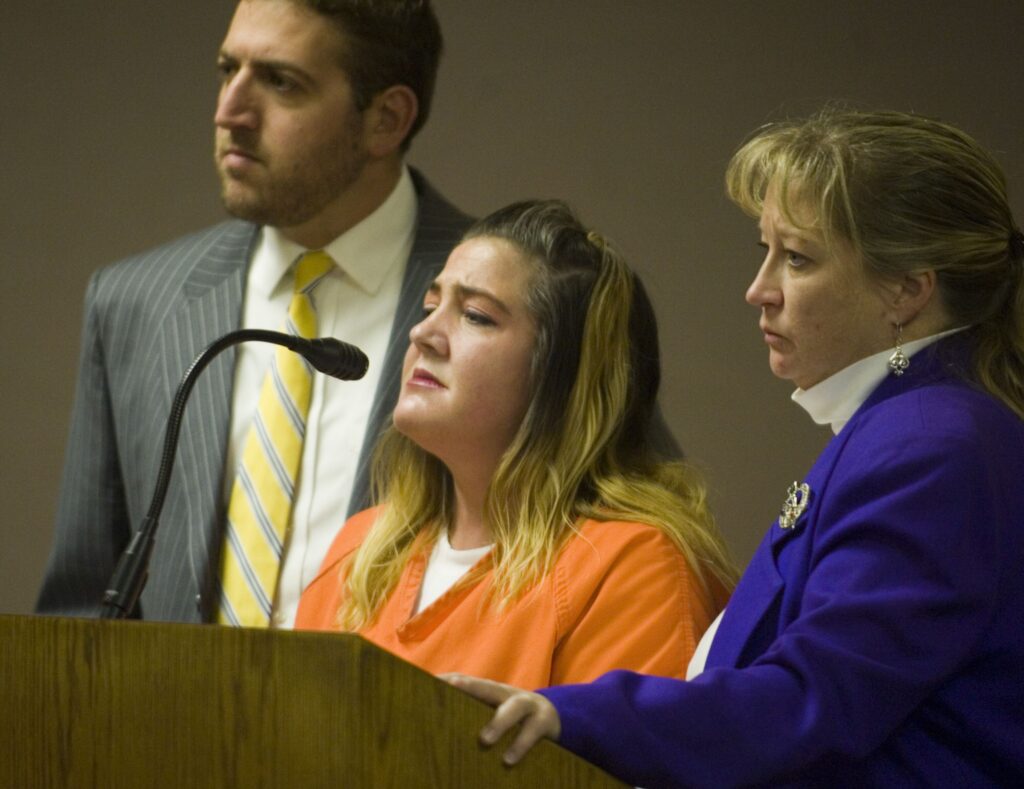
A Colorado Springs mother convicted in 2008 of murdering her three children in a house fire might get a new trial after a judge ruled that prosecutors withheld key evidence that could have impacted the jury’s verdict. Deborah Nicholls, whose...
Colorado court overturns illegal $7,000 restitution order
Michael Karlik
michael.karlik@coloradopolitics.com
Updated 4 days ago
Colorado’s second-highest court overturned a Weld County defendant’s obligation to pay more than $7,000 in crime victim restitution on Thursday because a trial judge failed to issue a legally compliant restitution order at the time of sentencing. In Colorado, as...
PREV
PREVIOUS
Colorado River Basin sees 'spectacular' snowpack, buying time for big decisions
The Colorado River is one of the West’s most vital resources. But 20 years of drought have stressed the entire river basin, forcing federal officials to call for massive cuts in water use. This winter, in the water-towers of the west, storms have dropped more than double the average snowpack in some Colorado mountains. But […]

Tina Peters sentenced to home detention in Mesa County obstruction case but plans to appeal
Former Mesa County clerk Tina Peters was sentenced Monday in Grand Junction to four months of home detention and will be required to perform community service following her conviction last month on a misdemeanor charge of obstructing government operations, but the sentence will be stayed pending the outcome of her appeal. Peters was convicted on […]