

Colorado Supreme Court mulls whether acquittal in Mexico bars man’s Mesa County murder conviction
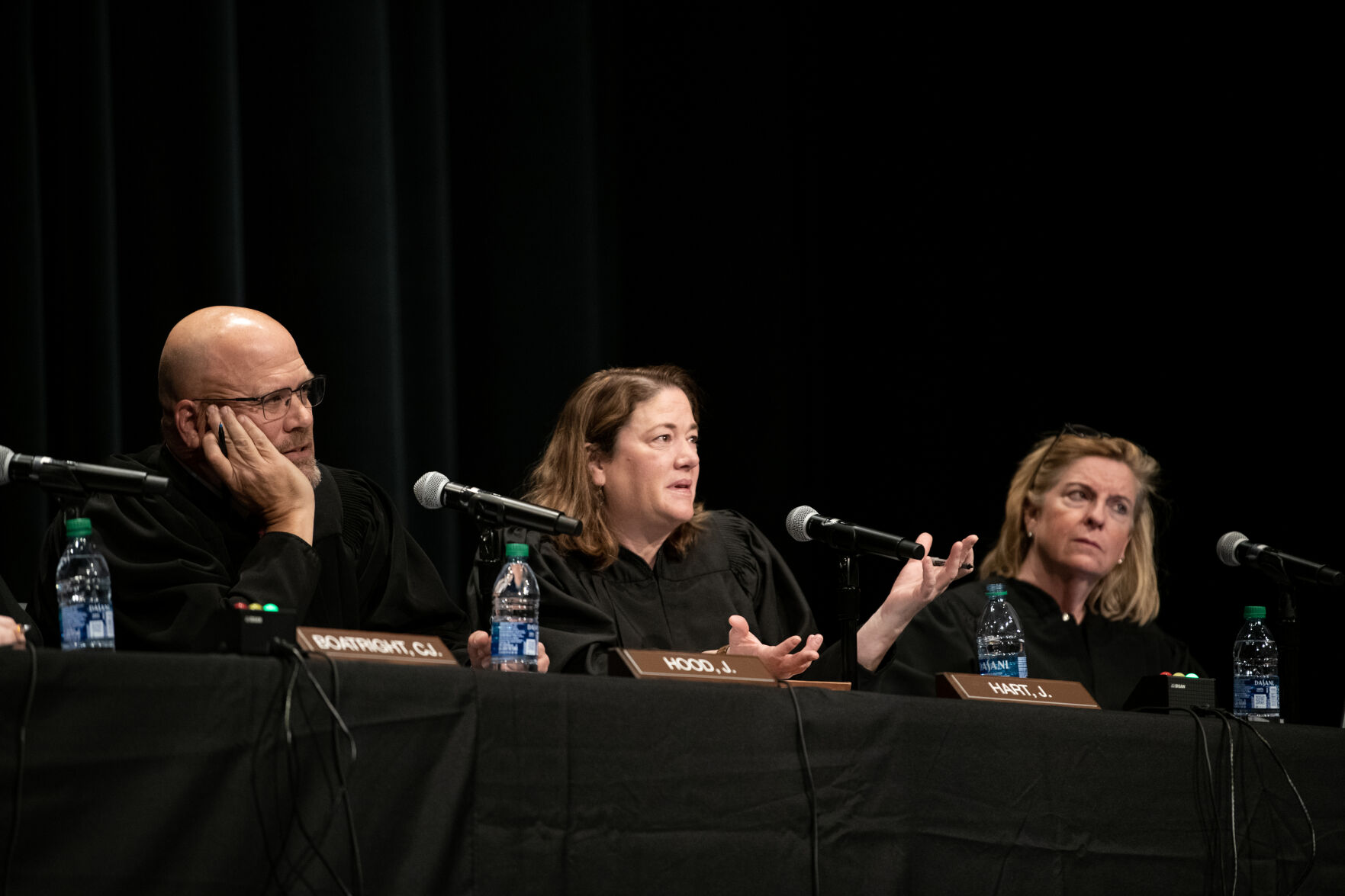
Colorado law generally prohibits local prosecutors from charging defendants with a criminal offense if they have already been prosecuted for the same conduct by “the United States, or another state, or … a municipality.”
But what about another country?
A Mesa County jury found Rafael Aguilar Garcia guilty of murder in 2017, nearly three decades after he killed Charles Porter and five years after Mexico’s judicial system acquitted him of the offense. Now, Garcia is arguing to the Colorado Supreme Court that his conviction violates the prohibition on double jeopardy, which can shield defendants from being prosecuted twice for the same act.
On the one hand, Colorado’s law against multiple prosecutions does not specifically mention other nations. On the other hand, the Supreme Court’s own precedent suggests that a prosecution by “any separate sovereign” triggers the bar against double jeopardy in Colorado.
“Do you see evidence that the intent behind the statute was to bar dual prosecutions like this one?” asked Justice Melissa Hart during oral arguments on Wednesday.
“The fact that they didn’t actually include or exclude foreign countries means to me it’s sort of an open question,” responded Deputy State Public Defender Joseph P. Hough.
There was no dispute that Garcia killed Porter in 1989. Evidence indicated Garcia was jealous of Porter’s relationship with his ex-wife, and Garcia later claimed he committed – at most – manslaughter by acting in a form of self-defense. Garcia fled to Mexico, where he was a citizen, and the Mexican government reportedly would not extradite him because of the potential death penalty Garcia would face in the United States.
Instead, state authorities sent a “casebook” with evidence to Mexico so that Mexican authorities could prosecute him under Article IV of its federal penal code. Article IV applies to Mexican citizens in Mexico who have committed a crime in another country. To qualify, the offense has to be a crime in both countries and the defendant cannot have been already tried in the country where he committed the crime.
After proceedings that did not involve sworn testimony or a jury trial, Mexico’s judiciary acquitted Garcia in 2012.
“Zero crossed my mind about double jeopardy,” former Mesa County District Attorney Peter Hautzinger later said. “I was assuming he’d be convicted in the Mexican case.”
In 2016, Garcia returned to Colorado, on the advice of an attorney who believed double jeopardy prohibited another prosecution for Porter’s killing. Instead, authorities arrested him and tried him for murder.
Following his conviction, a three-judge panel for the Court of Appeals believed the “dual sovereignty doctrine,” which allows separate government entities to prosecute a person for an offense that violates each of their laws, allowed for Garcia’s prosecution. In doing so, it rejected the notion that the Mexican prosecution was a “sham” that Colorado actually controlled.
The panel also rejected a 1990 Colorado Supreme Court decision that interpreted the state prohibition against multiple prosecutions to “abolish the dual sovereignty doctrine.” Because that case was about tribal and state prosecutions, the Court of Appeals believed it had nothing to do with other countries.
The current Supreme Court was similarly unsure that Colorado’s double jeopardy prohibition for prosecutions by “another state” applied to countries.
“How do we read ‘foreign nation’ into ‘another state?'” asked Justice Richard L. Gabriel.
“Especially when the General Assembly seems to, elsewhere in the Colorado code, refer specifically to a foreign country when it intends to do so,” added Justice Monica M. Márquez.
Garcia argued in the alternative that Mexico’s prosecution was so closely tied to Colorado’s justice system that Colorado effectively dominated, controlled or manipulated the process and double jeopardy should still apply.
“The prosecution in Mexico was basically a shell for the prosecutors in Colorado, who gave the packet of materials for the prosecution over to the Mexican government,” Hough said.
“Is that really enough?” asked Justice Maria E. Berkenkotter. “If there’s encouragement or I send a binder full of information, does that get you to ‘dominates, controls and manipulates’?”
The Colorado Attorney General’s Office countered that it did not coerce Mexico into prosecuting Garcia. Further, even if the former district attorney believed double jeopardy applied following Garcia’s acquittal, he was mistaken, said Senior Assistant Attorney General Brian M. Lanni.
Lanni also contended the U.S. Constitution’s prohibition on double jeopardy should not be understood to allow “foreign acquittals to protect domestic criminals.”
“The attorney general brought up the fact that we can’t always trust foreign governments to do the right thing,” responded Hough. “But I think we can’t always trust some of the states, particularly some of the southern states, to be quite frank … to do the right thing either.”
The case is Garcia v. People.


Colorado Supreme Court upholds police search of car based on arm movements
Michael Karlik
michael.karlik@coloradopolitics.com
Updated 12 hours ago
The Colorado Supreme Court decided last week that Denver officers’ search of a vehicle was constitutional, based on their perception of the occupants’ arm movements that a trial judge found to not be credible. Officers Keegan Grubb and Richard Eberharter...

10th Circuit tosses Pueblo County sheriff defendants’ appeal in fatal shooting lawsuit
Michael Karlik
michael.karlik@coloradopolitics.com
Updated 20 hours ago
The Denver-based federal appeals court rejected an attempt from Pueblo County sheriff’s employees on Wednesday to rely on their own version of the facts to escape liability for fatally shooting an unarmed man outside a middle school. A trial judge...
Colorado justices uphold strict interpretation of consumer protection law against debt collector
Michael Karlik
michael.karlik@coloradopolitics.com
Updated 15 hours ago
The Colorado Supreme Court concluded last month that a debt collector failed to comply with state law by suing a woman for an unpaid credit card debt without documentation that it owned her account. Portfolio Recovery Associates, LLC filed a...
Colorado justices say judges can nearly eliminate parenting time without it being a ‘restriction’
Michael Karlik
michael.karlik@coloradopolitics.com
Updated 2 days ago
The Colorado Supreme Court concluded last month that judges can reduce the number of days a parent spends with their child post-divorce to just above zero without it rising to the level of a “restriction” that requires more rigorous justification...

Colorado Springs may be sued for faulty intersection, state Supreme Court rules
Michael Karlik
michael.karlik@coloradopolitics.com
Updated 2 days ago
The Colorado Supreme Court decided last month that Colorado Springs can be sued over a collision that occurred as a result of traffic lights that were functioning normally in one direction, but were inoperative in the perpendicular direction. The question...
Internal appeals of parole revocation must come before judicial review, Colorado justices conclude
Michael Karlik
michael.karlik@coloradopolitics.com
Updated 2 days ago
The Colorado Supreme Court ruled last month that criminal defendants whose parole is revoked must appeal the decision internally to the state’s parole board before seeking review by a judge. The process for returning someone to incarceration for violating the...

Judge approves injunction for Colorado Springs counselor after SCOTUS rules in conversion therapy case
Michael Karlik
michael.karlik@coloradopolitics.com
Updated 15 hours ago
A federal judge last week blocked Colorado from enforcing its restriction on conversion therapy for LGBTQ children against a Colorado Springs counselor, after both sides agreed that the state will not pursue professional disciplinary action while the case proceeds. The...
Colorado Supreme Court to decide whether out-of-state defendant may be prosecuted for in-state crime
Michael Karlik
michael.karlik@coloradopolitics.com
Updated 2 days ago
The Colorado Supreme Court recently announced that it will decide whether Douglas County prosecutors had grounds to pursue criminal charges against a woman in New York whose conduct occurred outside of Colorado. Erin Brennan and her children lived in New...
Colorado justices, 4-2, say defendant cannot be retried after judge rejected jury’s partial acquittal
Michael Karlik
michael.karlik@coloradopolitics.com
Updated 3 days ago
If a jury clearly indicates that it has acquitted a defendant of certain charges while remaining deadlocked on others, judges must accept that partial acquittal verdict, a divided Colorado Supreme Court ruled on Monday. Justice William W. Hood III, in...
After prison release, Tina Peters faces tight parole limits, ongoing legal troubles
Marianne Goodland
marianne.goodland@coloradopolitics.com
Updated 6 days ago
Released from prison this week, former Mesa County Clerk Tina Peters now begins a parole term that outlines strict limits on her movements and conduct, while separate ethics and campaign‑finance cases continue to move forward. Peters’ parole, as first reported...
PREV
PREVIOUS

Denver officials say to believe survivors as part of Sexual Assault Awareness Month
Denver is recognizing Sexual Assault Awareness Month by reminding people to believe survivors. Kimberly Corban, a survivor, said when she was 20, a stranger broke into her apartment and raped her. She chose to report it to police, and said her experience in the aftermath was defined by police, prosecutors and health care workers believing […]

Denver Election: City Councilmember Candi CdeBaca overtakes challenger in latest count
District 9 Councilwoman Candi CdeBaca, the incumbent, overtook challenger Darrell Watson by 54 votes in the latest count. The latest tally on Wednesday counted nearly 14,000 votes. With neither candidate anywhere close to hitting the 50% mark, the race is likely headed toward a runoff. So far, CdeBaca has secured 43.95% of the vote, compared […]