

Underground nuclear waste repository begins filling new disposal area | OUT WEST ROUNDUP

NEW MEXICO
Nuclear waste repository begins filling new disposal area
ALBUQUERQUE – Workers at the nation’s only underground nuclear waste repository have started using a newly mined disposal area at the underground facility in southern New Mexico.
Officials at the Waste Isolation Pilot Plant made the announcement late last month, saying the first containers of waste to be entombed in the new area came from Oak Ridge National Laboratory in Tennessee – one of the many labs and government sites across the country that package up waste and ship it to WIPP.
Known as Panel 8, the new area consists of seven separate rooms for placing special boxes and barrels packed with lab coats, rubber gloves, tools and debris contaminated with plutonium and other radioactive elements.
Each room measures 33 feet wide, 16 feet high and runs the length of a football field minus the end zones.
Carved out of an ancient salt formation about half a mile deep, the subterranean landfill located outside of Carlsbad received its first shipment in 1999. The idea is that the shifting salt will eventually entomb the radioactive waste left from decades of bomb-making and nuclear weapons research.
In 2014, a fire and separate radiation release forced a nearly three-year closure of the repository and a costly overhaul of the policies and procedures that govern WIPP and the nation’s multibillion-dollar cleanup program for Cold War-era waste.
State eases testing for students set to graduate in 2024
ALBUQUERQUE – New Mexico is relaxing requirements for some high school students by eliminating the need to pass standardized tests as a way to demonstrate they’re ready to graduate, the state Public Education Department said.
The announcement applies to students on track to graduate in 2024. While the students still must take the tests, their scores won’t serve as a measure of whether they’re eligible to graduate, said Lynn Vasquez, who directs the Assessment and Learning Management System.
The decision wasn’t made lightly and was based on guidance from the U.S. Department of Education to consider the high stakes of testing to gauge performance, state Education Secretary Kurt Steinhaus said.
The students, who were freshman when the coronavirus pandemic began, are still required to pass their classes, Vasquez told the Albuquerque Journal.
Whitney Holland, president of the American Federation of Teachers New Mexico, welcomed the decision. She said she’s hopeful it will lead to instruction that’s not focused on teaching to a test.
Amanda Aragon, who directs the advocacy group NewMexicoKidsCAN, said she’s worried the decision might hinder students’ success in the future.
WYOMING
Medicaid expansion on lawmakers’ agenda
CHEYENNE – Lawmakers in the 67th Wyoming Legislature will decide whether to expand the state’s Medicaid program eligibility in the upcoming general session.
If approved, Wyoming will be the last state in the West to do so.
The Legislature’s Joint Revenue Committee voted 9-5 on Nov. 22 to sponsor a bill that would allow the Wyoming Department of Health director, insurance commissioner and governor to negotiate with the Centers for Medicare and Medicaid Services to obtain a state amendment. This would provide Medicaid coverage for all individuals described under the Social Security Act, unless the federal medical assistance percentage is less than a certain amount.
It is the same piece of legislation that wasn’t considered for introduction in the 2022 budget session or passed in the 2021 general session. The Medical Treatment Opportunity Act was sponsored by seven state representatives from both sides of the aisle in 2021, and after passing the House for the first time, it died in the Senate.
Lawmakers have had the opportunity to expand Medicaid since 2010, when it was included as part of the Patent Protection and Affordable Care Act. The program was designed to cover all adults with an income below 138% of the federal poverty line and address the historically high uninsured rates among adults.
“The bottom line is, I think the last poll I saw was about 70% of Wyomingites support this. That should matter to us,” said Sen. Wendy Schuler, R-Evanston, who previously voted against expansion in the Senate. She said she received more than 200 supportive emails and only 20 in opposition.
Sen. Tom James, R-Rock Springs, said he believed there could be cases of fraud by residents who were not under 138% of the poverty line, while others said expansion could be a liability for the state because 10% of the cost is not paid by the federal government.
OKLAHOMA
Citizen-led initiative would codify abortion access
OKLAHOMA CITY – Roger Coody, an Oklahoma hairstylist without legal training or significant political experience, is pushing a ballot proposal he wrote that would make abortion access a constitutional right in his deeply red state, where Republican lawmakers have banned the procedure in nearly all circumstances.
“I don’t ever want to see anybody else’s right stripped away from them, because you never know when it is going to be yours,” said Coody, who said women who have been instrumental in his life inspired his foray into politics. “I am just trying to do my best to change things.”
Having overcome the initial hurdle where someone can protest a petition’s legality, the Tulsa man now needs approval from the secretary of state’s office. He then will have 90 days to gather more than 173,000 signatures of registered voters who want to put abortion rights to a vote. Campaigns for ballot questions can cost millions of dollars, and each signature must be verified before the governor schedules an election.
Republican state Rep. Jim Olsen, who wrote the bill to make it a felony crime to perform an abortion in Oklahoma, said he recognizes the right of citizens to launch an initiative petition, but added that “basic morality should not be argued from a standpoint of majority vote.”
In one of the most surprising policy shifts in the conservative state, marijuana supporters in 2018 managed to successfully pass one of the country’s most liberal medical marijuana programs. The question was approved by 57% of voters and opened the state to a booming industry.
Other ballot measures have enshrined Medicaid expansion into the state’s constitution and reduced penalties for drug possession and low-level property crimes, in both cases circumventing the legislature.
Amber England, an Oklahoma political consultant who spearheaded the Medicaid expansion, said supporters likely spent more than $5 million on the effort.
SOUTH DAKOTA
Governor bans TikTok from state-owned devices
SIOUX FALLS – South Dakota Gov. Kristi Noem on Nov. 29 issued an executive order banning state employees and contractors from accessing the video platform TikTok on state-owned devices, citing its ties to China.
TikTok is owned by ByteDance, a Chinese company that moved its headquarters to Singapore in 2020. It has been targeted by Republicans who say the Chinese government could access its user data like browsing history and location. U.S. armed forces also have prohibited the app on military devices.
TikTok, which has exploded in popularity with a nearly addictive scroll of videos, has also struggled to detect ads that contain blatant misinformation about U.S. elections, according to a recent report from nonprofit Global Witness and the Cybersecurity for Democracy team at New York University.
BytDance did not immediately respond to a request for comment on Noem’s order.
TikTok Chief Operating Officer Vanessa Pappas, based in Los Angeles, has previously said the company protects all data of American users and that Chinese government officials have no access to it.
U.S. officials and the company are now in talks over a possible agreement that would resolve American security concerns.



Judge grants partial injunction to GEO in fight against state health inspection law
Kyla Pearce
kyla.pearce@gazette.com
Updated 8 hours ago
A judge ruled Thursday that The GEO Group does not have to follow parts of a new state law requiring more frequent health and safety inspections at the U.S. Immigration and Customs Enforcement processing center in Aurora. Under the order...

Parker man faces 20 years to life for serial sexual assaults
Nicholas Fogleman
nicholas.fogleman@denvergazette.com
Updated 11 hours ago
A 25-year-old Parker man who sexually assaulted three women in 2025 pleaded guilty Wednesday and will serve 20 years to life in prison. Javier Rodriguez-Andrade pleaded guilty to charges stemming from three sexual assaults involving women ages 19 to 24. ...

Buttigieg performs best among Democrats against Rubio or Vance in possible 2028 contest: Poll
David Zimmermann
david-zimmermann@coloradopolitics.com
Updated 13 hours ago
Former Transportation Secretary Pete Buttigieg appears to be the Democratic Party’s best chance at winning the presidency against Secretary of State Marco Rubio or Vice President JD Vance in 2028, according to a poll released on Thursday. In hypothetical matchups...

Douglas County moves to Stage 1 fire restrictions following recent rain
Nicholas Fogleman
nicholas.fogleman@denvergazette.com
Updated 11 hours ago
Douglas County has downgraded its fire restrictions from Stage 2 to Stage 1 on Thursday following recent rainfall and moderate fire conditions, according to the Douglas County Sheriff’s Office. The change applies to unincorporated Douglas County, as well as the...
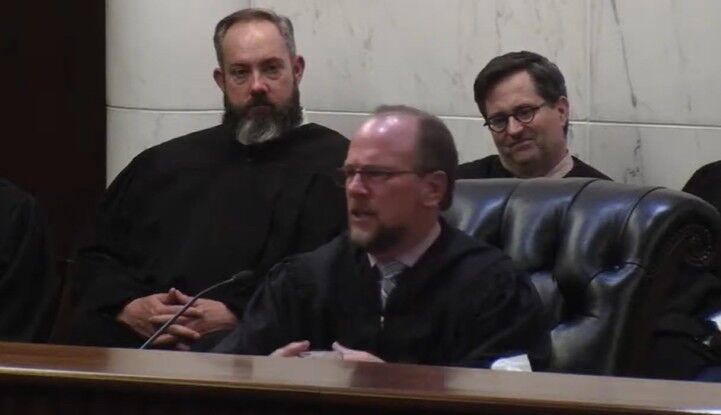
Divided appeals court upholds warrantless DNA collection in Colorado cold case, cautions of government overreach
Michael Karlik
michael.karlik@coloradopolitics.com
Updated 9 hours ago
Colorado’s second-highest court upheld the warrantless collection of a suspect’s DNA from a discarded soda can as constitutional on Thursday, while warning about potential abuse of DNA privacy in the absence of further guardrails. By 2-1, a three-judge Court of...

Democratic gubernatorial candidate Phil Weiser promises to appoint rural outreach director, water adviser
Marianne Goodland
marianne.goodland@coloradopolitics.com
Updated 9 hours ago
Democratic gubernatorial candidate and current Attorney General Phil Weiser told the Colorado Water Congress Thursday he intends to appoint a rural outreach director and a water policy adviser should he win the election in November. Weiser’s speech at the Steamboat...
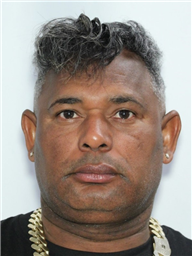
Man charged in Northglenn homicide of wife
Matt Kyle
matt.kyle@denvergazette.com
Updated 11 hours ago
A man has been formally charged with murder and burglary relating to a homicide last week in Northglenn. Alexei Munive-Rodriguez, 48, was arrested Sunday after he was at large following the homicide, which occurred Friday. Police were dispatched around 10:30...
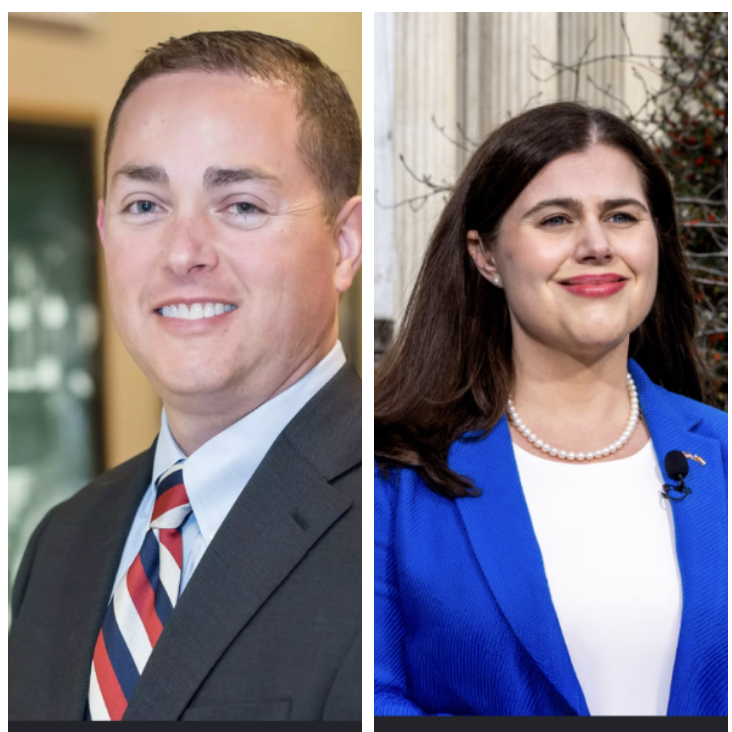
Attorney General candidates present priorities at Colorado Water Congress
Marianne Goodland
marianne.goodland@coloradopolitics.com
Updated 10 hours ago
The two major-party candidates for attorney general — Republican Michael Allen, the district attorney for Teller and El Paso counties, and Democratic Secretary of State Jena Griswold — on Thursday outlined their priorities at the Colorado Water Congress. Griswold attended...

US aircraft carrier arrives in Middle East, relieving long-deployed USS Lincoln
The Associated Press
the-associated-press@coloradopolitics.com
Updated 14 hours ago
WASHINGTON (AP) — The Asia-based USS George Washington aircraft carrier is now operating in the Middle East, the U.S. military said Thursday, relieving a long-deployed carrier following reports of mental health challenges and supply shortages aboard while it was supporting...

Denver named finalist for 2028 Democratic Convention site
Thelma Grimes
thelma.grimes@coloradopolitics.com
Updated 9 hours ago
The Mile High City competes with Boston and Philadelphia The list of cities being considered to host the 2028 Democratic National Convention has narrowed even further, with Denver making the cut as one of the final three, along with Boston...
PREV
PREVIOUS

A year that could have been worse | SONDERMANN
Eric Sondermann Time away, especially following a noisy election, can be good for the soul. Moreover, such breaks can offer perspective and make the debates that fill our days seem rather small and narrow. Consider that southeast Asia, only a sliver of that massive continent, comprises nearly 700 million people. That is a population more […]

Colorado judge reportedly 'screamed' at attorneys days after returning from suspension, undergoing anger management
Just two days after returning from a monthlong suspension from the bench for a criminal conviction that required extensive anger-management counseling, Summit County District Judge Mark Thompson launched into a courtroom tirade against two attorneys that left them “frightened” and “fearful.” Thompson said in a written order that he “roundly admonished” the lawyers at the […]