

Court upholds $187,000 sanction against lawyers who claimed election rigging by Dominion, Facebook
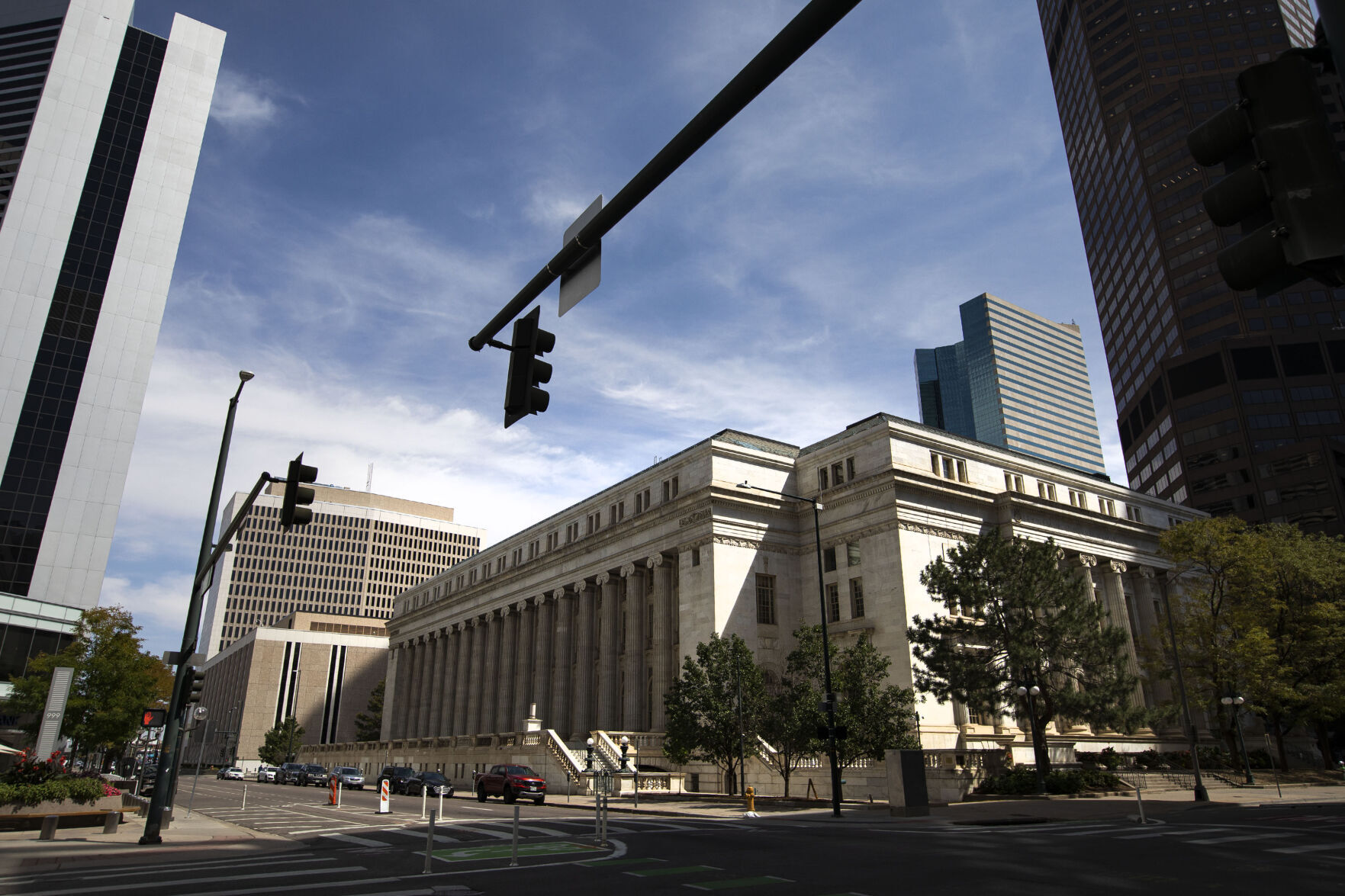
The federal appeals court based in Denver upheld a sanction of nearly $187,000 against two attorneys who pursued unproven claims that Dominion Voting Systems, Facebook and multiple officials in swing states violated the rights of all American voters during the 2020 presidential election.
The U.S. Court of Appeals for the 10th Circuit previously agreed the underlying lawsuit was a nonstarter because the plaintiffs lacked standing – meaning they failed to show a specific injury they suffered from the purported vote-altering scheme.
Now, a three-judge panel of the appellate court also affirmed the trial judge’s award of $186,922 to the defendants, agreeing that attorneys Gary D. Fielder and Ernest J. Walker tried to litigate a clearly meritless lawsuit without doing their homework.
“In short, plaintiffs’ arguments regarding standing were so inadequate that it was not an abuse of discretion for the district court to conclude that the claims were made in bad faith, vexatiously, wantonly, or for oppressive reasons,” the panel wrote in a Dec. 13 order.
The decision, which was unsigned, came from Chief Judge Jerome A. Holmes and Judge Timothy M. Tymkovich, both appointees of George W. Bush, and Judge Veronica S. Rossman, a Joe Biden appointee.
Fielder issued a statement saying he and Walker spent “thousands” of hours researching and preparing the case, which they brought on behalf of eight named voters and the remaining 160 million registered voters in the country. He vowed to appeal the sanctions decision to the U.S. Supreme Court, which already declined to hear his appeal of the lawsuit’s dismissal.
“Never did we think that our actions were unethical or frivolous,” Fielder wrote. “We were representing voters from across the country and, now, fear that the affirmation of the sanctions imposed against us will have a chilling effect on other lawyers.”
The 2020 presidential election spawned a raft of litigation alleging voter fraud and violations of election law, concentrated among swing states. Fielder and Walker filed their own lawsuit in December 2020 in Colorado’s federal trial court. Intended as a class action, it asked for $160 billion in damages – $1,000 for each registered voter – and for a legal declaration that the actions of the defendants, including state elections officials, were null.
The lawyers named as defendants the voting technology company Dominion Voting Systems, Inc.; social media platform Facebook and its CEO, Mark Zuckerberg; the nonprofit Center for Tech and Civic Life; the governors of Georgia, Michigan, Pennsylvania and Wisconsin; and 10,000 unidentified “co-conspirators.”
The lawsuit alleged the defendants engaged in a “coordinated effort” to change voting laws, alter votes, provide illegal methods of voting, count illegal votes and “suppress the speech of opposing voices.”
The parties agreed to have a federal magistrate judge, N. Reid Neureiter, handle the case. Neureiter granted the defendants’ request to dismiss for lack of standing, and then determined Fielder and Walker were liable for monetary sanctions because their claims were serious, but also clearly meritless.
Given the attack on the U.S. Capitol on Jan. 6, 2021 by supporters of then-President Donald Trump seeking to disrupt the counting of Electoral College votes, “circumstances mandated that plaintiffs’ counsel perform heightened due diligence, research, and investigation before repeating in publicly filed documents the inflammatory, indisputably damaging, and potentially violence-provoking assertions about the election having been rigged or stolen,” Neureiter wrote on Aug. 3, 2021.
Fielder responded by complaining in a video to supporters that he only consented to the magistrate judge handling the case because “we don’t need the judge. … We just need the magistrate to sit quietly off to the side and sign orders that we present after argument.”
He then filed an appeal to the 10th Circuit, insisting he could prove to a jury his claims about a “cabal of progressives” illegally influencing the election outcome. Fielder also argued Neureiter’s monetary sanctions were designed to prevent him from speaking about the 2020 election.
The 10th Circuit disagreed on all counts. Neureiter’s conclusion that no reasonable attorney would have believed the plaintiffs had standing to bring the lawsuit was “amply supported in the record.” Specifically, the panel pointed to Fielder’s inability to show how his lawsuit was viable compared to all of the other election challenges that had failed to gain traction.
“At the hearing on the motions to dismiss and the motions to amend, the district court explicitly gave Mr. Fielder the opportunity to distinguish the many adverse cases cited by the defendants, but he was not able to meaningfully do so,” the panel wrote.
As for the decision to name various state officials outside of Colorado as defendants, Fielder and Walker “could not identify a single case supporting the proposition that a federal court sitting in State A has personal jurisdiction over an official of State B regarding actions taken by that official with regard to elections within State B.”
The panel added that Neureiter’s order did not violate the lawyers’ First Amendment rights because frivolous litigation is not immune from sanctions.
An Associated Press review of potentially illegal votes in competitive states found an absence of widespread fraud that would have affected the outcome of the election.
The case is O’Rourke et al. v. Dominion Voting Systems, Inc. et al.

Parole, appeals deadlines and restitution: Colorado justices accept cases
Michael Karlik
michael.karlik@coloradopolitics.com
Updated 9 hours ago
The Colorado Supreme Court announced on Monday that it will determine how a defendant’s parole-eligibility date should be calculated in instances where a new trial results in a sentence being imposed retroactively to the date of the original, since-overturned sentence....
Federal judge rejects DOJ bid to force Colorado to hand over voter information
Marissa Ventrelli
marissa.ventrelli@coloradopolitics.com
Updated 13 hours ago
A U.S. district court judge has dismissed a lawsuit filed by the U.S. Department of Justice against Colorado Secretary of State Jena Griswold for refusing to provide the agency with personal voter information. Last December, the DOJ’s Civil Rights Division asked...
3 Colorado judges receive unfavorable retention recommendation as one performance commission violates rules
Michael Karlik
michael.karlik@coloradopolitics.com
Updated 17 hours ago
Of the 123 Colorado judges standing for retention on the November ballot, citizen-led performance commissions found that three did not meet the required performance standards. However, in an unprecedented move, the commission charged with evaluating Supreme Court and Court of...
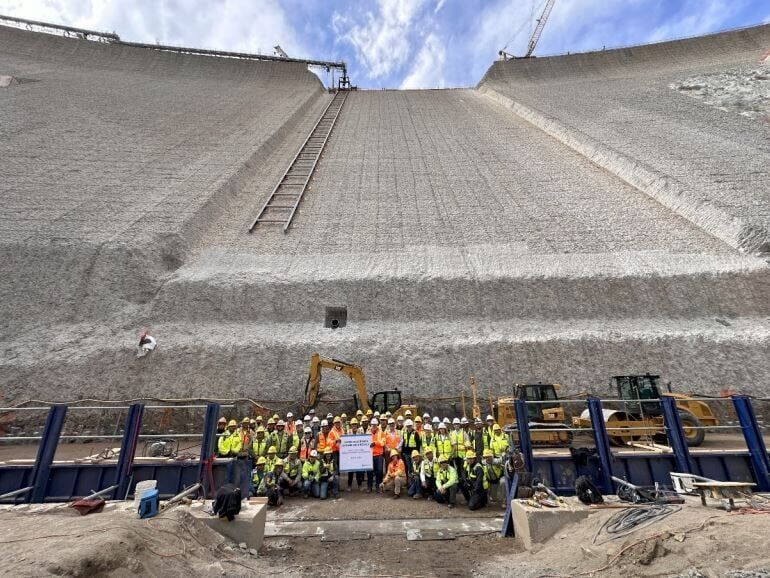
10th Circuit weighs Gross Reservoir expansion, judge’s ‘punishment’ of Denver Water
Michael Karlik
michael.karlik@coloradopolitics.com
Updated 1 day ago
Members of the Denver-based federal appeals court considered on Friday whether they could intervene in an ongoing infrastructure project to enlarge a Boulder County dam after a trial judge deemed the underlying permit unlawful nearly two years ago. Denver Water...

10th Circuit upholds federal prohibition on juvenile handgun possession
Michael Karlik
michael.karlik@coloradopolitics.com
Updated 12 hours ago
The Denver-based federal appeals court concluded on Monday that Congress acted within its constitutional powers to make it a crime for juveniles to possess handguns in most instances. The decision from the U.S. Court of Appeals for the 10th Circuit...

Senate advances judicial nominee, Montezuma County judge agrees to discipline | COURT CRAWL
Michael Karlik
michael.karlik@coloradopolitics.com
Updated 2 days ago
Welcome to Court Crawl, Colorado Politics’ roundup of news from the third branch of government. A U.S. Senate committee advanced a judicial nominee from Colorado, plus a Montezuma County judge agreed to receive discipline for his misconduct that stops short...
Judge denies Calderon injunction case against Denver, Johnston
Deborah Grigsby
deborah.smith@denvergazette.com
Updated 2 days ago
A U.S. District Court judge has denied a preliminary injunction in the case of Jessica Calderon, the Denver city employee who won a temporary restraining order preventing the City and County of Denver from terminating her amid the 2025 citywide...

10th Circuit partially revives lawsuit over 2020 Denver protest injuries
Michael Karlik
michael.karlik@coloradopolitics.com
Updated 3 days ago
The Colorado-based federal appeals court revived a man’s claims against Denver on Friday after concluding a trial judge resolved the case in the city’s favor without analyzing two of the three instances of alleged excessive force and other constitutional violations....

Federal judges find Colorado immigration judge violated several orders
Michael Karlik
michael.karlik@coloradopolitics.com
Updated 3 days ago
Multiple federal judges in Colorado have freed people from immigration custody after determining that one immigration judge violated their directives for properly conducting bond hearings. For nearly a year, Colorado’s U.S. District Court has faced a flood of habeas corpus petitions...
Misconduct complaints from ex-Colorado judicial discipline director dismissed against federal judges
Michael Karlik
michael.karlik@coloradopolitics.com
Updated 5 days ago
The administrative body for the Denver-based federal appeals court upheld a finding last week that misconduct complaints against Colorado’s chief federal trial judge and the chief appeals judge warranted dismissal and appeared to be a “litigation tactic” by the complaining...
PREV
PREVIOUS

Colorado think tank sees economic perils ahead, argues for free market approach to challenges
A Denver-based think tank argued for the adherence to free-market principles when crafting policy in a new report that gives Colorado’s economy a strong rating but which also warns about a “sour” climate ahead. The new report by the Common Sense Institute paints both an optimistic and foreboding future, noting that Colorado’s […]

Colorado House committee leadership announcement draws internal diversity critique
Colorado state House Speaker-designee Julie McCluskie on Monday announced legislative assignments for 11 committees, trumpeting the fact that eight of those panels will be chaired by women in the upcoming session. But it didn’t go unnoticed in the Democratic caucus that every committee chair is white. The lack of inclusion of people of color among […]