

COURT CRAWL | Judicial retention election, public trial right under scrutiny
Welcome to Court Crawl, Colorado Politics’ roundup of news from the third branch of government.
Voters have fewer than 48 hours to turn in their ballots and decide whether to retain state judges whose terms are expiring, plus the appellate courts last week interpreted the boundaries of the constitutional right to a public trial.
Remember to vote
? There are 135 judges who are seeking retention this year to terms of varying lengths, depending on their position. Citizen-led performance commissions have advised that all of the judges meet performance standards. The non-retention of a judge will create a vacancy for the governor to fill.
? For any questions about the judicial retention process, check out this explanation from Colorado Politics’ voter guide.
? Voters are also welcome to use Colorado Politics as a resource to learn about the work and decisions of judges throughout the state.
The right to a public trial
? Under the Sixth Amendment and the Colorado constitution, criminal defendants have the right to a public trial. Although sometimes that right has to give way to accommodate other concerns, the U.S. Supreme Court has laid out a rubric for when judges may close their courtroom to some or all members of the public. Last week, the Colorado Supreme Court decided an Arapahoe County judge acted properly by excluding the disruptive wife of one of the defendants from three-and-a-half days of trial.
? Days later, the state’s Court of Appeals ruled a different Arapahoe County judge was also justified in excluding one member of the public during jury selection, but only because of the unique circumstances: a small courtroom, a large jury pool, and the inability to seat anyone else because of the fire code.
In federal news
? A Republican candidate for the state House of Representatives insisted he didn’t purposefully opt himself in to voluntary spending limits when he registered his candidacy for an Arapahoe County district in February. When he learned in June he was opted in, he…waited a couple of months to file a lawsuit. Then he waited several more weeks to ask a court to block the spending limits. But a federal judge now says the candidate unreasonably delayed his request for relief, to the point where it was too close to the election.
? An Arvada police officer allegedly looked at a cell phone recording that showed three people calmly interacting with each other, but nevertheless sought a warrant for felony menacing against one of them. A judge has declined to dismiss the civil rights lawsuit against the officer, which claims unlawful arrest and malicious prosecution.
? An attorney spent two years suing Commerce City for allegations that, to date, don’t seem to implicate the city in any way. Commerce City asked a judge to financially sanction the lawyer for her behavior, and the judge has agreed.
? Jefferson County and the medical contractor for its jail may be sued for failing to adequately treat a detainee’s severe sinus infection over his six-month stay, a judge decided.
? A federal employee who is very opposed to the Biden administration’s requirement for executive branch workers to get the COVID-19 vaccine didn’t follow the proper process for challenging the mandate, a judge has ruled.
? A former Denver Public Schools employee has not shown her termination was unlawful because it stemmed from her opposition to racial discrimination.
? A judge did not believe he could order undergarments and dentures be given to a woman detained in the Washington County jail, who called the deprivation “degrading.”

Heard on appeal
? An inmate confessed to having a contraband item in his cell, but insisted at trial he only took responsibility because he didn’t want to be labeled a “snitch.” The Court of Appeals ruled the trial judge should have allowed the jury to hear expert testimony about prison culture, which could have made it more plausible the inmate was actually covering up for his cellmate.
? The state’s school districts were freaked out when an El Paso County judge ruled last year that an educational co-op based in Monument was allowed to open schools outside of its boundaries, without needing other school districts’ permission to host a school. The Court of Appeals, however, concluded nothing in state law gives co-ops that authority.
? A former Loveland city employee may not gain access to certain emails under attorney-client privilege, even though the subject of the emails was her.
? A pair of environmental groups sued the state, alleging it blew past a July 2020 deadline to announce rules to curb Colorado’s greenhouse gas emissions over the next three decades. But the Court of Appeals decided the July 2020 deadline wasn’t intended for a comprehensive set of regulations, but rather for rules aimed at data collection.
Miscellaneous proceedings
? The Colorado Supreme Court has reduced the minimum score needed to pass the bar exam, bringing Colorado in line with most other states’ scores.
? The arraignments of three police officers and two paramedics for their role in the 2019 death of Elijah McClain have been pushed back to next year.
? The state’s judicial ethics panel has clarified that judges with lawyer spouses don’t need to recuse themselves from cases unless their spouse is directly involved.
? The ACLU of Colorado has written to 12 local governments to warn they cannot legally bar people with felony convictions from running for office.
? Aurora’s former police chief, Vanessa Wilson, has alerted the city she plans to file a lawsuit alleging retaliation and discrimination played a role in her firing.


Federal judge hears arguments about Colorado’s 3-day gun purchase waiting period
Michael Karlik
michael.karlik@coloradopolitics.com
Updated 3 hours ago
A federal judge heard arguments on Monday about the constitutionality of a 2023 Colorado law that generally imposes a three-day waiting period on firearm purchases after the initiation of a background check. The test that the U.S. Supreme Court created...
Colorado Supreme Court intervenes in Weld County prosecution dismissed due to Missy Woods misconduct
Michael Karlik
michael.karlik@coloradopolitics.com
Updated 6 hours ago
The Colorado Supreme Court ordered a Weld County trial judge last week to respond to the district attorney’s claim that he improperly dismissed a criminal case because of “outrageous” conduct by the Colorado Bureau of Investigation. Daniel Lee Eatinger stood...
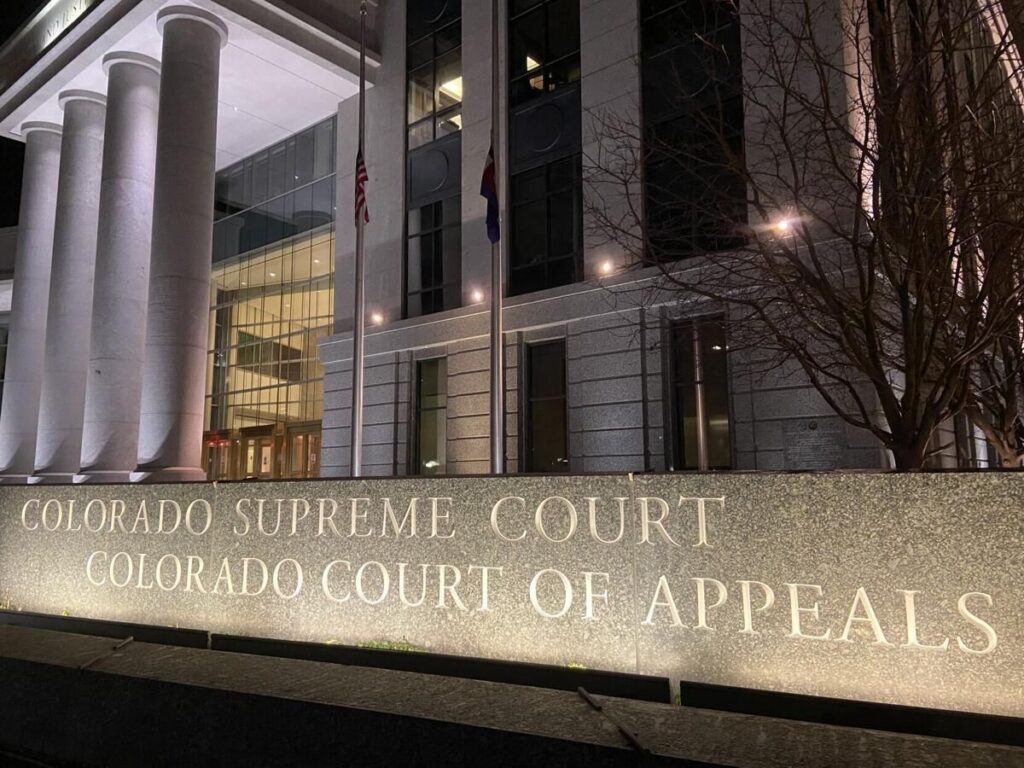
Schoolchildren’s presence at child sex-related trial did not harm Arapahoe County defendant, appeals court says
Michael Karlik
michael.karlik@coloradopolitics.com
Updated 2 days ago
Colorado’s second-highest court decided on Thursday that the presence of a group of schoolchildren on the first day of a child sexual exploitation trial did not violate an Arapahoe County defendant’s constitutional right to a fair trial. Prosecutors charged Jerry...
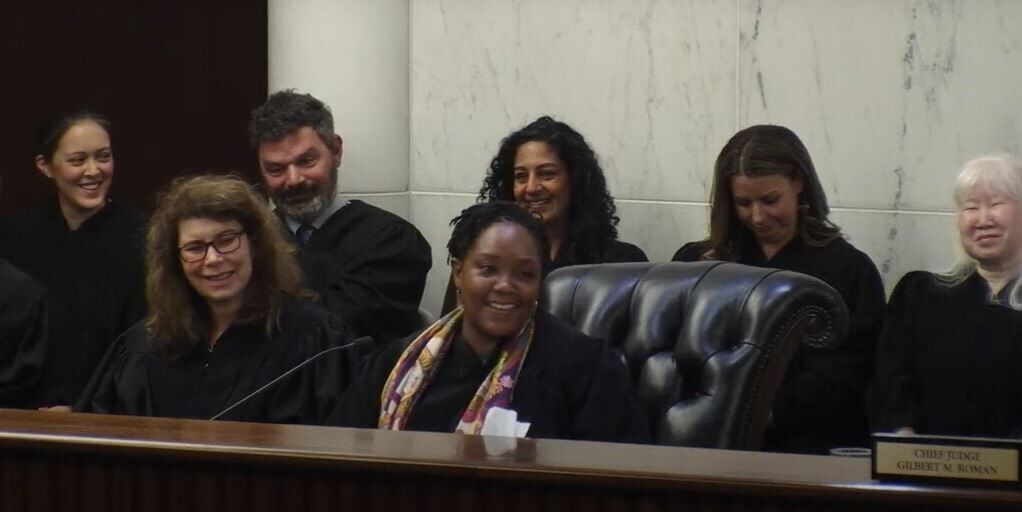
Appeals court cites week-old Colorado law to reinstate child neglect case at child, father’s request
Michael Karlik
michael.karlik@coloradopolitics.com
Updated 2 days ago
Colorado’s second-highest court invoked a new state law for the first time on Thursday and reinstated a child neglect case that both the child and her father wished to reopen. House Bill 1227 took effect on Aug. 12, reversing a...
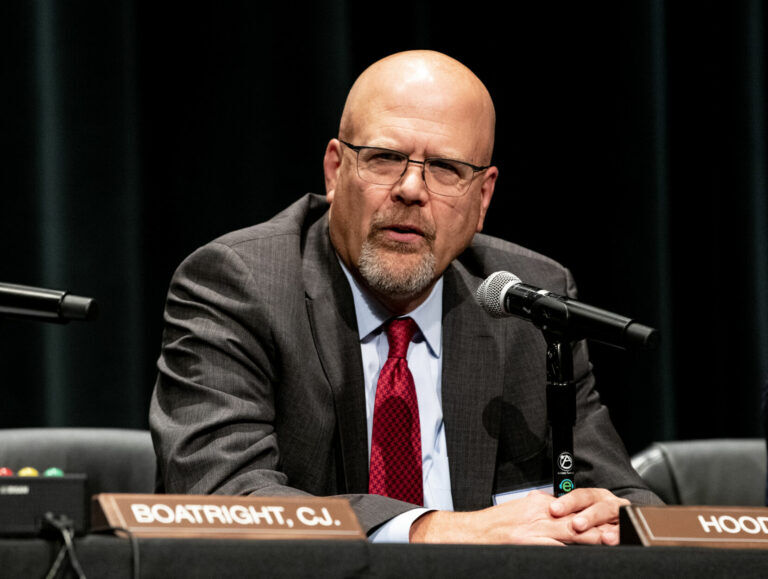
Colorado Supreme Court names William Hood as next chief justice
Michael Karlik
michael.karlik@coloradopolitics.com
Updated 3 days ago
The Colorado Supreme Court has selected Justice William W. Hood III to be the next chief justice, the judicial branch announced on Friday. Hood will succeed Chief Justice Monica M. Márquez, who took over the role in July 2024. “I...
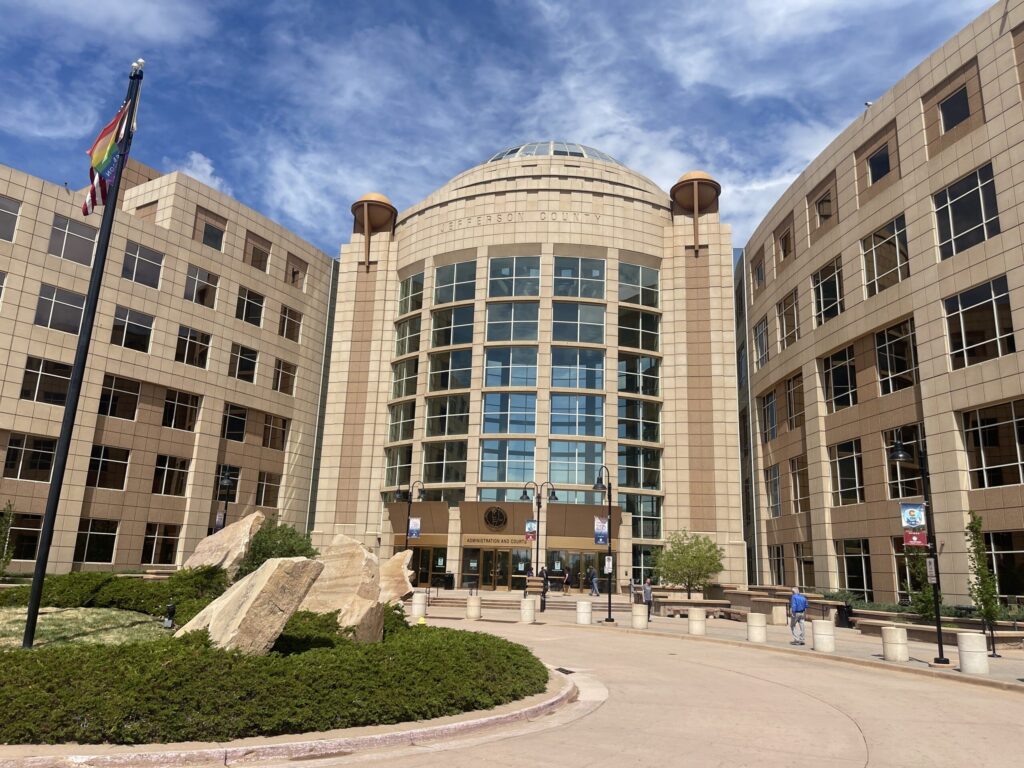
Family of slain Lakewood teacher releases statement as murder suspect makes first court appearance
Matt Kyle
matt.kyle@denvergazette.com
Updated 13 hours ago
Patrick Theodore Barnett, the Lakewood man accused of killing his wife, a Jeffco Public Schools art teacher, made his first court appearance Friday morning as his wife’s family looked on. The status conference hearing was held before District Court Judge...
Appeals court upholds Park County trophy hunting conviction
Michael Karlik
michael.karlik@coloradopolitics.com
Updated 3 days ago
Colorado’s second-highest court clarified on Thursday that a defendant may stand convicted under the state’s trophy hunting laws if he abandons a bear carcass but returns later to remove the meat. Under Colorado law, it is a felony to detach...
Judge grants partial injunction to GEO in fight against state health inspection law
Kyla Pearce
kyla.pearce@gazette.com
Updated 4 days ago
A judge ruled Thursday that The GEO Group does not have to follow parts of a new state law requiring more frequent health and safety inspections at the U.S. Immigration and Customs Enforcement processing center in Aurora. Under the order...

Parker man faces 20 years to life for serial sexual assaults
Nicholas Fogleman
nicholas.fogleman@denvergazette.com
Updated 4 days ago
A 25-year-old Parker man who sexually assaulted three women in 2025 pleaded guilty Wednesday and will serve 20 years to life in prison. Javier Rodriguez-Andrade pleaded guilty to charges stemming from three sexual assaults involving women ages 19 to 24. ...
Divided appeals court upholds warrantless DNA collection in Colorado cold case, cautions of government overreach
Michael Karlik
michael.karlik@coloradopolitics.com
Updated 4 days ago
Colorado’s second-highest court upheld the warrantless collection of a suspect’s DNA from a discarded soda can as constitutional on Thursday, while warning about potential abuse of DNA privacy in the absence of further guardrails. By 2-1, a three-judge Court of...
PREV
PREVIOUS

Colorado prosecutors welcome proposed funding to aid DAs in combatting auto thefts
Prosecutors welcomed Gov. Jared Polis’ budget proposal to earmark $12.6 million over two years for prevention and prosecution of auto theft, saying the assistance from the state is sorely needed. The director of Colorado’s district attorneys’ organization noted it’s new for the state budget to give funding directly to prosecutors’ offices that doesn’t come through […]
From 'eccentric' family to pandemic-era justice: Maria Berkenkotter ceremonially sworn in to Supreme Court
Justice Maria E. Berkenkotter poked gentle fun at the unusually large gap between her first day on the job in January 2021 and her public swearing-in nearly 21 months later. “Thank you all so much for being here to celebrate the 633rd-day anniversary of my appointment,” Berkenkotter said to laughter during her late-September ceremony. Gov. […]