

COURT CRAWL | New federal judge gets welcome ceremony, state agency the target of Supreme Court criticism

Welcome to Court Crawl, Colorado Politics’ roundup of news from the third branch of government.
A recently-appointed federal magistrate judge held her formal swearing-in ceremony, known as an investiture, last week and the Colorado Supreme Court had some harsh words for a state agency that is making life difficult for juvenile court judges.
Friends, family celebrate new judge
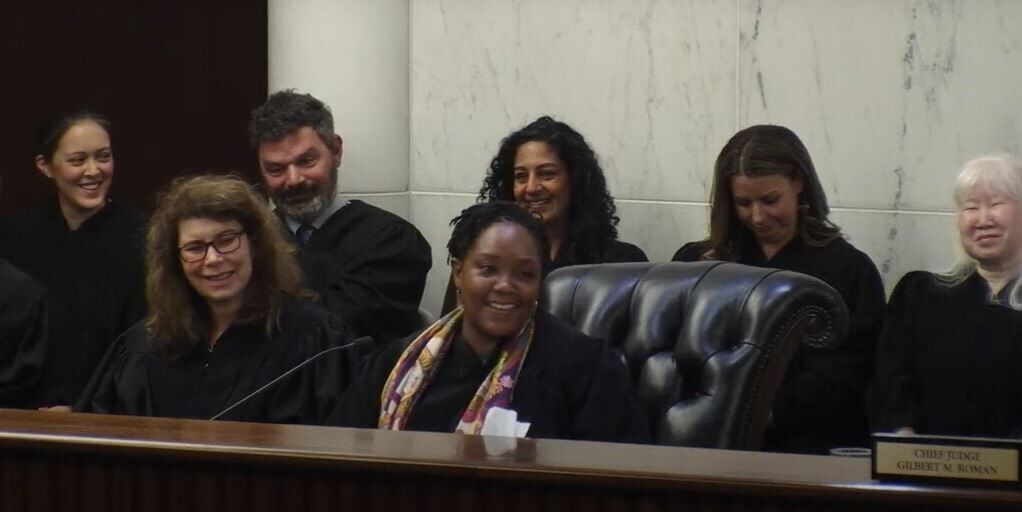
? U.S. Magistrate Judge Maritza Dominguez Braswell began her job in early July as the only federal judge who is stationed in Colorado Springs, but last week was her investiture ceremony in downtown Denver where family and colleagues watched her formally take the oath of office. Several people spoke on her behalf, including her former boss, Attorney General Phil Weiser, who hired her for a leadership position shortly after his 2018 election.
? Attendees also heard speeches from Dominguez Braswell’s high school sweetheart-turned husband plus her former law partner, Michael Rollin, who talked about the corporate and financial cases they litigated from Colorado: “You may not be surprised that Wall Street boardrooms are not the most inviting places in general. They’re not particularly inviting to women and people of color and especially women of color. … Maritza had the room of all suits nodding along with her ideas and her strategy and ultimately following her direction. That’s what led to big trial wins.”
? There is one vacancy on the district court for a full-time magistrate judge, following the appointment of the previous officeholder, Nina Y. Wang, as a district judge. All of the magistrate judges work out of Denver, with the exception of Dominguez Braswell and two part-time judges in Durango and Grand Junction.

Justices vent frustration
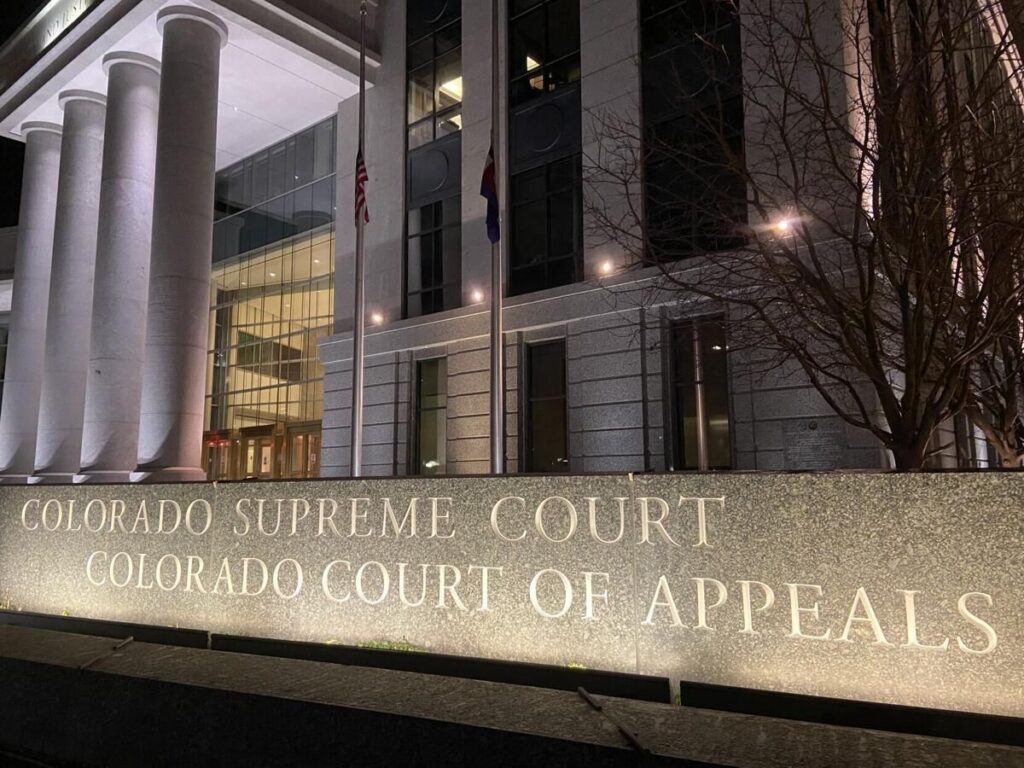
? Multiple members of the state Supreme Court had some unflattering things to say about the agency formerly known as the Office of Behavioral Health (now going by the Office of Civil and Forensic Mental Health). The office is responsible for coordinating services for juvenile defendants who are incompetent to stand trial and need their competency restored. In short, OBH takes the position that its providers can’t give meaningful reports to juvenile court judges about a child’s progress because that would amount to opining on the effectiveness of their own services.
? Although the court’s majority embraced a workaround to the problem, that did not stop three members, including Justices William W. Hood III and Richard L. Gabriel, from accusing OBH in a dissent of not following the law:

? The Office of Civil and Forensic Mental Health disputed the accusation that it isn’t living up to its legal obligations.
? In other news out of the Supreme Court, the justices largely upheld the findings of professional misconduct against a divorce attorney who used an undisclosed IRS refund check from her client to pay her own bills, while failing to disclose the sizable amount of money to her client’s husband.
In federal news
? A federal judge believed a Rifle police officer who shot a fleeing, suicidal man in the back didn’t act reasonably, rejecting the officer’s explanation that the fleeing man – now deceased – posed a threat to others. A jury will now decide whether the officer and the city itself are liable for a constitutional violation.
? A detainee in the El Paso County jail developed an infection. At the time he was hospitalized, it was “the size of a silver dollar, is hot and has a black center.” A federal judge, however, ruled he cannot sue the sheriff’s deputies at the jail for failing to intervene in a timely fashion, despite the seriousness of the medical problem.
? Two police officers at the University of Colorado Colorado Springs campus detained and handcuffed a student for failing to show his identification when asked. After 11 minutes, they lectured him and released him. Although a judge found several of the man’s claims were not viable, the allegations of wrongful detention will proceed.
? A handful of Michigan residents suing Denver-based Dominion Voting Systems failed to demonstrate they were actually harmed from the company’s efforts to defend itself from defamation.
? At the Denver mayor’s 2019 inauguration, police arrested a woman for violating the city’s ordinance against disrupting events. A judge has declined Denver’s motion to dismiss her subsequent lawsuit.

? An inmate at the “supermax” prison in Florence had not shown how a pair of policies regulating inmate mail were unconstitutional, ruled the U.S. Court of Appeals for the 10th Circuit.
? A decision from the U.S. Supreme Court earlier this year altered the way the 10th Circuit evaluates malicious prosecution claims. Consequently, the 10th Circuit reinstated a man’s lawsuit against Denver police officers based on the new protocol.
? Even though the 10th Circuit is considering whether to block a University of Colorado policy requiring COVID-19 vaccinations at its medical campus, a federal trial judge has winnowed down several of the claims against CU as either moot or not legal violations.
Vacancies and appointments
? District Court Judge Todd Jay Plewe will be the next chief judge of the 22nd Judicial District, which encompasses Dolores and Montezuma counties. Plewe first began as a county court judge in 2002 before joining the district court in 2010. He will succeed Chief Judge Douglas S. Walker in January.
? There are three finalists to succeed retiring Judge K.J. Moore on the Jefferson County Court: Keith Gorman, Christopher Rhamey and Amber St. Clair.
? There are also two candidates to succeed Amanda Hunter on the Custer County Court, following her elevation to the district court bench. Michael Halpin and Troy Krenning are on the shortlist.
Miscellaneous proceedings
? The Denver Gazette reported on concerns about the conflicts of interest Supreme Court justices have in ongoing disciplinary investigations.
? The state’s Court of Appeals reversed another criminal conviction in Adams County because of a judge’s use of a faulty reasonable doubt analogy.
? This week, the Court of Appeals will hold oral arguments in the community, hearing two cases at the Montrose Pavilion on Tuesday and two more at Pagosa Springs High School on Thursday.
? The state’s Judicial Department has announced five of the 22 judicial districts will begin administering electronic surveys to people about their experiences using the court system. The targeted demographics include litigants, attorneys, jurors and law enforcement. The jurisdictions participating include the larger counties of Jefferson, El Paso and Larimer, as well as smaller counties like Mineral, Rio Grande and Jackson.


Federal judge hears arguments about Colorado’s 3-day gun purchase waiting period
Michael Karlik
michael.karlik@coloradopolitics.com
Updated 5 hours ago
A federal judge heard arguments on Monday about the constitutionality of a 2023 Colorado law that generally imposes a three-day waiting period on firearm purchases after the initiation of a background check. The test that the U.S. Supreme Court created...
Colorado Supreme Court intervenes in Weld County prosecution dismissed due to Missy Woods misconduct
Michael Karlik
michael.karlik@coloradopolitics.com
Updated 8 hours ago
The Colorado Supreme Court ordered a Weld County trial judge last week to respond to the district attorney’s claim that he improperly dismissed a criminal case because of “outrageous” conduct by the Colorado Bureau of Investigation. Daniel Lee Eatinger stood...
Schoolchildren’s presence at child sex-related trial did not harm Arapahoe County defendant, appeals court says
Michael Karlik
michael.karlik@coloradopolitics.com
Updated 2 days ago
Colorado’s second-highest court decided on Thursday that the presence of a group of schoolchildren on the first day of a child sexual exploitation trial did not violate an Arapahoe County defendant’s constitutional right to a fair trial. Prosecutors charged Jerry...
Appeals court cites week-old Colorado law to reinstate child neglect case at child, father’s request
Michael Karlik
michael.karlik@coloradopolitics.com
Updated 2 days ago
Colorado’s second-highest court invoked a new state law for the first time on Thursday and reinstated a child neglect case that both the child and her father wished to reopen. House Bill 1227 took effect on Aug. 12, reversing a...
Colorado Supreme Court names William Hood as next chief justice
Michael Karlik
michael.karlik@coloradopolitics.com
Updated 3 days ago
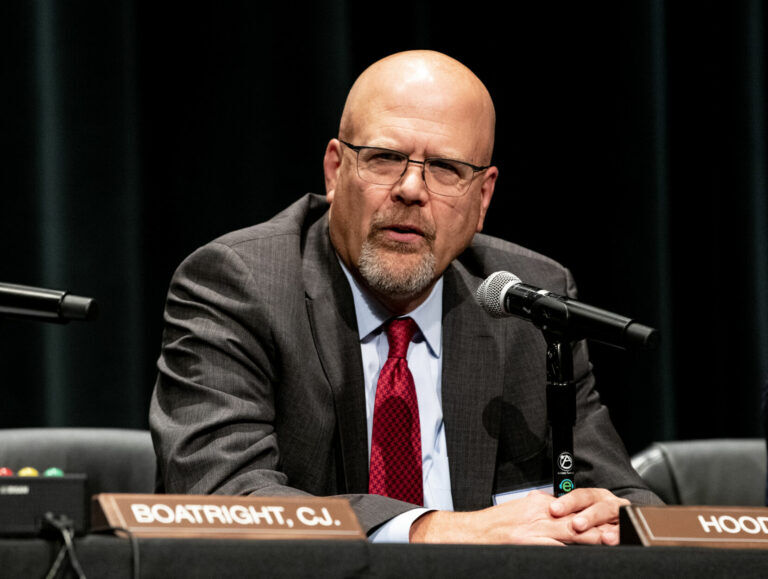
The Colorado Supreme Court has selected Justice William W. Hood III to be the next chief justice, the judicial branch announced on Friday. Hood will succeed Chief Justice Monica M. Márquez, who took over the role in July 2024. “I...
Family of slain Lakewood teacher releases statement as murder suspect makes first court appearance
Matt Kyle
matt.kyle@denvergazette.com
Updated 15 hours ago
Patrick Theodore Barnett, the Lakewood man accused of killing his wife, a Jeffco Public Schools art teacher, made his first court appearance Friday morning as his wife’s family looked on. The status conference hearing was held before District Court Judge...

Appeals court upholds Park County trophy hunting conviction
Michael Karlik
michael.karlik@coloradopolitics.com
Updated 3 days ago
Colorado’s second-highest court clarified on Thursday that a defendant may stand convicted under the state’s trophy hunting laws if he abandons a bear carcass but returns later to remove the meat. Under Colorado law, it is a felony to detach...

Judge grants partial injunction to GEO in fight against state health inspection law
Kyla Pearce
kyla.pearce@gazette.com
Updated 4 days ago
A judge ruled Thursday that The GEO Group does not have to follow parts of a new state law requiring more frequent health and safety inspections at the U.S. Immigration and Customs Enforcement processing center in Aurora. Under the order...
Parker man faces 20 years to life for serial sexual assaults
Nicholas Fogleman
nicholas.fogleman@denvergazette.com
Updated 4 days ago
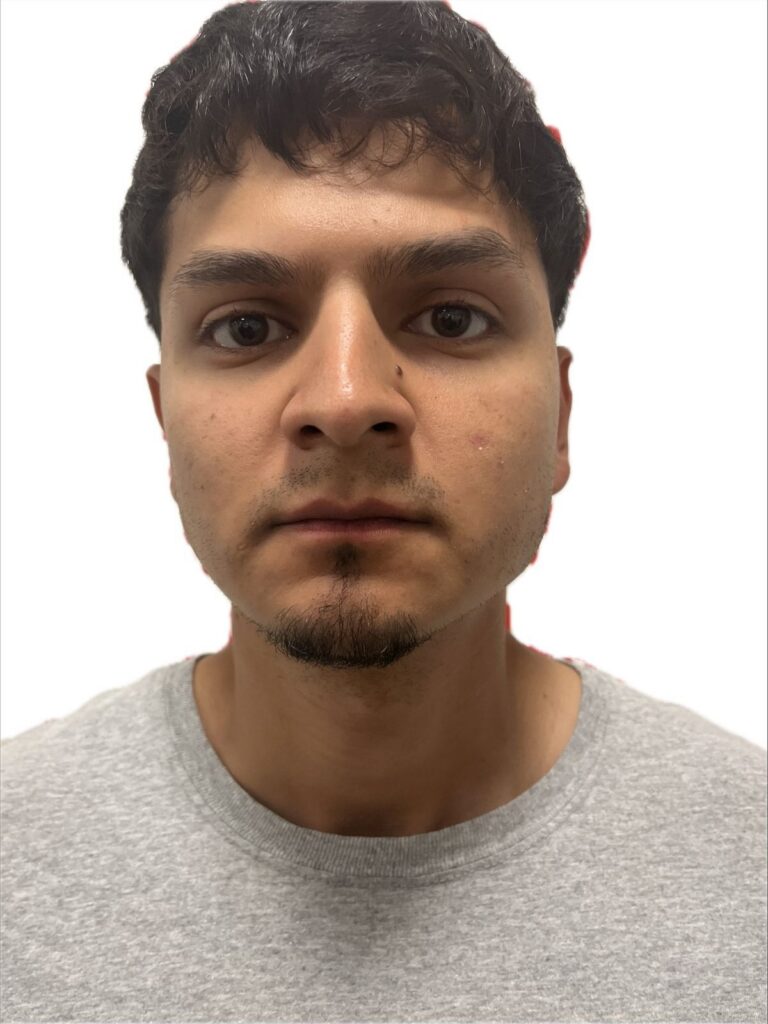
A 25-year-old Parker man who sexually assaulted three women in 2025 pleaded guilty Wednesday and will serve 20 years to life in prison. Javier Rodriguez-Andrade pleaded guilty to charges stemming from three sexual assaults involving women ages 19 to 24. ...
Divided appeals court upholds warrantless DNA collection in Colorado cold case, cautions of government overreach
Michael Karlik
michael.karlik@coloradopolitics.com
Updated 4 days ago
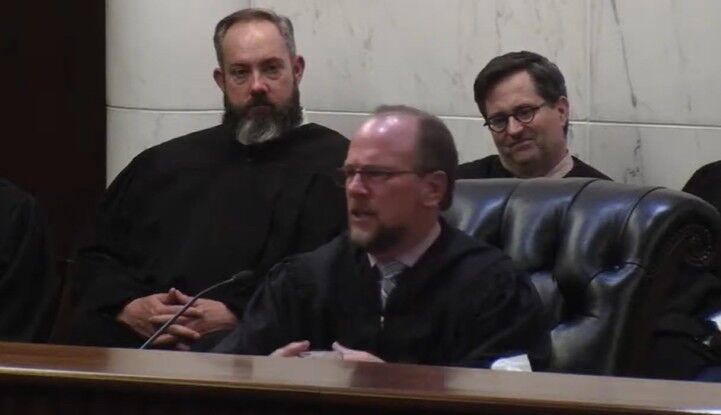
Colorado’s second-highest court upheld the warrantless collection of a suspect’s DNA from a discarded soda can as constitutional on Thursday, while warning about potential abuse of DNA privacy in the absence of further guardrails. By 2-1, a three-judge Court of...
PREV
PREVIOUS

Consumer data privacy protection advances in Colorado with draft rules
The next steps are afoot in setting up stronger requirements for protecting consumer data privacy in Colorado. The Colorado Attorney General’s Office is seeking public comment on draft rules tied to 2021 legislation that will allow consumers more control over their personal data, including a so-called “universal opt-out.” The draft rules being considered include: Definitions and clarifications of […]

ProgressNow Colorado agrees to pay fine over primary voter guide that failed to disclose information
ProgressNow Colorado agreed to pay a fine for a primary “voter guide” that failed to fully disclose required information. Under the settlement with the Colorado Secretary of State, ProgressNow will pay $16,277 over a complaint filed in June by the Maven Law Group. It was the third complaint over ProgressNow’s voter guides in the last […]