

Claims of tribal heritage not enough to trigger ‘Indian child’ protections, state justices say

Family members’ assertions that a child has American Indian heritage are insufficient to trigger the longstanding federal protections for tribal children in welfare proceedings, the Colorado Supreme Court ruled on Monday.
The justices resolved an issue that has split the state’s Court of Appeals and focused attention on a key section of the Indian Child Welfare Act of 1978. When a juvenile court judge knows or has “reason to know” a child in a custody case meets the legal definition of an “Indian child,” the government must notify the relevant tribal nations of their ability to intervene.
But a judge does not have reason to know, explained Justice Carlos A. Samour Jr. in the court’s opinion, if family members claim the child has tribal lineage without further evidence.
“And, correspondingly,” Samour added, “to the extent that other (rulings) of the court of appeals have expressly or impliedly reached a contrary conclusion, we overrule those decisions.”
Joel M. Pratt, an attorney representing the mother who appealed her child’s welfare case to the Supreme Court, criticized the decision and its implications for American Indian families.
“The court undermined the Indian Child Welfare Act and tribal sovereignty,” he said. “This ruling represents an unfortunate rollback of ICWA’s protections, which is especially concerning because we know that child welfare departments separate Native families at disproportionately high rates.”
Congress originally enacted ICWA after learning of the large number of American Indian children being removed from their households into non-tribal families and institutions – accounting for up to 35% of tribal children. Now, ICWA applies to state custody proceedings involving an “Indian child,” meaning those who are members of a tribe or who are the children of tribal members and are themselves eligible for membership.
Once judges know or have reason to know they are dealing with an Indian child, protections aimed at keeping the American Indian family together kick in. One of the most important provisions is the requirement for the government to notify tribal nations and give them the opportunity to become involved in cases implicating their members.
But for several months, appellate judges in Colorado have been grappling with the question: When do juvenile judges have reason to know?
Between December and June, four separate panels of the Court of Appeals published opinions on the subject, and they divided equally. Two panels believed a family member’s suggestion of tribal lineage should merely lead to more investigation, or “due diligence,” and not trigger ICWA.
Two other panels, however, decided the opposite. One such case, arising from Denver, was the first to reach the Supreme Court.
In 2019, Denver Human Services initiated dependency and neglect – or welfare – proceedings for an infant who was abandoned at the hospital. His mother suspected she had Apache and Sioux heritage. The juvenile judge determined such information did not give a reason to know the baby, E.A.M., was an Indian child. Instead she directed the county to investigate further.
Denver ultimately reported the mother was not enrolled in any tribe, but the grandmother asserted a connection with the Cherokee or Sioux nations, and the grandfather claimed Sioux heritage. A great-grandmother also mentioned there was “Cherokee and something else” in the family. Other relatives disclaimed any possibility of tribal lineage.
The county never sent notice of the proceedings to any tribe and Judge Pax Moultrie maintained she did not have reason to know E.A.M. was an Indian child. Eventually, she terminated the mother’s legal relationship with the child, prompting an appeal.
In December, a three-judge panel for the appellate court decided the information pointed to E.A.M.’s family having connections to specific tribal groups. Even if such assertions from relatives meant E.A.M. does not “fully satisf(y) the definition of an Indian child,” Moultrie had reason to know, the panel concluded.
Since then, another panel adopted the same reasoning in a different case, while two other panels decided there is no reason to know in such scenarios. Denver appealed the ruling in E.A.M.’s case to the Supreme Court.
“I think the regulations are very clear that ancestry alone is not what we are talking about here. We are talking about political affiliation with the tribe – citizenship with the tribe,” Assistant City Attorney Laura Grzetic Eibsen argued to the justices.
The Ute Mountain Ute and Southern Ute tribes, as the two federally-recognized American Indian tribes in Colorado, wrote to the Supreme Court advocating for the broader interpretation of the reason-to-know standard. Tribal nations alone determine who qualifies as a member, they reminded the justices, and timely notice to tribes will enable them to decide for themselves whether to get involved.
But ICWA’s regulations do not automatically trigger tribal notice when a party merely utters a tribe’s name, the Supreme Court decided. Federal rules advise that judges have reason to know when someone tells the judge a child is an Indian child, or else when a party “informs the court that it has discovered information indicating that the child is an Indian child.”
Samour, in the court’s Sept. 12 opinion, honed in on the subtle distinction between information indicating the child may be an Indian child, versus information indicating the child is one.
“What the court was told is simply that E.A.M. has Indian heritage because some of his relatives, including his mother, believe they have Indian ancestors. This information in no way indicated to the court that E.A.M. is a member of an Indian tribe,” he wrote.
In the Supreme Court’s view, judges have reason to know when someone divulges information pointing to a child being an enrolled tribal member or the offspring of a tribal member – and not when there is simply an admission of potential tribal lineage. Such statements, instead, prompt the government to perform its due diligence in investigating the claims.
The Office of Respondent Parents’ Counsel, which represents indigent parents in court proceedings, said it is disappointed the Supreme Court adopted the narrower view of the reason-to-know standard, predicting tribal nations will be “effectively excluded from involvement in many child welfare proceedings.”
Last month, the justices agreed to hear one of the other ICWA appeals that took the opposite view of the appellate judges in E.A.M.’s case. They selected People in the Interest of Jay.J.L. and Jac.J.L., decided in April. But the court’s new ruling has cut off any controversy about the reason-to-know standard, as Samour indicated the justices endorsed the Jay.J.L. panel’s reasoning.
The only contested issue now in the Jay.J.L. appeal is a follow-up question the Supreme Court left unanswered in E.A.M.’s case: Once a juvenile judge directs the government to conduct due diligence about a child’s potential tribal lineage, what steps does the county need to take?
Given the justices’ decision this week, the Jay.J.L. case “will have big repercussions as the court determines what an agency’s due diligence requirements are in determining who is an Indian child for ICWA purposes,” said Kathryn Fort, who represented the Colorado-based tribes in their advocacy to the Supreme Court.
According to the 2020 Census, 3.6% of Colorado’s population is American Indian or Alaska Native, at least in part, with the descendants of at least 200 tribal nations living in the Denver metro area.
The case is People in the Interest of E.A.M.


U.S. Supreme Court will hear challenge from Colorado Catholic preschools on state funding exclusion
Lindsay Whitehurst
lindsay.whitehurst@associatedpress.com
Updated 11 hours ago
WASHINGTON (AP) — The Supreme Court will hear from Catholic preschools that say Colorado violated their religious rights by excluding them from a state-funded “universal” pre-kindergarten program over their admission policies. The court agreed on Monday to take up the...
DougCo commissioners challenging open meetings violation
Nicholas Fogleman
nicholas.fogleman@denvergazette.com
Updated 13 hours ago
The Douglas County Board of Commissioners is challenging a recent court decision that found the board violated Colorado Open Meetings Law. County commissioners filed a petition Thursday seeking a rehearing from the Colorado Court of Appeals. On April 2, the...
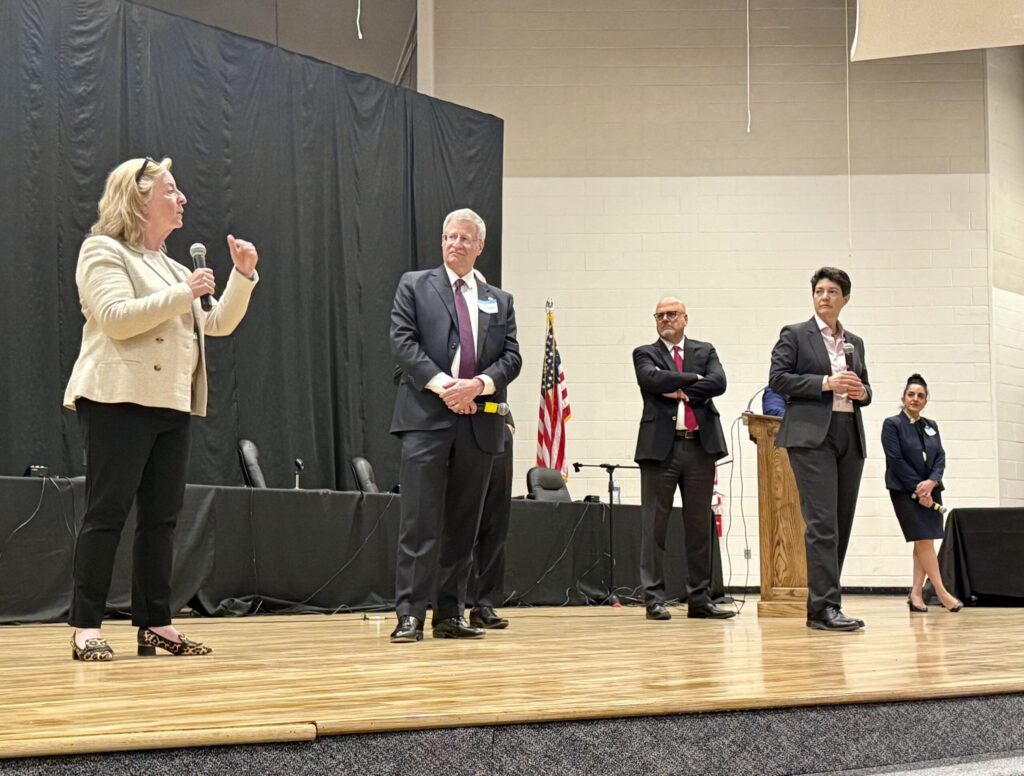
Colorado justices, lawyers speak with rural students through outreach program
Michael Karlik
michael.karlik@coloradopolitics.com
Updated 3 days ago
Members of the Colorado Supreme Court appeared before students from eight rural schools on Thursday to hear a pair of cases, field questions, and mark the first time the state’s newest justice participated in the long-running program. “I had such...
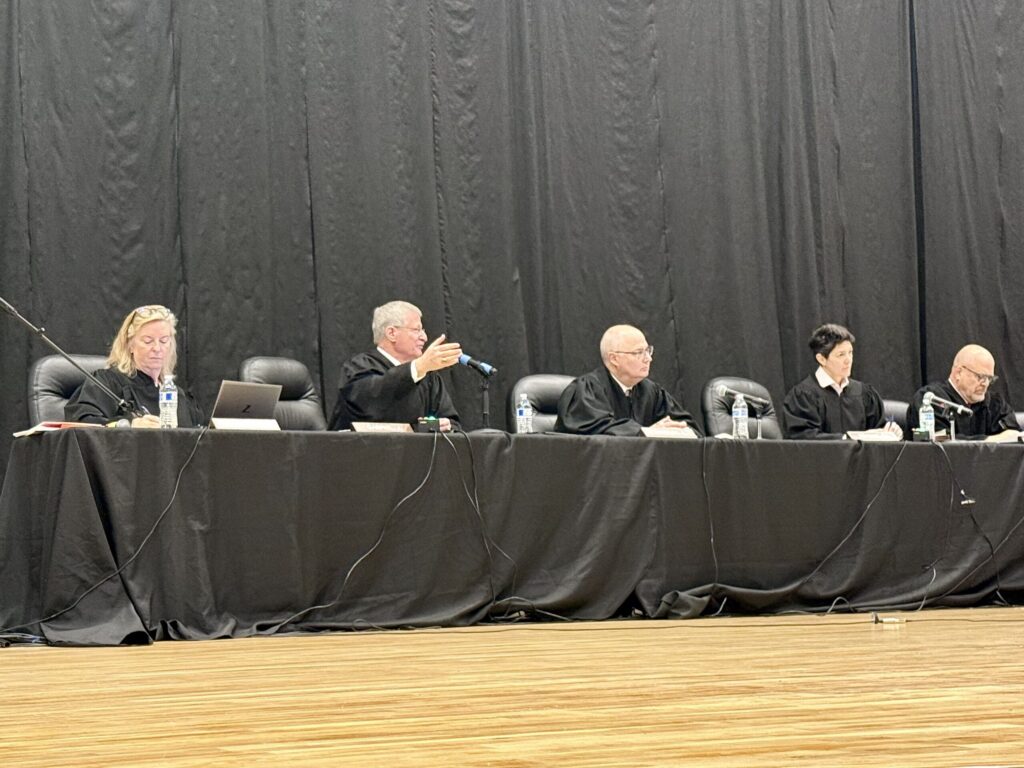
Colorado justices skeptical of snowboarder’s bid to revive injury lawsuit after signing new waiver
Michael Karlik
michael.karlik@coloradopolitics.com
Updated 3 days ago
The Colorado Supreme Court seemed to agree on Thursday that a plaintiff is not entitled to continue his snowboarding injury lawsuit because he purchased another pass in the middle of litigation that released all past legal claims. “It says you’re...
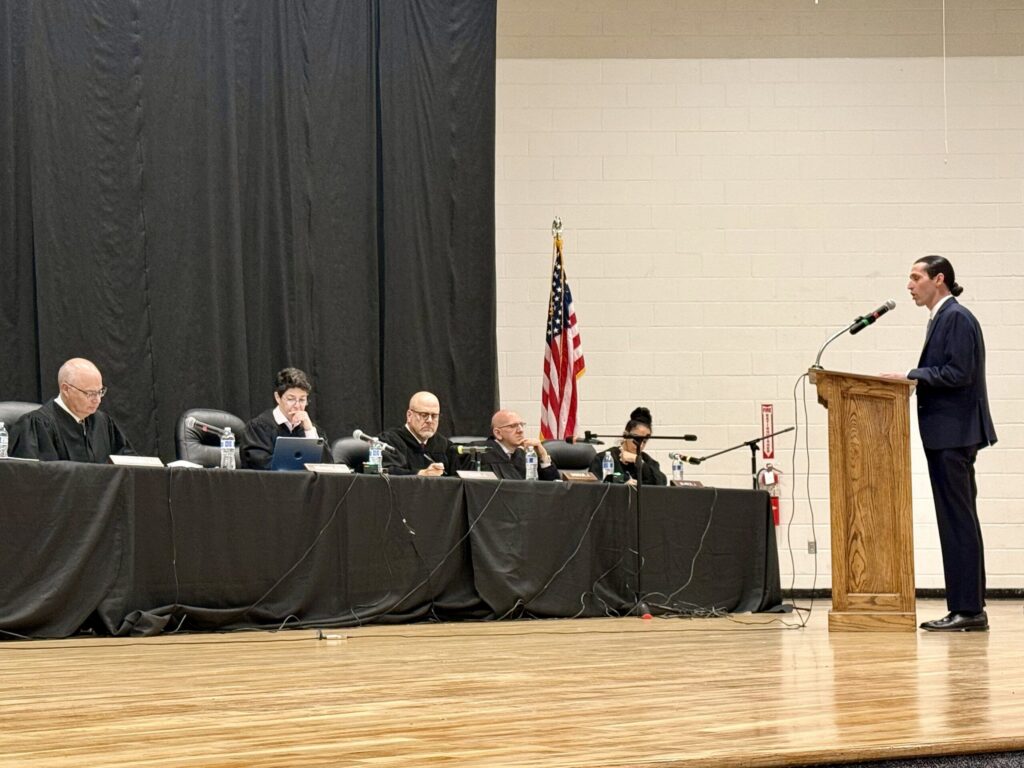
Colorado Supreme Court appears OK with revised ‘reasonable doubt’ instruction
Michael Karlik
michael.karlik@coloradopolitics.com
Updated 3 days ago
The Colorado Supreme Court appeared largely comfortable on Thursday with the recently revised definition of “reasonable doubt” that is now part of the template jury instructions for criminal cases. To date, multiple Court of Appeals decisions have endorsed the constitutionality...
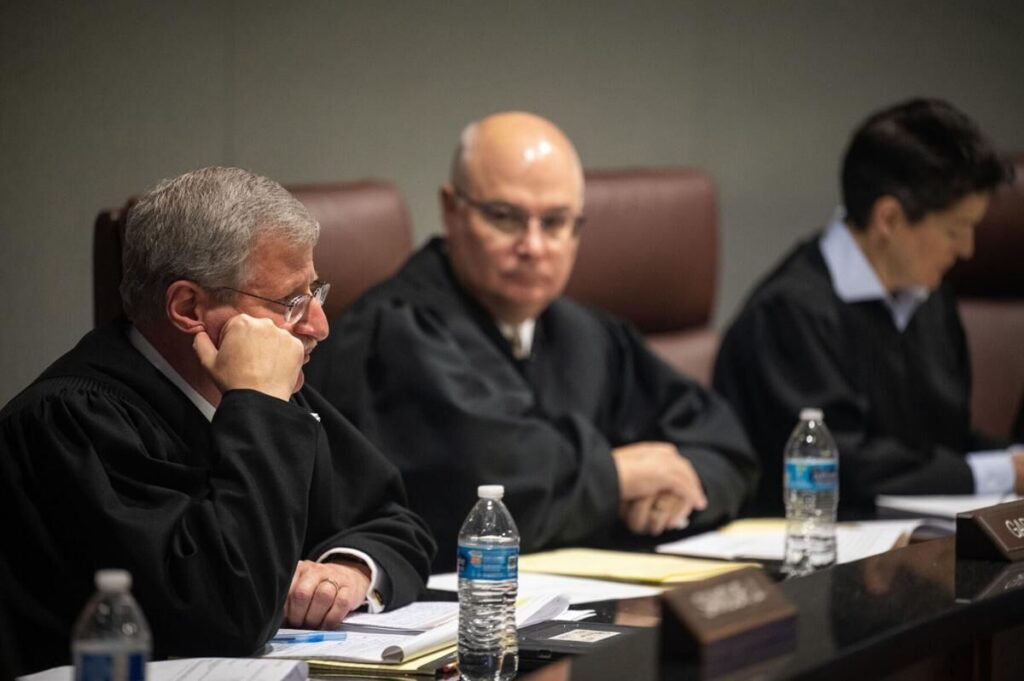
Colorado Supreme Court concerned about police overreach in interrogations
Michael Karlik
michael.karlik@coloradopolitics.com
Updated 4 days ago
Some members of the Colorado Supreme Court appeared hesitant on Tuesday to endorse the ability of police to interrogate a suspect after they have obtained a court order authorizing only the collection of physical evidence. Under Colorado’s criminal rules, law...
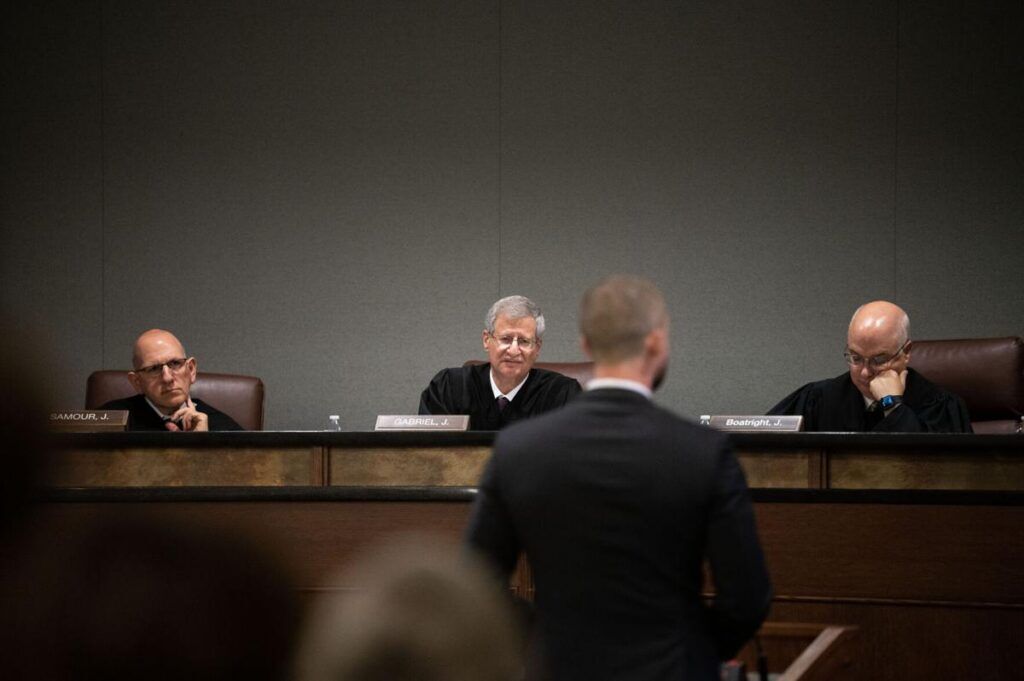
Colorado Supreme Court considers new requirement for leaving-the-scene convictions
Michael Karlik
michael.karlik@coloradopolitics.com
Updated 11 hours ago
In 2006, the Colorado Supreme Court ruled that leaving the scene of an accident resulting in serious injury is a “strict liability” offense, meaning a person is guilty solely through their conduct, without the need for prosecutors to prove the...
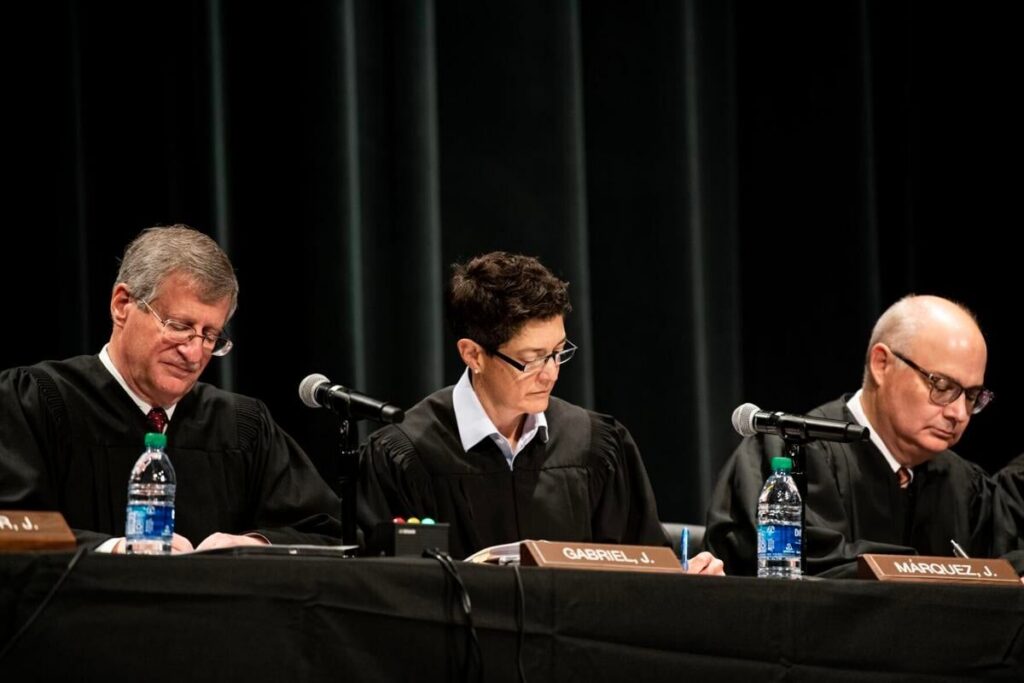
Colorado Supreme Court weighs transgender services case involving Children’s Hospital and federal threats
Michael Karlik
michael.karlik@coloradopolitics.com
Updated 3 days ago
Some members of the Colorado Supreme Court expressed discomfort on Tuesday with having to decide whether to order Children’s Hospital Colorado to resume providing certain services to transgender children, which could trigger a “death sentence” if the federal government imposes...
Colorado justices weigh constitutionality of unique disclosure requirement for ballot measures
Michael Karlik
michael.karlik@coloradopolitics.com
Updated 7 days ago
Members of the Colorado Supreme Court considered on Tuesday whether a unique feature of the state’s campaign finance system categorically violates the First Amendment by requiring the disclosure of a ballot measure committee’s legal representative on advertisements. No on EE...

Colorado justices block injured plaintiff from suing, despite alleged concealment by Manitou Springs
Michael Karlik
michael.karlik@coloradopolitics.com
Updated 1 week ago
The Colorado Supreme Court ruled on Monday that a woman injured on a Manitou Springs sidewalk could not sue the allegedly responsible entity, the city of Colorado Springs, even though she did not learn until too late of an agreement...
PREV
PREVIOUS

Protective order granted to Colorado state senator against man convicted of being accessory to son's murder
DENVER — Seventeen years after her son, Javad, was shot to death, Democratic State Sen. Rhonda Fields said she just learned that she has a new constituent: a man convicted of being an accessory to Javad’s murder, according to Denver Gazette news partner KUSA. In June 2005, Javad Fields and his girlfriend were shot to […]

Colorado state senator used text message to avoid open records scrutiny
In the week prior to Colorado Sen. Kevin Priola announcing that he was flipping political parties, the soon-to-be-Democrat said in a text message to his soon-to-be party leader that he would share certain information with him but wanted to avoid the state’s email system so as not to leave a paper trail subject to public […]