

TRAIL MIX | In place since statehood, Colorado’s office of lieutenant governor has evolved over time
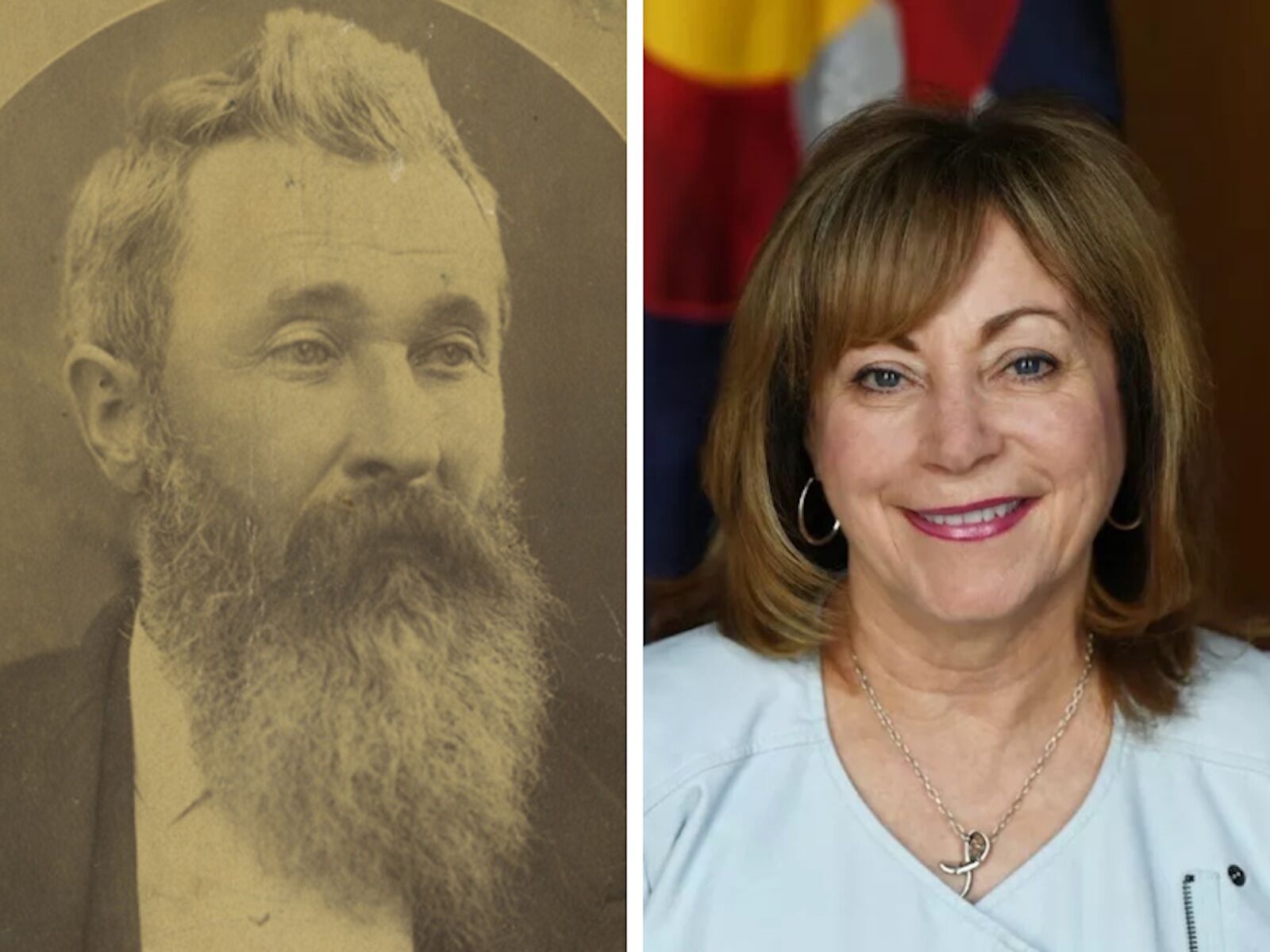
Colorado’s Republican gubernatorial nominee Heidi Ganahl announced her pick for lieutenant governor this week, though she has yet to introduce her running mate to the public beyond a press release.
Danny Moore, a 24-year Navy veteran who owns and runs a pair of companies that work in the defense industry, first landed in news coverage last year after he was selected to represent the 6th Congressional District on the state’s newly created Independent Congressional Redistricting Commission, tasked with drawing boundaries for Colorado’s eight U.S. House districts following the 2020 census. Selected by his fellow commissioners to serve as chairman of the panel, Moore was later demoted after The Gazette and other news organizations unearthed Moore’s social media posts questioning the legitimacy of the 2020 presidential election.
Ganahl and Moore are facing Democratic nominees Gov. Jared Polis and Lt. Gov. Dianne Primavera, who are seeking second terms.
In addition to her chief formal duty — to fill in for the governor in his absence, and to take over if the governor leaves office — Primavera heads multiple state office and programs, including the Polis-created Offices of Saving People Money on Health Care and eHealth Innovation, and chairs the Colorado Disability Funding Commission and Disability Policy, the Colorado Commission of Indian Affairs, Serve Colorado and the Colorado Space Coalition.
Primavera’s job as the state’s second-in-command is busier than it used to be. The relatively new tradition of the lieutenant governor overseeing a state office or agency was pioneered by Polis’ predecessor, Democrat John Hickenlooper, who appointed Joe Garcia, his first lieutenant governor, to be executive director of the Colorado Department of Higher Education. Garcia resigned about a year into his second term to run the Boulder-based Western Interstate Commission for Higher Education.
Hickenlooper named Garcia’s successor, Donna Lynne, chief operating officer for the state. After a stint as an executive and chief operating officer at Columbia University Irving Medical Center in New York, Denver Health announced earlier this month that Lynne will take over later this summer as the venerable institution’s CEO.
It’s quite an evolution for a position that was nearly abolished two decades ago.
After much debate and consternation, however, instead of asking voters to erase the job from the constitution — partly in response to the frosty relationship between then-Gov. Bill Owens and his second-in-command, fellow Republican Joe Rogers — lawmakers changed the way the lieutenant governor made it onto the ballot and into office.
While the position of Colorado lieutenant governor has existed since statehood, prior to the change ahead of the 2002 election, governors and lieutenant governors sought their party’s nomination separately — sometimes leading to a dissonant relationship between the state’s top two executive officers, as turned out to be the case with Owens and Rogers.
Since then, freshly minted gubernatorial nominees select their potential lieutenant governors much the same as presidential nominees pick their running mates.
Up until the 1970 election, however, Colorado’s governors and lieutenant governors were not only nominated on separate tracks but elected independently of one another, leading to multiple stretches where the governor and lieutenant governor were from different parties.
Primavera, a former state lawmaker with a background in health care, was only the sixth lieutenant governor tapped as a running mate by the governor she would go on to served alongside.
She’s the 50th lieutenant governor of Colorado and the fifth woman elected to the office, though she’s the sixth to hold the position, including Lynne, who assumed the job by appointment.
For just over a century, 40 men were elected — or in a couple cases appointed — lieutenant governor, with the streak finally breaking in 1978 with the election of Democrat Nancy Dick, who held the position for Gov. Dick Lamm’s second and third terms.
Since Dick’s tenure, Colorado voters have elected four women and three men to the No. 2 job.
In addition to Primavera, the women elected to the position were Democrat Gail Schoettler for Roy Romer’s third term, Republican Jane Norton for Owens’ second term, and Democrat Barbara O’Brien, who served during Gov. Bill Ritter’s only term. Before Garcia and Rogers, Democrat Mike Callihan won election twice for Romer’s first and second terms. After Callihan resigned midway through Romer’s second term to open a Kenny Rogers Roasters franchise, Sam Cassidy was appointed to the post.
If elected, Moore will be the state’s third Black lieutenant governor. The first was Democrat George Brown, a former state lawmaker elected in 1974 to serve with Lamm during his first term, and Rogers, who clashed with Owens and wasn’t asked to join the ticket for the Republican’s successful 2002 run for reelection.
Up until 1975 — the year Brown was sworn in to the office — Colorado’s lieutenant governors presided over the state Senate, like the vice president wields the gavel in the U.S. Senate, though the role on the national stage is mostly ceremonial except when called upon to break a tied Senate vote. The Colorado version had more powerful duties in its official legislative role, too, including assigning bills to committees.
The office used to be a fairly reliable stepping stone to higher office, but since then-Lt. Gov. John Vanderhoof took over the governorship from fellow Republican John Love — who resigned a little over two years into his second term in 1973 to join the Nixon administration as its short-lived energy czar — none of Colorado’s lieutenant governors have gone on to higher office.
Vanderhoof lost his bid for a full term as governor to Lamm in 1974. Vanderhoof’s lieutenant governor, longtime legislative leader Ted Strickland, lost a bid to prevent Lamm from winning a second term in 1978. Subsequently, Schoettler came within a hair of succeeding Romer but lost her gubernatorial run to Owens in 1998, and Lynne trailed Polis and others in the 2018 Democratic primary for the chance to follow Hickenlooper in office. One-time lieutenant governors also made unsuccessful bids for the U.S. Senate — Dick in 1978, losing to Republican incumbent Bill Armstrong, and Norton in 2010, losing the GOP primary to Ken Buck — and the U.S. House, with failed attempts by Callihan and Rogers.
Prior to Vanderhoof’s move up the ladder, five of the light governors went on to become full-fledged governors — including one who only held the lesser office for the blink of an eye, on that famous day in 1905 when Colorado had three governors and two lieutenant governors.
In the wake of the fraud-riddled 1904 election, which resulted in the questionable victory of Democratic gubernatorial candidate Alva Adams over GOP incumbent James Peabody, the Republican-controlled General Assembly declared that Peabody had really won, ousted Adams and installed their fellow Republican in office just over two months after Adams had been sworn in. The move came with a condition, though — that Peabody would resign that same day to let his lieutenant governor, Republican Jesse McDonald, ascend to the governorship and finish the term. Adams’ lieutenant governor, Democrat Arthur Cornforth, was replaced by McDonald but then resumed the office of lieutenant governor after Peabody resigned and McDonald became governor. Cornforth served another four months until he was replaced by Republican Arthur Parks, who finished out the term under McDonald.


CoComandering? | Miller Hudson
Miller Hudson
miller-hudson@coloradopolitics.com
Updated 1 day ago
At 8 a.m., Friday morning, Aug. 28, 70 or 80 mostly bleary-eyed visitors to the Transportation Technology Center outside Pueblo packed a conference room to attend the Front Range Passenger Rail District’s (FRPRD) Board meeting. With the exception of those...

Even Dem court couldn’t abide theft of GOP seats | Dick Wadhams
Dick Wadhams
dick-wadhams@coloradopolitics.com
Updated 1 day ago
Thanks to the Colorado Supreme Court, Colorado voters will be able to reaffirm their support for the Independent Congressional Redistricting Commission after the court struck down the Democratic scheme to steal three Republican congressional seats. Billionaire-funded national Democratic groups from...

Chaotic meeting began with attempt to squelch public comment | Rachel Gabel
Rachel Gabel
rachel-gabel@coloradopolitics.com
Updated 1 day ago
When Attorney General Phil Weiser takes the governor’s office in January, he must immediately address the chaos of the latest round of appointees to the Colorado Parks and Wildlife Commission to assure stakeholders he’s willing to put pressure on the...

Graduated income tax proposal is a flat tax in disguise | Jon Caldara
Jon Caldara
jon-caldara@coloradopolitics.com
Updated 4 days ago
“Youth is wasted on all the wrong people.” That’s one of my favorite lines from “It’s a Wonderful Life.” The older I get, the less it sounds like a joke. Every generation inherits victories it did not win. Young Americans...

AI optimism vs. anxiety — podcasters debate this every night | Tom Cronin
Tom Cronin
tom-cronin@coloradopolitics.com
Updated 2 days ago
President Donald Trump, CNBC’s “Mad Money” host Jim Cramer and entrepreneurial “accelerationists” celebrate the AI revolution and the infrastructure data-center build-out. Cramer recently gushed, “I like data centers so much that I wish I lived in one.” Trump criticized any community...
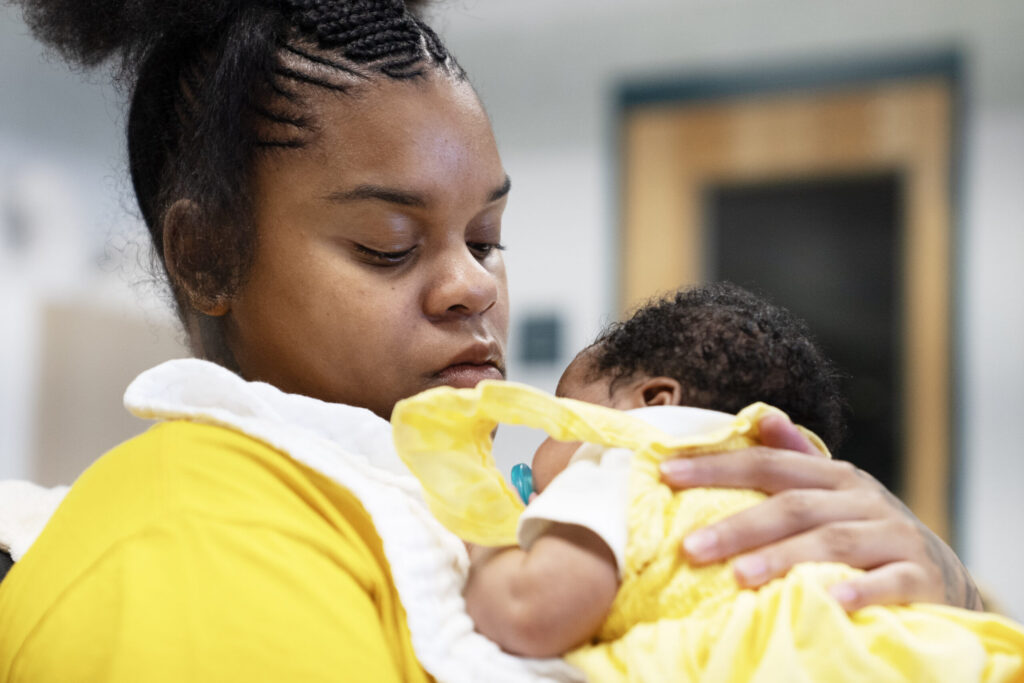
Parenting from prison: Inmates hope to be present in their children’s lives, while physically absent
Marianne Goodland
marianne.goodland@coloradopolitics.com
Updated 7 hours ago
The room was decorated with balloons, the tables sparking bright with colors as the smell of pizza and cake wafted through the air. As did music. This was, after all, a father-daughter dance. Except this was not a typical father-daughter...

The dissonance of an American Jew thinking about Israel | SONDERMANN
Eric Sondermann
eric-sondermann@coloradopolitics.com
Updated 4 days ago
The Jewish High Holidays will soon be upon us. The third anniversary of Oct. 7 will then quickly follow. Three weeks later, Israeli voters will head to the polls to elect all 120 members of its parliament, the Knesset and...
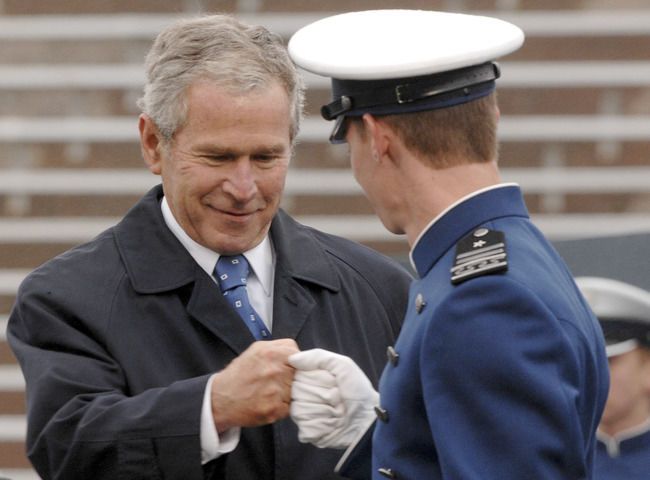
Blue-collar support trends highlighted GOP gains among rank‑and‑file workers | A LOOK BACK
Rachael Wright, Special to Colorado Politics
rachael.wright@coloradopolitics.com
Updated 4 days ago
Forty-five years ago this week: Kathy Oatis of the Colorado AFL-CIO’s Committee on Political Education said that organized labor had a negative image with the American voter. “I don’t think the country is against us,” said Oatis. “I think the...
Colorado Politics Calendar Sept. 7-13
Rachael Wright, Special to Colorado Politics
rachael.wright@coloradopolitics.com
Updated 5 days ago
CoPo’s weekly political calendar will help you find political and public-policy events throughout Colorado. It includes candidate and issue campaign events, public policy meetings, court hearings, state and local party conventions, assemblies, debates, rallies, parades, speaking engagements, traveling dignitary appearances,...
Colorado House ethics committee issues ‘stern letter’ to Democrat over caucus funds mismanagement
Marianne Goodland
marianne.goodland@coloradopolitics.com
Updated 1 day ago
The Colorado House ethics committee on Friday voted unanimously to issue a “stern letter” to Rep. Mandy Lindsay, D-Aurora, regarding her mismanagement of House Democratic caucus funds. The committee further voted to request that Lindsay resign as Democratic Caucus co-chair...