

CoComandering? | Miller Hudson
At 8 a.m., Friday morning, Aug. 28, 70 or 80 mostly bleary-eyed visitors to the Transportation Technology Center outside Pueblo packed a conference room to attend the Front Range Passenger Rail District’s (FRPRD) Board meeting. With the exception of those on a public or contractor payroll, who made their trips Thursday afternoon to overnight at a motel, most of us rolled out of bed at 4 a.m. to drive three hours to reach America’s rail-test facility. There was no mystery about what was scheduled to transpire. The FRPRD Board of Directors would be ratifying their ballot proposal requesting a third of a cent sales tax, levied within the district, to fund a build-out of starter rail service between Pueblo and Denver.
The board had already committed to launching three times a day starter trips linking Denver to Fort Collins as part of its envisioned Colorado Connector (CoCo) service, irrespective of voter approval for the proposed expansion tax. Despite the ritualized and repetitive two-minute “public comment” testimonials favoring support for the ballot question, you wouldn’t be wrong to wonder whether there isn’t something a little cuckoo about the proposed funding of CoCo’s starter segment. It is premised on a kinda, sorta, maybe, probably available mix of revenues anchored with a $150 million commitment from the Regional Transportation District’s (RTD) Board. Not a dime of this grant has yet been transferred to FRPRD, nor will it arrive before completion of a 90% design costing study currently underway which is funded with a $3 million contribution from RTD.
If the existing FRPRD estimates of starter costs prove dramatically low-balled, requiring significantly larger contributions by RTD and CDOT, all bets are off. Incredibly, this vital report is not expected to become publicly available before voters return their ballots. If this feels like a frantic, slapdash rush to the ballot box, it’s important to know across the country an initial referral of transit funding proposals are defeated four times out of five. RTD’s FasTracks light-rail program only succeeded on its third attempt to win taxpayer approval. If it weren’t for the COVID interruption, FRPRD would almost certainly have gone to the ballot years earlier. Launching Front Range rail service is a legacy goal for Gov. Jared Polis and he has simply run out of time. He can take credit for creating CoCo but will not be cutting the ribbon.
Although I will personally have to hold my nose, I plan to vote yes for two reasons. First, there is little doubt Colorado’s Front Range will require a robust rail alternative within the next 20 or 30 years. The T-REX project on Interstate 25 delivered us 20 years of congestion relief within Denver’s central corridor. Light rail also helped, but this combined capacity is exhausted and gridlock occurs now at all hours of day and night. Colorado has too often postponed necessary infrastructure investments in hopes of capturing federal dollars. With the current administration in Washington, that’s a fool’s errand. The chance we might be able to pay our own way for a starter rail service would be a major victory. If CoCo’s funding has to wait for a rerun in 2028, it will not be the demise of the project. Several policy mistakes, however, have thrown shade on FRPRD’s chances.
VILLAINIZING RTD
Both the governor and a handful of north metro legislative allies have trumpeted the dubious charge RTD “broke its promise” to complete a rail connection to Boulder. Yes, the FasTracks plan anticipated such service. When it became evident the voter-approved tax increase wouldn’t pay for everything originally hoped for, the least cost-effective line was canceled. That’s the nature of every construction project, public or private. The RTD board has since lathered Boulder with additional bus service unavailable elsewhere in the district. The Flatiron Flyer and a pair of commuter shuttle van routes have failed to sate Boulder’s lust for train service. Rather than partner with RTD to accelerate rail planning, these legislators irrationally focused on RTD’s elected board as the focus of their ire.
In just the past five years, there have been three attempts to repeal the elected board in favor of “appointed experts,” replacing its democratically elected character. There’s considerable irony most of the ringleaders for these assaults were Democrats who whine constantly regarding Trump’s incursions against democracy. The hybrid board now scheduled for 2028 has begun to alarm local government leaders enough the 2027 legislature appears likely to either reverse or dramatically restructure the RTD board to guarantee community input. In a statewide 1980 vote, 73% of Coloradans opted for an elected board at RTD. Without this change, it is doubtful we would enjoy the light-rail system we have today. Yes, RTD’s post-COVID ridership decline is a problem. The solution is well known and simple: deploy more trains and buses more frequently. Riders don’t have to consult a schedule when service arrives reliably every 10-15 minutes. That, of course, requires more money.
CONFUSING IMPROVED MOBILITY WITH POLLUTION REDUCTION
The most ardent supporters of FRPRD expansion, eventually south to Trinidad and possibly on to New Mexico, as well as north to Cheyenne, like to tout greenhouse-gas savings. Though all well and good as a byproduct of transit operations, these zealots seem far more committed to virtue signaling than to the intrinsic purpose of transit — moving people from point A to point B. During the presentation in Pueblo, a speaker detailed claims alleging 30 million tons of greenhouse-gas reductions. This number is big and sounds impressive, but pales when compared against the personal vehicles passing through the corridor. The initial three time a-day starter service will only provide 3,000 seats. That number of travelers pass north and south on I-25 every 15 minutes. Any environmental improvement will be “de minimis.”
The same goes for congestion relief. When introducing a proposed extension of passenger service on the Mountain West rail line beyond Winter Park onto Steamboat and Craig last year, Gov. Polis promised significant congestion relief on I-70. Truth be told, this service will remove less than two-tenths of 1% of vehicles from the interstate, if that. The environmental effect is so slight as to be negligible. That doesn’t mean the service isn’t worth pursuing. It just offers not a panacea — convenient, to be sure, for those who travel to Denver once a week, but wholly impractical as a commuter connection.
COCOMANDERING
The FRPRD boundaries were drawn on the basis of how individual precincts voted in previous elections. Thus, it gets very skinny through Douglas and northern El Paso counties where residents resent the fact they had to create their own rural transportation district to forcibly finance the expansion of I-25 to six lanes. They feel they paid to improve I-25 mobility and the rest of us should pay for CoCo. The only “no” vote on the board came from the Pikes Peak Council of Government representative. This animosity is why we don’t see a Castle Rock station.
Undoubtedly, the new passenger coaches being delivered to Amtrak and demonstrated for CoCo are remarkably plush. Yet only a month remains before ballots arrive. Whether FRPRD can tell voters a convincing tale remains to be seen.
Miller Hudson is a public affairs consultant and a former Colorado legislator.

Trumpicans thumb their nose at the Constitution | Hal Bidlack
Hal Bidlack
hal-bidlack@coloradopolitics.com
Updated 11 hours ago
As is all too often the case, there are again too many interesting things appearing in Colorado Politics for me to comment on all of them. So let me tell you what I won’t be talking about before I get...

Even Dem court couldn’t abide theft of GOP seats | Dick Wadhams
Dick Wadhams
dick-wadhams@coloradopolitics.com
Updated 2 days ago
Thanks to the Colorado Supreme Court, Colorado voters will be able to reaffirm their support for the Independent Congressional Redistricting Commission after the court struck down the Democratic scheme to steal three Republican congressional seats. Billionaire-funded national Democratic groups from...

Chaotic meeting began with attempt to squelch public comment | Rachel Gabel
Rachel Gabel
rachel-gabel@coloradopolitics.com
Updated 2 days ago
When Attorney General Phil Weiser takes the governor’s office in January, he must immediately address the chaos of the latest round of appointees to the Colorado Parks and Wildlife Commission to assure stakeholders he’s willing to put pressure on the...

Graduated income tax proposal is a flat tax in disguise | Jon Caldara
Jon Caldara
jon-caldara@coloradopolitics.com
Updated 4 days ago
“Youth is wasted on all the wrong people.” That’s one of my favorite lines from “It’s a Wonderful Life.” The older I get, the less it sounds like a joke. Every generation inherits victories it did not win. Young Americans...
AI optimism vs. anxiety — podcasters debate this every night | Tom Cronin
Tom Cronin
tom-cronin@coloradopolitics.com
Updated 3 days ago
President Donald Trump, CNBC’s “Mad Money” host Jim Cramer and entrepreneurial “accelerationists” celebrate the AI revolution and the infrastructure data-center build-out. Cramer recently gushed, “I like data centers so much that I wish I lived in one.” Trump criticized any community...
Colorado House ethics committee issues ‘stern letter’ to Democrat over caucus funds mismanagement
Marianne Goodland
marianne.goodland@coloradopolitics.com
Updated 2 days ago
The Colorado House ethics committee on Friday voted unanimously to issue a “stern letter” to Rep. Mandy Lindsay, D-Aurora, regarding her mismanagement of House Democratic caucus funds. The committee further voted to request that Lindsay resign as Democratic Caucus co-chair...
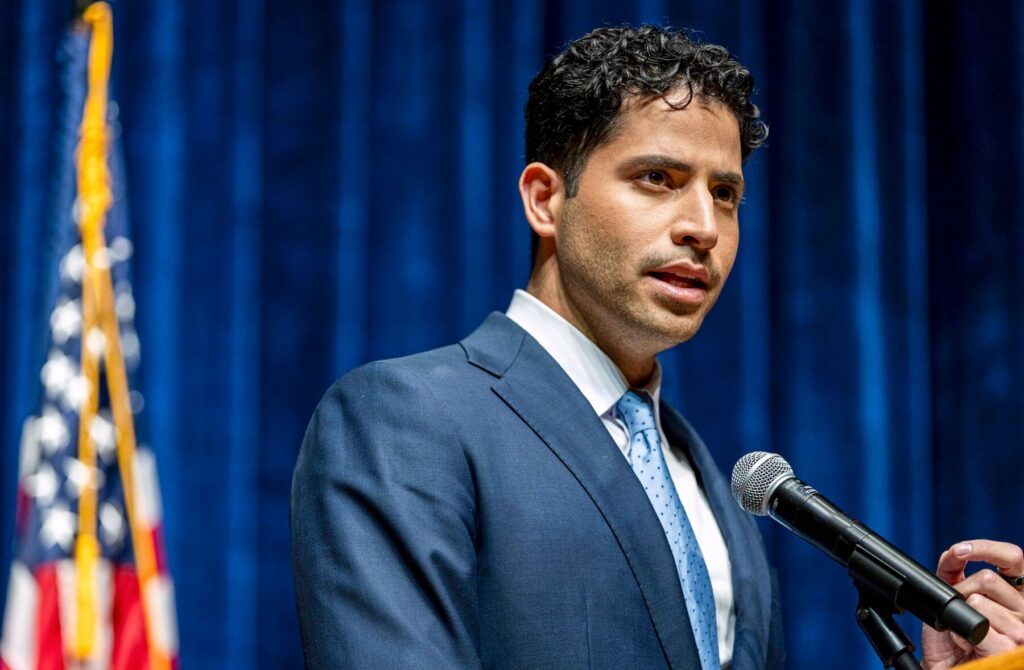
Manny Rutinel resigns from Colorado legislature to focus on congressional race
Marissa Ventrelli
marissa.ventrelli@coloradopolitics.com
Updated 3 days ago
The Democrat running for a key congressional race — whose outcome could decide the balance of power in the U.S. House — on Friday resigned from the Colorado legislature. State Rep. Manny Rutinel is turning his attention to his campaign...
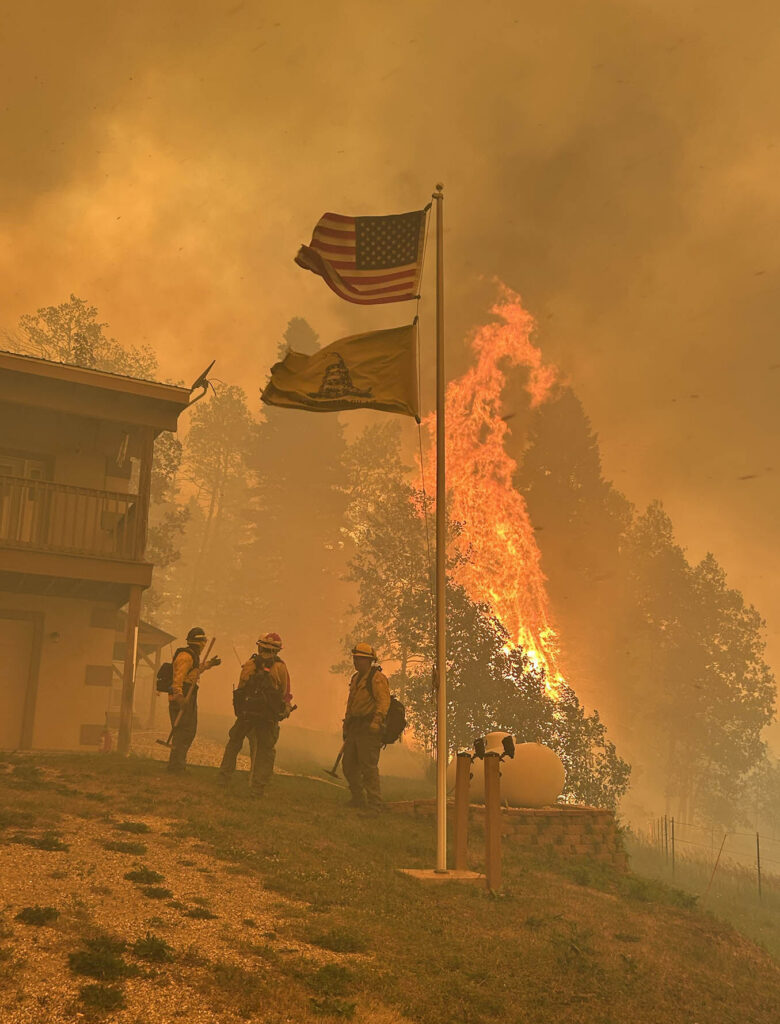
Colorado secures FEMA support for wildfire, flooding and mudslide recovery
Marissa Ventrelli
marissa.ventrelli@coloradopolitics.com
Updated 2 days ago
Federal authorities on Friday approved Colorado’s request for federal public assistance to help communities devastated by the Aspen Acres and Gold Mountain Fires. The Federal Emergency Management Agency did not announce how much the state would receive but confirmed that...
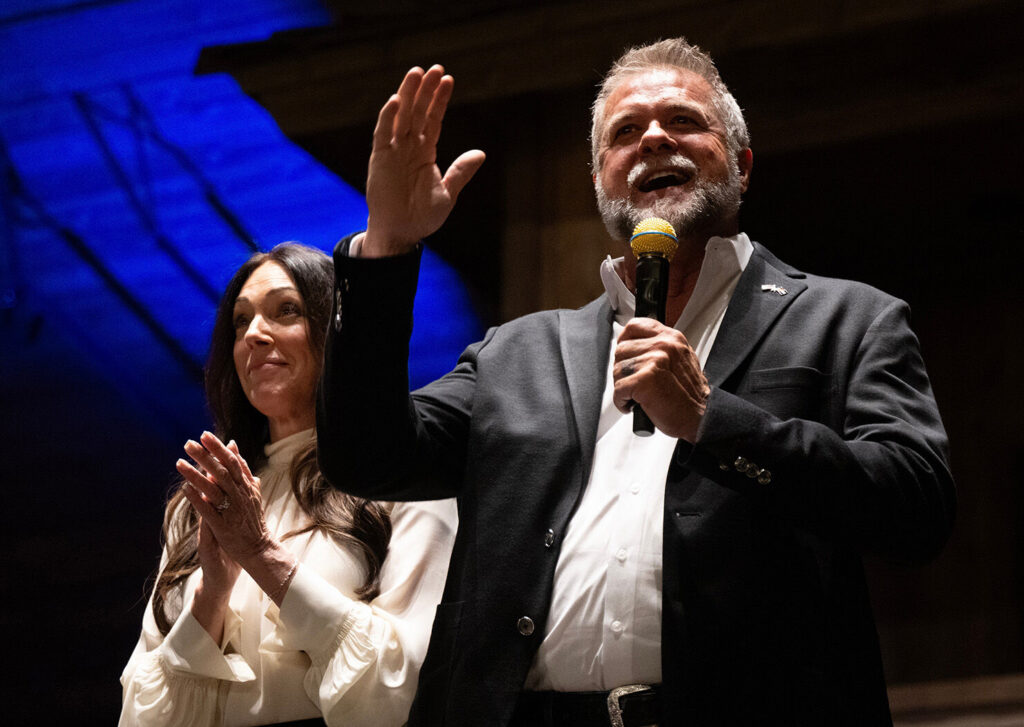
State seeks $50K penalty against GOP candidate Victor Marx over alleged campaign finance violations
Deborah Grigsby
deborah.smith@denvergazette.com
Updated 3 days ago
Republican gubernatorial candidate Victor Marx is looking at more than $50,000 in fines in what the Elections Division of the Office of the Secretary of State calls “unprecedented” campaign finance violations. The state has not imposed that fine yet, and...

Judge puts Colorado Libertarians’ secretary of state candidate on ballot after party’s 1st nominee drops out
Ernest Luning
ernest.luning@coloradopolitics.com
Updated 3 days ago
A Denver judge ruled Friday that the Colorado Libertarian Party’s pick for secretary of state will appear on the November ballot after the party’s original nominee withdrew one day after the deadline to replace minor party candidates. Following a hearing...
PREV
PREVIOUS

Even Dem court couldn’t abide theft of GOP seats | Dick Wadhams
Thanks to the Colorado Supreme Court, Colorado voters will be able to reaffirm their support for the Independent Congressional Redistricting Commission after the court struck down the Democratic scheme to steal three Republican congressional seats. Billionaire-funded national Democratic groups from New York and Washington, D.C. created the hilariously named “Coloradans for a Level Playing Field,” […]
Trumpicans thumb their nose at the Constitution | Hal Bidlack
As is all too often the case, there are again too many interesting things appearing in Colorado Politics for me to comment on all of them. So let me tell you what I won’t be talking about before I get to the good stuff. I’m not going to talk about Victor Marx’s remarkably and surprisingly […]