

AI optimism vs. anxiety — podcasters debate this every night | Tom Cronin
President Donald Trump, CNBC’s “Mad Money” host Jim Cramer and entrepreneurial “accelerationists” celebrate the AI revolution and the infrastructure data-center build-out.
Cramer recently gushed, “I like data centers so much that I wish I lived in one.” Trump criticized any community that opposes them as losers who will lose jobs and taxes — and will weaken our national security.
But there is a growing pushback to both data centers and the AI industry. Music icon Willie Nelson, who lives in the heart of Texas spoke for a majority of Americans when he recently said, “the last thing we need is a loud, water-thieving, light-polluting data center anywhere near our town.”
AI anxiety includes many who fear AI will eliminate millions of jobs at call centers, in accounting, the law and white-collar administrative work. It also includes many who fear its consequences for cognitive learning, social relationships and humanity itself.
One of the ways to learn about this increasingly heated debate is by viewing several contending podcasts devoted to this subject.
These are available via YouTube, and one can watch them at one’s convenience — viewing the most current episodes as well as scores of previous episodes. If one searches carefully, you can listen to a variety of exceptionally bright tech founders, inventors, computer experts and commentators.
Viewer warning: These can be enormously instructive, yet they are long, sometimes going on for two hours or more. They also can be language challenging as they riff on power purchase agreements, robotic personhood, gigawatts, GPU chips and competing quantum computing theories.
Here are a few podcasts worth checking out. First, some of the AI optimists.
“Moonshots with Peter Diamandis” began in 2022 and has evolved into a twice-weekly pod. Diamandis is a MIT graduate with a Harvard MD degree and works out of Santa Monica, California. He is a self-described cheerleader who accepts it as his responsibility to emphasize the breakthrough benefits of AI and related technologies. He and his colleagues joke their pod is a necessary alternative to the negative news channels like CNN which they call the “Crisis News Network.”
He has several talented panelists who help him explain the latest tech news and related controversies — including space exploration, longevity and geopolitical trade issues. They try to avoid partisanship and investment advice, though they appear bullish on many tech ventures and are skeptical of government regulation — giving the impression they share a Silicon Valley “liberaltarianism.”
Theirs is lively format with sophisticated explanations and back-and-forth banter. Two of his regulars are also MIT-connected, Boston-based tech inventors, investors and venture capitalists. “Moonshots” is aligned with the famed scientist/inventor Ray Kurzweil and his “singularity” theories. They are also generally in agreement with Elon Musk’s ideas and ventures. Kurzweil and Musk have been among an impressive list of guests.
What makes this pod valuable is it’s fast-paced and translates complicated technical developments so most of us can at least begin to appreciate the rapid pace of the exponential change that is occurring — and why government officials and most business leaders are having a hard time dealing with effects of this change. A recent long interview with NASA director Jared Issacman provided a great overview of government-sponsored space programs. Another pod featured an expert AI scientist who has extensive AI work experience both in China and in the United States. He compared progress and competition, and the issues President Trump and Chinese president Xi Jinping will soon be discussing at their Sept. 24 summit.
“Moonshots” has a growing audience of AI workers, tech investors and STEM educators. It is unapologetically bullish on AI and emphasizes benefits and the likely medical and environmental progress they believe is coming. Diamandis is a big believer an era of abundance will soon be replacing the age of scarcity. He forecasts though there will be a lot of changes in the workforce, there will be many new jobs and the number of people who can be entrepreneurs has exploded.
The most watched AI pod is the “Lex Fridman Podcast.” Fridman was born in the Soviet Union’s Tajikistan, raised in Moscow and came to the U.S. as a youth.
He earned a PhD in computer science at Drexel University and has been an AI researcher at MIT. He has an unusually successful pod that mostly deals with AI and tech breakthroughs but occasionally deals with geopolitical issues. Recent interviews with Indian prime minister Narendra Modi and Ukraine president Volodymyr Zelenskyy were wide-ranging. More typical are his long interviews with Sam Altman, Dario Amodei, Jeff Bezos and Nvidia’s Jensen Huang.
The mild-mannered and bright Fridman consistently wears a white shirt, black tie and dark suit — making him look like a Morman missionary. He has an especially pleasing laid-back style yet asks penetrating and probing questions and then lets his guest speak at considerable length. He rarely interrupts or disputes what guests say.
What has made his pod successful is he has garnered big-name celebrity guests and he is able to call on his impressive computer science, AI and world affairs knowledge to ask great questions. He is especially good at putting his guests at ease and making them the center of attention. His pod wins a much larger viewing audience than CNN and most evening news broadcasts because it is opposite of their typically negative and superficial coverage.
Podcaster Dwankesh Patel hosts another AI-focused program. He is an Indian-born computer science graduate of the University of Texas now based in San Francisco. He has a smaller audience than Fridman but wins praise for his thorough homework and for recruiting the leading AI researchers and chief executives. His program is widely watched in Silicon Valley and similar tech centers and by people who invest in these fields. His is a generally optimistic look at AI developments but he is praised for tough questioning.
AI skeptics have a smaller audience yet deserve to be watched as a counterpoint to the pods mentioned above.
One notable critic of AI and Silicon Valley is a young Canadian named Paris Marx. He studied at McGill University and the University of Auckland.
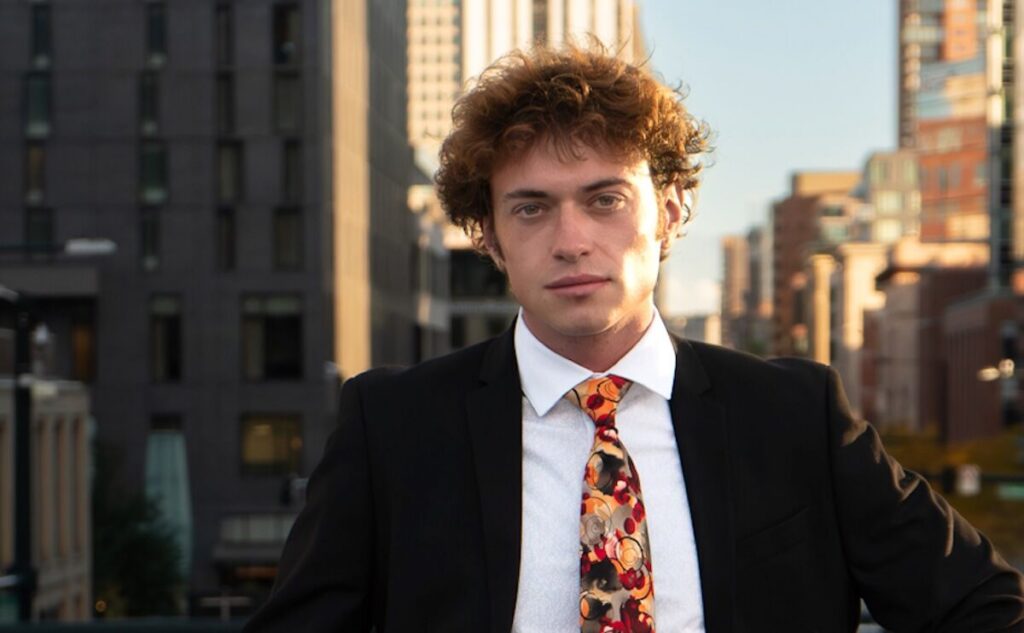
Marx is more of a technology journalist than a scientist or engineer. He works out of Newfoundland, Canada and looks and dresses as if he is a first-year graduate student. But the boyish looking and charming Marx has hosted his podcast “Tech Won’t Save Us” since 2020. He has also authored a couple of books.
He hosts long-form interviews but in his case his guests are cynics and critics of AI developments. Marx worries AI will lead to mass layoffs and have major negative effects on young people and democracy. He suggests AI leaders are primarily motivated by greed and are more reckless than benevolent.
He shares the views of one of his recent guests, journalist Gil Duran and Duran’s new book “The Nerd Reich: Silicon Valley Fascism and the War on Democracy.” Marx’s programs are easy to listen to but are heavy on cynicism and skepticism. His goal is to warn viewers and urge alternative futures to protect the environment and public safety.
Marx is a leftist who, if he lived in the U.S. would probably be a member of the Democratic Socialists of America. His point of view is a major contrast to what one hears on pods such as “Moonshots.”
British-born Ed Zitron hosts a podcast called “Better Offline.” He works out of New York and Las Vegas and offers blistering critiques of AI executives, their excessive hype and their failings. He predicts an AI bubble. He is a contrarian and raises serious questions about the data center buildouts. His views are akin to those that both Bernie Sanders and former Trump adviser Steve Bannon have been trumpeting.
A more moderate critic of AI is podcaster Tristan Harris. Harris studied computer science and psychology at Stanford University and worked at Google as a design ethicist.
Harris won national attention for his major role in a Netflix documentary called “A Social Dilemma.” He calls attention to the manipulative aspects of social media and AI outlets. He documents misinformation and the harmful effects tech companies have had, especially on young people.
What makes Harris interesting is he is not opposed to AI and he has insider experience. He is indeed a product of Silicon Valley. But his podcast called “Your Undivided Attention” is a red flag of things that can go wrong if we do not invest in AI safety and integrity. He warns of how AI is transforming warfare and the military-industrial complex. He warns too about how this new industry is changing the way people learn, or don’t learn and about its effect on human relationships and human decency.
The world has seen and navigated many major technological disruptions in the past. But this “revolution” may be exponentially larger and harder.
The podcasts reviewed here along with similar ones can help prepare and educate us. They may provide just an AI 101 yet most of us need all the help we can get as we participate in this transformational period.
Tom Cronin is a news commentator who writes about Colorado and national politics.


CoComandering? | Miller Hudson
Miller Hudson
miller-hudson@coloradopolitics.com
Updated 17 hours ago
At 8 a.m., Friday morning, Aug. 28, 70 or 80 mostly bleary-eyed visitors to the Transportation Technology Center outside Pueblo packed a conference room to attend the Front Range Passenger Rail District’s (FRPRD) Board meeting. With the exception of those...
Even Dem court couldn’t abide theft of GOP seats | Dick Wadhams
Dick Wadhams
dick-wadhams@coloradopolitics.com
Updated 13 hours ago
Thanks to the Colorado Supreme Court, Colorado voters will be able to reaffirm their support for the Independent Congressional Redistricting Commission after the court struck down the Democratic scheme to steal three Republican congressional seats. Billionaire-funded national Democratic groups from...

Chaotic meeting began with attempt to squelch public comment | Rachel Gabel
Rachel Gabel
rachel-gabel@coloradopolitics.com
Updated 13 hours ago
When Attorney General Phil Weiser takes the governor’s office in January, he must immediately address the chaos of the latest round of appointees to the Colorado Parks and Wildlife Commission to assure stakeholders he’s willing to put pressure on the...

Graduated income tax proposal is a flat tax in disguise | Jon Caldara
Jon Caldara
jon-caldara@coloradopolitics.com
Updated 3 days ago
“Youth is wasted on all the wrong people.” That’s one of my favorite lines from “It’s a Wonderful Life.” The older I get, the less it sounds like a joke. Every generation inherits victories it did not win. Young Americans...

Colorado House ethics committee issues ‘stern letter’ to Democrat over caucus funds mismanagement
Marianne Goodland
marianne.goodland@coloradopolitics.com
Updated 16 hours ago
The Colorado House ethics committee on Friday voted unanimously to issue a “stern letter” to Rep. Mandy Lindsay, D-Aurora, regarding her mismanagement of House Democratic caucus funds. The committee further voted to request that Lindsay resign as Democratic Caucus co-chair...
Manny Rutinel resigns from Colorado legislature to focus on congressional race
Marissa Ventrelli
marissa.ventrelli@coloradopolitics.com
Updated 2 days ago
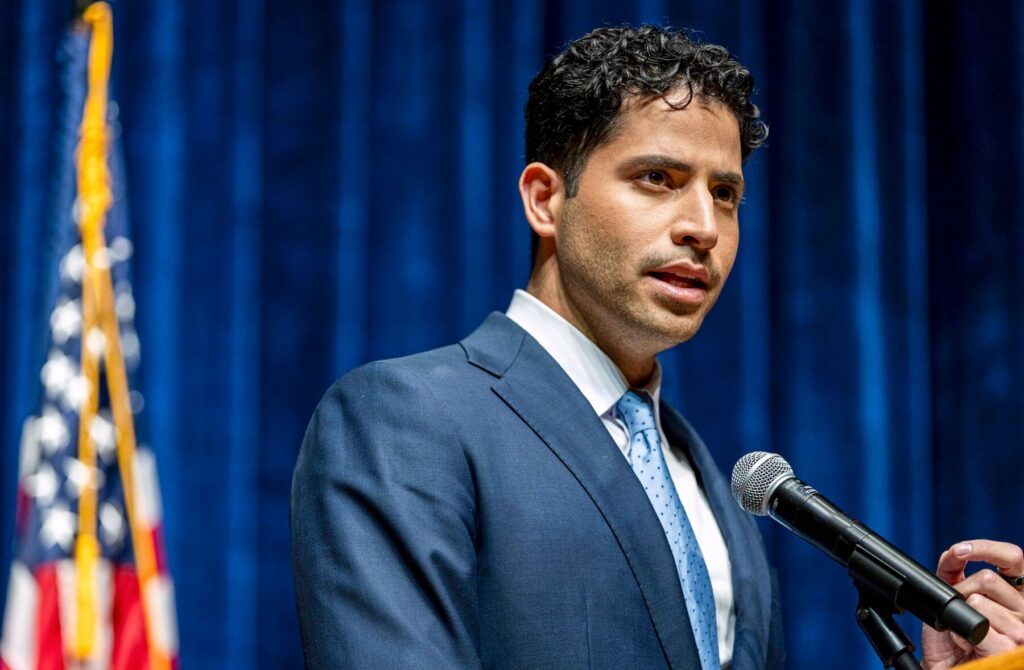
The Democrat running for a key congressional race — whose outcome could decide the balance of power in the U.S. House — on Friday resigned from the Colorado legislature. State Rep. Manny Rutinel is turning his attention to his campaign...

Colorado secures FEMA support for wildfire, flooding and mudslide recovery
Marissa Ventrelli
marissa.ventrelli@coloradopolitics.com
Updated 1 day ago
Federal authorities on Friday approved Colorado’s request for federal public assistance to help communities devastated by the Aspen Acres and Gold Mountain Fires. The Federal Emergency Management Agency did not announce how much the state would receive but confirmed that...
State seeks $50K penalty against GOP candidate Victor Marx over alleged campaign finance violations
Deborah Grigsby
deborah.smith@denvergazette.com
Updated 2 days ago
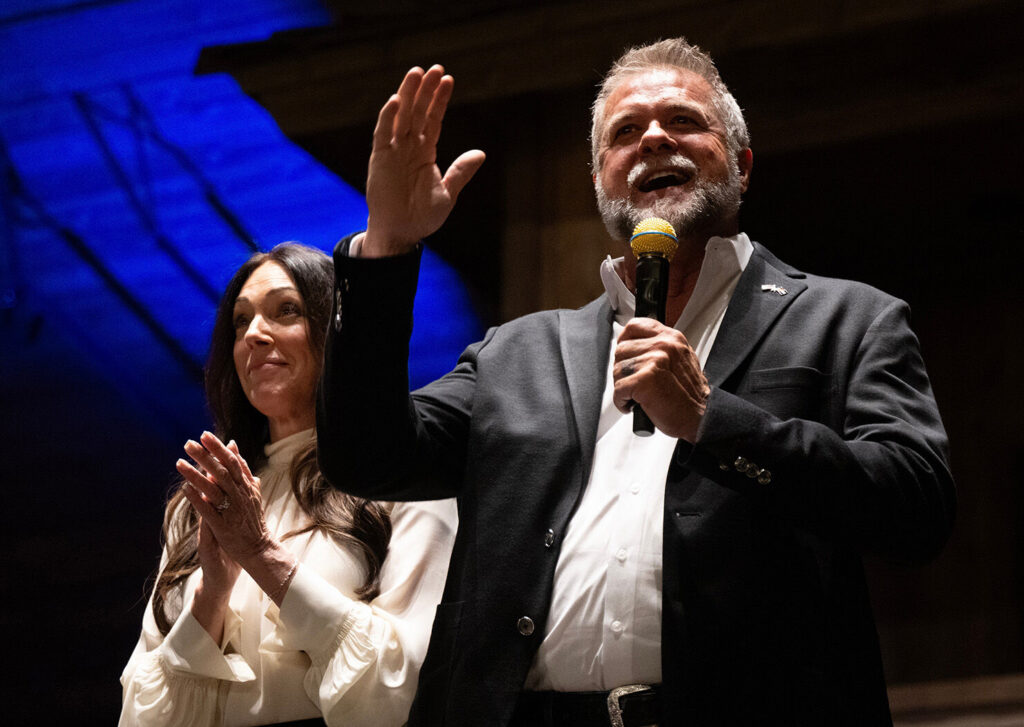
Republican gubernatorial candidate Victor Marx is looking at more than $50,000 in fines in what the Elections Division of the Office of the Secretary of State calls “unprecedented” campaign finance violations. The state has not imposed that fine yet, and...
Judge puts Colorado Libertarians’ secretary of state candidate on ballot after party’s 1st nominee drops out
Ernest Luning
ernest.luning@coloradopolitics.com
Updated 2 days ago
A Denver judge ruled Friday that the Colorado Libertarian Party’s pick for secretary of state will appear on the November ballot after the party’s original nominee withdrew one day after the deadline to replace minor party candidates. Following a hearing...
President Trump puts Colorado farmers and ranchers first | GUEST COLUMN
Colorado Politics
colorado-politics@coloradopolitics.com
Updated 3 days ago
By Brooke L. Rollins Ever since Colorado was admitted to the union 150 years ago this month, farmers and ranchers across the state have kept our nation’s food supply secure and our freedom alive. From cattle ranchers on the eastern plains to specialty crop producers on the Western Slope, Colorado is home to more than 36,000...
PREV
PREVIOUS

The dissonance of an American Jew thinking about Israel | SONDERMANN
The Jewish High Holidays will soon be upon us. The third anniversary of Oct. 7 will then quickly follow. Three weeks later, Israeli voters will head to the polls to elect all 120 members of its parliament, the Knesset and thereby their next prime minister. It has been a couple of years since I’ve addressed […]

Graduated income tax proposal is a flat tax in disguise | Jon Caldara
“Youth is wasted on all the wrong people.” That’s one of my favorite lines from “It’s a Wonderful Life.” The older I get, the less it sounds like a joke. Every generation inherits victories it did not win. Young Americans never experienced the Cold War, the draft or stagflation. Double-digit inflation is something grandpa now […]