

10th Circuit tosses phony arbitration scheme seeking $300 million against Loveland

The federal appeals court based in Denver has rejected outright a Fort Collins man’s attempt to extract $300 million from the city of Loveland, in a case a lower court judge deemed “fraudulent.”
Eyoel-Dawit Matios claimed Loveland was subject to a “self-executing” agreement to arbitrate his grievances stemming from a traffic stop with a Loveland police officer. Although the city never agreed it would participate in arbitration, Matios engaged Sitcomm Arbitration Association. Sitcomm’s founder, Brett “Eeon” Jones, awarded Matios $300 million after a hearing in which the city did not take part.
Matios subsequently petitioned a federal judge to enforce the award.
Although the U.S. Court of Appeals for the 10th Circuit did not weigh in on the merits of Matios’ petition, it was aware of the multiple other cases throughout the country involving plaintiffs’ attempts to enforce invalid arbitration agreements.
“Federal courts have encountered several petitions to vacate or confirm arbitration awards issued by Sitcomm and/or Mr. Jones, and they have consistently questioned the validity of the underlying contracts and the subsequent arbitration awards,” wrote Judge Carolyn B. McHugh in the July 14 order.
In August 2021, Matios submitted a petition to confirm the $300 million amount he was allegedly owed from arbitration. But U.S. Magistrate Judge N. Reid Neureiter, in a blistering analysis, referred to the arbitration documents as “non-sensical legal mumbo-jumbo” and an “abuse” of the judicial system.
“Mr. Matios’ instant attempt to enforce in federal court this non-existent arbitration ‘contract’ and the accompanying patently ridiculous $300 million arbitration award is fraudulent, an undue imposition on the City, and an extreme waste of judicial resources,” Neureiter wrote in November.
He noted the pattern of unfounded arbitration claims had connections to the antigovernment sovereign citizen movement. The Anti-Defamation League has described the purpose of fraudulent arbitration as intimidating and harassing targets and clogging the courts with unfounded requests.
Sitcomm cases have arisen in federal courts in several other states, with one judge in the Northern District of Texas going so far as to alert the U.S. Attorney’s Office and multiple state attorneys general of Sitcomm’s activities. Another judge in the Middle District of Georgia warned that Sitcomm “appears to make money by selling unwitting consumers fraudulent legal documents and also attempting – so far, unsuccessfully – to dupe a court into confirming one of its awards.”
In February, U.S. District Court Judge William J. Martínez agreed with Neureiter that he could not confirm the arbitration award because there was no valid contract between Matios and Loveland to begin with.
Matios, representing himself, turned to the 10th Circuit and attempted to advance several claims. He argued Neureiter was not permitted to be involved in his case and that there was a “valid private common-law consolidated constitutional contract” between himself and Loveland.
The city countered that Matios was pursuing litigation in bad faith, considering Colorado’s requirement that a valid contract requires the mutual assent of both parties and Loveland’s repeated statements to Matios it had never agreed to the arbitration process.
“Indeed, Mr. Matios, and individuals like him, who are trying to use an improper, harassing, and ultimately fraudulent process in an effort to get money from a party that has from the beginning denied the claims made and explicitly stated it did not agree to arbitrate need to be stopped,” wrote attorney Ashley Hernandez-Schlagel on behalf of the city.
A three-judge panel for the 10th Circuit quickly determined federal courts did not have jurisdiction over Matios’ case. A U.S. Supreme Court decision from March of this year concluded that federal district courts can only handle arbitration-related petitions in the limited circumstances where Congress has given them authority: disputes between parties of different states and questions of federal law.
Neither of those conditions applied to Matios.
“These contractual disputes are issues of state law, not federal law,” McHugh concluded.
Sitcomm and Matios did not respond to requests for comment.
The case is Matios v. City of Loveland.



10th Circuit partially revives lawsuit over 2020 Denver protest injuries
Michael Karlik
michael.karlik@coloradopolitics.com
Updated 2 hours ago
The Colorado-based federal appeals court revived a man’s claims against Denver on Friday after concluding a trial judge resolved the case in the city’s favor without analyzing two of the three instances of alleged excessive force and other constitutional violations....
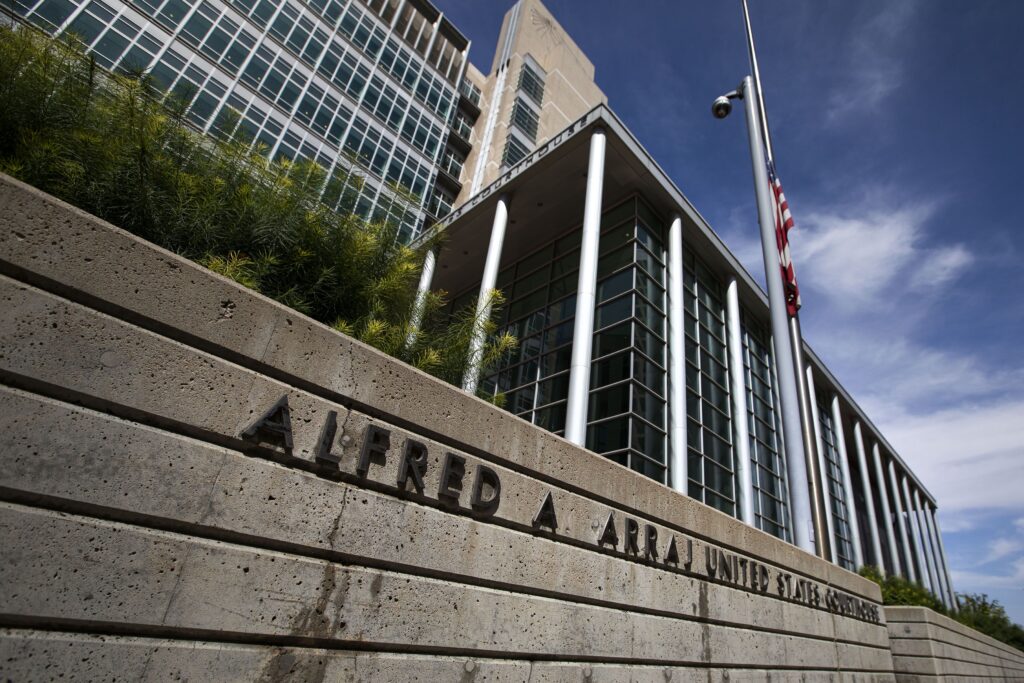
Federal judges find Colorado immigration judge violated several orders
Michael Karlik
michael.karlik@coloradopolitics.com
Updated 22 hours ago
Multiple federal judges in Colorado have freed people from immigration custody after determining that one immigration judge violated their directives for properly conducting bond hearings. For nearly a year, Colorado’s U.S. District Court has faced a flood of habeas corpus petitions...
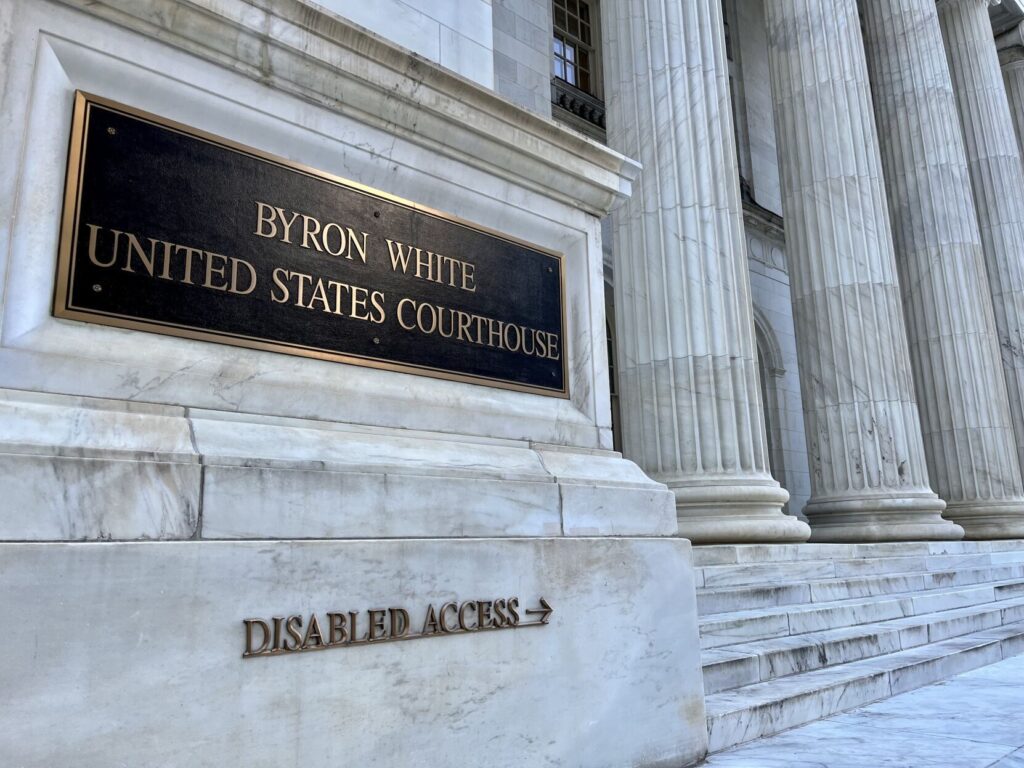
Misconduct complaints from ex-Colorado judicial discipline director dismissed against federal judges
Michael Karlik
michael.karlik@coloradopolitics.com
Updated 3 days ago
The administrative body for the Denver-based federal appeals court upheld a finding last week that misconduct complaints against Colorado’s chief federal trial judge and the chief appeals judge warranted dismissal and appeared to be a “litigation tactic” by the complaining...

First-ever Red Rocks naturalization ceremony draws most diverse group of new citizens
Michael Karlik
michael.karlik@coloradopolitics.com
Updated 20 hours ago
Colorado’s federal trial court held its first-ever naturalization ceremony for nearly 300 new citizens on Thursday at Red Rocks Park and Amphitheatre. “We’re doing it to commemorate the 250th anniversary of the Declaration of Independence and the United States. Red...
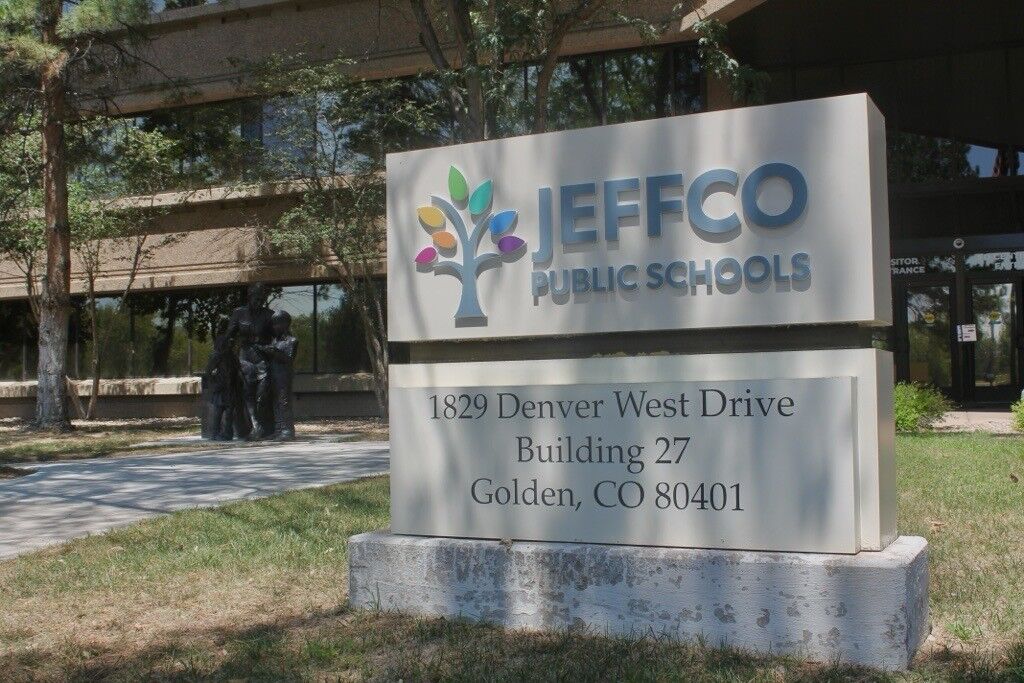
Jeffco taxpayers could be on the hook for a possible child sex assault settlement
Matt Kyle
matt.kyle@denvergazette.com
Updated 2 days ago
Taxpayers may end up on the hook for a child sexual assault settlement, possibly worth up to $15 million, after Jeffco Public Schools failed to notify its insurance company in a timely manner about the case. The incident stems from...
10th Circuit finds no fair housing violation by Littleton landlord for worker’s alleged rape of tenant
Michael Karlik
michael.karlik@coloradopolitics.com
Updated 22 hours ago
The Denver-based federal appeals court concluded on Monday that Littleton’s housing authority could not be held liable for a maintenance worker’s alleged rape of a tenant, as the worker’s employment did not provide any special access to the victim. A...

Jeffco Public Schools sues Trump administration to protect funding after alleged transgender policies violation
Matt Kyle
matt.kyle@denvergazette.com
Updated 3 days ago
In the wake of several threats by the Trump administration to revoke federal funding, Jeffco Public Schools filed a lawsuit against the Department of Education seeking to protect that badly needed money. Jeffco has been under investigation by the DOE’s...

Denver detox center did not violate man’s rights with 10-hour hold, 10th Circuit says
Michael Karlik
michael.karlik@coloradopolitics.com
Updated 5 days ago
The Colorado-based federal appeals court concluded on Tuesday that Denver’s detoxification facility did not violate a man’s rights by holding him against his will for 10 hours until his blood alcohol content was projected to reach zero. Unusually, Brian Garrett’s...

Federal judge clarifies ex-GOP treasurer candidate’s burden to prove defamation claims
Michael Karlik
michael.karlik@coloradopolitics.com
Updated 5 days ago
A federal judge clarified last week that businessman and former Republican statewide candidate Brian Watson will need to surmount a higher hurdle in proving his claim that a party guest’s alleged description of him as a “criminal” amounted to defamation....
Colorado board permits state to appeal injunction against arthritis drug price cap
Marissa Ventrelli
marissa.ventrelli@coloradopolitics.com
Updated 5 days ago
A Colorado board voted Friday to allow the Attorney General’s Office to fight an injunction against a price cap on a drug that treats arthritis. A U.S. district court judge had granted the company Amgen a preliminary injunction, temporarily blocking...
PREV
PREVIOUS

Appeals court overturns Jeffco drug conviction for detective's improper testimony
Colorado’s second-highest court determined last month that a detective’s expert testimony claiming the defendant had a “classic case” of possessing drugs with an intent to distribute amounted to a fundamental error that required reversing the conviction. State and federal courts have delineated when an expert’s testimony is improper at trial, including when an expert opines […]

Report: Colorado economy continues to outperform, but headwinds are fierce
While Colorado continues to outperform the nation and most states in job recovery and growth, business owners are decidedly glum about the future, a midyear economic report by the University of Colorado Boulder Leeds School of Business released Friday shows. The latest Colorado Business Economic Outlook shows Colorado with the second-highest labor force participation rate […]