

Mesa County judge went too far in ordering sex offender treatment absent a conviction, appeals court rules

Although trial judges may require parents to receive psychological counseling for their sexual behavior as part of child welfare proceedings, they may not order parents to receive Colorado’s formal sex offender treatment in the absence of a criminal conviction, the Court of Appeals ruled last week.
A three-judge appellate panel explained that the treatment standards of the state’s Sex Offender Management Board are, by law, intended for adults who are subject to the “supervision of the criminal justice system.” A Mesa County judge therefore went too far by ordering a man to comply with the SOMB’s protocols as part of a non-criminal child welfare case.
“To be clear, we do not hold today that a juvenile court may not require a respondent parent to participate in an evaluation and obtain treatment or counseling for sexual behavior that poses a risk to the parent’s children,” wrote Judge Timothy J. Schutz in the July 7 opinion. “However, in a situation like father’s, where the parent has not been convicted of a qualifying sex offense and objects to participating in SOMB treatment, the juvenile court may not require a parent to comply with an SOMB evaluation or treatment pursuant to the SOMB Standards.”
The Mesa County Department of Human Services initiated a dependency and neglect — or welfare — case involving a child identified as M.W. There were allegations her father, D.W. sexually assaulted her and that M.W.’s overall environment was injurious to her health. D.W. contested those allegations, but a jury eventually agreed M.W. lacked proper parental care.
The department proposed a treatment plan requiring D.W. to undergo a psychosexual evaluation that would determine his “risk for re-offense.” Whether D.W. successfully completed the goal would depend upon his attendance, his adherence to any recommendations and being “open and honest during the evaluation.”
D.W. objected to the requirement of engaging in treatment pursuant to SOMB standards. Because the welfare case was not criminal, he argued, there was no reason to impose a criminal sanction. Further, the SOMB guidelines state that denial of sexual misconduct impedes treatment and can lead to its discontinuation, and D.W. countered that he risked self-incrimination if he were required to admit to a crime in order to receive treatment.
District Court Judge Valerie J. Robison overruled D.W.’s objections, saying she was loathe to “not consider or somehow decide not to address the main issue” of alleged child sexual abuse. D.W. then turned to the Court of Appeals.
Schutz, in the panel’s opinion, described the conditions of sex offender evaluations and treatment as “extraordinary.” The evaluation identifies what level of treatment is appropriate, as well as specific risk factors. Offenders have a supervision team that includes their treatment provider, a victim representative and a polygraph examiner. SOMB standards also forbid most types of contact with children.
While sex offender treatment is meant to protect the public by placing often-heavy restrictions on defendants, treatment plans in child welfare cases seek to preserve parent-child relationships through helping a family reach a stage at which government intervention is not required.
“So, for example, if the parents were experiencing discord in their relationship that was interfering with their ability to appropriately parent their children, the court could order them to complete couples’ therapy,” Schutz wrote.
He acknowledged Robison was troubled by M.W.’s allegations of abuse, but emphasized that dependency and neglect proceedings are not designed to punish parents in a criminal fashion. Absent a criminal conviction, the requirement for D.W. to undergo the state’s sex offender treatment created a dilemma for parents like him.
“If they admit sexually abusing their child, they forfeit their constitutional right to remain silent, potentially face criminal sanctions, and will likely have their parental rights terminated,” Schutz wrote. “If they do not admit the alleged abuse, they will not successfully complete their treatment plan and therefore face termination of their parental rights.”
The appellate panel returned the case to Robison, permitting her to order appropriate psychological counseling and treatment if needed. She may not, however, impose the SOMB’s requirements on D.W.
The Court of Appeals also rejected D.W.’s other claim that Robison should not have prevented two of his witnesses from testifying remotely. Schutz, a former trial judge, explained that judges know best the capabilities of their courtroom audiovisual equipment and the efficacy of remote testimony, and Robison did not clearly abuse her authority in blocking the witnesses from appearing.
The case is People in the Interest of M.W.


A new day? Colorado’s troubled guardianship office pursues ‘cultural reset’
Marianne Goodland
marianne.goodland@coloradopolitics.com
Updated 3 days ago
Colorado’s guardianship program, long criticized for mismanagement and high staff attrition, is undergoing a “cultural reset,” as its new director works to repair partnerships and prepare for a major expansion under recent legislation. Created by lawmakers in 2017, the Office...

Local party leaders, incoming judge among members of judicial performance commission that violated law
Michael Karlik
michael.karlik@coloradopolitics.com
Updated 15 hours ago
A local Democratic leader and 2024 presidential elector. A legislative aide and leader in the Young Republicans. An incoming county court judge freshly appointed by the governor. They are among the eight members of the northeastern Colorado judicial performance commission...

Judge dismisses lawsuit seeking records from Colorado Democratic group
Marianne Goodland
marianne.goodland@coloradopolitics.com
Updated 2 days ago
A lawsuit seeking to obtain records from Democratic lawmakers affiliated with a caucus has been thrown out by a Denver District Court judge. On July 17, Judge Ericka Englert dismissed the April lawsuit filed by progressive activist Derrick Blanton, who...
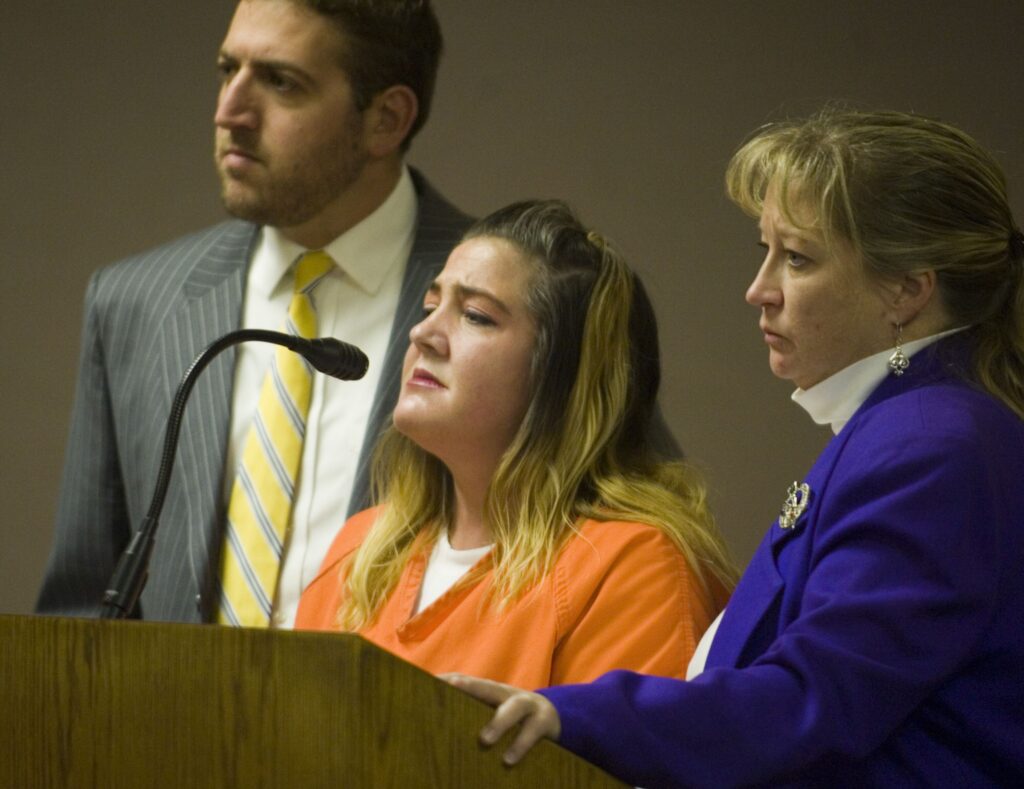
Colorado Springs mother Deborah Nicholls’ murder conviction overturned
Nick Smith
nick-smith@coloradopolitics.com
Updated 2 days ago
A Colorado Springs mother convicted in 2008 of murdering her three children in a house fire might get a new trial after a judge ruled that prosecutors withheld key evidence that could have impacted the jury’s verdict. Deborah Nicholls, whose...
Colorado court overturns illegal $7,000 restitution order
Michael Karlik
michael.karlik@coloradopolitics.com
Updated 1 day ago
Colorado’s second-highest court overturned a Weld County defendant’s obligation to pay more than $7,000 in crime victim restitution on Thursday because a trial judge failed to issue a legally compliant restitution order at the time of sentencing. In Colorado, as...

Appeals court rejects former DougCo commissioner’s legal fee claim
Nicholas Fogleman
nicholas.fogleman@denvergazette.com
Updated 2 days ago
The Colorado Court of Appeals rejected a former Douglas County commissioner’s bid for reimbursement of attorney fees she incurred while responding to multiple investigations into her conduct. The dispute stemmed from a 2019 anonymous letter sent to county officials alleging...
Appeals court orders second look at Denver Water’s immunity for cyclist’s injury
Michael Karlik
michael.karlik@coloradopolitics.com
Updated 2 days ago
Colorado’s second-highest court ordered another look at a bicyclist’s negligence lawsuit against Denver Water on Thursday, concluding that a trial judge needed to evaluate the utility’s potential immunity using the state Supreme Court’s new guidance. Joseph A. “Joey” Scott alleged...
Labels, duration not definitive proof of ‘intimate relationship,’ Colorado court rules in domestic violence case
Michael Karlik
michael.karlik@coloradopolitics.com
Updated 2 days ago
Colorado’s second-highest court clarified on Thursday that the length of a couple’s relationship and the labels they attach to it are not conclusive evidence of whether it is an “intimate relationship” that can give rise to a domestic violence prosecution....

Colorado AG urges Supreme Court to let Boulder climate lawsuit proceed
Marissa Ventrelli
marissa.ventrelli@coloradopolitics.com
Updated 3 days ago
Colorado Attorney General Phil Weiser has filed a court brief with the U.S. Supreme Court in a lawsuit brought by Boulder city officials seeking to hold oil companies liable for their environmental impact. The case began in 2018, when the...
10th Circuit says landowner cannot sue ex-Routt County judge for statements in decision
Michael Karlik
michael.karlik@coloradopolitics.com
Updated 4 days ago
A Routt County landowner cannot sue a former judge for his allegedly inaccurate statements in a case where the landowner was not a party, the Denver-based federal appeals court decided on Wednesday. Anne Fitzsimmons, who lives in Germany, owns a...
PREV
PREVIOUS

Appeals court upholds convictions for religious group's killing of 2 girls
Ashford Nathaniel Archer argued to the state’s second-highest court that there was insufficient evidence he committed child abuse resulting in death, stemming from his religious group’s 2017 killing of two girls in San Miguel County. The Court of Appeals disagreed last week, finding Archer was aware of the group’s overall decisions that led up to […]

10th Circuit tosses inmate's lawsuit over COVID-19 prison protocols
A Colorado inmate has not plausibly claimed that prison officials’ allegedly-deficient COVID-19-prevention measures amounted to cruel and unusual punishment, the federal appeals court based in Denver has decided. Delano Marco Medina, who is incarcerated at the Colorado Territorial Correctional Facility in Cañon City, first filed a petition in federal court in June 2020, claiming the Colorado […]