

Colorado’s new retail delivery fee takes effect, drawing criticism

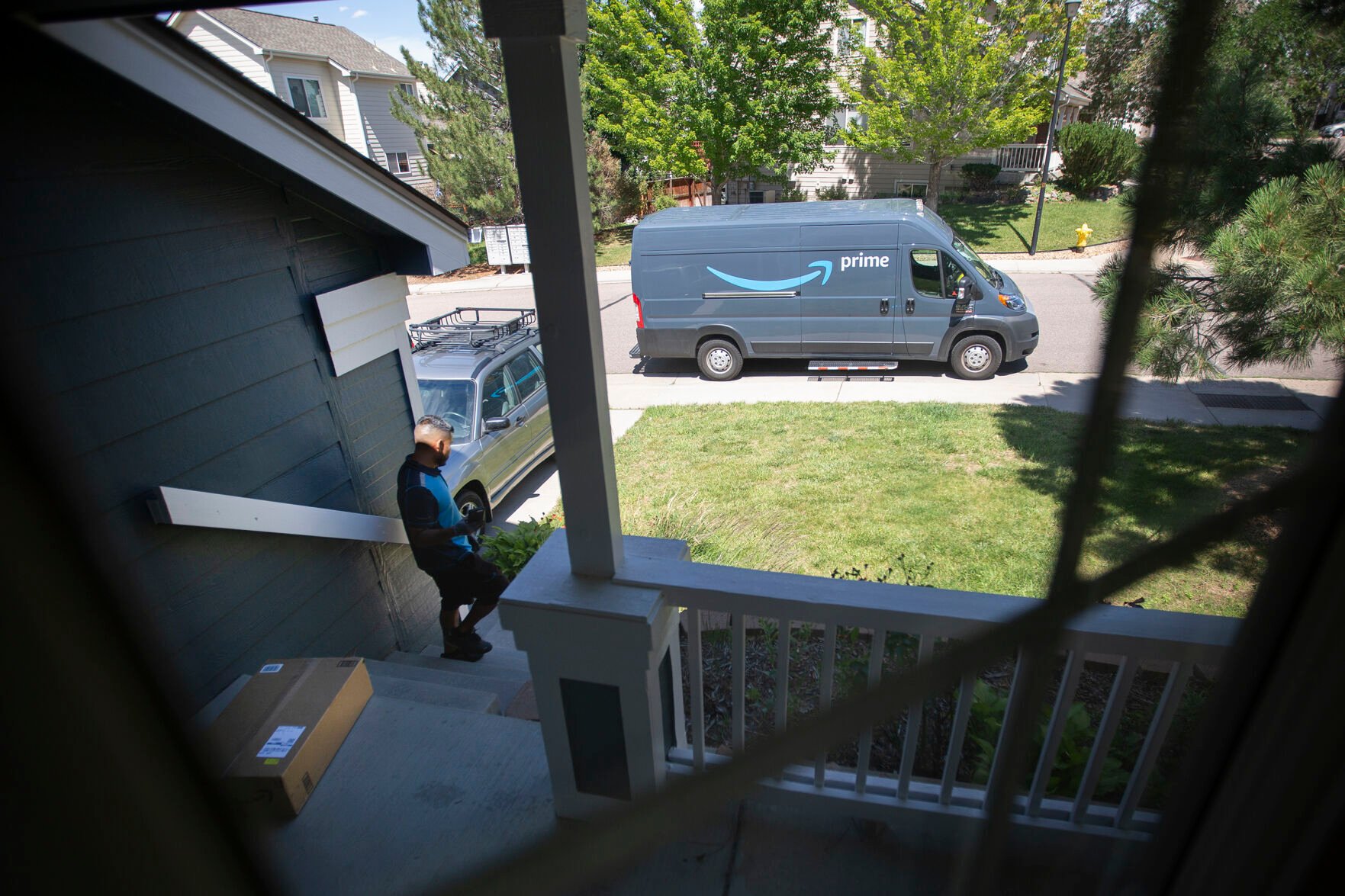
Colorado consumers will start noticing a 27-cent fee on receipts for almost everything that gets delivered to them, including restaurant food, after Colorado’s new “retail delivery fee” took effect July 1.
The fee must be collected and paid to the state by retailers “on all deliveries by motor vehicle to a location in Colorado with at least one item of tangible personal property subject to state sales or use tax,” according to the new law.
100 deliveries: My week as a culinary desire fulfillment officer
The new fee is occurring at a time of record-setting inflation, spiking home prices, and a general sense that living in Colorado has become less affordable. It’s also occurring as elected officials promise to do everything in their power to lift the economic burden on residents.
The fee is part of the transportation package the Legislature passed in 2021 and is expected to generate hundreds of millions of dollars in coming years for road improvements, transit projects and electric vehicle programs.
The Colorado Department of Revenue only finalized draft rules for the new fee – which is actually four fees rolled into one – in May, and the final rules are still weeks away. A department spokesman said they sent letters to retailers “both by mail and email depending on what we had on file in our GenTax system” and held a public rulemaking hearing on June 23, which was attended by hundreds of people. The department also created a Q&A site on its website tax.colorado.gov.
Inflation nation: Colorado Springs residents pummeled by rising prices
Department officials “auto-registered” all sales tax business to collect the new fee, Tax Policy Manager Erika Hoxeng told attendees.
But many business representatives who attended that meeting said they were unaware of the new fee, complained that it was incredibly complicated to comply with, and expressed worry about raising prices for customers already enduring the biggest spike in inflation the nation has seen in decades.
It also comes at a time when many Coloradans have grown used to the convenience of home delivery after years of a pandemic.
E-bike trade show rolls into Colorado in 2023
The Koch brothers-founded Americans For Prosperity, which advocates for “economic freedom” and limited government, has sued the state, alleging legislators skirted TABOR requirements that voters must approve all new taxes by creating four new enterprises to collect the fees. State attorneys deny the claim and have asked a judge to dismiss the lawsuit.
“This certainly has been challenging to our tax teams,” said Chris Howes, president of the Colorado Retail Council. “This is a really unique fee. The first in the nation. … We’re working through creation software that will allow our members to comply.”
The council represents 1,800 retail locations in the state, including all the major chain retailers and giant Amazon.
While Amazon officials declined to specifically address the retail-delivery fee, they said, “Amazon complies with all applicable tax laws.”
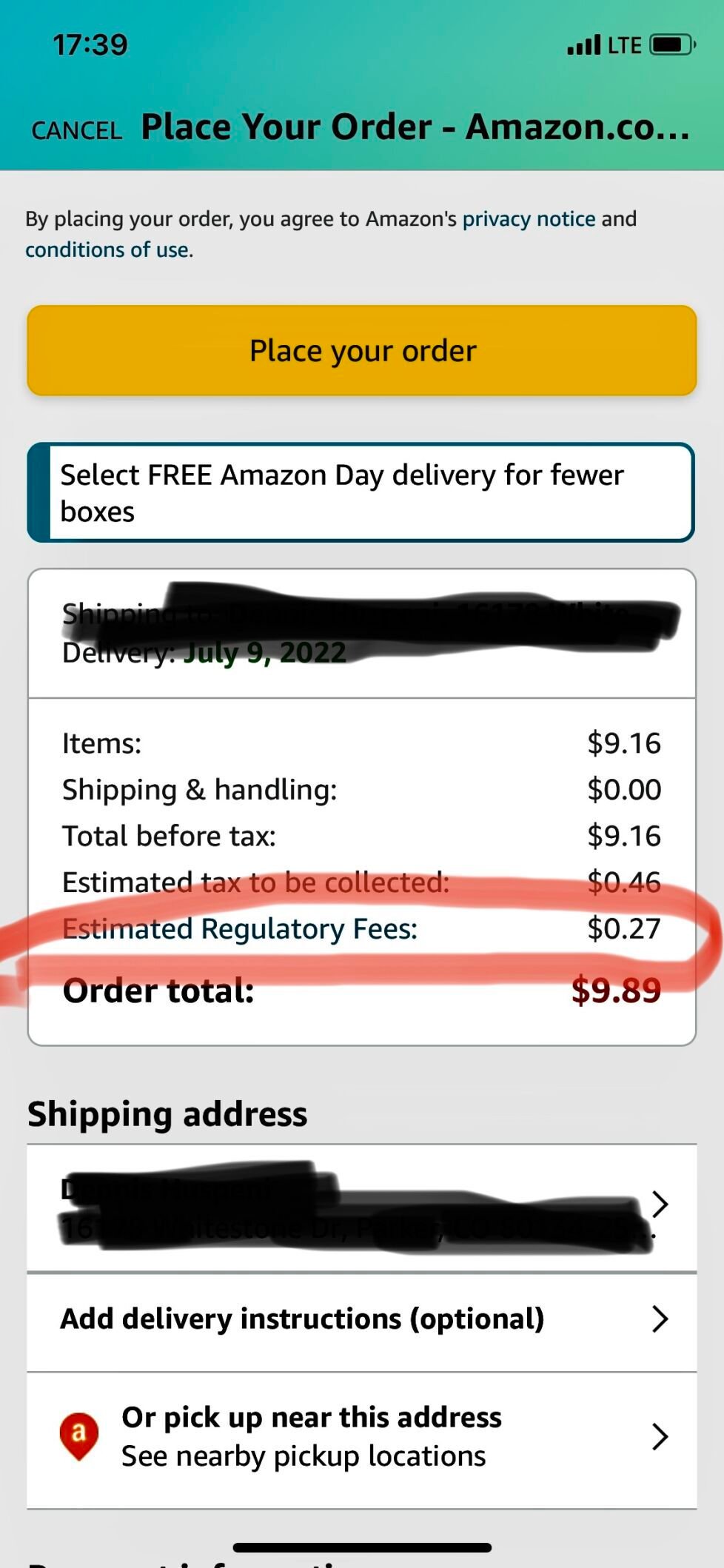
And sure enough, Amazon’s Colorado customers will notice on receipts since July 1 an “estimated regulatory fees $0.27.”
The issue has split people along political lines.
“These delivery and rideshare fees are the latest example of Democrats being out of touch,” Michael Fields, president of Advance Colorado and a plaintiff in the AFP lawsuit, told The Denver Gazette in an email. “With 9% inflation in Colorado, families are struggling to make ends meet. Government shouldn’t be raising taxes or fees on anything right now.”
The nonprofit Advance Colorado describes itself as an educational group in “areas of fiscal responsibility and transparency, limited government, free enterprise, lower taxes, strong public safety, and an accountable education system.”
Gov. Jared Polis countered that the transportation package received bipartisan backing and is necessary to help Colorado’s ailing roads, bridges and transportation infrastructure.
“Coloradans are smart enough to understand that these delivery trucks and services are contributing to wear and tear on our roads, and in order to keep the roads up for the rest of us and improve transit, there is a fee that goes towards transportation,” Polis said via a spokesperson.
The governor’s response continued his theme of “saving Coloradans money” when describing the whole transportation package.
“The same bill that had the delivery fee also cut the vehicle registration fee,” gubernatorial spokesperson Conor Cahill said via email. “A family with two cars saves money overall unless they have over 82 deliveries.”
In its motion to dismiss the AFP lawsuit, the state insists lawmakers passed the bill for the “sustainability of the transportation system,” and that the enterprises created by the 2021 law – and fees they will collect to fund programs – will “benefit the health and safety of all Coloradans.”
The motion describes the law as fully TABOR-compliant.
The lawsuit, filed in April in Denver District Court, alleges the Legislature’s “sleight of hand” is illegal.
“Rather than listen to the people, the General Assembly took their scheming to a new high with SB 21-260,” the lawsuit says. “In that bill, the General Assembly decided several aspects of Colorado’s transportation system needed more funding. Instead of going to the voters to authorize new taxes, as would be required by TABOR, the General Assembly decided to use their favorite revenue generator: enterprises and fees.”
Area chambers of commerce are split on support for the fee.
“While SB 21-260 was far from perfect, it was a bill rooted in the reality of our current situation and the funding we so desperately need to address serious transportation issues that plague Colorado,” Adam Burg, the vice president of government affairs at the Denver Metro Chamber of Commerce, said via email. “The Denver Metro Chamber supported this bill with the understanding that its constitutionality will be questioned and determined by the courts.”
“This fee is not friendly to businesses or the consumer,” countered Jeff Keener, president and CEO of the South Metro Denver Chamber, via email. “It also appears from the information available the monies collected, and the allocation of these funds, is not well planned. The South Metro Denver Chamber opposed this additional fee.”
Confusion about the retail delivery fee continues, as evidenced by questions in the June 23 meeting and to the Colorado Retail Council:
? What if a taxable good is delivered via bicycle or electric bike?
? Is the fee subject to sales tax? (No, according to revenue department officials.)
? Is a customer refunded the fee if they return a product delivered by companies like Amazon?
? Can a business not charge customers and just pay the fee instead?
“The cost to program-out systems to collect this fee will be expensive, and it will be much more cost-effective for us to just pay the fee,” said one business representative.
“This is a little more complicated than what was described to the business community while the bill was being passed at the Legislature,” Howes said. “Many of our members are concerned about liability issues. What if we charge a customer too much or too little?”
Out of caution, many Retail Council members are just eating the cost of the new fee in an “escrow-type situation,” Howes said.
There’s also the question of delivery of nontaxed items, such as fruits, vegetables or ground beef, for example.
“If just one item in that order is taxed, like a tube of toothpaste, it triggers the fee,” Howes said.
Food-delivery services, such as UberEats, DoorDash, InstaCart or even pizza houses, are now required to charge the fee.
“As required by Colorado law, we now collect and remit a retail delivery fee from customers on each delivery order in the state,” according to a DoorDash spokesperson. “Customers in Colorado now see this fee displayed on the checkout screen prior to placing their order, as well as on their receipt.”
While the Department of Revenue has no ability to delay implementation, it seems to sympathize with business owners trying to comply and won’t “prioritize enforcement.”
“We understand that some retailers may have difficulty implementing this new retail delivery fee program by July 1,” according to the department’s website. “State statute generally requires retailers to add the retail delivery fee to the sale and show it on the receipt or invoice as a separately stated item. However, the Department currently has no plans to prioritize enforcement of this provision as long as retailers are paying the full amount of the fees due in accordance with their liability under section 43-4-605(6)(c), C.R.S.
“Furthermore, for those retailers who are making a good-faith effort to comply with these new requirements, we plan to be generous in granting requests to waive late filing and payment penalties and interest.”



Grand Canyon flooding threatens economy that’s still recovering from a fire | OUT WEST ROUNDUP
Ernest Luning
ernest.luning@coloradopolitics.com
Updated 3 days ago
ARIZONA Flooding slams park’s economy Deadly flooding at the Grand Canyon is damaging the area’s economy, with a washed-out pipeline severing the South Rim’s water supply and shutting down lodging at the popular tourist vista for an indefinite period. The...

Immigration reporting measure fuels debate over Colorado’s role with ICE
Marissa Ventrelli
marissa.ventrelli@coloradopolitics.com
Updated 4 hours ago
A coalition of advocacy groups and several district attorneys rallied outside the Colorado Capitol on Thursday to oppose a ballot measure that, if approved by voters in November, would require state and local law enforcement to cooperate with federal immigration...

Colorado Politics Calendar Sept. 14-20
Rachael Wright, Special to Colorado Politics
rachael.wright@coloradopolitics.com
Updated 4 days ago
CoPo’s weekly political calendar will help you find political and public-policy events throughout Colorado. It includes candidate and issue campaign events, public policy meetings, court hearings, state and local party conventions, assemblies, debates, rallies, parades, speaking engagements, traveling dignitary appearances,...
The African roots of three Colorado leaders | SONDERMANN
Eric Sondermann
eric-sondermann@coloradopolitics.com
Updated 3 days ago
Colorado’s political transformation is measured in many ways. A once reliably red state (with asterisks) became purple and is now a rather deep blue. For better or worse, probably the latter, power is ever more consolidated along the Front Range...
Federal judge green-lights civil trial against ex-Fort Collins DUI officer
Michael Karlik
michael.karlik@coloradopolitics.com
Updated 2 days ago
A federal judge ruled on Thursday that Fort Collins’ former “DUI officer” will face a civil trial for allegedly investigating a motorist for impaired driving without any reasonable suspicion to do so. In recent years, several people arrested by Officer...

Denver police reopen 13 sex assault cases after retesting Missy Woods’ CBI work
Jenny Deam
jenny.deam@gazette.com
Updated 4 hours ago
Thirteen previously closed Denver sexual assault cases have been reopened after the city’s crime lab retested DNA evidence once analyzed by former Colorado Bureau of Investigation forensic analyst Yvonne Woods. A police spokesperson told The Denver Gazette the once-closed cases...

Ballot measure aims to shift Colorado sporting goods tax revenue to land, water and wildfire projects
Marissa Ventrelli
marissa.ventrelli@coloradopolitics.com
Updated 20 hours ago
Colorado voters this November will decide whether to direct a share of sales tax revenue from sporting goods — including bicycles and skiing equipment — toward land and water conservation, wildfire prevention and expanding outdoor recreation. Supporters say the measure...

Colorado Supreme Court suspends Mesa County judge pending misconduct investigation
Michael Karlik
michael.karlik@coloradopolitics.com
Updated 22 hours ago
The Colorado Supreme Court suspended Mesa County Court Judge Michael J. Grattan on Thursday amid a misconduct investigation. The court’s Sept. 10 order gave Grattan 21 days to explain why his paid suspension should not continue through the end of...

Trump honors the fallen of the 9/11 terrorist attacks during Pentagon speech
Mabinty Quarshie
mabinty-quarshie@coloradopolitics.com
Updated 2 days ago
President Donald Trump and first lady Melania Trump honored the roughly 3,000 Americans killed during the Sept. 11, 2001, terrorist attacks during a ceremony at the Pentagon. The event marking the 25th anniversary of the deadliest attack on American soil...
Colorado Supreme Court changes course, dismisses case about special district bonds
Michael Karlik
michael.karlik@coloradopolitics.com
Updated 22 hours ago
The Colorado Supreme Court declined on Friday to decide a dispute between a large-scale Commerce City development and the various districts financing it, after initially showing interest in the ongoing case. Colorado has roughly 2,800 special districts, which are local...
PREV
PREVIOUS

'Colorado's Dr. Fauci' reflects on COVID and the state of public health
Nearly half of Jon Samet’s tenure as the dean of the Colorado School of Public Health has been spent battling COVID-19, from modeling the virus’s spread to advising state and local leaders; he even found time to keep a regular blog with his thoughts on the situation. Now, at the tail end of his time […]

Chasing Progress: Poverty gap for Black, Latino seniors grew over past decade
Although Melvin Page had a long career in public service, retiring proved to be much more difficult than he thought. Three years into his retirement, Page suffered a brain aneurysm that left him with crippling medical debt and no chance of keeping his apartment. The then 70-year-old ended up experiencing homelessness in Denver for more […]