

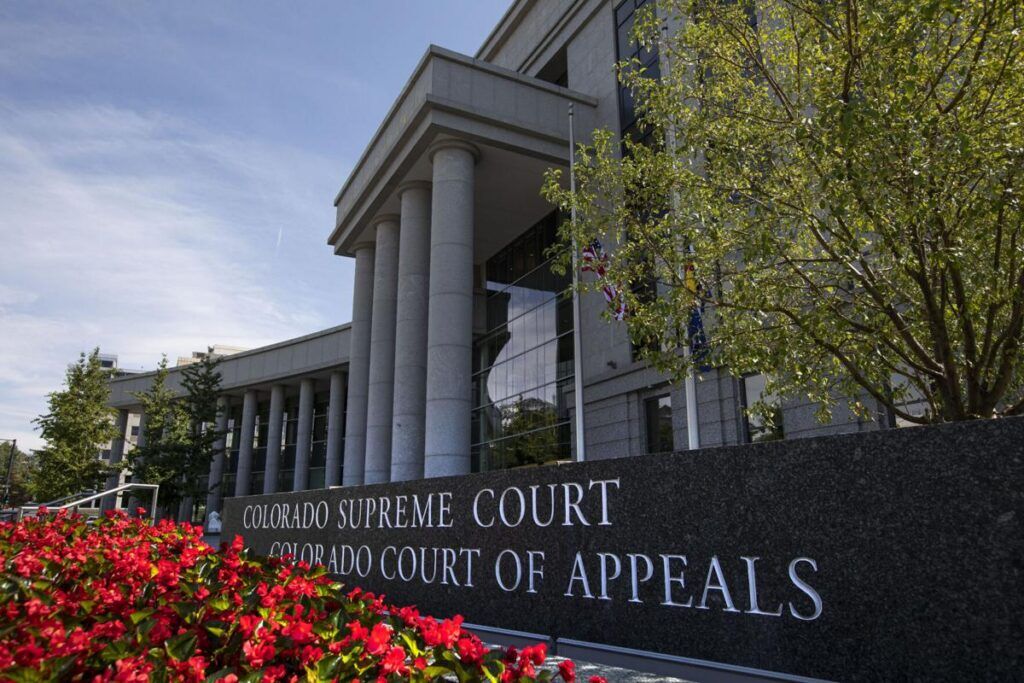
State Supreme Court mulls how much evidence is enough to prove identity in prior convictions
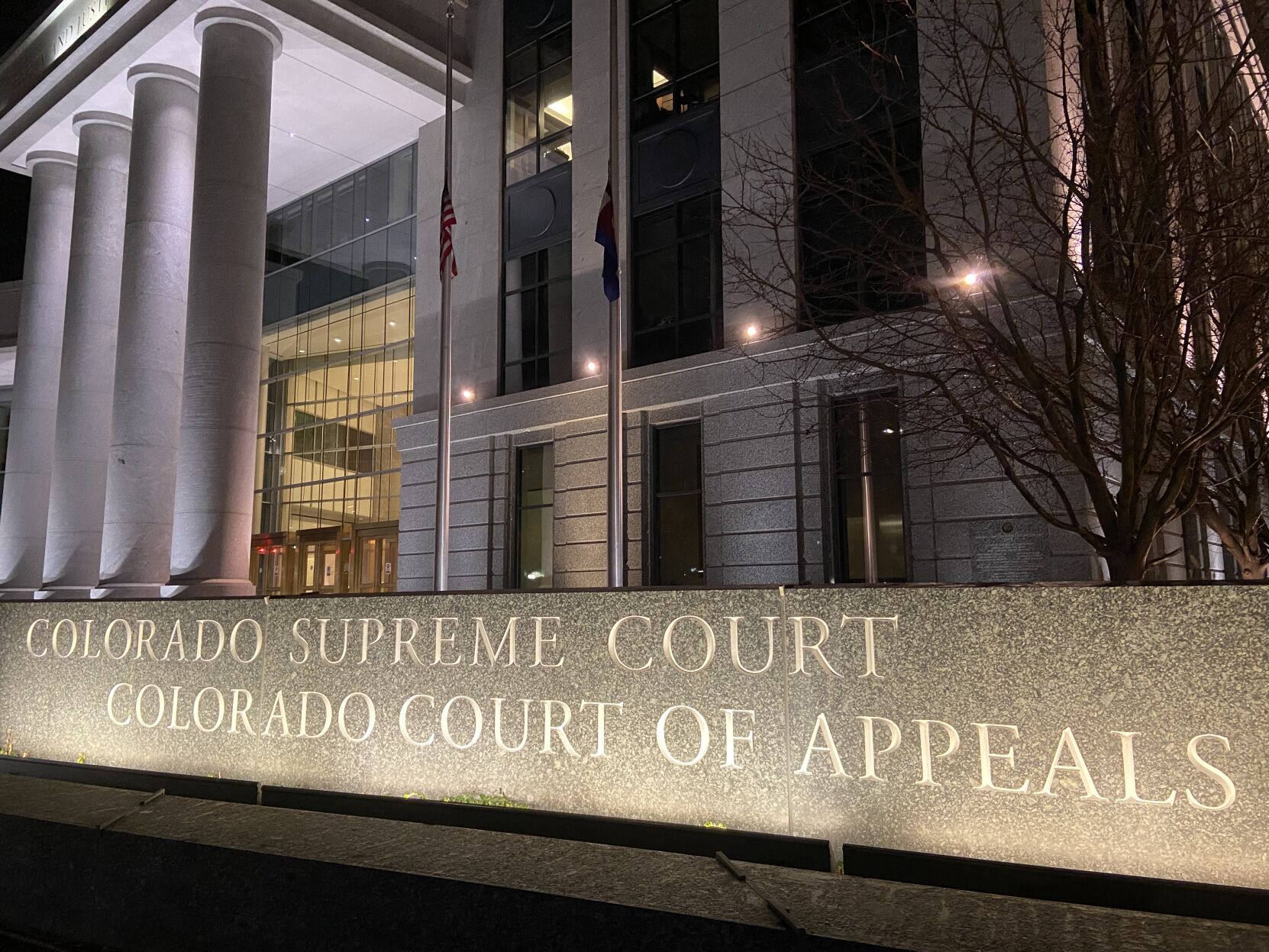
An El Paso County jury convicted Enrique Gorostieta in 2019 for possession of a weapon by a prior offender.
To determine he was the same Enrique Gorostieta who had a 2016 drug conviction on his record, jurors heard that the name, birthdate and county matched, and they also received a physical description of the defendant from the prior case.
Last May, the state’s Court of Appeals decided by 2-1 the evidence was sufficient to find Gorostieta was the same defendant in both prosecutions. But the Colorado Supreme Court agreed to hear the case, based on the dissenting judge’s belief that more information was required to say, beyond a reasonable doubt, the same man was involved in both crimes.
“The prosecution must present the jury with a unique or distinct identifier that would provide an essential nexus between the accused and the prior conviction,” public defender Mackenzie Shields told the justices during oral arguments last week.
Police arrested Gorostieta in January 2019 upon reports of gunfire in the 2000 block of Whitewood Drive in Colorado Springs. Officers found firearms under the seats of the SUV Gorostieta was driving, as well as ammunition. Prosecutors charged him with possession of a weapon by a prior offender, and noted his previous offense was a March 2016 drug conviction, also in El Paso County.
Jurors saw court records from the drug case that included the name Enrique Ernesto Gorostieta, a birthdate, and physical characteristics of race, height, weight, hair color and eye color. The defense argued the prosecution had not proven he was the same Enrique Gorostieta who had the 2016 conviction.
A three-judge panel for the Court of Appeals subsequently upheld his weapons conviction. The majority agreed the prosecution might have put more effort into proving his identity, but a reasonable jury could conclude the same man was involved in both cases.
Judge Ted C. Tow III dissented, believing the name, birthdate and physical description did not necessarily amount to proof of identity beyond a reasonable doubt.
“No one testified that Gorostieta’s fingerprints or signature matched those in the earlier court file. The jury was not provided a photograph from the earlier case file,” Tow wrote. “Moreover, the physical description was relatively nondescript, describing a black-haired Hispanic male of a height and weight that are essentially average — literally a description that likely matched hundreds, if not thousands, of people in El Paso County.”
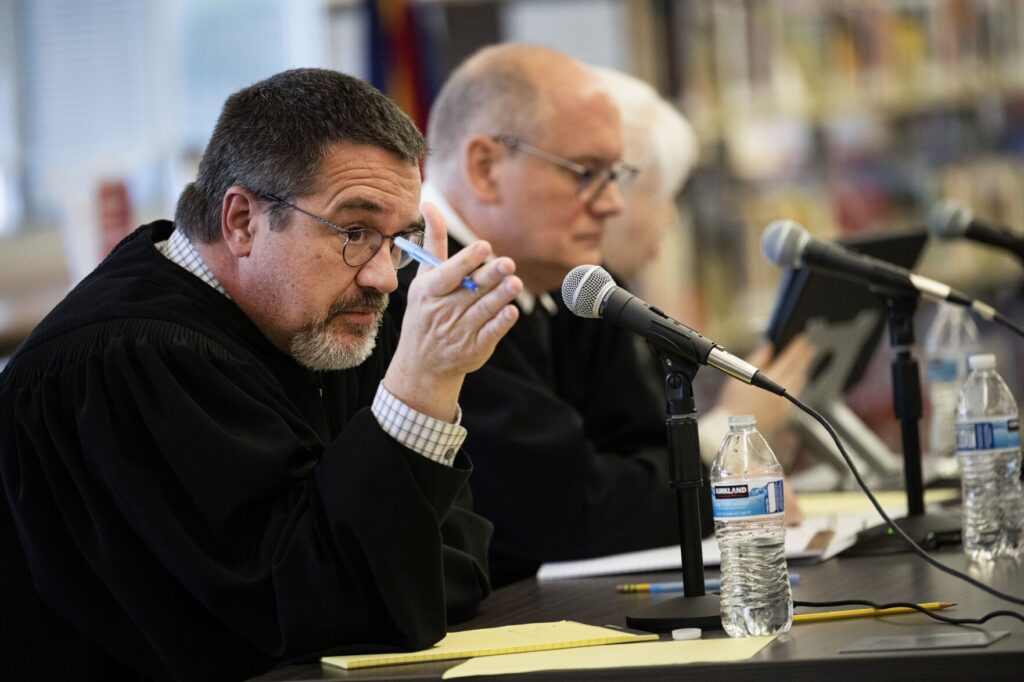
During arguments before the Supreme Court, some justices were skeptical that Gorostieta’s jury had too little information to decide both crimes involved the same defendant.
“It’s not just that we have someone who’s 5’4″ and 192 pounds in Colorado Springs. Or someone is 5’4″, 192 pounds who’s Latino,” said Justice Richard L. Gabriel. “We have someone named Gorostieta in Colorado Springs who committed a crime in Colorado Springs, and there’s another person by the name of Gorostieta who committed a crime three years before who’s 5’4″ and 192 pounds and Latino.”
“Hell,” he continued, “that’s a pretty good coincidence someone named Gorostieta has all of those qualities.”
Shields argued that at minimum, a name and date of birth were insufficient to establish identity, and the government agreed in principle. While Shields said the geographic location of the prior conviction could be an important detail in smaller counties, El Paso County’s status as the most populous in Colorado made it less definitive that the same Enrique Gorostieta committed both crimes.
Justice Maria E. Bekrenkotter, the former chief judge of Boulder County, observed that clerical errors or suspects using the wrong name were both plausible explanations for a defendant’s mistaken identity.
“I actually have had cases before as a trial court judge where suddenly something is being dismissed because the defendant is not who law enforcement thought they were,” she said.
Berkenkotter said she understood why relying on physical characteristics, such as height and weight, could be insufficient evidence for defendants with seemingly generic names or average proportions. However, “someone who weighs 600 pounds and is seven feet tall, that could be part of the general physical description. That could enough to be a unique identifier,” she added.
Assistant Attorney General Trina K. Kissel argued juries should be allowed to determine a suspect’s identity in a prior conviction “the usual way,” without any special evidentiary requirement. Even though there were not unique identifiers for Gorostieta, like fingerprint matches or defining marks such as tattoos, she believed the combination of factors rightly led the jury to conclude he was the defendant in the 2016 drug conviction.
Gabriel alluded to the possibility that a jury unfamiliar with a defendant’s ethnicity might draw conclusions about the probability of two people having the same name.
“I’m concerned about leaving the jury to speculate. There are cross-cultural issues, right?” he asked.
“Yes, and I’m sensitive to those,” Kissel replied. “I’m not suggesting the name alone is sufficient. But the jury can use its common sense.”
The case is Gorostieta v. People.


Parenting from prison: Inmates hope to be present in their children’s lives, while physically absent
Marianne Goodland
marianne.goodland@coloradopolitics.com
Updated 51 minutes ago
The room was decorated with balloons, the tables sparking bright with colors as the smell of pizza and cake wafted through the air. As did music. This was, after all, a father-daughter dance. Except this was not a typical father-daughter...
Appeals court confirms Colorado judges can compel electronic records from out of state
Michael Karlik
michael.karlik@coloradopolitics.com
Updated 2 days ago
Colorado’s second-highest court clarified on Thursday that judges are empowered to compel out-of-state companies to produce electronic records under state law. El Paso County jurors convicted Mischa Jargowsky on three counts of money laundering and one violation of Colorado’s organized...
10th Circuit upholds finding of no racial discrimination against family at Denver Chili’s
Michael Karlik
michael.karlik@coloradopolitics.com
Updated 4 days ago
The Denver-based federal appeals court agreed on Wednesday that a Black plaintiff failed to show that a Chili’s manager’s request for her family to provide valid payment at the outset of their meal amounted to racial discrimination. Markesha Futrell-Smith filed...
Appeals court reinstates Mesa County defendant’s request for DNA testing under new Colorado law
Michael Karlik
michael.karlik@coloradopolitics.com
Updated 5 days ago
Colorado’s second-highest court revived a Mesa County defendant’s petition for DNA testing in his three-decade-old attempted murder case on Thursday, concluding that a trial judge wrongly interpreted a recent Colorado law in dismissing the request outright. Jurors convicted Billy Joe...
Appeals court reverses Denver juvenile’s conviction due to improper expert testimony
Michael Karlik
michael.karlik@coloradopolitics.com
Updated 3 days ago
Colorado’s second-highest court reversed a juvenile defendant’s conviction for unlawful sexual contact on Thursday after an expert witness’s testimony improperly suggested the child victim was telling the truth. The defendant, identified as S.H-S., was around 16 years old when he...

Judge orders home confinement for Barry Morphew
Dennis Huspeni
dennis.huspeni@gazette.com
Updated 5 days ago
An Alamosa County district judge has ordered home confinement for Barry Morphew, who is accused of murdering his wife. Barry Morphew, 59, faces a first-degree murder charge in the death of his wife, Suzanne Morphew, who disappeared Mother’s Day weekend...
Appeals court says jury does not need to view porn to determine if it’s ‘obscene’
Michael Karlik
michael.karlik@coloradopolitics.com
Updated 3 days ago
Colorado’s second-highest court ruled for the first time on Thursday that a jury does not always need to view pornographic material to determine if it meets the criteria for obscenity. Mesa County jurors found Shayla Ann Simpson guilty of child...
10th Circuit disagrees Sterling officer had no basis to arrest motorist who lacked insurance details
Michael Karlik
michael.karlik@coloradopolitics.com
Updated 6 days ago
The Denver-based federal appeals court disagreed on Tuesday with a trial judge’s decision to bar evidence from a pat-down search from being used against a defendant. Federal prosecutors obtained an indictment of Jorge Sigala-Baray for being a felon in possession of a...

Colorado Springs officers’ tasing, threats prompt federal judge to block use of suspect’s statements
Michael Karlik
michael.karlik@coloradopolitics.com
Updated 6 days ago
A federal judge blocked the government last month from using some of a defendant’s statements as evidence, reasoning that the defendant made them involuntarily as Colorado Springs officers tased him five times and one officer threatened to kill him. Officers...

Appeals court rejects CDOT employee’s discrimination, retaliation claims
Michael Karlik
michael.karlik@coloradopolitics.com
Updated 4 days ago
Colorado’s second-highest court agreed last week that a Colorado Department of Transportation employee had not shown that his employer discriminated and retaliated against him due to his religion and national origin. Ayman Salloum, who described himself as a 70-year-old Muslim...
PREV
PREVIOUS
'I've never seen anything like that': State Supreme Court weighs discipline for divorce attorney
Prominent family law attorney Brenda L. Storey said she was wrongly punished for simply asking a client in a divorce case to pay her, and for ultimately using money from the marriage toward her bill — a common practice in such proceedings. The Office of Attorney Regulation Counsel, which prosecutes lawyer discipline cases, took a vastly […]
Several Air Force cadets listed as plaintiffs in lawsuit against Defense Department COVID-19 vaccine mandate
Several Air Force Academy cadets are named as plaintiffs in a lawsuit filed Wednesday in South Carolina that seeks a temporary restraining order and preliminary injunction against the Department of Defense’s COVID-19 vaccine mandate. The cadets face potential disenrollment, and some may be required to repay the cost of their education, the suit alleges. That […]