

FBI sets $25,000 minimum reward for dozens of unsolved Indian Country cases | OUT WEST ROUNDUP

SOUTH DAKOTA
Indian Country rewards set
SIOUX FALLS — The Federal Bureau of Investigation has established a minimum reward of $25,000 in cases where people went missing or were killed in Indian Country, part of a broader effort to address high rates of violence affecting Native American communities.
The new minimum applies to more than 50 unsolved homicides and missing-person cases in tribal communities. Most of the cases are less than 10 years old, though a dozen have been unsolved for more than two decades, an AP analysis found.
Victims’ families and experts are unsure the higher amounts will be enough to get tipsters to come forward, citing people’s fears and distrust of the federal government.
“Everybody’s scared in Oglala,” said Lisa Carlow, whose father Patrick Carlow Sr. was found dead in his Pine Ridge Reservation home in 2023. “So to me it’s like, OK, what do you guys know that you’re not saying?”
The FBI investigates federal crimes on nearly 200 Native American reservations, along with the U.S. Bureau of Indian Affairs. At the end of 2025, the FBI’s National Crime Information Center recorded just under 1,500 active cases involving missing Native Americans, though not all become federal cases.
Mary Kathryn Nagle, a citizen of the Cherokee Nation of Oklahoma and an attorney who advocates for families of missing Native Americans, said federal investigators often “parachute in” to investigate crimes in tight-knit communities where witnesses may stay silent because of distrust and fear of retribution.
Still, she said, larger rewards could provide an incentive for people to talk, and show families their loved ones’ cases are being taken seriously.
ARIZONA
Polygamous leader sentenced
PHOENIX — A polygamous sect leader already serving a 50-year federal sentence for orchestrating sex involving children was given another 24 years in prison on Aug. 25 on separate state convictions for child abuse for hauling girls in an unventilated trailer in Arizona.
Samuel Bateman, 50, was convicted of three child abuse counts stemming from an August 2022 traffic stop in Flagstaff that led to the discovery of three girls, ages 11 to 14, in the trailer. It had a makeshift toilet, sofa and camping chairs and lacked air conditioning and seat belts. Someone tipped off authorities about the trailer after seeing small fingers reaching through gaps in the doors.
Bateman’s small group was an offshoot of the polygamous sect once led by Warren Jeffs. Bateman is currently serving 50 years in federal prison for coercing girls as young as 9 to submit to sex acts with him and other adults and for scheming to kidnap girls from protective custody — the story of which is the focus of the Netflix series, “Trust Me: The False Prophet.”
Citing an “insane danger” to the girls in the trailer, among other factors, Judge Joshua Steinlage ordered Bateman to serve the state sentence after completing the 50-year federal sentence.
Victims urged the judge to reject Bateman’s claims that he didn’t mean to harm anyone.
One victim who was in the trailer when Bateman was pulled over described the psychological pain she suffered. The victim, who was then 14, said Bateman took advantage of her sexually when she was 12.
Bateman, a self-proclaimed prophet, previously claimed to have more than 20 “spiritual wives,” including 10 girls under the age of 18.
MONTANA
Education lawsuit settled
A group of Montana students, families and tribes has reached a settlement with the state Office of Public Instruction that’s set to bring closure to a yearslong legal dispute about how the state implements its constitutional requirement to provide Indigenous education.
The settlement, if approved, would resolve a class action lawsuit filed in 2021 in which plaintiffs alleged the state has failed to implement and enforce a constitutional mandate requiring K-12 public education to recognize the “distinct and unique cultural heritage of American Indians.”
In 1999, the state legislature enacted the Indian Education for All Act to implement that constitutional mandate and require public schools to teach Native American history and culture. Since 2007, the legislature has appropriated about $3.5 million annually to school districts to fund implementation. According to the law, schools are supposed to use the funds to develop curricula, purchase class materials and train teachers.
In 2021, a group of Montana students, families and tribes filed a class action lawsuit against the Office of Public Instruction and the Montana Board of Public Education, alleging that school districts were improperly using funds intended to support IEFA. Court documents alleged that in 2019 and 2020, only 10% of Montana school districts could account for their IEFA funding having been spent on appropriate expenses.
A district court judge on Aug. 24 preliminarily approved the settlement, which is subject to final court approval after a notice period. The Office of Public Instruction has agreed, in part, to require that districts provide evidence of the law’s implementation, set enforcement mechanisms and strengthen consultation with tribes.
WYOMING
College to add 4-year degrees
Casper College is taking a major step toward becoming a four-year institution, with two bachelor’s degrees now moving through the approval process.
The Casper College Board of Trustees unanimously approved plans for Bachelor of Applied Science degrees in agriculture business and human services. The programs still need approval from the Wyoming Community College Commission, but if approved, they would mark the first four-year degrees in Casper College’s history.
The degrees are in agriculture business and human services. The planning for the degrees began in December when the Bachelor of Applied Science in Human Services was first presented to the board. In January, the board received a request to begin planning the same type of degree in agriculture business.
Vice President of Academic Affairs Kevin Hartshorn said at an Aug. 18 trustees meeting that the college had been in conversation with the University of Wyoming to clarify that the degree programs would not conflict with theirs.
The human services degree could prepare students for careers in counseling or case management while also providing a pathway to a master’s degree. The agribusiness degree builds upon the agribusiness program the college already has as an Associate of Applied Science.


Boebert challenger Eileen Laubacher says she’ll ‘break through the noise’ in Democrat’s 1st TV ad
Ernest Luning
ernest.luning@coloradopolitics.com
Updated 3 minutes ago
Democratic congressional candidate Eileen Laubacher says she’ll take a different approach than her opponent in a campaign ad released by Wednesday that opens with a cacophonous series of videos featuring Republican U.S. Rep. Lauren Boebert. “Eileen’s had enough of the...
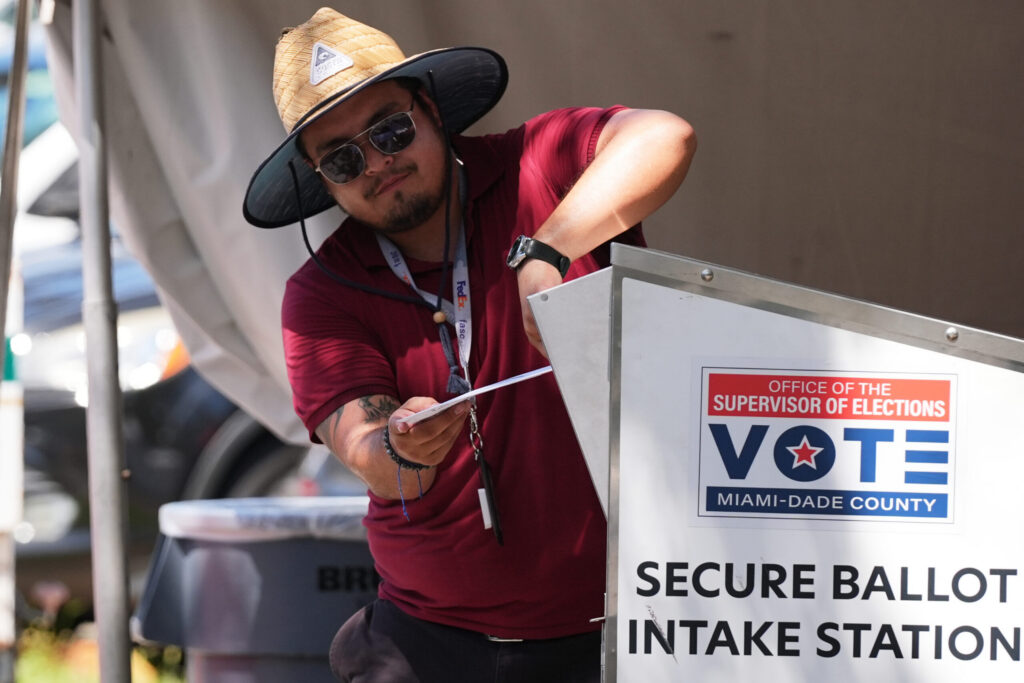
General election season is here. Where does mail-in voting stand?
David Zimmermann
david-zimmermann@coloradopolitics.com
Updated 1 hour ago
As the general election season approaches, the legal question surrounding the new U.S. Postal Service mail-in ballot requirements remains up in the air. With the case playing out in the courts, mail-in voting has not been changed substantially despite President...

10th Circuit orders second look at immunity for Kiowa County deputy over fatal vehicle crash
Michael Karlik
michael.karlik@coloradopolitics.com
Updated 3 hours ago
The Denver-based federal appeals court directed a trial judge on Tuesday to further analyze whether a Kiowa County deputy and the sheriff’s office may be sued for a fatal vehicle collision. The Colorado Governmental Immunity Act generally shields government entities and public...
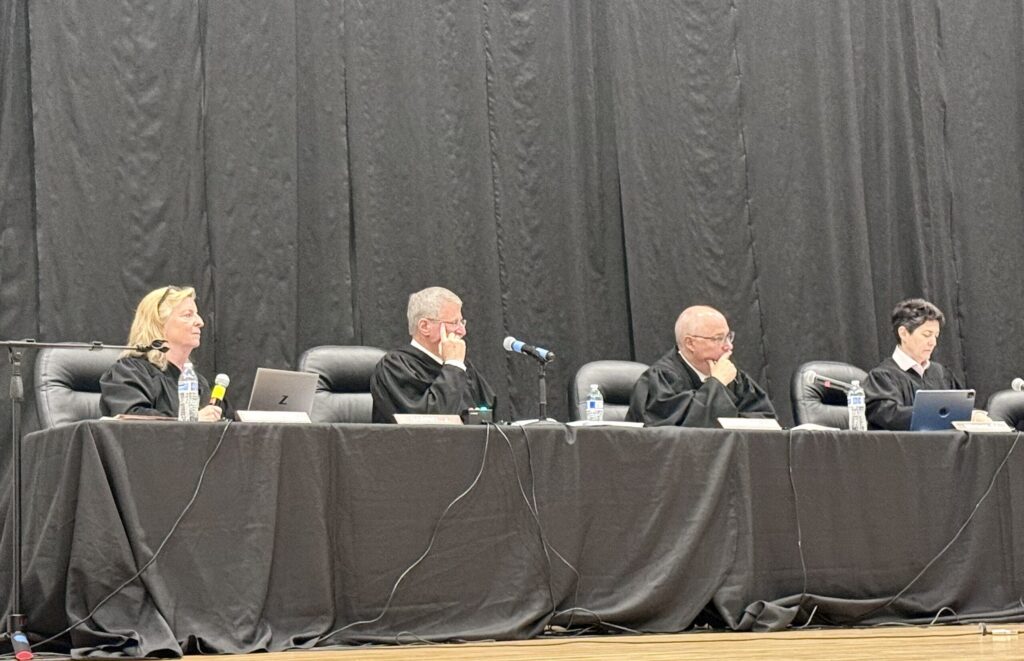
Colorado justices to hear appeal in Kendrick Castillo death lawsuit, ‘fugitive’ rule
Michael Karlik
michael.karlik@coloradopolitics.com
Updated 21 hours ago
The Colorado Supreme Court announced on Tuesday that it will decide whether it was proper to dismiss a lawsuit over the 2019 shooting death of Kendrick Castillo after the defendants paid the maximum amount of damages available to Castillo’s parents,...

Two more wolves killed by Colorado wildlife staff
Marianne Goodland
marianne.goodland@coloradopolitics.com
Updated 22 hours ago
Two yearling wolves from the Copper Creek and Three Creeks packs in Pitkin and Rio Blanco counties, respectively, were killed by Colorado Parks and Wildlife staff on Monday. That brings to 19 the number of wolves that have died under...

Federal judge dismisses Douglas County’s challenge to collective bargaining law
Nicholas Fogleman
nicholas.fogleman@denvergazette.com
Updated 6 hours ago
A federal judge dismissed claims brought by the Douglas County Board of Commissioners alleging that a state law granting county employees the right to organize and join labor unions violates free speech protections and conflicts with federal labor law. Douglas...

U.S. Rep. Lauren Boebert calls Trump’s 90-day wolf-delisting review ‘real progress’
Marianne Goodland
marianne.goodland@coloradopolitics.com
Updated 20 hours ago
President Donald Trump has directed Interior Secretary Doug Burgum to launch a 90-day review on whether gray wolves and Mexican wolves should be removed from Endangered Species Act protections. The order drew mixed reactions for Colorado’s wolf-reintroduction effort, with ranchers...
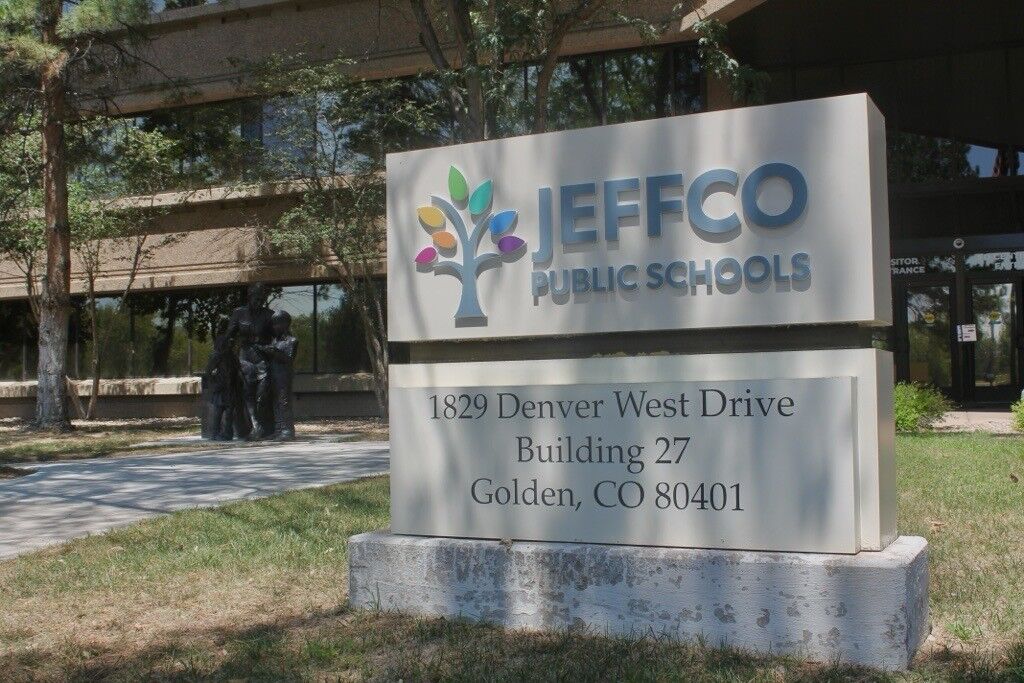
Jeffco Public Schools eliminated 350 jobs as part of budget cuts
Matt Kyle
matt.kyle@denvergazette.com
Updated 6 hours ago
Jeffco Public Schools eliminated 350 full-time positions as part of ongoing budget cuts between last school year and this school year. The district has operated in a budget deficit in the range of tens of millions of dollars over the...

Arapahoe County judge’s frustration with defense lawyer not grounds for new trial
Michael Karlik
michael.karlik@coloradopolitics.com
Updated 22 hours ago
Colorado’s second-highest court decided last week that an Arapahoe County judge’s repeated rebukes of a defense attorney and orders to “be quiet” did not rise to the level of bias or a violation of the defendant’s due process rights. A...

Divided appeals court upholds vehicle theft conviction despite unclear origin of car’s value
Michael Karlik
michael.karlik@coloradopolitics.com
Updated 19 hours ago
Colorado’s second-highest court upheld a defendant’s conviction for aggravated motor vehicle theft last week, even though it was unclear how the Thornton Police Department estimated the value of the stolen car. Officer Marc Faivre encountered Ashley Shelee Gibbens-Martinez in a...
PREV
PREVIOUS

What to know about Canada’s escalating trade war with the US as Carney retaliates with tariffs
TORONTO (AP) — Canada struck back at U.S. President Donald Trump on Tuesday with tariffs on about $20 billion worth of U.S. goods, in response to the latest round of tariffs on Canada. The outcome could resonate far beyond Canada, showing other governments whether a smaller U.S. ally can withstand Trump’s economic pressure. Canadian Prime […]

Jason Crow endorses Democrats up and down Colorado’s ballot, chips in $100K for campaign efforts
Democratic U.S. Rep. Jason Crow on Tuesday formally endorsed more than 60 Democrats running up and down Colorado’s ballot and said he’s putting $100,000 into statewide and county campaigns and organizing programs to drive turnout in the fall election. Crow, who is seeking reelection to a fifth term representing the Aurora-based 6th Congressional District, said […]