

Colorado announces millions in funding to prepare for what could be the worst wildfire season in history
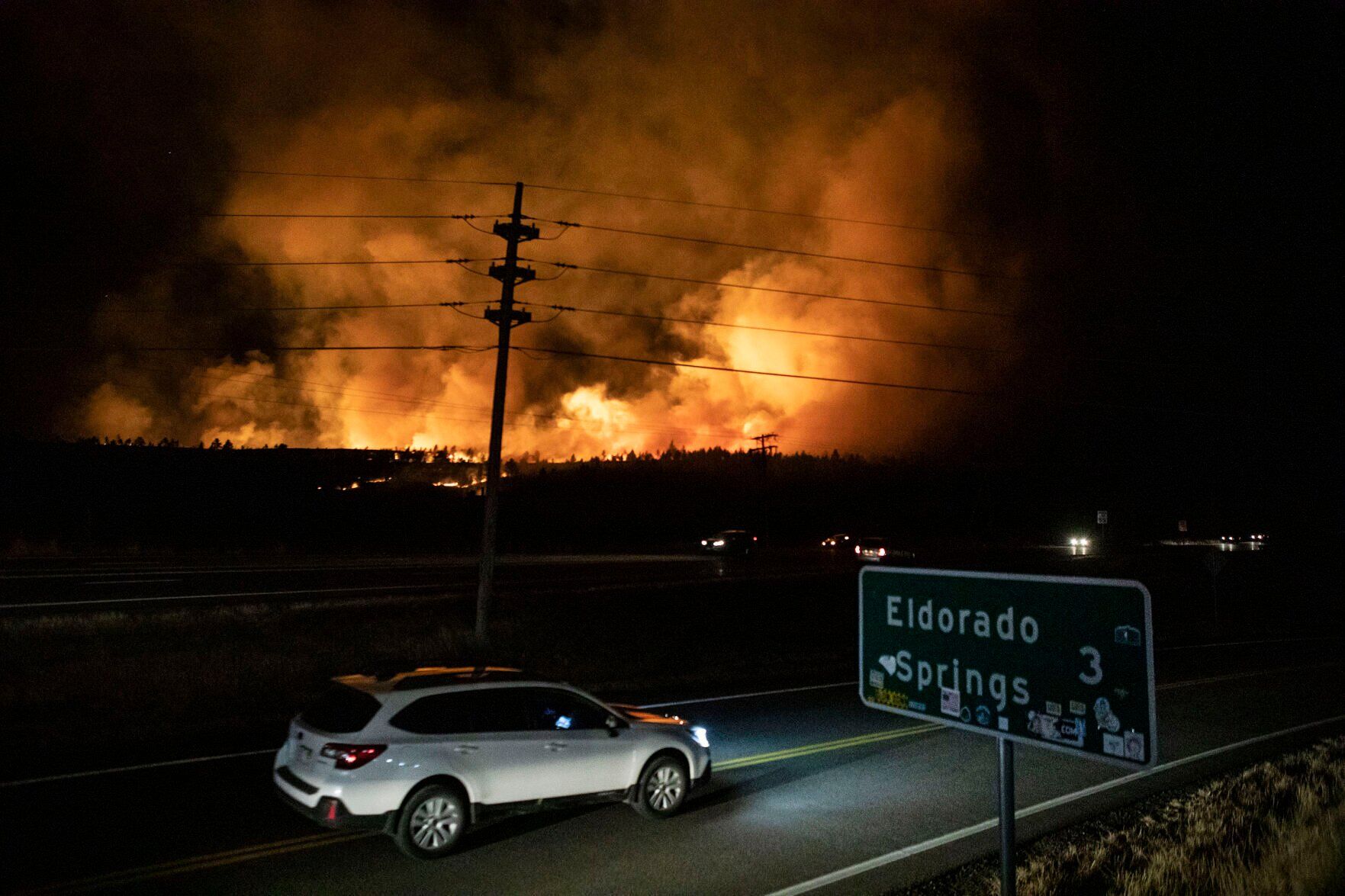
Colorado will pour nearly $20 million of federal funding into fire prevention this year ahead of what could be the worst fire season in the state’s history, officials announced on Friday.
On the same day, the state House passed House Bill 1007, which would create a grant program for organizations that conduct wildfire mitigation outreach in hazard areas. The bill would also extend an existing income tax deduction and create a new state income tax credit to reimburse homeowners for the costs of performing wildfire mitigation measures on their property.
The additional federal funding announced by state officials will pay for additional contracts with air tankers and helicopters, expanded dispatch services and new technology for on-the-ground coordination, Senate President Steve Fenberg said. The additional funding came from Federal Emergency Management reimbursements.
The resources are needed to prepare for the worst-case scenario, he said.
“We may very well be heading into the worst fire season in our state’s history,” he said. “I hope I am terribly wrong.”
The state is planning to extend its contract with a large air tanker and to add a contract with a second large air tanker. Two Type 1 helicopters, some of the largest and fastest, will also be added, Gov. Jared Polis said.
Colorado competes with other states to extend the contacts, which ensure aircraft are available.
Colorado competes with 19 other states for federal aircraft, and, at times, they have not been available when the state needed them, said Mike Morgan, director of the Colorado Division of Fire Prevention and control.
The officials made the announcement on the same day the state is facing the worst fire conditions the state as seen in over a decade.
The state has prepositioned a multi-mission aircraft that can detect fires early in Mesa County and a strike team of firefighters in northeastern Colorado. Another strike team will be sent to southeastern Colorado, Morgan said.
The new 24/7 dispatch services will also ensure that local fire departments have quick access to state dedicated aircraft and other support to help stop fires early.
“It will save lives and it will save property,” he said.
Polis and Fenberg also announced the new Office of Climate Preparedness that will coordinate disaster recovery and work on an action plan to address disasters.
“We are living through the early stages of the climate change crisis right now,” Fenberg said.
Acknowledging that Coloradans will face an ever-increasing number of wildfires, legislators have hunkered down to confront the state’s grim reality through several measures. Some of their work predated the Marshall fire.
The grant program in House Bill 1007 would provide approximately 30 grants per year, averaging $10,000 each, to local governments, counties, municipalities, special districts, tribal agencies and nonprofit organizations. The tax credit would reimburse 25% of the wildfire mitigation expenses – up to $625 per year – and would be available to landowners with taxable income of up to $120,000.
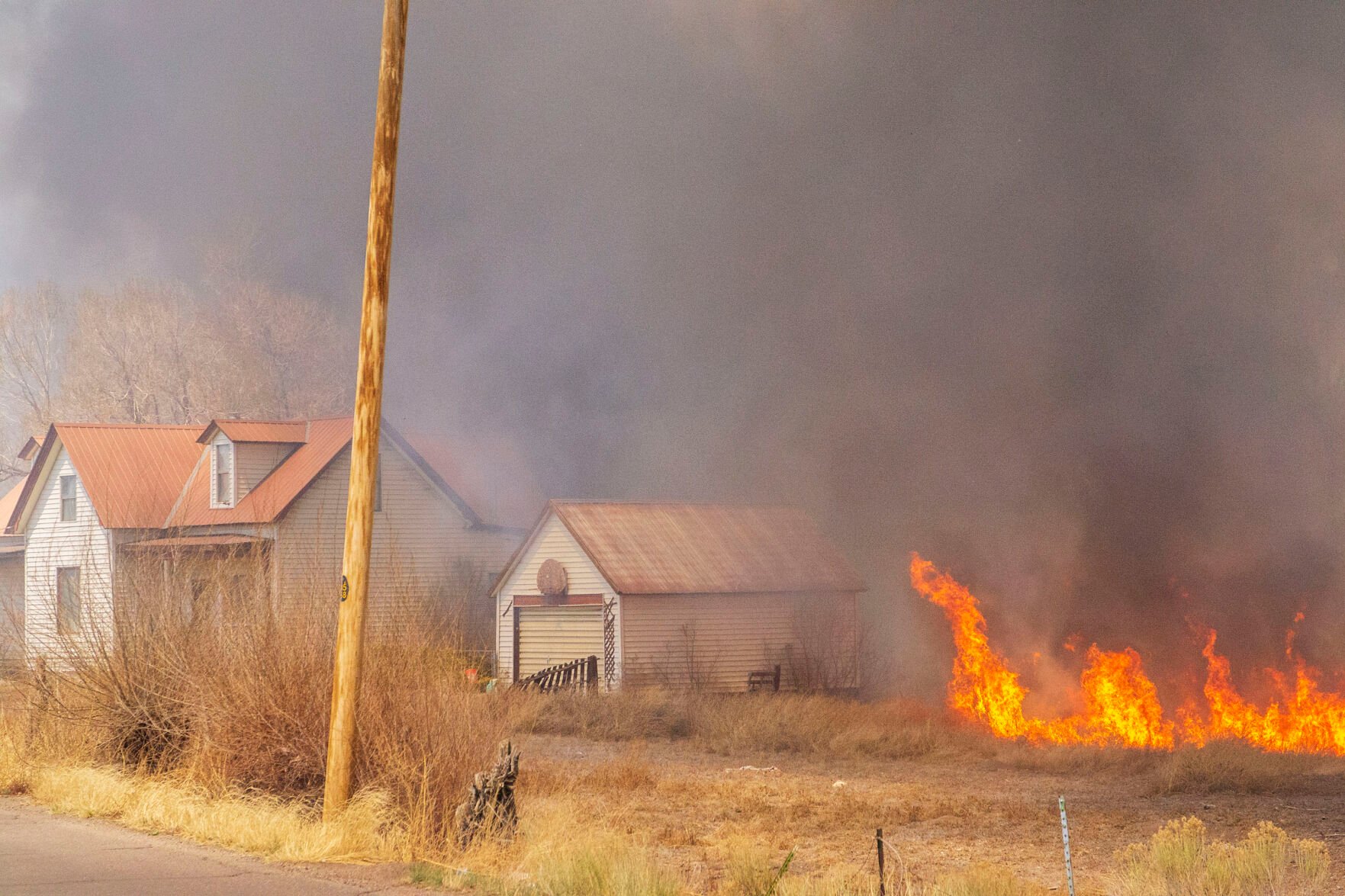
“The time to act on wildfire prevention efforts is now,” Rep. Donald Valdez, D-La Jara, the bill’s sponsor, said. “My heart goes out to all those displaced by the recent wildfire in Monte Vista and yet this is another reminder of why we need to invest in prevention efforts to protect communities and build a safer state.”
Another bill would increase the amount of lost property insurance providers have to cover upfront and extend the timeframe victims have to rebuild their homes, ensuring that wildfire victims would get more immediate and substantive help.
The proposed change, however, would only apply to future fire disasters. The bill, if enacted, would not help victims of more recent wildfires.
“There’s no question there are going to be more. That’s the unfortunate reality,” said Fenberg, D-Boulder, who sponsored the bill, earlier. “This is something that, unfortunately, is not going to provide much relief to those who have already gone through these horrible disasters. But it is something that many of us have learned from those disasters that we can apply to right the policy and make it a better situation for those in the future.”
Another measure would invest $5 million in expanding resources for volunteer firefighters in Colorado. If enacted, the proposal would add the funding to the Local Firefighter Safety and Disease Prevention Grant Program and expand it to cover replacement firefighting equipment. It would also make volunteer fire departments eligible for reimbursement for wildland fire suppression activities and provide behavioral health care services to firefighters.
The legislative responses sit atop initiatives by the Biden and Polis administrations to provide help to survivors of the Marshall fire and other recent disasters.




Assisted-living facility in Colorado faced minimal fine after death of 73-year-old man
Jenny Deam
jenny-deam@coloradopolitics.com
Updated 1 day ago
On Jan. 6, just after 8:30 p.m., Robert Dutkevitch rolled his wheelchair onto the smoking patio outside The Argyle assisted-living facility in Denver. Minutes later, the 73-year-old suddenly slumped in his chair, his head lolling to the side. He then...

Governor OK’s funding for summer food assistance for Wyoming kids | OUT WEST ROUNDUP
The Associated Press
the-associated-press@coloradopolitics.com
Updated 3 days ago
WYOMING Governor funds kids’ summer meals Gov. Mark Gordon secured funding for a summer food assistance program for kids and directed its implementation through an executive order. After the Wyoming legislature declined to fund the SUN Bucks program—designed to provide...

Trump says suspect was armed with multiple weapons at White House correspondents’ dinner
Alanna Durkin Richer
alanna.durkin.richer@associatedpress.com
Updated 22 hours ago
WASHINGTON (AP) — President Donald Trump is addressing reporters at the White House after he and other top leaders of the United States were evacuated from an annual dinner of White House correspondents on Saturday night after a shooting incident...
Mountain Lion/Pheasant Green Chile a hit! | Capitol M | Week of April 25, 2026
Marianne Goodland
marianne.goodland@coloradopolitics.com
Updated 23 hours ago
The lighter side of the state Capitol, although if you were eating at the barbecue Thursday, you are probably not any “lighter.” With the arrival of spring comes outdoor barbecues at the state Capitol, and the most unusual is the...
Domestic violence rises in Colorado, state rep. seeks to fight back | A LOOK BACK
Rachael Wright, Special to Colorado Politics
rachael.wright@coloradopolitics.com
Updated 3 days ago
Forty-Five Years Ago This Week: A bill sponsored by Rep. Jeanne Faatz’, R-Denver, House Bill 81-1336, was the final compromise bill intended to counteract the rising tide of domestic violence in Colorado. According to FBI figures, 40,000 women in 1980...

Passenger train service from Denver to Fort Collins? | Cronin and Loevy
Tom Cronin Bob Loevy
tom-cronin-bob-loevy@coloradopolitics.com
Updated 19 hours ago
A “Joint Service” plan is being developed that would bring passenger rail service from Denver north to Fort Collins by 2029. The passenger trains would be paid for with existing funds from the Denver Regional Transportation District (RTD) and other...

The applicability of Hungary’s election to our politics | SONDERMANN
By Eric Sondermann
by-eric-sondermann@coloradopolitics.com
Updated 5 days ago
American conservatives, largely synonymous these days with MAGA save for a few lonely voices of courage and dissent, have plenty to lament. Their domination of the political landscape is waning. Various special elections hither and yon have presented bright, flashing...

Colorado Politics Calendar Apr. 27-May 3
Rachael Wright, Special to Colorado Politics
rachael.wright@coloradopolitics.com
Updated 4 days ago
CoPo’s weekly political calendar will help you find political and public-policy events throughout Colorado. It includes candidate and issue campaign events, public policy meetings, court hearings, state and local party conventions, assemblies, debates, rallies, parades, speaking engagements, traveling dignitary appearances,...

Colorado candidates square off up and down the ballot ahead of primary election
Ernest Luning
ernest.luning@coloradopolitics.com
Updated 2 days ago
With just over two months to go until ballots are counted in Colorado’s primary, candidates are squaring off in high-stakes contests for their party’s nominations in statewide and congressional races approaching the midterm election. For the first time in memory,...
Federal judge tosses class-action lawsuit over poor Vail Resorts experience during strike
Michael Karlik
michael.karlik@coloradopolitics.com
Updated 2 days ago
A federal judge dismissed a plaintiff’s proposed class-action lawsuit last month that sought compensation from Vail Resorts after a ski patrol strike turned a family vacation into a “colossal disaster.” U.S. District Court Judge Nina Y. Wang concluded plaintiff Christopher...
PREV
PREVIOUS

Colorado state Rep. Matt Gray arrested for DUI
Rep. Matt Gray, a Broomfield Democrat and former prosecutor, was arrested Thursday night by Broomfield police for driving under the influence, as first reported Friday morning by The Colorado Sun. Gray, 42, is in his third term in the Colorado House and has filed for re-election in November.* In a statement, House Speaker Alec Garnett […]

Colorado legislature passes bill to crack down on illicit massage parlors
The Colorado legislature on Friday passed a bill that seeks to address human trafficking in the state by cracking down on illicit massage parlors. If enacted, House Bill 1300 would give counties the power to require special business licenses for massage parlors, something cities can already do. Supporters of the bill said this would help […]