

United States v. DaVita: Preview of groundbreaking white-collar trial in Denver
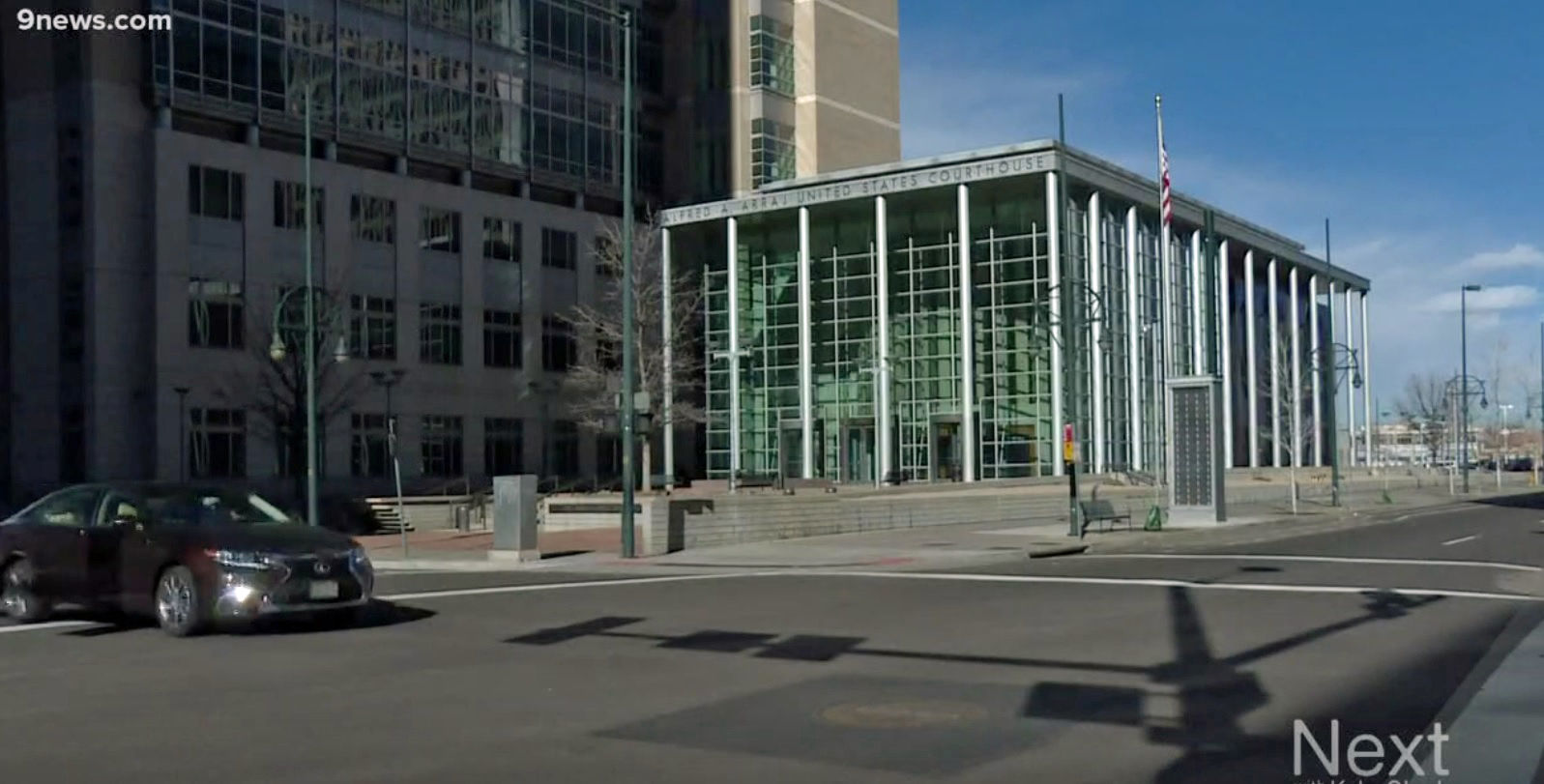
The nearly three-week criminal trial of Denver-based DaVita, Inc. and its former leader, Kent Thiry, will begin on Monday morning, as prosecutors attempt to prove that a series of agreements between DaVita and its competitors are a novel violation of a century-old antitrust law.
The government alleges there were high-level understandings that certain competitor companies of DaVita’s in the healthcare industry would not solicit DaVita workers for jobs. If DaVita employees were candidates for jobs at those competitors, they would have to tell DaVita before they could be considered for a position.
From that arrangement, the U.S. Department of Justice has charged Thiry and DaVita with three counts each of a conspiracy in restraint of trade. The alleged offenses fall under Section 1 of the Sherman Antitrust Act of 1890, which broadly outlaws unreasonable, anticompetitive agreements in the marketplace – bid rigging or price fixing, for instance.
Prosecutors claim that the non-solicitation agreements intentionally restricted the interstate movement of employees and amounted to “per se” Sherman Act violations, meaning the non-solicitation pacts were inherently anticompetitive. One or more agreements were in place between approximately February 2012 and June 2019.
Here is where the case stands and who the players are.
The issues
In a set of orders last month, the judge addressed several of the disputed issues between the parties. First, the jury will be allowed to hear evidence about the possible pro-competitive reasons for DaVita’s agreements, which might be relevant to deciding whether the defendants intended to restrict the labor market. Jurors will also receive instructions before the trial begins to explain the Sherman Act at a basic level.
The jury will not hear about Thiry’s compensation as DaVita’s leader, nor will it hear about the extramarital affair of a DaVita executive who will testify.
Certain statements from co-conspirators will also be admissible at trial. For example, the chief talent officer at Surgical Care Affiliates forwarded an email stating the company “can recruit junior people (from DaVita), but our agreement is that we would only speak with senior executives if they have told their boss already that they want to leave and are looking.”
That same executive also wrote to the company’s recruiting firm, warning that “we must not under any circumstances be contacting people at DaVita … we have a commitment not to contact each other’s people.”
The prosecution
The Antitrust Division of the Justice Department is prosecuting the case with help from the Federal Bureau of Investigation. Among the lawyers for the government are Megan S. Lewis, assistant chief of the Washington Criminal II Section, chief James J. Fredricks, and trial attorneys William J. Vigen, Anthony W. Mariano, Terence Parker and Sara Clingan.
The defense
On the other side of the courtroom are the two defendants: Kent Thiry and kidney care company DaVita, Inc. Thiry was the chairman and CEO of DaVita for roughly 20 years beginning in 1999. If convicted, Thiry could face up to 10 years in prison and a fine of $1 million for each of the three criminal counts. DaVita could receive a fine of up to $100 million for each count, according to the government’s indictment.
On the defense’s legal team are a number of attorneys experienced in federal and financial cases. John Walsh, the top federal prosecutor in Colorado under the Obama administration, and Seth P. Waxman, the U.S. solicitor general during the Clinton administration, are now going up against their former employer, the Justice Department.
Former Assistant U.S. Attorney John C. Dodds, Texas trial lawyer Tom Melsheimer and Los Angeles-based Daniel Crump are also on the defense side.
The judge
Presiding over the trial is U.S. District Court Senior Judge R. Brooke Jackson, a 2011 appointee of the Obama administration who was a longtime state judge in the First Judicial District of Jefferson and Gilpin counties.
In late January, Jackson denied the defense’s motion to dismiss the charges. He waved aside the argument that there had never been a prosecution for employee non-solicitation agreements before, saying, “as violators use new methods to suppress competition by allocating the market or fixing prices these new methods will have to be prosecuted for a first time.”
Jackson recently concluded a three-week trial in which protestors prevailed against City and County of Denver after challenging its police response to the racial justice protests of 2020. Heading into the DaVita proceedings, he has ruled that the government has proven it more likely than not that there was a conspiracy between DaVita and competitors Surgical Care Affiliates, Hazel Health, IntegraMed and Radiology Partners.
For a conviction, the jury will have to decide the question beyond a reasonable doubt.

Parole, appeals deadlines and restitution: Colorado justices accept cases
Michael Karlik
michael.karlik@coloradopolitics.com
Updated 7 hours ago
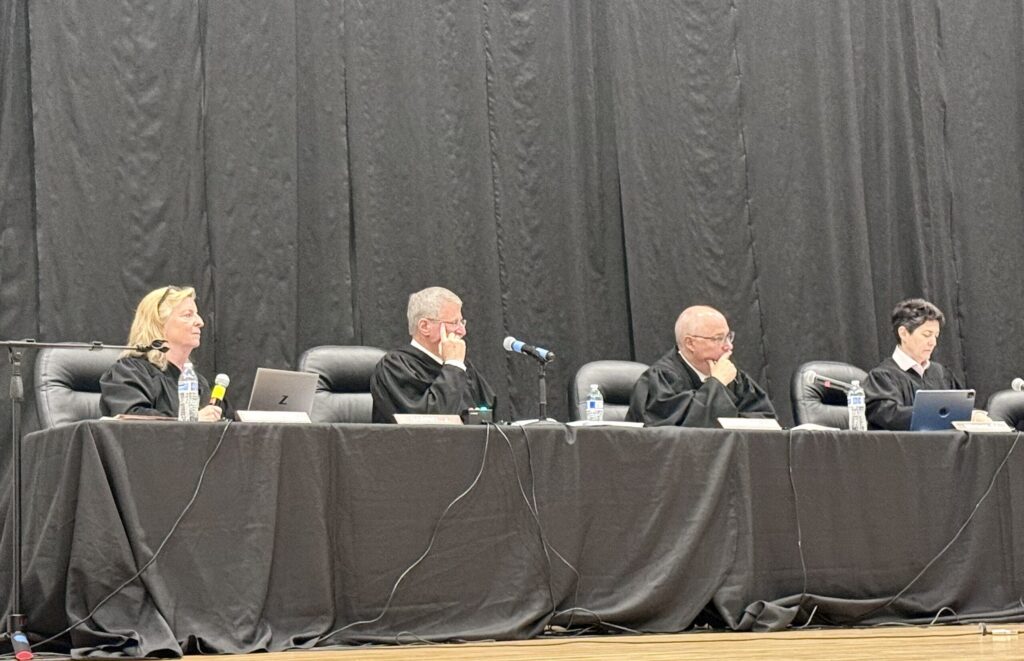
The Colorado Supreme Court announced on Monday that it will determine how a defendant’s parole-eligibility date should be calculated in instances where a new trial results in a sentence being imposed retroactively to the date of the original, since-overturned sentence....
Federal judge rejects DOJ bid to force Colorado to hand over voter information
Marissa Ventrelli
marissa.ventrelli@coloradopolitics.com
Updated 11 hours ago
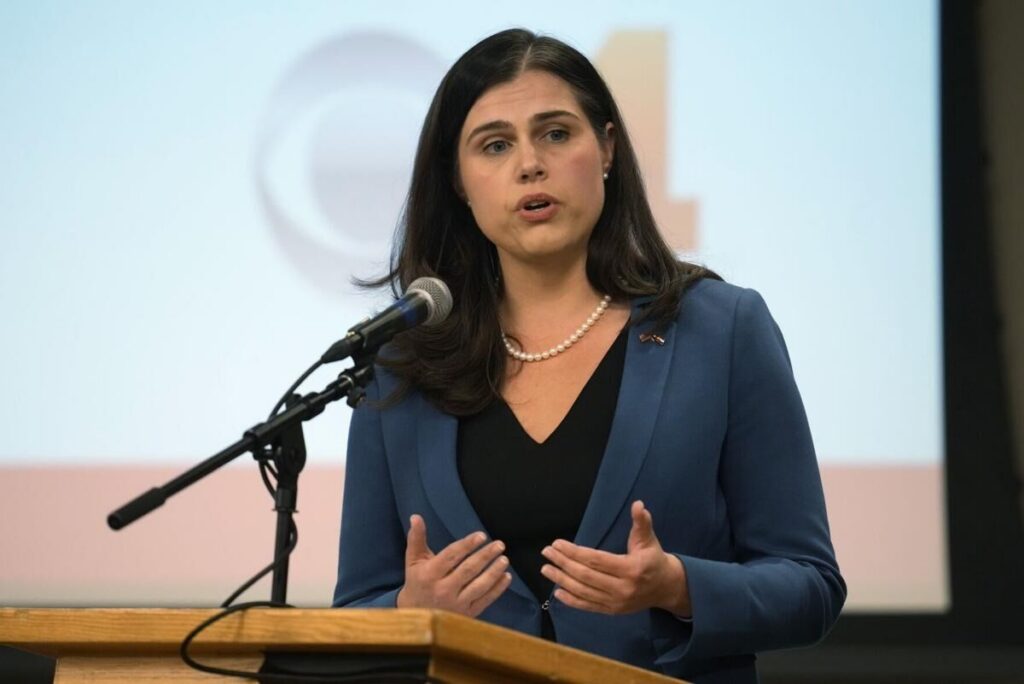
A U.S. district court judge has dismissed a lawsuit filed by the U.S. Department of Justice against Colorado Secretary of State Jena Griswold for refusing to provide the agency with personal voter information. Last December, the DOJ’s Civil Rights Division asked...
3 Colorado judges receive unfavorable retention recommendation as one performance commission violates rules
Michael Karlik
michael.karlik@coloradopolitics.com
Updated 15 hours ago
Of the 123 Colorado judges standing for retention on the November ballot, citizen-led performance commissions found that three did not meet the required performance standards. However, in an unprecedented move, the commission charged with evaluating Supreme Court and Court of...

10th Circuit weighs Gross Reservoir expansion, judge’s ‘punishment’ of Denver Water
Michael Karlik
michael.karlik@coloradopolitics.com
Updated 1 day ago
Members of the Denver-based federal appeals court considered on Friday whether they could intervene in an ongoing infrastructure project to enlarge a Boulder County dam after a trial judge deemed the underlying permit unlawful nearly two years ago. Denver Water...

10th Circuit upholds federal prohibition on juvenile handgun possession
Michael Karlik
michael.karlik@coloradopolitics.com
Updated 10 hours ago
The Denver-based federal appeals court concluded on Monday that Congress acted within its constitutional powers to make it a crime for juveniles to possess handguns in most instances. The decision from the U.S. Court of Appeals for the 10th Circuit...

Senate advances judicial nominee, Montezuma County judge agrees to discipline | COURT CRAWL
Michael Karlik
michael.karlik@coloradopolitics.com
Updated 2 days ago
Welcome to Court Crawl, Colorado Politics’ roundup of news from the third branch of government. A U.S. Senate committee advanced a judicial nominee from Colorado, plus a Montezuma County judge agreed to receive discipline for his misconduct that stops short...
Judge denies Calderon injunction case against Denver, Johnston
Deborah Grigsby
deborah.smith@denvergazette.com
Updated 2 days ago
A U.S. District Court judge has denied a preliminary injunction in the case of Jessica Calderon, the Denver city employee who won a temporary restraining order preventing the City and County of Denver from terminating her amid the 2025 citywide...
10th Circuit partially revives lawsuit over 2020 Denver protest injuries
Michael Karlik
michael.karlik@coloradopolitics.com
Updated 3 days ago
The Colorado-based federal appeals court revived a man’s claims against Denver on Friday after concluding a trial judge resolved the case in the city’s favor without analyzing two of the three instances of alleged excessive force and other constitutional violations....
Federal judges find Colorado immigration judge violated several orders
Michael Karlik
michael.karlik@coloradopolitics.com
Updated 3 days ago
Multiple federal judges in Colorado have freed people from immigration custody after determining that one immigration judge violated their directives for properly conducting bond hearings. For nearly a year, Colorado’s U.S. District Court has faced a flood of habeas corpus petitions...
Misconduct complaints from ex-Colorado judicial discipline director dismissed against federal judges
Michael Karlik
michael.karlik@coloradopolitics.com
Updated 5 days ago
The administrative body for the Denver-based federal appeals court upheld a finding last week that misconduct complaints against Colorado’s chief federal trial judge and the chief appeals judge warranted dismissal and appeared to be a “litigation tactic” by the complaining...
PREV
PREVIOUS

HOA dues add insult to injury for Colorado wildfire victims
Just days after Colorado’s most destructive wildfire left Sandy Quiller with nothing but a suitcase full of clothes, $362 in homeowners association dues was removed, like clockwork, from her bank account. “I saw it online and thought it was a mistake!” said Quiller, 70, who is currently living in Annapolis, Md., with one of her […]

Colorado could become first legislature in the nation to pass law on parental leave for lawmakers
Colorado could become the first legislature in the country to have a formal law in place that grants paid family leave to legislators. A month ago, Senate President Steve Fenberg of Boulder toyed with the idea of paid leave for lawmakers, but wondered whether it would be constitutional, given that lawmakers cannot obligate future legislatures […]