

Colorado panel advances permanent daylight saving time — as long as nearby states do it, too

After decades of failed attempts, a bill to make daylight saving time permanent in Colorado unanimously passed a House committee vote on Monday and is heading to the full chamber for consideration.
If enacted, House Bill 1297 would make daylight saving time year-round if federal law is changed to allow states to do so – and, under a new amendment, if four other states in the Mountain Time Zone also make the switch.
“People in general are tired of changing their clocks,” said bill sponsor Rep. Patrick Neville, R-Castle Rock. “They’re tired of having to deal with the effects of that, whether it’s being tired or groggy or it’s just having to change the clock in your car.”
Though the legislation still has a long way to go, Monday’s victory is historic. In Colorado, no effort to make daylight saving time permanent – or to end it – has ever made it to the full state House or Senate.
Colorado lawmakers have tried for more than 30 years to end the flipping back and forth between Mountain Standard Time and daylight saving time, beginning in 1988 with the efforts of then-Sen. Bill Schroeder, R-Morrison. Since 2015, seven different bills and ballot proposals to make standard time or daylight saving time year-round have been introduced in the state.
This year, the bill has a fighting chance – thanks to neutral positions by the skiing and tourism industries, which shut down all previous attempts to lock the clock, arguing it would disrupt their scheduling and operations. Now that the U.S. Senate also passed a bill to make daylight saving time permanent, the industries said they’re willing to negotiate.
“If Colorado ski areas must adapt to the new operational challenges imposed by daylight saving time in the winter, our next priority regarding time change is national consistency,” said Xander Martin, spokesman for Colorado Ski Country USA.
The industries are responsible for Monday’s amendment that requires four other states in the Mountain Time Zone to adopt permanent daylight saving time before Colorado’s change can go into effect. Martin said this will prevent competition from nearby ski industries.
Three eligible states – Utah, Montana and Wyoming – are already on board. This means, if the federal government gives the OK, only one more state has to adopt daylight saving time: Arizona, New Mexico or southern Idaho.
The measure comes as national calls to stop switching between daylight and standard time have grown in recent years. Though it’s against federal law for states to implement year-round daylight saving time, 18 states have passed legislation to make daylight saving time year-round if Congress allows it. Since 2018, Congress has tried and failed each year to make the change.
“What if we didn’t change the clocks and somebody came forward and proposed, ‘Let’s start changing the clocks twice a year because it’s going to help … something?'” said Scott Yates, a local #LockTheClock advocate. “They’d just get laughed out of the room.”
By disrupting sleep schedules, the bi-annual time change results in more overall deaths from heart attacks, traffic accidents and suicides, according to several studies compiled by Yates.
Supporters of the bill said making daylight saving time permanent will also lead to people spending more time outdoors in the evenings, increasing physical health and activity while boosting spending at local shops and restaurants.
This year, HB-1297 is the second bill on Colorado’s legislative agenda seeking to stop the switch. Senate Bill 135 aims to create a statewide ballot measure to leave Colorado in Mountain Standard Time year-round. A Senate panel discussed SB-135 on March 1 but skipped voting on the bill. The panel has yet to reschedule tackling the measure.



Colorado Senate reworks key programs, gives preliminary nod to $46B budget
Marianne Goodland
marianne.goodland@coloradopolitics.com
Updated 13 hours ago
With the Senate’s traditional Budget Day barbecue setting a lighter tone, lawmakers worked through the $46.8 billion state budget Wednesday, navigating a long list of amendments but avoiding the partisan clashes that defined the House debate last week. The Senate...
Colorado budget plan seeks to keep $306M by canceling TABOR refunds
Marianne Goodland
marianne.goodland@coloradopolitics.com
Updated 13 hours ago
Tucked deep within the hundreds of pages of the proposed $46.8 billion 2026–27 state budget is a line item showing $306.1 million in savings — achieved by canceling TABOR refunds. Gov. Jared Polis has recommended withholding TABOR refunds in both...
Colorado Supreme Court concerned about police overreach in interrogations
Michael Karlik
michael.karlik@coloradopolitics.com
Updated 17 hours ago
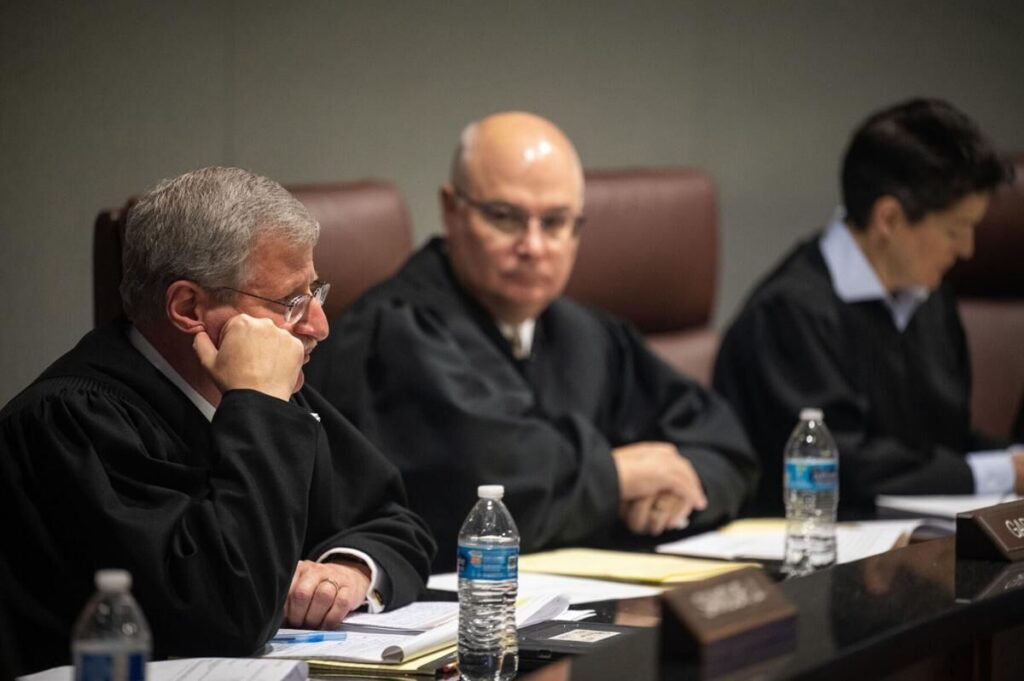
Some members of the Colorado Supreme Court appeared hesitant on Tuesday to endorse the ability of police to interrogate a suspect after they have obtained a court order authorizing only the collection of physical evidence. Under Colorado’s criminal rules, law...

Colorado House committee advances Democratic bill to reduce penalties for ‘extreme indifference’ murder
Marissa Ventrelli
marissa.ventrelli@coloradopolitics.com
Updated 16 hours ago
Lawmakers on the Colorado House Judiciary Committee narrowly passed a bill proposing changes to the state’s sentencing guidelines for murders facilitated with “extreme indifference to the value of human life.” Colorado is one of several states with this type of...

Boebert working on bill to strip Swalwell of $22,000 annual taxpayer-funded pension
Haris Alic and Lauren Green, Washington Examiner
haris.alic.and.lauren.green.washington.examiner@gazetteedit.wpenginepowered.com
Updated 18 hours ago
EXCLUSIVE — Rep. Lauren Boebert (R-CO) is working on legislation to strip disgraced former Rep. Eric Swalwell of his $22,000 annual taxpayer-funded congressional pension. Swalwell resigned from the House on Tuesday after allegations of sexual assault by multiple women, including...

Trump AI framework puts ball in Congress’s court. Time to act is running out
Liz O'Bagy, Washington Examiner
liz.o'bagy.washington.examiner@gazetteedit.wpenginepowered.com
Updated 18 hours ago
Artificial intelligence is no longer a future policy debate. It is already compressing years of drug discovery into months, helping doctors detect cancer earlier through advanced diagnostic imaging, improving aviation and traffic systems that make travel safer, and giving small...
Colorado Supreme Court considers new requirement for leaving-the-scene convictions
Michael Karlik
michael.karlik@coloradopolitics.com
Updated 18 hours ago
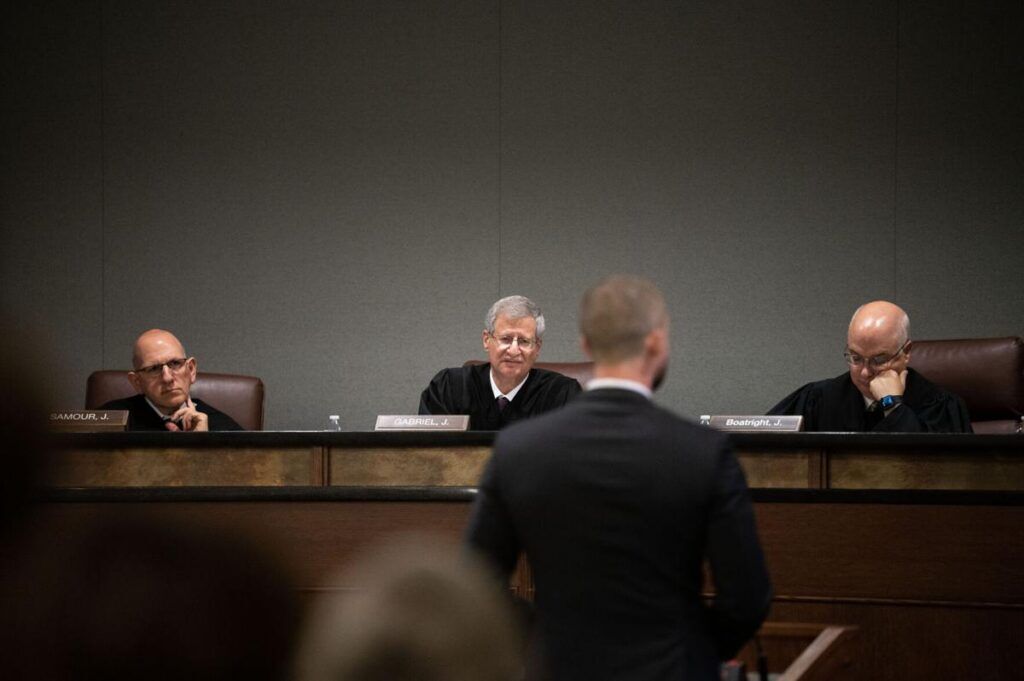
In 2006, the Colorado Supreme Court ruled that leaving the scene of an accident resulting in serious injury is a “strict liability” offense, meaning a person is guilty solely through their conduct, without the need for prosecutors to prove the...

Democratic lawmakers seek fix to Colorado’s stalled prison population plan
Marissa Ventrelli
marissa.ventrelli@coloradopolitics.com
Updated 12 hours ago
Colorado’s prison population plan was designed to prevent overcrowding. Instead, eight months after it was triggered, the system remains strained and largely ineffective, prompting two Democratic lawmakers to push for changes through new legislation. According to its sponsors, Senate Bill...

After internal strategy sessions, Colorado Senate to take up $46B budget debate
Marianne Goodland
marianne.goodland@coloradopolitics.com
Updated 20 hours ago
Tax Day carries added weight at the state Capitol this year, as the Senate prepares to take up the 2026‑27 budget on Wednesday following a day of preparations by both Republican and Democratic caucuses. Senators are expected to raise some...

Douglas County approves AI system for sheriff’s investigations
Nicholas Fogleman
nicholas.fogleman@denvergazette.com
Updated 14 hours ago
Douglas County commissioners unanimously approved the purchase of an artificial intelligence system to assist the Sheriff’s Office with investigative analysis. The system is designed to help investigators process large volumes of data more efficiently and turn it into usable investigative...
PREV
PREVIOUS

State Supreme Court to hear criminal appeals involving racial bias, jury instructions
The Colorado Supreme Court agreed to review whether an Arapahoe County judge, who is now a justice on the state’s highest court, correctly handled a potentially race-based dismissal of a Black juror, and whether jurors in an Adams County criminal trial should have received the definition of a key legal term – even though there is […]

Lamborn primary challenger Rebecca Keltie qualifies for GOP ballot by petition
Colorado Springs Republican Rebecca Keltie, one of four GOP candidates challenging U.S. Rep. Doug Lamborn’s bid for a ninth term, has qualified for the primary after submitting a sufficient number of valid petition signatures, state officials said. Lamborn qualified for the June 28 ballot in Colorado’s 5th Congressional District by petition earlier this month. In […]