

Reform state’s involuntary-commitment laws
It’s no secret that our mental health system in Colorado is broken and that people regularly fall through what ought to be a safety net. Many of the laws that govern our behavioral-health system haven’t been updated for more than 40 years, and unfortunately my family has had to experience the effects of a dated, underfunded and understaffed system firsthand.
In a five-year period, my wife attempted suicide multiple times. She suffered from bipolar disorder, and eventually succumbed to this devastating disease, and died by suicide. Throughout the duration of her struggles, we had become all too familiar with the difficult, time-consuming, frustrating process of navigating Colorado’s mental health system.
Even though we were blessed with good health insurance – something many Coloradans sadly lack – we struggled to find services and resources. It became clear that in our state there simply are not enough therapists or beds, particularly those that fit the specific mental-health needs of individual patients. Making matters more complicated, my wife was resistant to treatment and to her diagnosis. She didn’t want to be sick, and I couldn’t force her to access care.
I learned about M1 holds after her first suicide attempt. In Colorado, anyone who is deemed to be gravely disabled or a threat to themselves or others can be held in an emergency room or other designated facility for up to 72 hours to be kept safe and evaluated for further treatment.
When the ER doctors told me they were placing her on a mental-health hold, I initially felt relief. I thought, finally, someone was going to help us through this. But I was wrong.
In Colorado, under current law people who are placed on an M1 hold have very few rights and standards of care are seriously lacking. Instead of being treated like a patient in crisis who deserves care and compassion, my wife was treated like a criminal with a guard by her door. Being treated this way caused her to feel shame, like she was being punished and not cared for. After future suicide attempts, I struggled with the decision to take her back to the hospital, where I knew we would repeat this traumatic M1 process and have to fight the system again.
Once, she was evaluated by a doctor virtually – she didn’t even get a face-to-face evaluation. This time she had tried to poison herself with carbon monoxide. The teledoc told us they would not provide follow-up care because she couldn’t have actually succeeded in killing herself this way because car emissions were so good now. I was floored that he would make such a dismissive comment, but worse, it prevented my wife from receiving the follow-up care she needed.
Colorado families deserve better.
House Bill 1256 will make a variety of critical reforms to protect patient rights and create a better system of care. For one, it will ensure patients have basic rights like access to food and water, their cell phone and a right to counsel so they feel like people and patients – not prisoners. This bill also provides additional resources for hospitals to help them get patients on M1 holds who need further care and treatment to a more appropriate location. It also requires that providers capture critical details about who is being placed on these holds and why.
It also ensures patients receive follow-up care when they are discharged and sets more detailed standards for evaluating the needs of patients and determining next steps. A more thorough and thoughtful approach like the kind established in this bill would have been invaluable to my family. It’s the least we can do for Coloradans who are having what is often the worst experience of their lives.
Finally, under current law, there is no way to be involuntarily committed for short-term mental health treatment without being first placed on an M1 hold which can be, as we experienced, a traumatic event. House Bill 1256 will create a new pathway for families to access help for loved ones through a court petition, bypassing the need to go through an expensive and intense ER experience or having to wait for a crisis to occur.
People are placed on M1 holds because they need help, but too often, they aren’t treated with the care they deserve. The goal of this system should be to ensure that patients leave in a better condition than when they came in, not further traumatized by the experience. I believe House Bill 1256 is one important step toward creating a mental-health system that ensures future families and patients receive both compassion and care.
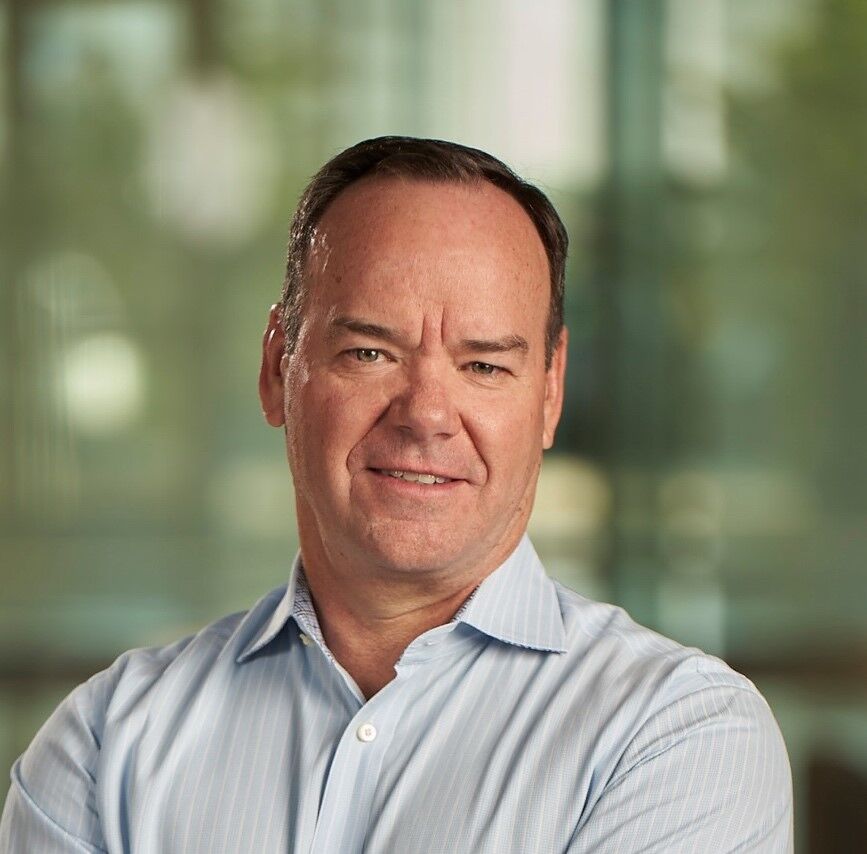
David Glenn is an Air Force veteran and a senior executive at a Broomfield-based business aviation company.


Colorado Democrats, your time is coming | Jon Caldara
Jon Caldara
jon-caldara@coloradopolitics.com
Updated 1 day ago
Hey, Colorado Democrats! All the fun you’ve had watching Republican dysfunction in Colorado for the last 20 years was just a preview of what is about to happen to you. The Colorado Republican Party no longer exists as a competitive...

The relevance of Watergate more than a half-century later | SONDERMANN
By Eric Sondermann
by-eric-sondermann@coloradopolitics.com
Updated 4 days ago
It was the scandal for which all other scandals are now named. In June 1972, a small group of Cuban burglars with high-level connections broke into the headquarters of the Democratic National Committee. Those headquarters were located in the Watergate...
Colorado must continue finding common ground on wildfire policy | GUEST COLUMN
Colorado Politics
colorado-politics@coloradopolitics.com
Updated 3 days ago
By John Herrick Colorado has never lacked for opinions about wildfire policy. We debate forest management, climate change, prescribed burns, land use, air quality and budgets. Those debates are familiar territory, but a new discussion is beginning to happen around...

Proposition NN is the best investment for Colorado’s students and schools | GUEST COLUMN
Colorado Politics
colorado-politics@coloradopolitics.com
Updated 3 days ago
By Justin Ogden Colorado families know what it means to make difficult budget decisions. Inflation has driven up the cost of groceries, housing, utilities and just about everything else. Families like mine work hard to stretch every dollar while still...
Were the primaries a preview for consequential general election? | Paula Noonan
Paula Noonan
paula-noonan@coloradopolitics.com
Updated 4 days ago
Colorado’s political future will go the way of this election. Historically, the state has not had both chambers controlled by a supermajority. This election may change that. The primaries suggest how the general election may play out. Democrats had solid...
Disagreement doesn’t have to mean disrespect | GUEST COLUMN
Colorado Politics
colorado-politics@coloradopolitics.com
Updated 4 days ago
By Vincent Atchity These days, it doesn’t take long to feel overwhelmed by politics. Turn on the news, scroll through social media or read the comments on almost any political post and you’ll find anger, outrage and personal attacks. For...
Keeping Colorado’s kids’ trust online | PODIUM
Colorado Politics
colorado-politics@coloradopolitics.com
Updated 5 days ago
By Stuart Jenkins Almost every day, the kids and teens we serve across Colorado are introduced to new generative artificial intelligence and other emerging technology, including conversational AI systems designed to simulate human conversation. These tools are no longer a...

Marx’s ‘through line’ predates Trump, connects to Maes | FEEDBACK
Colorado Politics
colorado-politics@coloradopolitics.com
Updated 5 days ago
Eric Sondermann is of course correct Victor Marx is an unserious, unelectable, embarrassing Republican nominee for governor of Colorado. But I respectfully submit that the “through line,” as Mr. Sondermann describes it, is not from Trump to Marx, despite their...

Cedric Pride’s blueprint for opportunity through the trades | The OpEdge Podcast
Tony Olivero
tony.olivero@gazette.com
Updated 5 days ago
Cedric Pride, CEO of the nonprofit Pride Initiative in Denver, joins The OpEdge with a blueprint for workforce development, skilled trades, and economic opportunity. Pride tells host and investigative columnist Jimmy Sengenberger why he believes the trades offer a path...
Colorado’s No. 1 education ranking should raise our ambition | GUEST COLUMN
Colorado Politics
colorado-politics@coloradopolitics.com
Updated 5 days ago
By Scott Laband Colorado has earned the right to celebrate its new No. 1 ranking in education from U.S. News & World Report. Gov. Jared Polis called it “one of the proudest moments” of his time in office and shared the...
PREV
PREVIOUS
Durango Herald: State GOP solutions – a start
Problem-solving politics over partisan politics gets our attention. In The Durango Herald on March 5 and The Journal on March 9, guest columnist Kristi Burton Brown, chairwoman of the Colorado State Republican Party, offered a list of what she called “real solutions” from a 44-bill package unveiled on the first day of the legislative session. […]

BIDLACK | Alamosa shouldn't recall DA on taxpayer dime
Hal Bidlack My regular reader (hi Jeff!) may recall that I am not a fan of recall elections. On several occasions I have written about my disdain for that practice. As I said in those earlier columns, I really do think that once a person has been elected to office, he or she should be […]