

NOONAN | Standardized-test emphasis stifles public education
It may be hard to admit to what’s wrong, but when the wrong is wrong, it should be admitted and corrected. In 2010, the state legislature passed SB-191 that attached 50% of a teacher’s performance evaluation to student standardized-test scores. More than a decade later, public schools continue to implement this misguided program. SB22-044 would have ended the travesty, but it failed on a 5-to-1 vote in the Senate Education Committee.
The bill’s sponsor, state Sen. Tammy Story, presented a compelling case to, as she put it, “get us off the bus” of using individual-student standardized-test results in educator-performance evaluation. SB22-044 was not a screed against standardized tests. It was a balanced, carefully constructed bill to use appropriate measures for teacher evaluation as well as to reconfigure how test results should be used to support quality instruction.
The discussion over the bill brought up the standard arguments for standardized tests as a 50% metric for evaluating educators. Sen. Paul Lundeen’s favorite theory of performance evaluation is that public school educators should be assessed like employees in the private business sector. He posed this question to Colorado Concern, a business lobbying group: don’t all businesses in your organization measure their success on quantifiable metrics related to their missions?
Maybe they do. But they also get to select employees from a qualified applicant pool, train employees on specific and well-defined tasks, fire employees for tardiness or absenteeism, otherwise control their workplaces and provide performance feedback when it matters.
Public schools take in all comers – that’s the point. They teach kids all sorts of subjects. And they hope for but can’t control kids arriving to school on time and ready to learn. Some kids are homeless and hungry. Some have special needs. Some just flat out don’t like school. One final kicker: teachers don’t receive results on tests students take in March until mid-summer – too late to inform instruction for a teacher’s cohort of kids tested.
Given these facts, it’s easy to understand why teachers find the current evaluation system ridiculous and punitive. Fifty percent of their performance depends on their students testing well on math, reading and writing, even if they teach art, music and physical education.
As early as 2010, the Economic Policy Institute confirmed that standardized testing should only be a part of evaluation, and basing 50% of evaluation on the tests would be “unwise.” The Center for American Progress, in 2021, argued that current standardized tests are not valid and reliable for measuring individual teacher performance based on individual student-test results. The tests are valuable for assessing how groups of students, say elementary classrooms in a grade level, have progressed generally and what gaps may need backfilling in relation to tested areas. SB22-044 aligns with that goal.
Unfortunately, most Republicans and some Democratic leaders cling to the notion that educators should continue to be evaluated based on SB-191 criteria. They’re discounting research data, even though they claim data is their motivating interest, and they’re ignoring the education community’s testimony that the current evaluation system is a failure. The most current results of state testing in 2019 show that about half of the state’s students still are not “meeting expectations” in English Language Arts and math.
Even the state’s colleges and universities no longer rely on standardized tests for admissions. They realize that school grades are a more reliable predictor of academic success.
This ideological commitment to a business model for public education threatens its foundations. Schools, fundamentally, aren’t businesses and students aren’t products or services. The student growth model in Colorado that underlies how the state and legislature assess districts, schools and teachers is inherently flawed and has not produced predicted results.
The performance-evaluation failure is just one of several important miscalculations built into state mandates interfering with Colorado’s public education system. The ongoing battle between Adams 14 and the State Board of Education over how that district is managed shows that hiring a for-profit management company to run a school district is not a go-to solution.
SB22-054 might be a creative alternative to placing districts such as Adams 14 under state management. It allows districts to develop community schools tailored to the specific needs of specific neighborhoods. But this option may not be available to Adams 14.
The most important reform for public education that can occur right away is mundane – more money. The only way the state will recruit, train, retain and develop great teachers is to put more money into the system. Until that happens, undoing the SB-191 mess is a great idea.
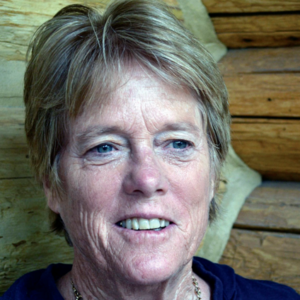
Paula Noonan owns Colorado Capitol Watch, the state’s premier legislature tracking platform.


A daring and fearless rescuer — is afraid of a debate | Dick Wadhams
Dick Wadhams
dick-wadhams@coloradopolitics.com
Updated 2 days ago
Victor Marx, the Republican nominee for governor who says he can exorcize demons and who claimed he has fearlessly rescued 45,000 women and children during 150 “high-risk” missions around the world, appears to be intimidated by the notion of debating...

Colorado’s ballot-initiative process again a battleground for deep pockets, special interests — not the people | Miller Hudson
Miller Hudson
miller-hudson@coloradopolitics.com
Updated 10 hours ago
The Oxford English Dictionary defines a constitution as, “The set of fundamental principles according to which a state is constituted and governed, a body of rules prescribing the major elements of the structure and activities of any organization.” Somewhere in...

Proposed EPA changes could save truckers billions | Rachel Gabel
Rachel Gabel
rachel-gabel@coloradopolitics.com
Updated 2 days ago
Agriculture is in distress across nearly every segment across much of the nation, and certainly to a more dire degree in the western United States. If it were not a historic drought, some pressures could be eased. Others can be...

Colorado Democrats, your time is coming | Jon Caldara
Jon Caldara
jon-caldara@coloradopolitics.com
Updated 2 days ago
Hey, Colorado Democrats! All the fun you’ve had watching Republican dysfunction in Colorado for the last 20 years was just a preview of what is about to happen to you. The Colorado Republican Party no longer exists as a competitive...

Perspective: Hunters and anglers are pushing back
Chris Dorsey
chrisd@gmail.com
Updated 8 hours ago
For generations, Coloradans hunted elk, caught trout and managed wildlife without consulting a constitutional attorney. That was before wildlife management became a recurring statewide election issue, replete with consultants, national pressure groups and enough political mail to denude an aspen...
The relevance of Watergate more than a half-century later | SONDERMANN
By Eric Sondermann
by-eric-sondermann@coloradopolitics.com
Updated 5 days ago
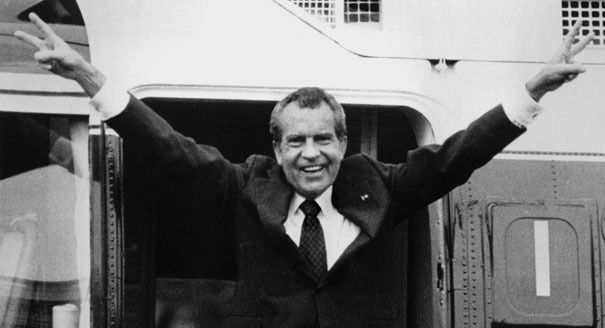
It was the scandal for which all other scandals are now named. In June 1972, a small group of Cuban burglars with high-level connections broke into the headquarters of the Democratic National Committee. Those headquarters were located in the Watergate...

Colorado must continue finding common ground on wildfire policy | GUEST COLUMN
Colorado Politics
colorado-politics@coloradopolitics.com
Updated 4 days ago
By John Herrick Colorado has never lacked for opinions about wildfire policy. We debate forest management, climate change, prescribed burns, land use, air quality and budgets. Those debates are familiar territory, but a new discussion is beginning to happen around...

Proposition NN is the best investment for Colorado’s students and schools | GUEST COLUMN
Colorado Politics
colorado-politics@coloradopolitics.com
Updated 4 days ago
By Justin Ogden Colorado families know what it means to make difficult budget decisions. Inflation has driven up the cost of groceries, housing, utilities and just about everything else. Families like mine work hard to stretch every dollar while still...
Were the primaries a preview for consequential general election? | Paula Noonan
Paula Noonan
paula-noonan@coloradopolitics.com
Updated 5 days ago
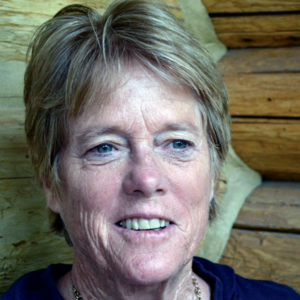
Colorado’s political future will go the way of this election. Historically, the state has not had both chambers controlled by a supermajority. This election may change that. The primaries suggest how the general election may play out. Democrats had solid...
Disagreement doesn’t have to mean disrespect | GUEST COLUMN
Colorado Politics
colorado-politics@coloradopolitics.com
Updated 5 days ago
By Vincent Atchity These days, it doesn’t take long to feel overwhelmed by politics. Turn on the news, scroll through social media or read the comments on almost any political post and you’ll find anger, outrage and personal attacks. For...
PREV
PREVIOUS

SLOAN | Fentanyl failures
Kelly Sloan A few weeks ago, the bodies of five young people, three women and two men aged between 24 and 32, were found dead in an apartment in Commerce City, a working-class suburb in the Denver metro area. They perished almost immediately and simultaneously, of overdoses brought on by the partaking of cocaine, laced […]
Colorado Springs Gazette: Small-town Colorado goes soft on crime
It’s not just our state’s metro areas that are reeling from rising crime. Far from the Front Range, small-town Coloradans, as well, are fed up with the state-sanctioned enablement of tried-and-true criminals. In southern Colorado’s San Luis Valley, residents of Alamosa are sharing heart-wrenching stories that amount to a testimonial of the real-world implications of […]