

Denver’s green roof ordinance morphs into a broader mandate

Denver has one of its first commercial rooftop green spaces despite the city morphing the citizen-led Green Roofs Initiative into a less ambitious energy conservation and heat island reduction plan.
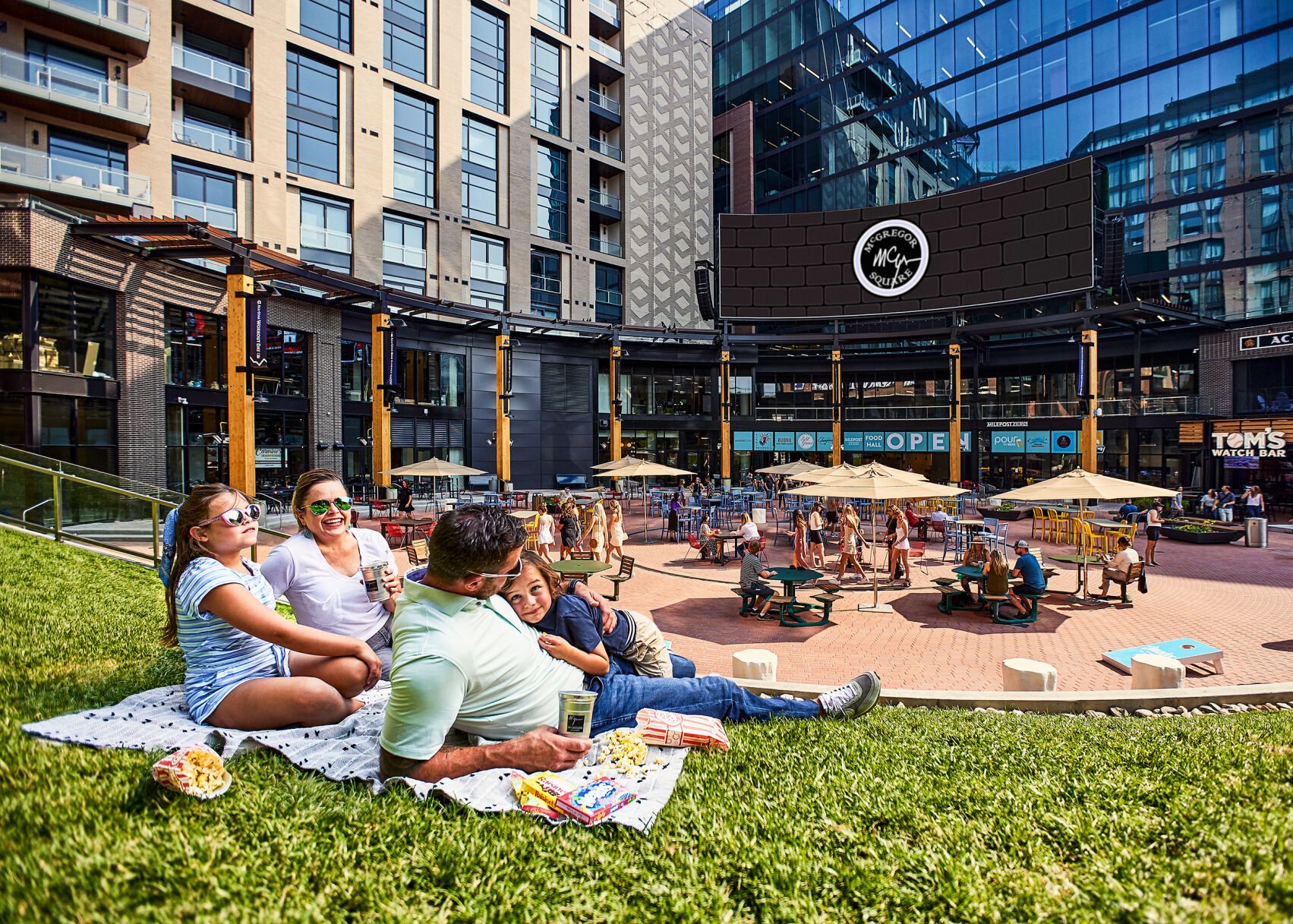
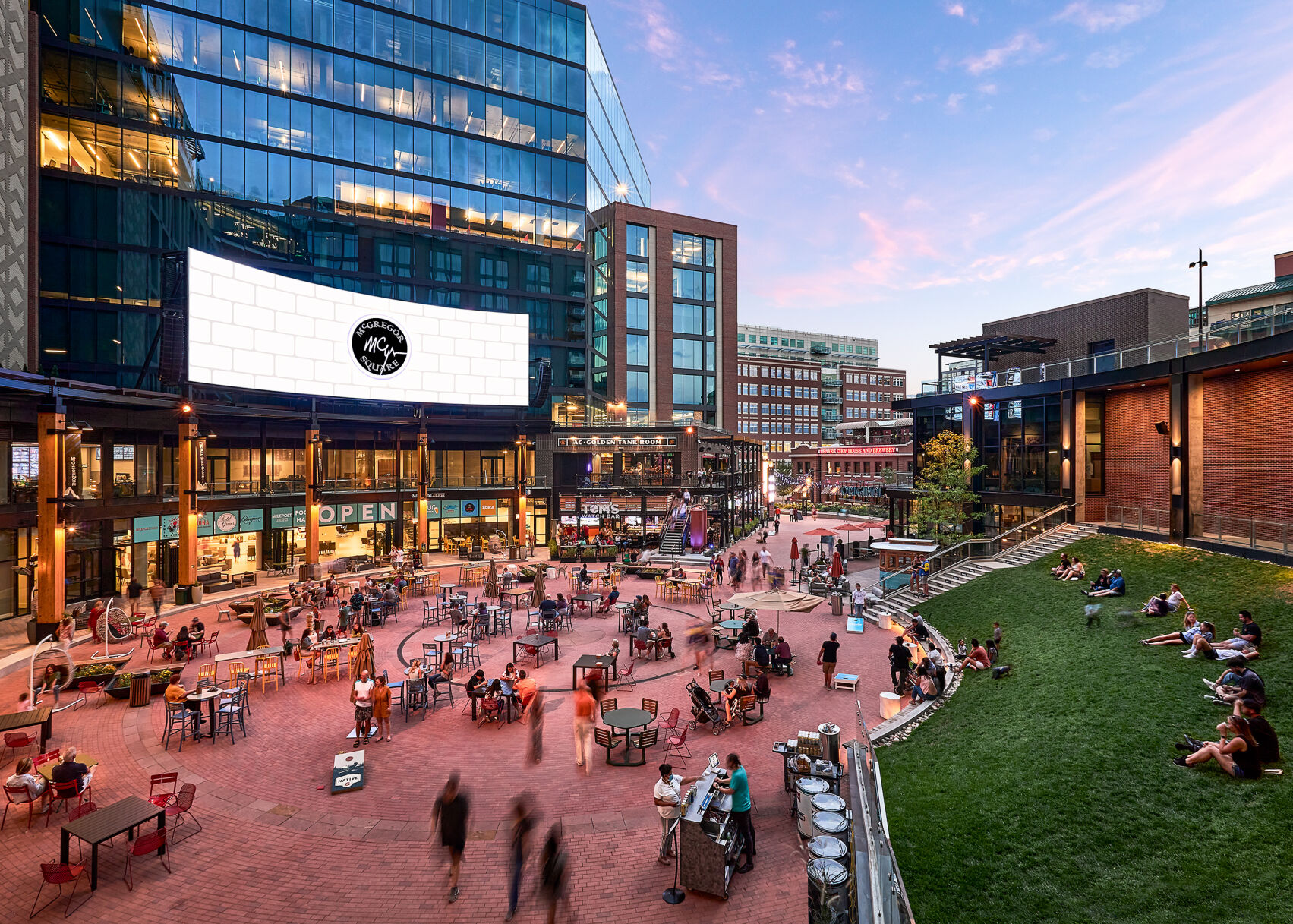
McGregor Square, a 659,000-square-foot development owned by the Colorado Rockies that is next to Coors Field, took the green roof ordinance to heart when its design process began in 2016. The complex at 1901 Wazee St. includes a hotel, residential space, retail, restaurants and offices.
“We were one of the first buildings in the city to start planning right when the ordinance came into place,” said CEO Brooke Bishop.
McGregor Square’s roof is dotted with green succulent plants, and there is a grass berm inside the square as well as planters along the perimeter of the property. It also partnered with the Denver Butterfly Pavilion to create a pollinating insect habitat.
Bishop said the 35,000 square feet of green space cost about $5.8 million to install and costs as much as $100,000 per year to maintain.
In 2017, 52% of Denver voters approved an initiative requiring all new buildings with more than 25,000 square feet of floor space to install rooftop vegetation and solar panels to help mitigate the “heat island effect” caused by heat-absorbing surfaces like streets and traditional tar-covered roofing materials.
According to the EPA, heat islands contribute to higher daytime temperatures, reduced nighttime cooling, and higher air-pollution levels. They increase both overall electricity demand, as well as peak energy demand.
“People wanted to see a reduction of our urban heat island,” said Laura Swartz with Denver Community Planning and Development. “They wanted to see a healthy or more sustainable Denver and that is a priority that we share.”
Although earth-sheltered buildings are not new, Denver is said to be the first city in the nation to require rooftop vegetation. The ordinance took effect Jan. 1, 2018.
Almost immediately, building owners were left scratching their heads about what to plan for. City officials put together a task force to try to resolve the roadblocks in implementing the initiative. One of the biggest hurdles, officials said, was that almost none of Denver’s existing buildings were subject to the ordinance because they were structurally incapable of carrying the loads imposed by soil and water.
“One of the things that the task force really wanted was to see a solution that would include our existing building stock,” said Swartz. “We didn’t want something that only applied to new buildings. But we also wanted to look at existing buildings when they are reroofed. So, an existing building comes in and they need to redo the roof. What can they do, since they can’t build a green roof at that point because the building can’t structurally support it?”
During the eight months or so that the task force labored to create workable amendments to the ordinance that still honored the will of the voters, a complicated set of regulations and options emerged that allowed new construction as well as existing buildings that were reroofing to choose from a menu of acceptable substitutes for growing crops on their roofs.
“It says you can have green space on the roof or you can have green space on the ground,” said Swartz. “You can have green space on top of a parking garage or on a plaza deck. It doesn’t necessarily have to be on the roof.”
Building owners can also meet the requirements by putting solar panels on their roof.
“When you are talking about new construction, having a building that’s designed 12 to 18% more energy efficient than what codes require will have a huge long-term impact,” Swartz said.
Another option is a “cool roof” installed during reroofing. Cool roofs are light-colored roofs that reflect solar heat rather than the customary black tarred roofs that absorb the sun’s energy and then radiate it at night, contributing to the heat island effect.
“You don’t need to rebuild or redesign a building to do that. It can be done at the time of roof replacement,” said Swartz. “Based on the number of buildings that it would apply to, you can have a really substantial impact on our urban heat island effect.”
Swartz said installing a cool roof during reroofing adds less than 1% to the cost.
A 2017 cost-benefit analysis of the initiative’s economic impact found that 57.5 million square feet of roofs covered with crops and produce would generate $1.85 billion in savings by 2058.
The analysis, authored by green roof advocates Rohan Lilauwala and Steven Peck, said that over 15 years the capital costs of these roofs would be $1.06 billion and maintenance costs would be $336 million.
The study based much of its conclusion on intangible social benefits such as “$37 million in biophilic benefits, including improved productivity and reduced absenteeism associated with exposure to green roofs,” “$445 million worth of food produced locally,” “$171 million … due to a reduction in the urban heat island” and “a host of additional benefits for the community that are not fully captured in this study, such as improved food security.”
Denver issued 99 permits in 2020 for buildings subject to the green roof ordinance.
? 57 were new construction and 42 were existing buildings replacing the roof.
? Nine buildings installed green space.
? Three installed on-site renewable energy.
? 10 new buildings were designed to be 12% more efficient than the building code requires.
? Nine buildings obtained a green building certification.
? 10 buildings installed a combination of green space and decreased energy consumption.
? 16 existing buildings enrolled in an energy program to decrease their energy consumption over time.
? Three existing buildings opted to pay into a green building fund.
The remaining projects were residential buildings of 5 stories or less, which are only required to install a cool roof.

White House withdraws hospitality executive as National Park Service nominee | OUT WEST ROUNDUP
The Associated Press
the-associated-press@coloradopolitics.com
Updated 6 days ago
MONTANA National parks nominee withdrawn BILLINGS — President Donald Trump is withdrawing his nomination of a hospitality company executive to lead the National Park Service, the White House announced on April 27. The withdrawal of nominee Scott Socha comes as...
Ron Hanks, Scott Bottoms sue to stop Colorado’s unaffiliated voters from participating in GOP primary
Ernest Luning
ernest.luning@coloradopolitics.com
Updated 16 hours ago
Three Republican candidates in Colorado filed a lawsuit in Denver District Court this week seeking to prevent unaffiliated voters from participating in next month’s GOP primary, arguing that the state’s semi-open primary system violates their constitutional rights by forcing Republicans...
Colorado needs a sane, viable opposition party | SONDERMANN
By Eric Sondermann
by-eric-sondermann@coloradopolitics.com
Updated 5 days ago
If you are upset with the increasing regulatory burden in Colorado, the exodus of too many large employers, accelerating property taxes, the condition of the roads, and all of the funding for transit schemes with low demand, of course, you...

Colorado Politics Calendar May 11-17
Rachael Wright, Special to Colorado Politics
rachael.wright@coloradopolitics.com
Updated 4 days ago
CoPo’s weekly political calendar will help you find political and public-policy events throughout Colorado. It includes candidate and issue campaign events, public policy meetings, court hearings, state and local party conventions, assemblies, debates, rallies, parades, speaking engagements, traveling dignitary appearances,...
NRA carves out early success story battling 1981 Colorado gun legislation | A LOOK BACK
Rachael Wright, Special to Colorado Politics
rachael.wright@coloradopolitics.com
Updated 3 days ago
Forty-Five Years Ago This Week: After House Bill 81-1542, which would have mandated detention for juveniles carrying concealed weapons, cleared the Senate Judiciary Committee, Sen. Paul Powers, R-Denver, said he had received 45 letters per day denouncing the legislation. And...
It’s almost Sine Die and it can’t come soon enough | Capitol M | Week of May 9, 2026
Marianne Goodland
marianne.goodland@coloradopolitics.com
Updated 3 days ago
The lighter side of the state Capitol, usually. At first, May the Fourth might have been a bit of a disappointment. Usually, there’s a lot of Star Wars foolishness on this particular day, but early on, it was low-key. The...
TABOR showdown: Senate moves bill forward, Advance Colorado prepares for legal action
Marianne Goodland
marianne.goodland@coloradopolitics.com
Updated 2 days ago
Despite objections from legislative staff and Republican opposition, Senate Democrats on Friday moved forward with a proposal to reroute $306 million in taxpayer refunds. Already, critics are preparing to sue over the proposal that seeks to take $300 million in Taxpayer’s...
Colorado governor signs $47 billion budget in which ‘nobody won’
Marianne Goodland
marianne.goodland@coloradopolitics.com
Updated 2 days ago
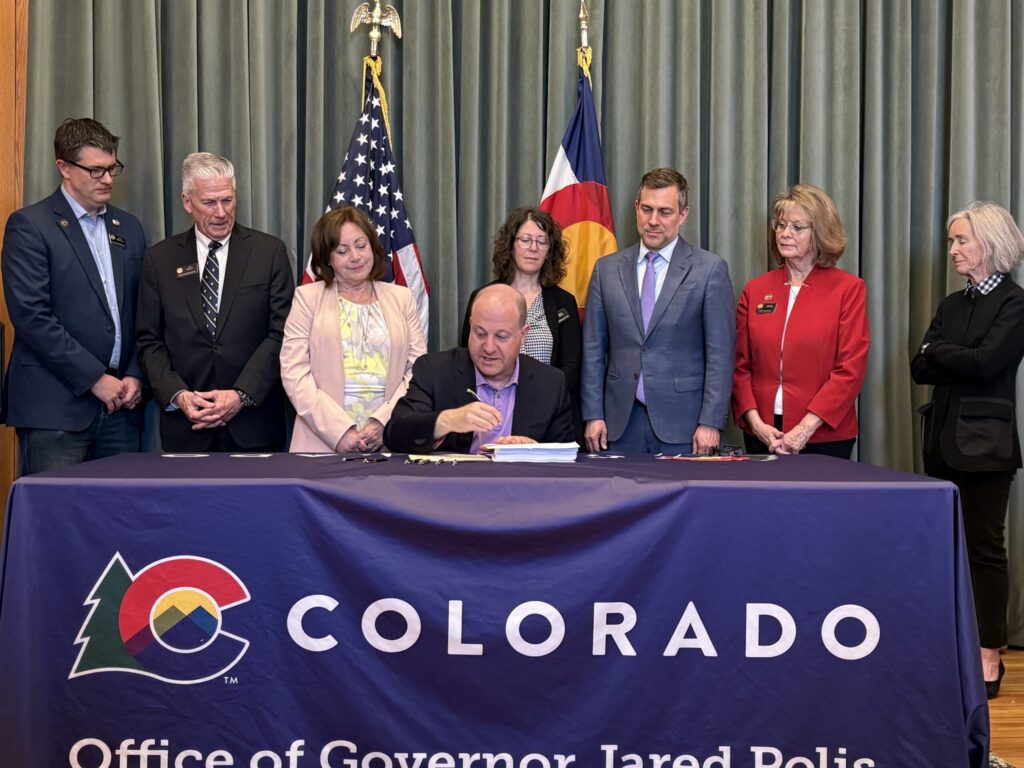
Gov. Jared Polis on Friday officially signed a $46.87 billion spending plan for the Colorado state government in the next fiscal year. His signature is the culmination of months of work by legislators, who resorted to cuts, transfers and other...
Latest Pinnacol proposal shifts sponsors and cuts state benefits, triggers union standoff
Marianne Goodland
marianne.goodland@coloradopolitics.com
Updated 14 hours ago
Colorado’s long‑running bid to let Pinnacol Assurance break away from state control is suddenly in jeopardy, as a newly revised bill — stripped of the payouts and structural changes once central to the deal — has triggered fresh tensions among...
Denver could be back in DNC spotlight 20 years later
Deborah Grigsby
deborah.smith@denvergazette.com
Updated 2 days ago
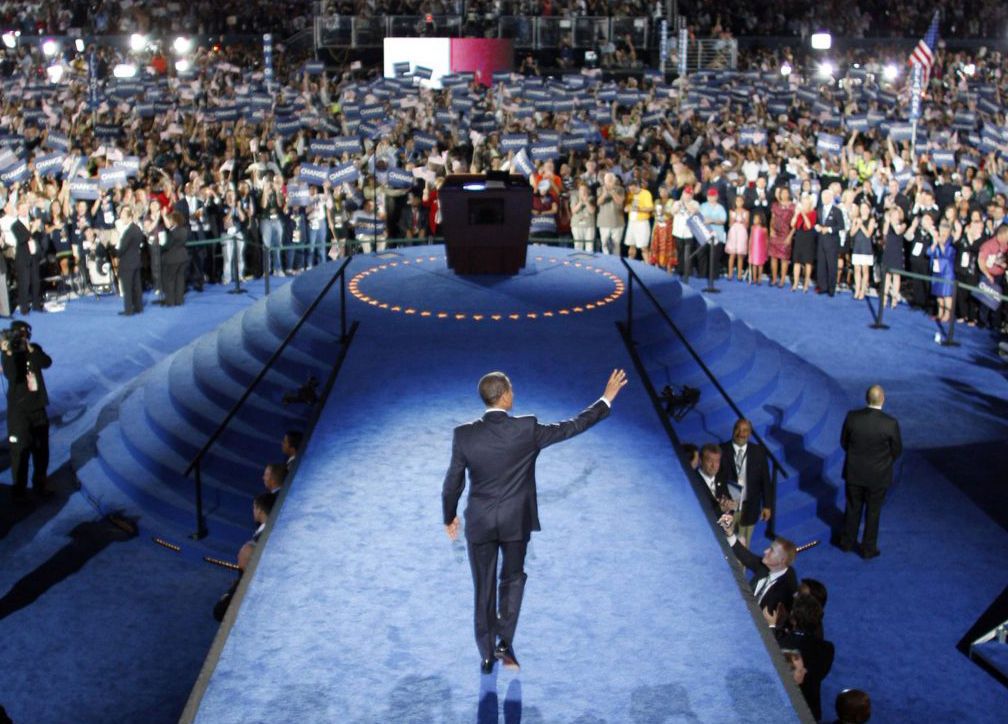
It’s been nearly two decades since Denver shared the spotlight as host to the 2008 Democratic National Convention — and a lot has happened in the city since then. But not major party conventions. In fact, before 2008, Denver hadn’t...
PREV
PREVIOUS

SONDERMANN | A wee, bitty, baby step toward two-party government in Colorado
Eric Sondermann In today’s tribal, all-or-nothing context, it is hard to believe that Colorado voters were once known for their ticket-splitting. In 1978, Democrat Dick Lamm, then a leading liberal and environmental champion, and Republican Bill Armstrong, a fiscal hawk and evangelical hero, both won their races for governor and U.S. Senate by nearly identical […]
OUT WEST ROUNDUP | Strayed Yellowstone wolves killed; nuke waste cleanup nears finish line
MONTANA Hunters kill 20 wolves that roamed out of Yellowstone BILLINGS – Twenty of Yellowstone National Park’s renowned gray wolves roamed from the park and were shot by hunters in recent months – the most killed by hunting in a single season since the predators were reintroduced to the region more than 25 years ago, […]