

IN RESPONSE: Coverage slighted me — and a good bill


I am very concerned about the article written about me titled, “Lawmakers relied on info from doctor paid by pharmaceutical company for bill on opioid substitutes,” from June 2, 2021.
My verbal statement to the author stands that I didn’t think about the form I filled out and made an honest mistake. I understand the optics and am willing to take some negative press for a stupid mistake in a very important forum. I was trying to make a difference after struggling, multiple times a day, with how limited I was as a pain physician in getting the safe and effective care my patients needed for treating their debilitating pain. My focus that day was on cramming all the valuable pain treatments we cannot get covered into only three minutes of allowed testimony. My nerves got the best of me, and I made a serious, unconscious mistake by neglecting to disclose my relationship with Collegium.
Discrediting me personally, however, with untrue statements and misrepresenting my intent casts a shadow over a revolutionary bill (HB21-1276) that will save lives. It will by allowing patients to have safer and affordable alternatives to the cheap generic opioids that only cost pennies for insurers to cover and have fueled thousands of deaths in Colorado alone.
Data shows that 75% of heroin users are first exposed to opioids through a legitimate prescription. A potentially dangerous and addicting oxycodone/acetaminophen 5/325-milligram tablet costs insurers 5 cents. This is why we can get it and other cheap, dangerous and addicting opioids without any cumbersome prior authorizations, red tape, denials and prohibitively high out-of-pocket costs for patients.
Too often these cheap, generic and dangerous opioids are the only affordable option for patients. Despite all the deaths and evidence, insurers in Colorado and across the country still make these dangerous opioids the easiest option for patients and create hurdles and barriers to safe and effective pain treatments – like many other non-opioid pain medications, safer atypical and abuse-deterrent opioids, physical/occupational therapy, pain psychology, chiropractic treatments and acupuncture.
Insurers will tell us that we can’t prescribe too much of a cheap generic opioid and tout that as their taking a stand against the opioid epidemic. But they still set up their tiers and prior-authorization processes to make smaller amounts the easiest, fastest and most affordable option for patients. This while they delay, deny or make prohibitively expensive the safer and proven alternatives to their “preferred” cheap, generic and dangerous opioids. This is the real ethical issue and dwarfs even this largely untrue report of my ethics and intentions.
The first misrepresentation was to dress up the article with a stock photo of a bottle of OxyContin 80-milligram tablets when I have never had anything to do with Purdue and 100% of my testimonies have been to reverse the damage largely caused by the drug that was curiously used to visually represent me with. I appreciate it being taken down, but the errors continued.
It was stated that I accepted money, “from more than a dozen pharmaceutical companies between 2013 and 2019.” In that time, I spoke for Pfizer, Collegium, Depomed and Mallinkrodt (that is four) to educate my colleagues on the safer and abuse-deterrent qualities of these new medications, in efforts to provide safer pain medications than the ones we can get so easily under the current insurers’ formularies. Other dollar amounts listed on the ProPublica website that comprise your “more than a dozen” quote include meals that were provided to feed our office. The cost is listed under my name, as I represent the office, and “accepting a turkey sandwich and a cookie” is not the same as “accepting money”.
Writing that, “In response to committee questions, however, the only drug Clapp talked about was tapentadol,” ignores the many times I mentioned tramadol and buprenorphine along with long list of other non-opioids and treatments mentioned many times as well! Please search my testimonies for mention of voltaren gel, lidocaine patches and the many therapies including detailed explanations of the evidence supporting psychology, physical therapy, acupuncture, etc. Answering one out of the many questions asked after one of my many testimonies where I “only talked about tapentadol”, grossly misrepresents my many hours spent at the Capitol.
Regarding your reference to my open letter of admonition to the state was based on a complaint after I discharged a patient for misusing her medications. Your statement that I continued to prescribe opioids despite inconsistent drug screens is false as her “inconsistent urine drug screens” were not truly inconsistent, but labeled as such when the patient mistakenly checked off that she was taking a medication she was not and then tested negative for it – which is actually “consistent” with what she was truly taking. She simply made an honest mistake on the form. If interested, my full letter of explanation is easily available.
Again, I made a dumb and “naive” mistake by not writing about my paid speaker role with Collegium. That’s it. I didn’t think about my speaking role for tapentadol as I was focused on using my three minutes of testimony and my need to be sure to include the values of all the therapies not affordable to patients under the current structure (psych, physical therapy, occupational therapy, acupuncture and other non-opioid and atypical pain medications).
A few final questions the article doesn’t address: If I was being paid by them, why didn’t this continue if I was doing such a great job for their company? If I was comfortable not disclosing my relationship, why not keep getting paid? Also, the original bill when this occurred was vetoed by the governor. So why come back for round two when I hadn’t received any money from Collegium in years?
Please look at the whole picture and stop slandering me as a physician and, more importantly, this incredible House Bill 21-1276 and what it accomplishes to prevent so many deaths in Colorado!
Jonathan Clapp, MD, is the president of the Colorado Pain Society and chairman of the Colorado Medical Society’s Substance Use Disorder Committee. He is double board-certified in physical medicine and rehabilitation and pain medicine.

Sans seniors, what does Colorado’s uninterested early turnout say about our disengaged electorate? | Paula Noonan
Paula Noonan
paula-noonan@coloradopolitics.com
Updated 1 day ago
This primary election is poorly attended. Evidence is in the numbers. About 10% of active registered voters are deciding this year’s primaries with seven days to go. If that number triples by June 30, only 30% of voters will decide...
Who gets to decide Colorado’s economic future? | GUEST COLUMN
Colorado Politics
colorado-politics@coloradopolitics.com
Updated 1 day ago
By Sarah Blackhurst Colorado’s prosperity depends on industries that grow our food, build our future and power our homes. But today, these sectors face an invisible threat from 5,000 miles away: the European Union’s Corporate Sustainability Due Diligence Directive (CS3D)....
We have the chance to change Colorado’s cancer outcomes | PODIUM
Colorado Politics
colorado-politics@coloradopolitics.com
Updated 1 day ago
By Erika Hanson Brown Colorado ranks among the healthiest states in the nation by nearly every measure. Yet even here — amid the Rocky Mountains and our deeply rooted culture of health and activity — cancer casts a long and...

Colorado has a playbook for youth mental health — our next governor must use it | GUEST COLUMN
Colorado Politics
colorado-politics@coloradopolitics.com
Updated 3 days ago
By Karen Ron-Li Liaw From the rural communities on the western slope to the eastern plains, to the major urban regions on the Front Range, Colorado families are navigating an all-too-familiar crisis: kids are struggling, and Colorado’s mental health system...

Pigs engineered to fight alpha-gal syndrome | Rachel Gabel
Rachel Gabel
rachel-gabel@coloradopolitics.com
Updated 3 days ago
If I were an evil genius trying to hamstring animal agriculture, I would create a fly that eats livestock alive and a tick whose bite and spit causes some people to have an allergic reaction to meat. (Insert evil laugh...

Registered voters on the eve of the 2026 primaries | Cronin & Loevy
Tom Cronin Bob Loevy
tom-cronin-bob-loevy@coloradopolitics.com
Updated 5 days ago
The Colorado Secretary of State’s Office has published the latest voter registration figures for the state and its counties as of June. Colorado ranks among the highest states for independent, or unaffiliated, voters. Only Alaska and Massachusetts have more. New Hampshire, New Jersey, Maine and Oregon also rank highly. So here...

A room for Sundance, a reality check for big-government Boulder | Jon Caldara
Jon Caldara
jon-caldara@coloradopolitics.com
Updated 7 days ago
There are few things more satisfying to watch than socialists getting mugged by reality. The Sundance Film Festival is invading my hometown of Boulder early next year. Sundance drew 85,000 attendees last year in Park City, Utah. Boulder’s hotel room...
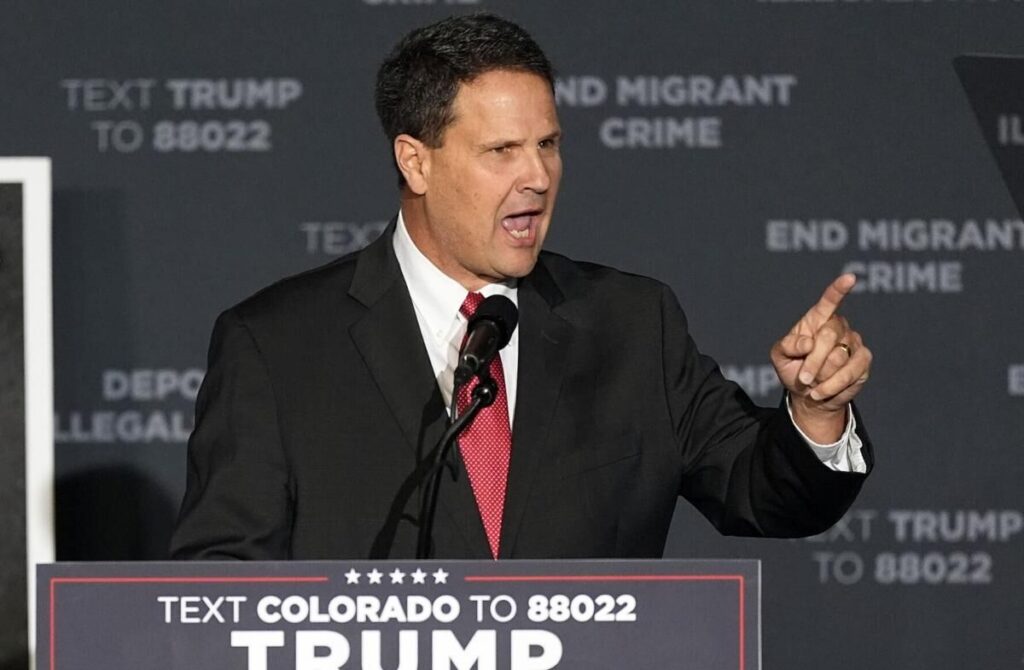
Rep. Jeff Crank thinks Democrats are too focused on Trump, not enough on Colorado Springs | Vince Bzdek
Vince Bzdek
vince.bzdek@gazette.com
Updated 4 days ago
For U.S. Rep. Jeff Crank, who’s unopposed in the Republican primary for the 5th Congressional District but the main target of both candidates in the lively Democratic primary, the big question in the midterms is not who will stand up...

Does character matter anymore? | SONDERMANN
By Eric Sondermann
by-eric-sondermann@coloradopolitics.com
Updated 1 week ago
The last few weeks have been illuminating in the manner of a headlamp pointing the way to some deep, dark, murky netherworld. Graham Platner, a hero to the populist set on the Democratic side, became his party’s Senate nominee in...

Private equity has no place in health care | GUEST COLUMN
Colorado Politics
colorado-politics@coloradopolitics.com
Updated 7 days ago
By Miah Ntepp Of all the financial pressures placed on working people in this country, the skyrocketing costs of health care rank near the top. As families struggle under the cuts to Medicaid made by the Trump administration, they are...
PREV
PREVIOUS
Denver Gazette: What is Denver’s council trying to hide?
You couldn’t put a cork in some Denver City Council members when they hold forth on the issues of the day, which is as it should be – even if it tries the public’s patience at times. So, why does the council seem to fear its own staff’s ability to speak up, as well? As […]

Union puts self interests over working-class members
Mike Lynch As a new guy down here at the gold dome, I presume legislators are sent to represent those hard-working families in the state trying to maneuver their way through these tough times. For me, this means sacrificing time from my own business, family and what few personal friends I have left. I am […]