

Private equity has no place in health care | GUEST COLUMN
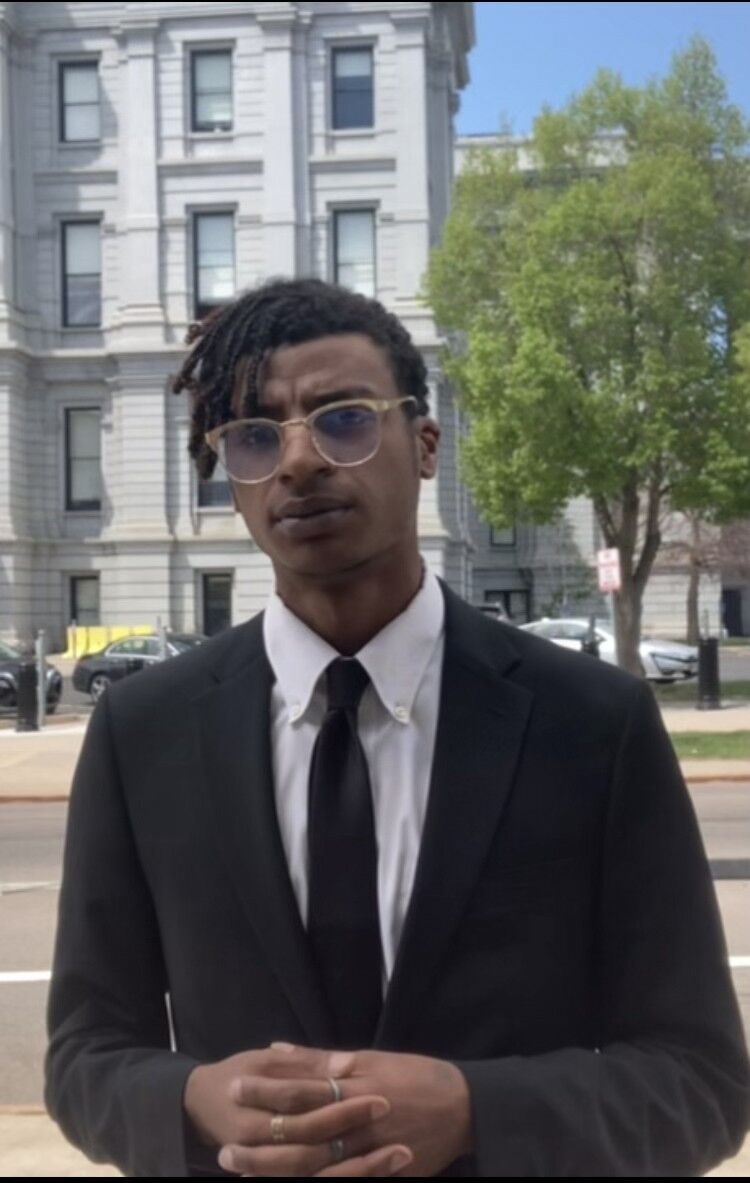
By Miah Ntepp
Of all the financial pressures placed on working people in this country, the skyrocketing costs of health care rank near the top. As families struggle under the cuts to Medicaid made by the Trump administration, they are now facing yet another barrier to affordable health care: the increasing incidence of predatory private equity firms taking over hospitals and other care facilities.
As many hospitals, nursing homes and other facilities face pressures from federal spending cuts, increased demand and inflation, some are tempted to accept the short-term solution presented by private equity. These are investment companies that acquire “distressed assets,” such as these struggling facilities, with the promise of making structural changes that will make them more financially stable. In fact, what they seek to do is merely provide a quick buck for investors. What happens is that after the takeover, these new owners cut services, lay off staff and essentially squeeze the hospital as a revenue source rather than a health care facility.
Though this may look good on paper, in reality the effect is higher costs for patients, decreased competition and ultimately worse patient outcomes for the acquired facilities. This is backed by considerable research: For example, a 2023 review of existing studies found private equity takeovers of health care facilities resulted in cost increases of up to 32% for payers in the majority of cases — and in no case did costs go down. Another 2023 study found costs for specialty services — such as obstetrics and gynecology — were substantially higher in facilities where private equity had at least a 30% stake.
The reasons for this are not hard to figure out. For one, private equity firms have one goal in mind and one goal only: to make money for their shareholders. Their business model is to make hospitals profit centers rather than places where patients go to for healing, whether or not they actually provide accessible health care.
The other reason costs go up post-private equity acquisition is due to another strategy private equity firms use, and that is consolidation: buying up several smaller health care-related practices in the same area. Consolidation of services simplifies things for the private equity firm but also concentrates their market power, allowing them to raise prices with impunity.
Ironically, in several cases the facilities that sought to be bailed out by private equity ended up in worse financial positions than they started. There have been several real-life examples where whistleblowers revealed the underhanded practices employed by these firms after the takeovers, resulting in the facilities having to pay millions of dollars in penalties. In one case, an autism center in South Carolina had to pay an $8.8 million settlement after the Department of Justice discovered the private equity firm that acquired it encouraged therapists to bill Medicaid for time not actually spent with patients. In another case, Steward Health Systems, acquired by Cerberus Capital Management, settled with the DoJ for $4.7 million after a whistleblower revealed the hospital re-coded treatments to higher service levels, violating the False Claims Act.
Of course, it is not the financial numbers that are most devastating. The increase in private equity in health care has had a detrimental effect on individual patients’ health as well. As their focus is solely on the bottom line, private equity owners have no qualms about cutting staff, services or needed treatments.
A 2018 study showed private equity-owned facilities had fewer staff per bed, while an earlier 2014 study found such facilities tended to hire lower-skilled health care staff. It is hardly surprising health outcomes fall short. In the case of Steward Health Systems, this resulted in more than 600 documented cases of poor care across Steward’s hospitals and at least one death. Compounding the tragedy was Steward Health System’s ultimate bankruptcy, the closure of its hospitals and the loss of hundreds of jobs, all linked to the lure of a fast private-equity fix.
This cannot be allowed to continue, and there is a growing bipartisan consensus in Congress that’s moving in the right direction. Last March, U.S. Sen. Chris Murphy (D-Connecticut) and U.S. Rep. Mary Gay Scanlon (D-Pennsylvania) introduced the Take Back Our Hospitals Act. This bill would effectively ban private equity ownership of hospitals and nursing homes by denying them access to taxpayer-provided Medicare dollars.
On the contrary, there are other proposed health care legislations that sound productive but, in reality, hurt more than help. For example, the Break Up Big Medicine Act by Senators Elizabeth Warren (D-Massachusetts) and Josh Hawley (R-Missouri) aims to break up all vertical integration in our country’s health care industry. Though consolidation of health care facilities by narrow-minded actors like private equity may be worth breaking up, indiscriminate dismantling of American health care companies is destructive and unproductive.
To lower health care costs for Americans, we must be more thoughtful and targeted in our approach, like tackling private equity, rather than resorting to sledgehammer tactics being considered in Congress. It’s time to make health care about healing, not the bottom line.
Miah Ntepp is a civil rights activist and the Policy Director for the NAACP Denver branch.

Three districts that will answer key Colorado political questions | Paula Noonan
Paula Noonan
paula-noonan@coloradopolitics.com
Updated 17 hours ago
Colorado’s legislature used to be a place where neither party was dominant. Dozens of seats were competitive and House and Senate majorities switched regularly. From 2010 to 2020, the House was predominantly Democratic with one two-year assembly under Republicans. The...
‘Ticked off’: Third-party US Senate candidate in Colorado launches $1.3 million TV ad campaign
Ernest Luning
ernest.luning@coloradopolitics.com
Updated 1 hour ago
Bob Chew, the Forward Party nominee for U.S. Senate in Colorado, sends household objects flying in a TV ad set to run statewide through September, backed by $1.3 million in ad reservations across multiple platforms, his campaign told Colorado Politics....

Colorado shifts vaccine authority to state as Trump administration revises childhood framework
Marissa Ventrelli
marissa.ventrelli@coloradopolitics.com
Updated 18 hours ago
As the Trump administration rolls out a revised childhood vaccine framework, Colorado’s law allowing the state to set its own immunization schedule has now taken effect. Issued Monday, President Donald Trump’s executive order separates childhood and adolescent vaccines into three...

Colorado NRA chapter seeks injunction against new gun‑training requirement
Marissa Ventrelli
marissa.ventrelli@coloradopolitics.com
Updated 43 minutes ago
The Colorado chapter of the National Rifle Association is seeking an injunction to stop the state from enforcing a new law that took effect earlier this month. The new law requires anyone buying or selling certain firearms to first complete...

Hunting is a privilege, not a constitutional right | PODIUM
Colorado Politics
colorado-politics@coloradopolitics.com
Updated 17 hours ago
By Roland Halpern Colorado voters may soon be asked to place hunting and fishing in the state constitution. Proposition 302 would establish the right to hunt, fish and take wildlife using “traditional methods,” while declaring hunting and fishing are the...

DEA’s Miguel Chino describes Colorado’s place on the ‘fentanyl pill superhighway’ | The OpEdge Podcast
Tony Olivero
tony.olivero@gazette.com
Updated 2 days ago
Miguel Chino, Acting Special Agent in Charge of the Drug Enforcement Administration’s Rocky Mountain Field Division, joins The OpEdge to paint the picture of Colorado’s place on America’s “fentanyl pill superhighways.” Chino updates Gazette and Colorado Politics Deputy Opinion Editor...

Colorado students push AI task force as schools navigate new tech era
Marissa Ventrelli
marissa.ventrelli@coloradopolitics.com
Updated 1 hour ago
A group of students is urging lawmakers to establish a task force on artificial intelligence in education to advise districts on how to ensure that pupils and educators use the technology effectively without becoming overly reliant on it. The students...
A right to buy a product? | Hal Bidlack
Hal Bidlack
hal-bidlack@coloradopolitics.com
Updated 3 days ago
A recent story in Colorado Politics caught my eye, as I learned of a “citizen initiative” that has qualified for the November ballot. It seems supporters of Initiative 177 have collected enough signatures, 146,165 legitimate ones out of a total...

Fourteen years after Aurora — we can’t afford to go backward | GUEST COLUMN
Colorado Politics
colorado-politics@coloradopolitics.com
Updated 3 days ago
By John Hickenlooper and Gabby Giffords Two Saturdays ago, a gunman shot and killed three people and wounded several others in Twin Falls, Idaho. This latest deadly shooting comes only days after we remembered the lives we lost 14 years...

U.S. Rep. Lauren Boebert’s son arrested, faces charges of sexual exploitation of minor
Matt Kyle
matt.kyle@denvergazette.com
Updated 3 days ago
U.S. Rep. Lauren Boebert’s son Tyler Jay Boebert has been arrested and accused of recording and sharing a video depicting himself having intercourse with a minor, according to court records. The case originated in Garfield County in Western Colorado and...
PREV
PREVIOUS

Democratic ballots outpace Republicans’ as Colorado's primary vote starts to trickle in
With less than two weeks left before ballots are due in Colorado’s primary election, election officials have logged in ballots from just under 6% of the state’s 4 million active, registered voters, the Colorado Secretary of State’s Office said Thursday. As of noon Wednesday, county clerks reported receiving 230,436 ballots, with ballots cast in the […]

Bernie Sanders endorses DeGette challenger Melat Kiros in Colorado’s 1st CD Democratic primary
U.S. Sen. Bernie Sanders on Friday endorsed congressional candidate Melat Kiros, one of two Democrats challenging 15-term U.S. Rep. Diana DeGette in Colorado’s June primary. Sanders, a Vermont independent who caucuses with the Democrats, called the 29-year-old Kiros “exactly the kind of bold leader we need in Congress” and said he is “excited” to endorse […]