

SLOAN | What Virginia means for Colorado

Dan McLaughlin of National Review deserves a great deal of credit; a week ago, while all political eyes in the nation were fixed unwaveringly on Virginia, McLaughlin wrote a piece suggesting that perhaps a bit more attention ought to be directed toward the New Jersey governor’s race. He posited that, perhaps, it just might be closer than anyone was really expecting.
As I write this on election night, Republican Glenn Youngkin’s victory over Democrat Terry McAuliffe in Virginia’s gubernatorial election has just been called by the remaining holdouts. That win is a pretty big deal, but the bigger story of the night may be the unexpected closeness of the New Jersey race, a deep blue state where the incumbent Democratic governor, Phil Murphy, enjoyed an average of an 11-point lead in the polls and a roughly 2-1 financial advantage. At this moment his Republican challenger, Jack Ciattarelli, is up by about 2 points, with 80-some percent of the vote in.
I still think Murphy will pull it off – maybe I’m just channeling my inner Whittaker Chambers which refuses to let any optimism infiltrate too deeply; and it’s hard to argue that Murphy, who is perhaps the only governor in the nation to mishandle the COVID pandemic worse than Andrew Cuomo, doesn’t deserve to lose – but the simple fact that it is this close is nothing short of a seismic event, politically speaking.
New Jersey is too close to call, and it may be days before the outcome is finalized, but Virginia’s election is in the books. There are three reasons for Youngkin’s win, each of which hold lessons for Colorado Republicans.
The first, most obviously, was a reaction to Democratic overreach. The progressive wing of the Democratic Party, inexplicably, believes that their slim victories in 2020 were a mandate for sweeping social and economic metamorphosis, and have acted on that. And not only in Congress and the White House, but seeping down into every level of government – including public schools. Tuesday night was a reaction to this. When offered revolution, the majority of Virginians responded “count me out.”
The second was a focus by the Republican candidate on issues that matter to most voters. While McAuliffe and his backers incessantly tried to make the election a redux of the 2020 presidential race, Youngkin spoke to Virginians about what really impacted them; concentrating on a shared opposition to ideologization of public education at the expense of educational quality, but also encompassing other themes, such as the economy and crime. Against this, McAuliffe was essentially unarmed, leaving him with little option but to say “Trump” in the same sentence as “Youngkin” as many times as he could.
But Youngkin never took the bait, bringing us to the third pillar, possibly the most crucial single factor of his win, and the greatest lesson for Republicans in Colorado who wish to regain some lost ground. Richard Nixon once remarked that his loss to JFK demonstrated that Republicans cannot win without the conservatives, and Goldwater’s loss revealed that they cannot win with only the conservatives. So it is today with Trump voters.
Youngkin successfully navigated that line – not re-alienating the Forgotten Man that Trump attracted into the fold, but also not cleaving to Trump himself. He kept Trump at a distance, not necessarily discarding his endorsement, but not embracing it either. He offered Republicans around the country a blueprint for how to win back a key natural constituency that fled the party in disgust with Trump – educated suburbanites – by focusing on issues.
The Democrats hoped to win the Virginia election by running on one issue: Donald Trump. No longer. Polls leading up to the election show that the issues Youngkin ran on – education, crime, and the economy – are the ones Americans care about, and it is getting harder for Democrats to evade blame for failures in these areas. The Albatross has changed his party.
Colorado is not substantially different from Virginia. Most Coloradans, we all know, identify politically as independents, an amorphous label that wraps itself around a number of diverse subcategories. Clearly the majority of those independents do not identify with Trump; but neither do they identify with the far left, the wing that seems ascendant in the Democratic Party.
This means that a Republican resurgence is possible in Colorado, as it happened in Virginia – that disaster can yet be averted, hope restored – provided Republicans can absorb the lessons illuminated by Youngkin’s win, move past Donald Trump, and leverage their natural philosophic advantages on the issues that matter. And in doing so provide a responsible, grown-up alternative.

Sans seniors, what does Colorado’s uninterested early turnout say about our disengaged electorate? | Paula Noonan
Paula Noonan
paula-noonan@coloradopolitics.com
Updated 20 hours ago
This primary election is poorly attended. Evidence is in the numbers. About 10% of active registered voters are deciding this year’s primaries with seven days to go. If that number triples by June 30, only 30% of voters will decide...

Who gets to decide Colorado’s economic future? | GUEST COLUMN
Colorado Politics
colorado-politics@coloradopolitics.com
Updated 19 hours ago
By Sarah Blackhurst Colorado’s prosperity depends on industries that grow our food, build our future and power our homes. But today, these sectors face an invisible threat from 5,000 miles away: the European Union’s Corporate Sustainability Due Diligence Directive (CS3D)....
We have the chance to change Colorado’s cancer outcomes | PODIUM
Colorado Politics
colorado-politics@coloradopolitics.com
Updated 19 hours ago
By Erika Hanson Brown Colorado ranks among the healthiest states in the nation by nearly every measure. Yet even here — amid the Rocky Mountains and our deeply rooted culture of health and activity — cancer casts a long and...
Colorado has a playbook for youth mental health — our next governor must use it | GUEST COLUMN
Colorado Politics
colorado-politics@coloradopolitics.com
Updated 3 days ago
By Karen Ron-Li Liaw From the rural communities on the western slope to the eastern plains, to the major urban regions on the Front Range, Colorado families are navigating an all-too-familiar crisis: kids are struggling, and Colorado’s mental health system...
Pigs engineered to fight alpha-gal syndrome | Rachel Gabel
Rachel Gabel
rachel-gabel@coloradopolitics.com
Updated 3 days ago
If I were an evil genius trying to hamstring animal agriculture, I would create a fly that eats livestock alive and a tick whose bite and spit causes some people to have an allergic reaction to meat. (Insert evil laugh...
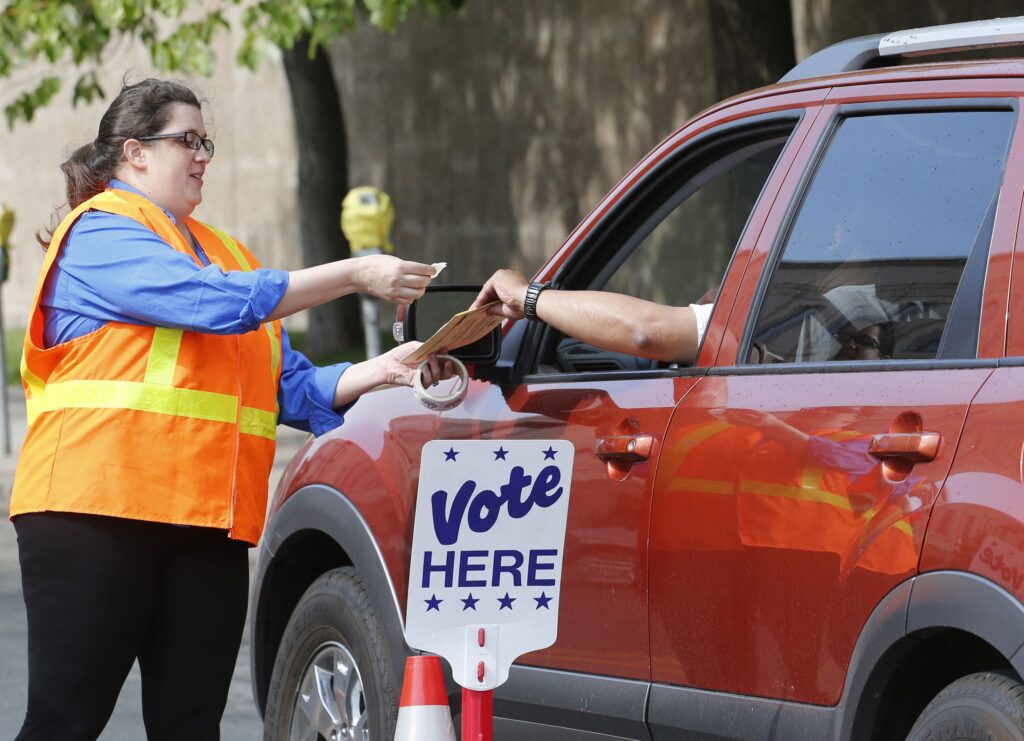
Registered voters on the eve of the 2026 primaries | Cronin & Loevy
Tom Cronin Bob Loevy
tom-cronin-bob-loevy@coloradopolitics.com
Updated 5 days ago
The Colorado Secretary of State’s Office has published the latest voter registration figures for the state and its counties as of June. Colorado ranks among the highest states for independent, or unaffiliated, voters. Only Alaska and Massachusetts have more. New Hampshire, New Jersey, Maine and Oregon also rank highly. So here...

A room for Sundance, a reality check for big-government Boulder | Jon Caldara
Jon Caldara
jon-caldara@coloradopolitics.com
Updated 7 days ago
There are few things more satisfying to watch than socialists getting mugged by reality. The Sundance Film Festival is invading my hometown of Boulder early next year. Sundance drew 85,000 attendees last year in Park City, Utah. Boulder’s hotel room...
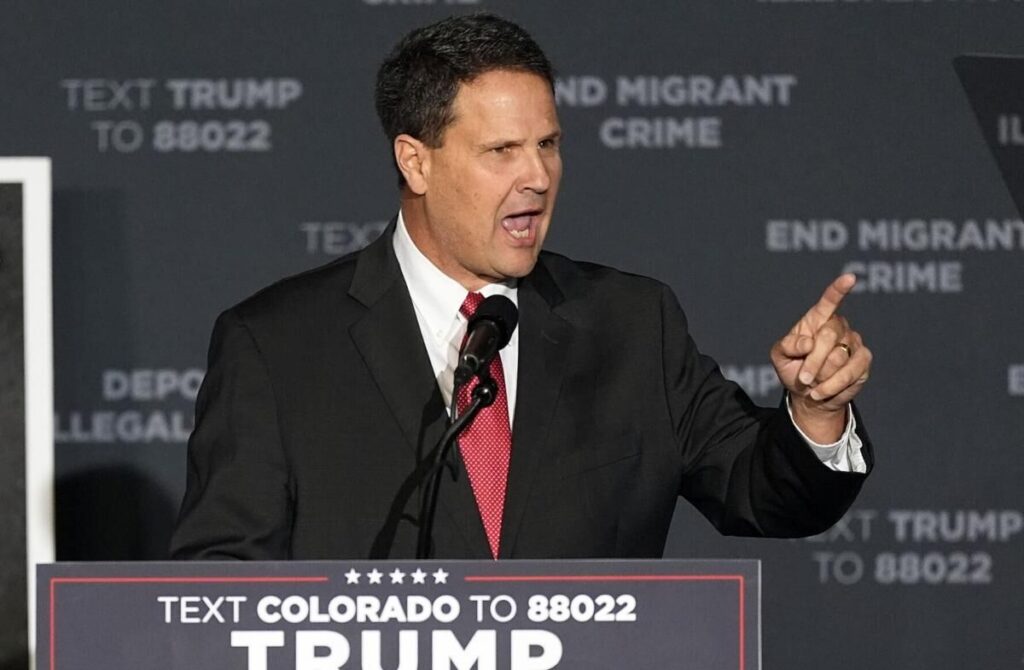
Rep. Jeff Crank thinks Democrats are too focused on Trump, not enough on Colorado Springs | Vince Bzdek
Vince Bzdek
vince.bzdek@gazette.com
Updated 4 days ago
For U.S. Rep. Jeff Crank, who’s unopposed in the Republican primary for the 5th Congressional District but the main target of both candidates in the lively Democratic primary, the big question in the midterms is not who will stand up...
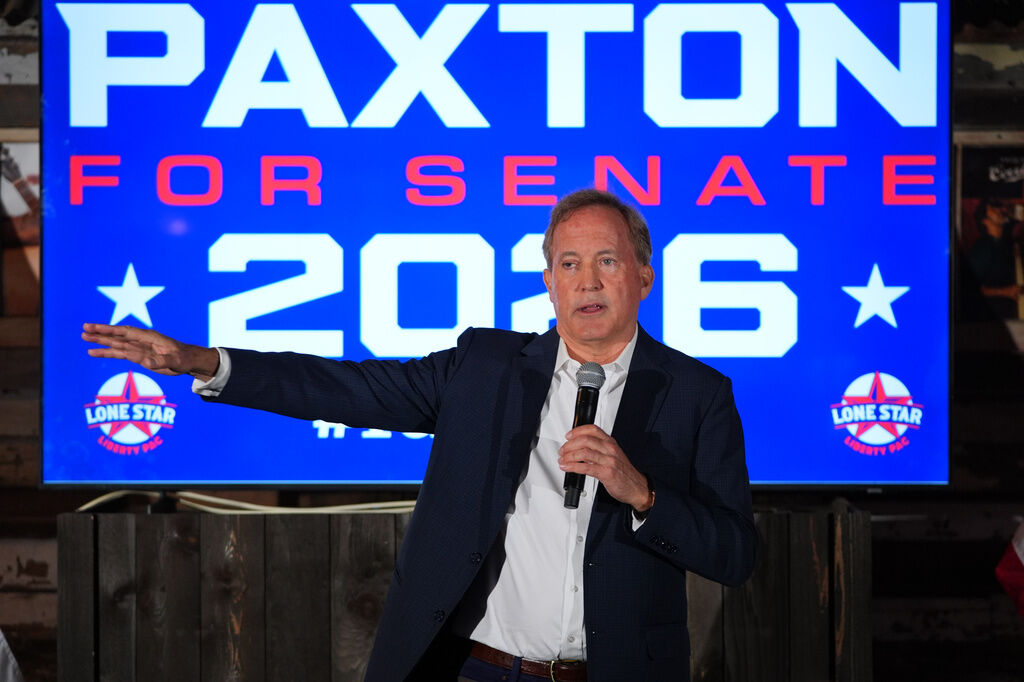
Does character matter anymore? | SONDERMANN
By Eric Sondermann
by-eric-sondermann@coloradopolitics.com
Updated 1 week ago
The last few weeks have been illuminating in the manner of a headlamp pointing the way to some deep, dark, murky netherworld. Graham Platner, a hero to the populist set on the Democratic side, became his party’s Senate nominee in...

Private equity has no place in health care | GUEST COLUMN
Colorado Politics
colorado-politics@coloradopolitics.com
Updated 7 days ago
By Miah Ntepp Of all the financial pressures placed on working people in this country, the skyrocketing costs of health care rank near the top. As families struggle under the cuts to Medicaid made by the Trump administration, they are...
PREV
PREVIOUS
NOONAN | Weld County energy development harms eagles
Paula Noonan Bald eagles are the national bird of the United States since 1782 and a protected species, but not protected enough to survive energy development in west Weld County. Over 20 bald eagles used to roost in the “Middle Nest” cottonwood trees on Boulder creek from October to April. Their “roosting network” settled in […]

Colorado Springs Gazette: Parents take back their schools
110421-cp-web-oped-csgeditorial-1 An uprising by parents in key school board races across the state Tuesday has opened the schoolhouse doors to fresh thinking, needed reforms – and new hope for many Colorado kids. Voters in those districts toppled an elected hierarchy that to varying degrees was bureaucratic; out-of-touch; passive about declining achievement; averse to reform – […]