

With judicial vacancy, Biden has opportunity to break streak in Colorado

When President Joe Biden announced 10 new court nominees this week, two of them were sitting magistrate judges and a third began his judicial career as a magistrate judge. In all, Biden has nominated more than a dozen magistrate judges in little over seven months to the federal bench.
But Colorado is not on that list. In fact, the state has never seen a magistrate judge nominated and confirmed to be a federal trial court judge.
“There’s no accounting for it,” said U.S. Magistrate Judge Kristen L. Mix of Colorado, who is also the president of the Federal Magistrate Judges Association.
The White House currently has a good chance to break that curse: of the three candidates that Colorado’s U.S. senators have recommended for an upcoming vacancy, two are magistrate judges.
In the federal court hierarchy, the Supreme Court sits at the top, with circuit courts beneath them and district courts at the bottom rung. Like their appellate counterparts, district court judges are subject to presidential nomination and Senate confirmation, with lifetime tenure on the bench.
Magistrate judges, by contrast, are hired by the district court for eight-year terms through a merit selection process. They work with the district court judges and handle many of the same duties, up to and including presiding over civil trials.
In general, being a magistrate judge is an established path to a lifetime trial court appointment. According to a 2017 analysis, magistrate judges comprised nearly 15% of district court judge appointees, and was the third-most prevalent occupation for a trial court judge prior to confirmation (behind private practice attorneys and state or local judges).
Colorado has yet to see one of its magistrate judges elevated in the same fashion, although there have been opportunities. The state’s senators recommended Mix for a prior vacancy during the final year of the Obama administration, but the White House selected another candidate. During Bill Clinton’s presidency, then-U.S. Sen. Wayne Allard blocked Magistrate Judge Patricia A. Coan’s nomination in the Senate.
Prior to that, the Senate never acted upon President Ronald Reagan’s 1988 nomination of Magistrate Judge Donald E. Abram, and an attorney in private practice ultimately filled the seat.
That stands in contrast to the federal trial court in New Jersey, where more than half of the current 15 members were magistrate judges. Among California’s district courts, half of Biden’s nominees so far have been magistrate judges, while the remainder are state judges.
John P. Collins, Jr., a visiting associate professor at The George Washington University Law School, speculated that a number of factors could influence the judicial pipeline, from the size of the attorney pool in a given state to the diversity of the sitting magistrate judges.
“The other part is the preference of the senators. Some may really value experience on the bench, either as an MJ or a state court judges. Some may not,” Collins said.
Colorado’s senior senator, Michael Bennet, did not immediately respond to a request for comment.
To date, all of Biden’s nominees from Colorado have been notable for their “firsts”: U.S. District Court Judge Regina M. Rodriguez is the first Asian-American district judge on the court. Appellate Judge Veronica S. Rossman is the only public defender on the 10th Circuit. And Charlotte N. Sweeney, whose nomination is still pending, would be the first openly gay judge.
The White House has another opportunity to buck the trend against magistrate judges and secure another “first.” Bennet and U.S. Sen. John Hickenlooper have recommended U.S. Magistrate Judges Nina Y. Wang and Gordon P. Gallagher for a district court vacancy arising in July 2022. Wang, unlike past magistrate judges, has the benefit of landing on a second shortlist, signaling to the White House strong support from the senators. (She was also a finalist for a prior vacancy this year, but the nomination ultimately went to Sweeney.)
As with the prior nominations, there is a private practice attorney – intellectual property lawyer Kenzo Kawanabe – under consideration as well.
Carl Tobias, the Williams Chair in Law at the University of Richmond who monitors judicial nominations, called it unusual for a judicial district to have Colorado’s record of zero successful magistrate judge nominations.
“That is probably the most directly relevant experience that most people can bring to the federal district bench, and many are highly experienced and have compiled long records that the Senate can review,” he said.


Trump’s 10th Circuit nominee recuses from cases against federal government without explanation
Michael Karlik
michael.karlik@coloradopolitics.com
Updated 10 hours ago
President Donald Trump’s nominee to fill a vacancy on the Denver-based federal appeals court recused himself without a clear explanation from nine cases against the executive branch while he was undergoing vetting by the White House this spring. U.S. District...
Adams County murder conviction reversed due to faulty jury instruction
Michael Karlik
michael.karlik@coloradopolitics.com
Updated 10 hours ago
Colorado’s second-highest court overturned an Adams County defendant’s murder conviction last month because the instruction provided to the jury about a trespasser’s right to use self-defense did not accurately reflect Colorado law. A person is justified in using force to...
Colorado court upholds murder conviction despite jury disobeying instructions
Michael Karlik
michael.karlik@coloradopolitics.com
Updated 1 day ago
Colorado’s second-highest court upheld an Arapahoe County defendant’s murder conviction last month, even though jurors found he was not the one who shot the victim and the evidence suggested he was not present for the shooting. A three-judge Court of...
Divided appeals court reverses conviction after judge declined to define ‘bludgeon’
Michael Karlik
michael.karlik@coloradopolitics.com
Updated 1 day ago
Colorado’s second-highest court reversed a Jefferson County defendant’s felony menacing conviction on Thursday, concluding that the trial judge’s failure to define “bludgeon” for jurors may have affected the outcome. A three-judge Court of Appeals panel divided in unusual ways in...
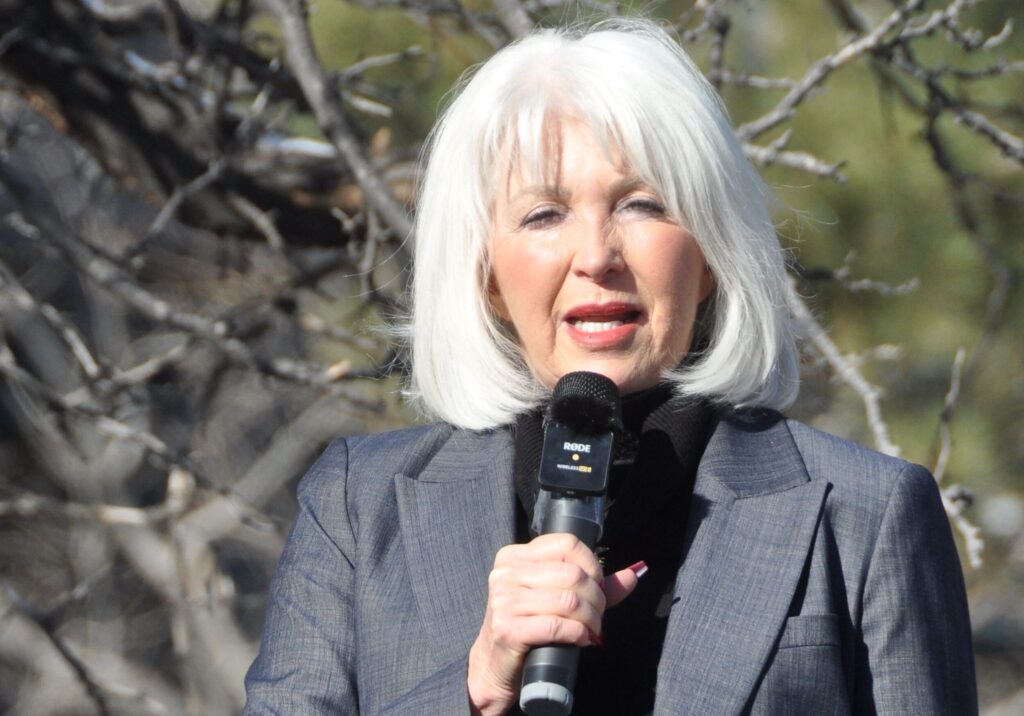
10th Circuit dismisses Tina Peters’ challenge to confinement as moot
Michael Karlik
michael.karlik@coloradopolitics.com
Updated 3 days ago
The Denver-based federal appeals court granted the state’s unopposed request on Wednesday to dismiss former Mesa County clerk Tina Peters’ challenge to her confinement as moot. Although Peters received a commutation of her prison sentence last month from Gov. Jared...
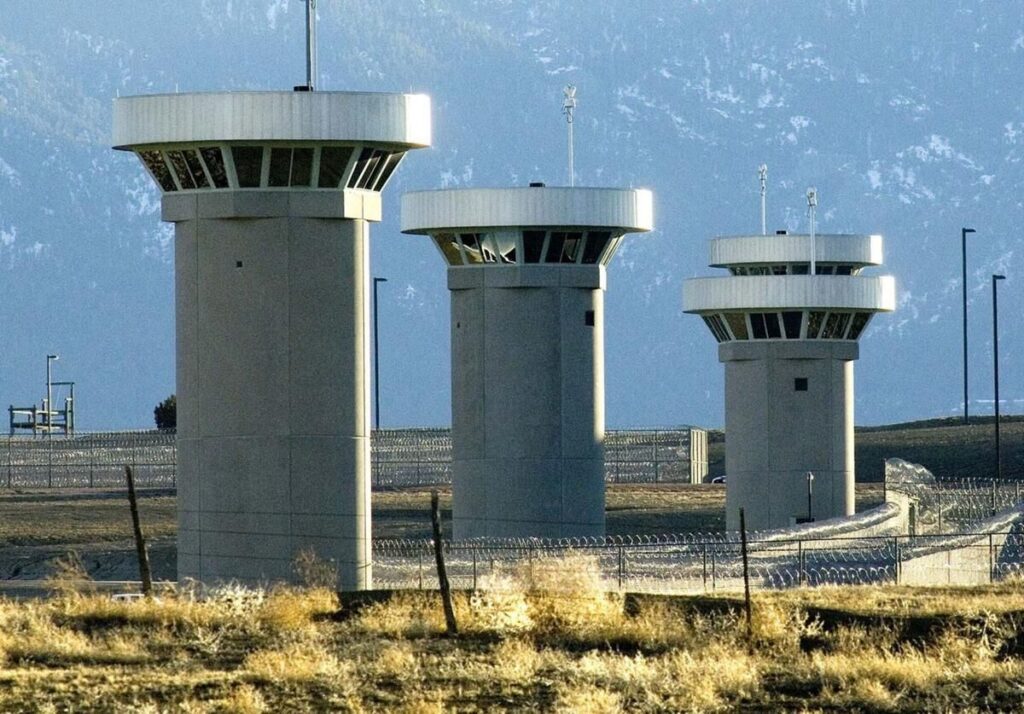
Federal judge declines to recuse from death penalty case after Supermax visit
Michael Karlik
michael.karlik@coloradopolitics.com
Updated 3 days ago
A federal judge declined to recuse herself last month from a death penalty case arising out of Colorado’s “Supermax” prison, finding that her tour of the facility earlier this year did not bias her decision-making. U.S. District Court Judge Charlotte...
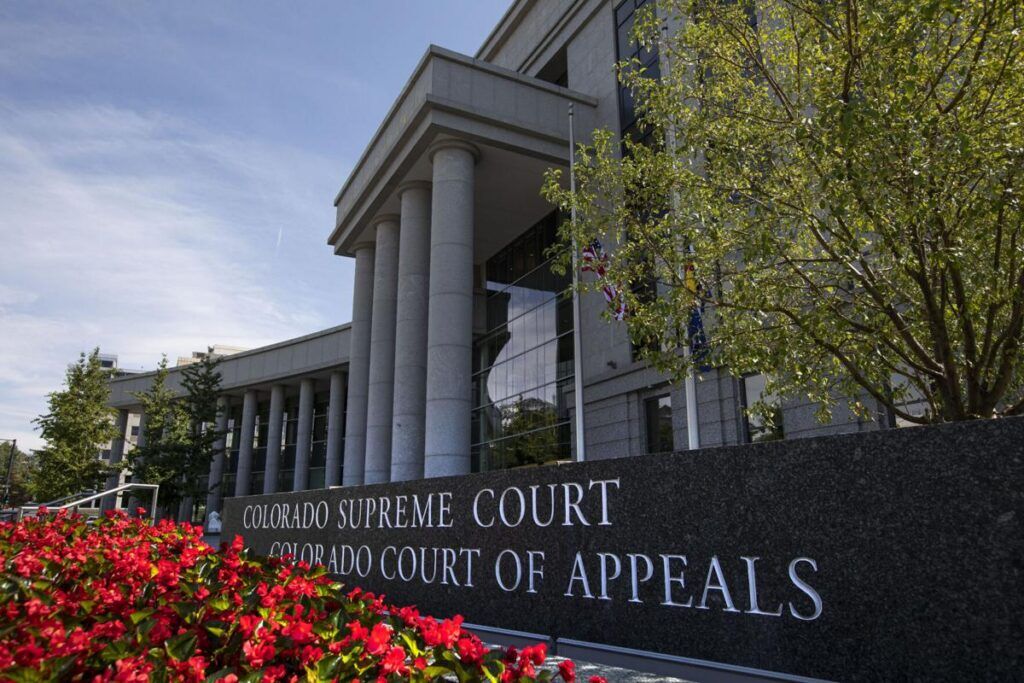
Appeals court clarifies offense of impersonating a peace officer
Michael Karlik
michael.karlik@coloradopolitics.com
Updated 1 day ago
Colorado’s second-highest court clarified this month that a person commits the offense of impersonating a peace officer if they engage in “any conduct” while pretending to be law enforcement. In a case out of El Paso County, Richard James Coulier...
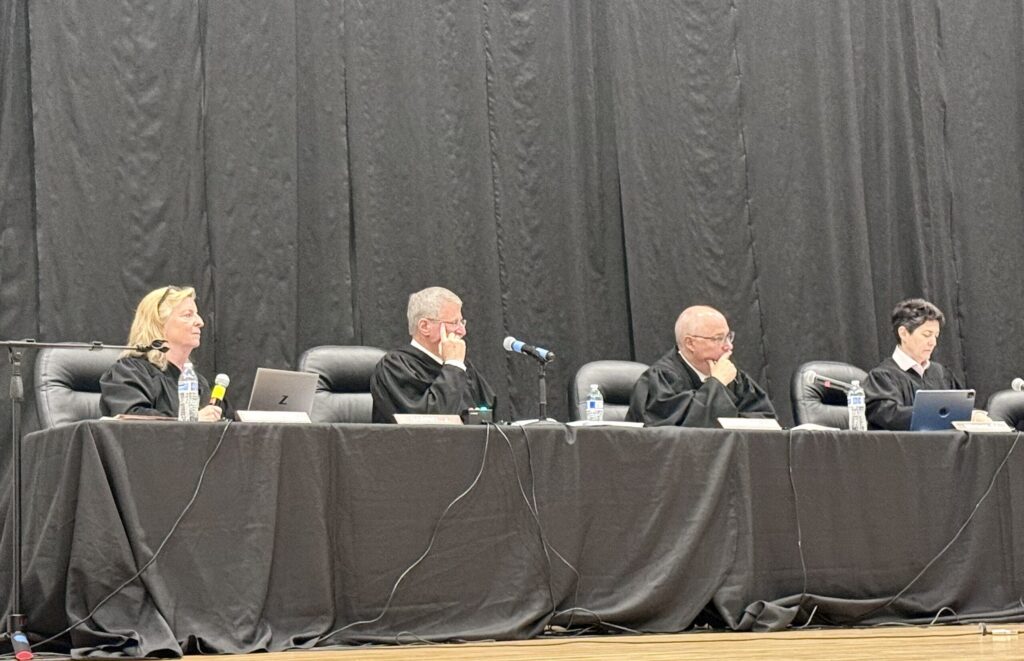
Colorado Supreme Court reverses 2 Chaffee County judges for imposing fee on habeas petitioner
Michael Karlik
michael.karlik@coloradopolitics.com
Updated 5 days ago
The Colorado Supreme Court rejected two separate appeals earlier this month from an incarcerated defendant seeking immediate release from prison, but concluded that two Chaffee County judges incorrectly required him to prepay filing fees for his cases. David J. Gottorff...
Weld County judge wrongly denied bail to murder defendant in gap between law change
Michael Karlik
michael.karlik@coloradopolitics.com
Updated 5 days ago
Colorado’s second-highest court ruled this month that a Weld County judge was wrong to deny bail to a murder defendant in the window between the state Supreme Court’s recognition of the right to bail and the voters’ subsequent overruling of...
Defendants acquitted by insanity are eligible for records-sealing, appeals court says
Michael Karlik
michael.karlik@coloradopolitics.com
Updated 4 days ago
Colorado’s second-highest court clarified last month that defendants who are found not guilty by reason of insanity are eligible to have their criminal records sealed from public view. Judges must seal criminal records if, among other things, a defendant is...
PREV
PREVIOUS

NONPROFIT REGISTER | Celebrate National Adoption Month by joining a virtual conversation next week
RAISE THE FUTURE Denver News: November is National Adoption Month and Colorado families wishing to learn more about the need for adoptive parents and services provided by Raise the Future are invited to join in a virtual conversation with chief executive officer Ann Ayers on Nov. 10. The Zoom session begins at 2 p.m. Mountain […]
Federal government clears way for most Colorado kids to get vaccinated
In the wake of Tuesday’s CDC decision allowing all Americans over the age of 4 to be vaccinated against COVID-19, vaccines will begin flowing in Colorado beginning Friday, and the state expects to have ample supply to vaccinate all who want doses, even in the early phases. The decision by federal regulators drew praise from […]