

Judge tosses lawsuit of white business owner challenging COVID-19 aid to minority businesses

A federal judge has dismissed the lawsuit of a white business owner who challenged Colorado’s ability to distribute COVID-19 relief grants to minority-owned businesses. In doing so, U.S. District Court Judge William J. Martínez also dissolved his restraining order against the state.
On Oct. 12, Martínez temporarily blocked the Office of Economic Development and International Trade (OEDIT) from using a business’s minority owned status as a criterion for distributing aid. Under the Disproportionately Impacted Business Grant program, qualifying small businesses who experienced losses during the pandemic could apply for grants of up to $10,000.
Stephen E. Collins, the white owner of event-planning company Resort Meeting Source, filed a lawsuit soon after applying, alleging the race-based factor was unconstitutional and disadvantaged him. Martínez, in issuing the temporary restraining order, signaled that Collins’ claim had merit. But the state quickly informed the judge that not only was Collins approved for his $10,000 grant, but in fact all qualified applicants were approved because the program was undersubscribed.
Martínez then reversed course on Thursday, dismissing the lawsuit because Collins and his business had not suffered an injury and therefore lacked standing to sue.
“Plaintiffs never competed with other applicants, nor were the minority-owned business preferences applied at all, much less applied to Plaintiffs’ detriment,” the judge wrote in his order.
This is the second time a federal court has tossed a challenge to the program the General Assembly first enacted in 2020 to direct $4 million in aid to minority-owned businesses. Data from the time showed businesses in majority-white neighborhoods were quicker to receive federal COVID-19 aid and that Black and Hispanic proprietors shuttered their businesses at higher rates in the first months of the pandemic.
After a white Colorado Springs barbershop owner sued over the original program, lawmakers revised it, broadening the eligibility criteria but still retaining minority ownership status as a factor. In April, U.S. District Court Chief Judge Philip A. Brimmer dismissed the lawsuit because the state had not finished setting up the program.
Resort Meeting Source was one of 11 companies that met one or more of the criteria for the Disproportionately Impacted Business Grant, and each of them received $10,000. None of them was minority owned. The other recipients according to OEDIT were Fisher Medicine, Djimi Djama, Said A Jama, Anji’s Probiotic Kitchen, Taqueria Esperanza, New Skyline Corporation, Abdi Liban, Colorado Coach Transportation, Web Mountain Technologies and Jeons Inc.
Colorado Politics could not immediately verify the existence of all applicants.
Martínez’s original temporary restraining order was in effect through Oct. 26, but he extended it through Oct. 29 so that he could consider the case in light of the fact that Resort Meeting Source had received what it asked for.
Collins’ attorneys argued the case should still proceed as a class action lawsuit because OEDIT planned to award additional grants in the future and could still disadvantage some business owners by applying the race-based criterion. But Martínez replied that because Collins lacked standing on his own, he could not possibly represent a class of plaintiffs.
“There is no class of non-minority-owned businesses that competed on unequal footing against minority-owned businesses for the relief payments,” the judge wrote, because every eligible business that sought an award will receive one.
In a declaration to the court on Oct. 25, Collins acknowledged OEDIT had told him on Oct. 19 he would receive the $10,000 grant and Collins submitted his bank account information two days later.
The case is Collins et al. v. Meyers.



Trump’s 10th Circuit nominee recuses from cases against federal government without explanation
Michael Karlik
michael.karlik@coloradopolitics.com
Updated 9 hours ago
President Donald Trump’s nominee to fill a vacancy on the Denver-based federal appeals court recused himself without a clear explanation from nine cases against the executive branch while he was undergoing vetting by the White House this spring. U.S. District...
Adams County murder conviction reversed due to faulty jury instruction
Michael Karlik
michael.karlik@coloradopolitics.com
Updated 9 hours ago
Colorado’s second-highest court overturned an Adams County defendant’s murder conviction last month because the instruction provided to the jury about a trespasser’s right to use self-defense did not accurately reflect Colorado law. A person is justified in using force to...
Colorado court upholds murder conviction despite jury disobeying instructions
Michael Karlik
michael.karlik@coloradopolitics.com
Updated 1 day ago
Colorado’s second-highest court upheld an Arapahoe County defendant’s murder conviction last month, even though jurors found he was not the one who shot the victim and the evidence suggested he was not present for the shooting. A three-judge Court of...
Divided appeals court reverses conviction after judge declined to define ‘bludgeon’
Michael Karlik
michael.karlik@coloradopolitics.com
Updated 1 day ago
Colorado’s second-highest court reversed a Jefferson County defendant’s felony menacing conviction on Thursday, concluding that the trial judge’s failure to define “bludgeon” for jurors may have affected the outcome. A three-judge Court of Appeals panel divided in unusual ways in...
10th Circuit dismisses Tina Peters’ challenge to confinement as moot
Michael Karlik
michael.karlik@coloradopolitics.com
Updated 3 days ago
The Denver-based federal appeals court granted the state’s unopposed request on Wednesday to dismiss former Mesa County clerk Tina Peters’ challenge to her confinement as moot. Although Peters received a commutation of her prison sentence last month from Gov. Jared...
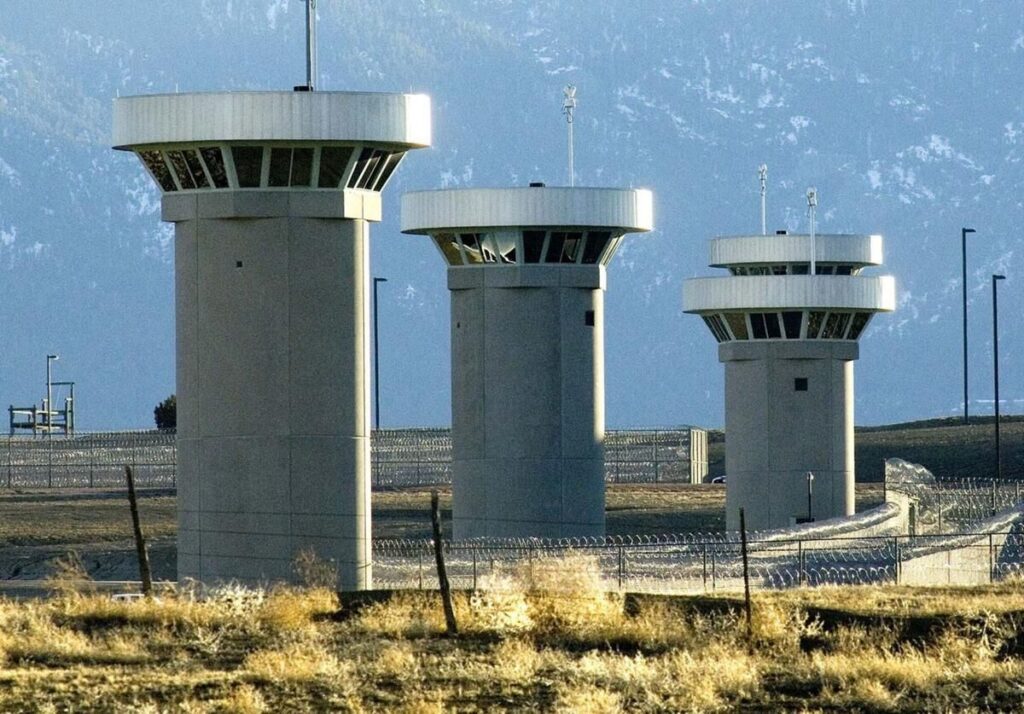
Federal judge declines to recuse from death penalty case after Supermax visit
Michael Karlik
michael.karlik@coloradopolitics.com
Updated 3 days ago
A federal judge declined to recuse herself last month from a death penalty case arising out of Colorado’s “Supermax” prison, finding that her tour of the facility earlier this year did not bias her decision-making. U.S. District Court Judge Charlotte...
Appeals court clarifies offense of impersonating a peace officer
Michael Karlik
michael.karlik@coloradopolitics.com
Updated 1 day ago
Colorado’s second-highest court clarified this month that a person commits the offense of impersonating a peace officer if they engage in “any conduct” while pretending to be law enforcement. In a case out of El Paso County, Richard James Coulier...
Colorado Supreme Court reverses 2 Chaffee County judges for imposing fee on habeas petitioner
Michael Karlik
michael.karlik@coloradopolitics.com
Updated 5 days ago
The Colorado Supreme Court rejected two separate appeals earlier this month from an incarcerated defendant seeking immediate release from prison, but concluded that two Chaffee County judges incorrectly required him to prepay filing fees for his cases. David J. Gottorff...
Weld County judge wrongly denied bail to murder defendant in gap between law change
Michael Karlik
michael.karlik@coloradopolitics.com
Updated 5 days ago
Colorado’s second-highest court ruled this month that a Weld County judge was wrong to deny bail to a murder defendant in the window between the state Supreme Court’s recognition of the right to bail and the voters’ subsequent overruling of...
Defendants acquitted by insanity are eligible for records-sealing, appeals court says
Michael Karlik
michael.karlik@coloradopolitics.com
Updated 4 days ago
Colorado’s second-highest court clarified last month that defendants who are found not guilty by reason of insanity are eligible to have their criminal records sealed from public view. Judges must seal criminal records if, among other things, a defendant is...
PREV
PREVIOUS

TRAIL MIX | Boebert primary challenger Marina Zimmerman wants to reboot GOP
If Republican congressional candidate Marina Zimmerman topples Lauren Boebert in next year’s GOP primary, she’ll have a sleepwalking dog to thank, in part. Zimmerman, an industrial crane operator and first-time candidate who lives in the far southwest corner of Colorado, knows she’s facing long odds challenging the incumbent, whose brash, confrontational approach to politics has […]

Appeals court upholds protections for Indian families during paternity decisions
The Colorado Court of Appeals has ruled for the first time that the four-decade-old federal law protecting tribal rights in child custody proceedings applies to court decisions establishing who is a child’s legal father. A three-judge panel on Thursday determined that the Indian Child Welfare Act of 1978 kicks in whenever an Indigenous child is […]