

Q&A with Elizabeth Wang | Taking a First Amendment case to the Supreme Court

Colorado Politics: First of all, who is Levi Frasier and how did he come to file a lawsuit against Denver?
Elizabeth Wang: Levi Frasier is a 37-year-old construction worker who was driving to work one morning in August 2014, when he saw Denver police officers forcefully pulling a man out of a car in a parking lot. Levi parked his truck, got out and began video recording the officers’ actions with his tablet.
The Denver police officers were arresting the man. One of the officers, Charles Jones, began punching the man numerous times in the head while he was restrained on the ground by three other officers in an attempt to get him to release a sock purportedly containing narcotics that was in his mouth. Jones punched the man with such force that his head struck the pavement numerous times, requiring him to be taken away in an ambulance.
At one point during the incident, the man’s visibly pregnant girlfriend stepped towards him in an attempt to help him. Jones tripped her, causing her to fall to the ground, screaming.
During these events, Levi stood at a distance from the officers and openly recorded their actions using his tablet. He thought that the actions of the officers — specifically, their use of excessive force — was newsworthy and should be recorded. The officers knew that Levi was recording them. At one point, one of the officers yelled, “Camera!” while Jones was punching the man in the head.
Levi stopped recording, walked over to his truck and put his tablet away.
The officers then asked Levi for the video he had recorded. Levi did not want to give them the video, because he was afraid that they would erase it. An officer then threatened him with arrest. Eventually, after being surrounded by the officers demanding his video and believing that he would be arrested if he did not produce his tablet, Levi retrieved his tablet from his truck.
Officer Christopher Evans took Levi’s tablet from him, searching for the video. After he could not find it, the officers let Levi go. Fortunately, the video was preserved.
Levi knew that the misconduct he had witnessed was a matter of public concern. Eventually, he shared his video with FOX31 News Denver, which aired an investigative report on the incident.
As a result of this incident and other instances of law enforcement — including Denver police — intimidating witnesses who record or attempt to record them, the Colorado legislature passed a law that strengthens the rights of citizens to obtain compensation under state law for trying to stop or retaliate against lawful recording of their activities. Unfortunately, the enactment (and effective date) of that law came after the retaliation inflicted on Levi. But Levi knew that his activity (recording police officers publicly performing their official duties) is or should be protected by the First Amendment, he decided to bring a lawsuit.
CP: When did you begin representing him, and what drew you to his case?
Wang: I began representing Levi in 2015. I was drawn to his case because of the facts: this was a very clear example of a citizen recording officers performing their duties in a way that should be protected by the Constitution. I saw this as an excellent set of facts for advancing the legal principle that individuals have a First Amendment right to record police officers when they are in public performing their duties.
Sometimes, the facts in cases of people retaliated against for recording the police are less clean: for instance, they might involve a traffic stop, which police officers view as a dangerous activity, or they might involve someone who is himself being arrested, or someone who is possibly interfering with the officers. This case did not have any of those issues.
CP: This case is in large part about whether we as Americans have a First Amendment right to record police officers in public. Is it fair to say that the answer is yes, we do, but if an officer in Colorado retaliates against you, there’s probably nothing that can be done about it at this point?
Wang: Fortunately for the citizens of Colorado, we now have two tools at our disposal. First, there’s Senate Bill 217, which was passed by the Colorado legislature in June 2020. That law allows a person who has a constitutional right secured by the bill of rights of the Colorado constitution to bring a civil action for the violation, and officers are not entitled to qualified immunity. Because the bill of rights of the Colorado constitution protects similar rights to the U.S. Constitution, a person in Colorado who records a police officer in public and is retaliated against can bring a lawsuit against that officer.
Second, there’s the law providing for civil liability for officers who destroy a recording. The damages allowed, however, are relatively small: $500 for the value of a destroyed recording or replacement cost of a device that was destroyed by an officer.
I hope, however, that the Supreme Court grants our petition, because the two questions we present are vitally important: one, whether training or law enforcement policies can be relevant to whether a police officer is entitled to qualified immunity, and, two, whether individuals have a clearly established right to film police officers performing their duties in public.
CP: The 10th Circuit, which is the federal appeals court that reviewed Frasier’s case, issued a decision in March that effectively refused to say whether it’s clearly established that we have a First Amendment right to record police. Are we in the only part of the country where an appeals court hasn’t decided that yet?
Wang: The Third and Fifth circuits have held that this right was not clearly established as of the date of the incidents presented in those cases. By contrast, the First Circuit held in 2011 that the First Amendment right to videotape police carrying out their duties in public is clearly established.
What is unique — and uniquely bad — about the 10th Circuit’s opinion is that the court held not only that the right was not clearly established for qualified immunity purposes, but it refused to address whether the First Amendment right exists at all. Even the other Circuits that held the right was not clearly established (Third and Fifth) went on to hold that the right is constitutionally protected.
CP: This also implicates qualified immunity, which readers may recognize as the judicial shield from liability that government employees have under certain circumstances. The 10th Circuit said that even though Denver police officers were told about the First Amendment right to record, it didn’t matter because only court decisions can say what rights exist. Doesn’t that make it seem like the court is more interested in protecting its jurisdiction than protecting people’s liberties?
Wang: This case is a great example of qualified immunity jurisprudence run amok. It makes no sense for the officers in this case to be entitled to qualified immunity when they were not only trained on the existence of the very First Amendment right at issue, but they admitted that it exists and that Levi’s recording activity that day was constitutionally protected. It is also a bit ironic that at the same time that the court said that only court decisions can say what rights exist, it flatly refused to say that the First Amendment right to record police in public exists.
CP: So now this case is at the Supreme Court, where you are hoping the justices will agree to hear it. Can you tell me who else you are working with, now that you’re at this level?
Prof. Jeffrey Fisher, who is co-director of the Supreme Court Litigation Clinic at Stanford Law School, is counsel of record in the Supreme Court.
CP: If the Supreme Court does agree to hear the case, it will put Levi Frasier in the national spotlight. Is he prepared for that? Are you?
Wang: We hope so!
CP: Finally, is there another case that you have worked on in the past that you are particularly proud of?
Another First Amendment case I worked on earlier in my career that I am proud of is Bell v. Keating, which was a case challenging a disorderly conduct ordinance in Chicago. Essentially, the ordinance criminalized failing to disperse if there were three or more people committing acts of disorderly conduct in the immediate vicinity, wherein the acts are likely to cause substantial harm or serious inconvenience, annoyance or alarm. I argued, on behalf of a protestor who was arrested under the law, that the ordinance was unconstitutional under the First Amendment and vague under the due process clause of the Fourteenth Amendment. The Seventh Circuit agreed, and the city of Chicago amended its ordinance.
One other (very different) case that I am particularly proud of is Cathy Woods v. City of Reno, et al. Ms. Woods was a woman who was incarcerated in Nevada for 35 years for a murder of a college girl that she did not commit. Ms. Woods was schizophrenic. Police officers and a prosecutor coerced and fabricated a false confession from her while she was in a psychiatric hospital in 1979. Decades after her wrongful conviction, DNA testing showed that the real perpetrator was a serial killer. I represented Ms. Woods in her civil rights lawsuit and we obtained a multi-million dollar settlement from the various defendants in 2019 and 2020.
Sadly, Ms. Woods died this year — the decades in prison suffering from mental illness were not kind to her — but she was able to benefit from the settlement for a while before her death.
FAST FACTS:
- Elizabeth Wang is a civil rights attorney and partner at the firm of Loevy & Loevy in Boulder.
- She is currently representing Levi Frasier in an appeal to the U.S. Supreme Court, arguing that the justices should decide the First Amendment guarantees the right to video record police officers in public.
- Wang graduated from the University of Chicago Law School, where she worked with the Civil Rights and Police Accountability Project, and previously researched alternatives to incarceration for those who committed drug offenses.
- Her legal practice focuses on people with wrongful convictions, those who had their medical needs ignored in jails or prisons, and clients who were targets of excessive force or had their First Amendment rights violated.
Colorado Politics Must-Reads:

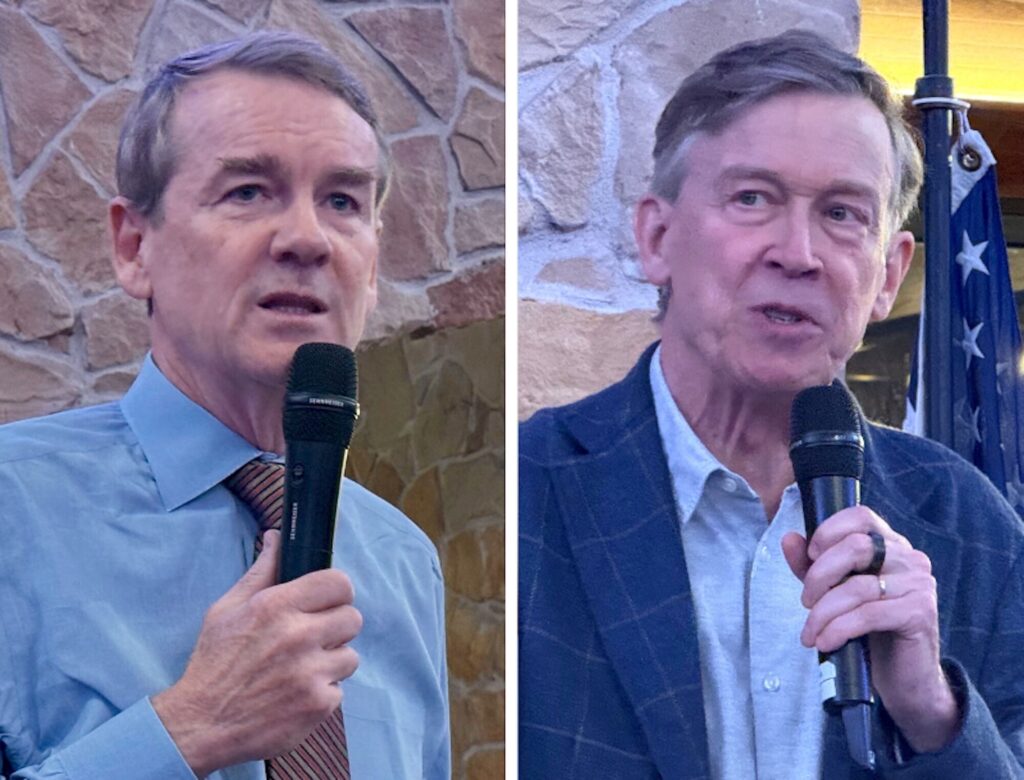
Bennet, Hickenlooper to vote against Trump’s 10th Circuit nominee from Colorado
Michael Karlik
michael.karlik@coloradopolitics.com
Updated 1 day ago
Colorado’s two Democratic senators will not vote to confirm President Donald Trump’s nominee to a vacancy on the Denver-based federal appeals court. Trump has selected U.S. District Court Chief Judge Daniel D. Domenico, who he appointed as a federal trial...
U.S. government declines to oppose multiple challenges to immigration detention in Colorado
Michael Karlik
michael.karlik@coloradopolitics.com
Updated 2 days ago
Multiple federal judges in Colorado granted petitions from people challenging the lawfulness of their immigration detention this week after the government took the unusual step of declining to submit arguments in opposition. Colorado’s federal trial court is facing a flood of...
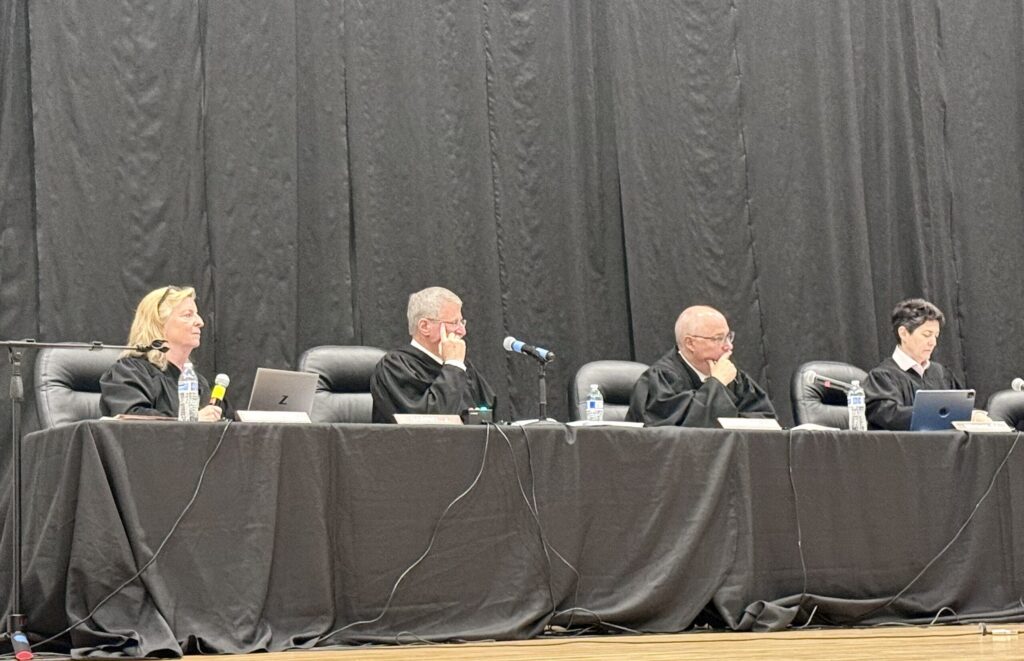
Colorado justices discuss solution to confusion from prior criminal ruling
Michael Karlik
michael.karlik@coloradopolitics.com
Updated 2 days ago
The Colorado Supreme Court pondered the fallout on Tuesday from its nearly six-year-old decision interpreting the state’s impaired driving laws, with the justices now addressing how defendants affected by the legal change must seek postconviction relief. In contrast to other...
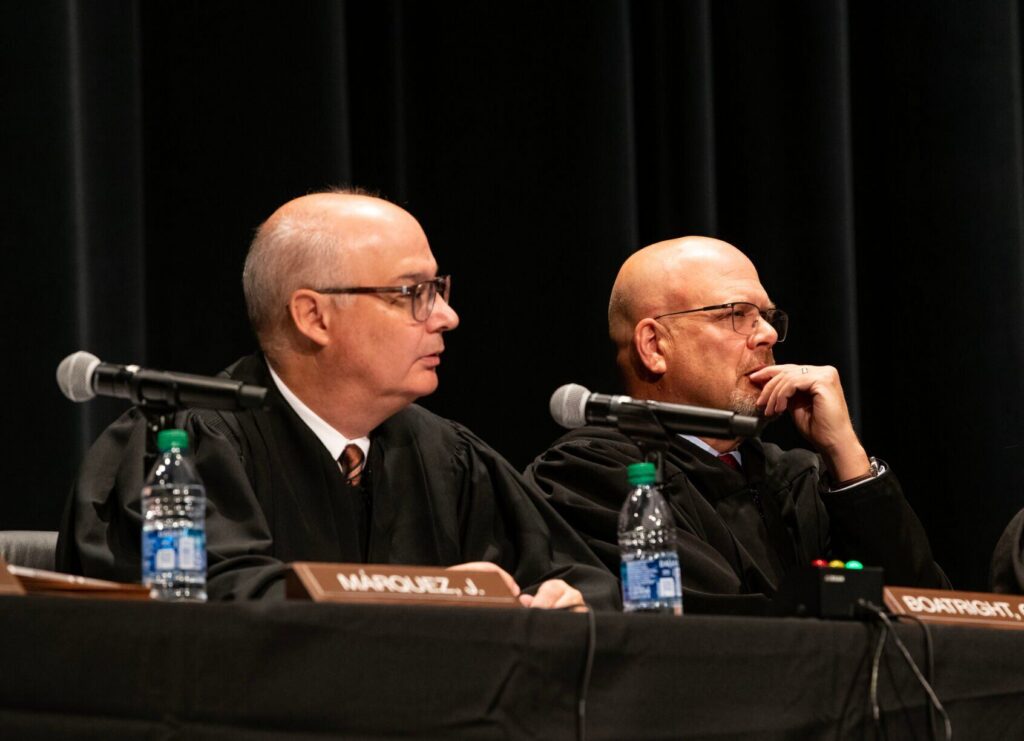
Colorado justices suggest father entitled to appeal of custody decision
Michael Karlik
michael.karlik@coloradopolitics.com
Updated 3 days ago
Members of the Colorado Supreme Court signaled strongly on Tuesday that a father deserved some avenue for challenging a temporary child custody order that no lower court believed it could review due to the unusual circumstances of the case. Because...

Court snuffs out challenge to Denver’s flavored tobacco ban
Deborah Grigsby
deborah.smith@denvergazette.com
Updated 2 days ago
The smoke finally cleared in Denver’s battle over a citywide ban on flavored tobacco products when a Denver court dismissed a challenge from local vape shop owners seeking to declare the ordinance unconstitutional and block its enforcement. On Wednesday, Denver...
Colorado justices agree fraud claims belong in corporate dispute
Michael Karlik
michael.karlik@coloradopolitics.com
Updated 3 days ago
The Colorado Supreme Court decided on Tuesday that a corporate plaintiff validly pursued fraud claims over conduct that was not covered by a contract or by a set of interrelated business agreements leading up to the contract. Previously, the Court...
Colorado Supreme Court says intimate messages irrelevant to assault case
Michael Karlik
michael.karlik@coloradopolitics.com
Updated 3 hours ago
The Colorado Supreme Court decided on Tuesday that a Douglas County judge acted reasonably by blocking evidence of a defendant’s BDSM-related conversations with the victim in his trial for assault and false imprisonment. While the Court of Appeals believed that...
Trump’s 10th Circuit nominee declines to name 2020 election winner, defends immigration decisions
Michael Karlik
michael.karlik@coloradopolitics.com
Updated 3 days ago
President Donald Trump’s nominee to the Denver-based federal appeals court declined to say who won the 2020 presidential election during his appearance before the U.S. Senate Judiciary Committee on Wednesday, and defended his recent rulings in immigration detention cases. U.S....
Colorado law allowing lawsuits against ‘conversion therapy’ providers takes effect July 1
Marissa Ventrelli
marissa.ventrelli@coloradopolitics.com
Updated 2 days ago
With a new law taking effect July 1, Colorado is creating a legal pathway for people to sue licensed providers of “conversion therapy,” even as debate over the practice’s constitutionality continues in the wake of a recent U.S. Supreme Court...
Colorado justices expand ability for civil defendants to avoid participating, win after trial
Michael Karlik
michael.karlik@coloradopolitics.com
Updated 2 hours ago
The Colorado Supreme Court decided on Tuesday that a civil defendant, whose non-participation in the case meant that he legally admitted to the sexual assault allegations against him, could nonetheless prevail after he showed up to testify at trial. A...
PREV
PREVIOUS

SPECIAL EDITION | Local voters to settle spending, policy questions
A Colorado Politics analysis turned up at least 170 county and local ballot questions facing voters in the Nov. 2 election, including affordable housing, short-term rentals, marijuana and even gender pronouns in a city charter. Here’s what we assessed: DENVER Voters in the capital city face 13 ballot measures: six from citizens and seven from the […]
Interim replacement named for Colorado judge after criminal charge
Colorado’s judicial branch has named an interim head of the 5th Judicial District following a criminal charge filed against the jurisdiction’s top judicial officer Judge Mark Thompson. A charge of felony menacing was filed against Thompson, 54, on Saturday in Summit County, court records show. But the case is suppressed, making its documents inaccessible by […]