

COURT CRAWL | State Supreme Court back with precautions, wrong judge gets the blame

Welcome to Court Crawl, Colorado Politics’ roundup of news from the third branch of government. The state Supreme Court heard its first cases in person since the pandemic began (albeit with precautions in place), and one Denver judge was blamed for handling a trial when in reality he wasn’t the guy.
Justices hear major issues on first days back
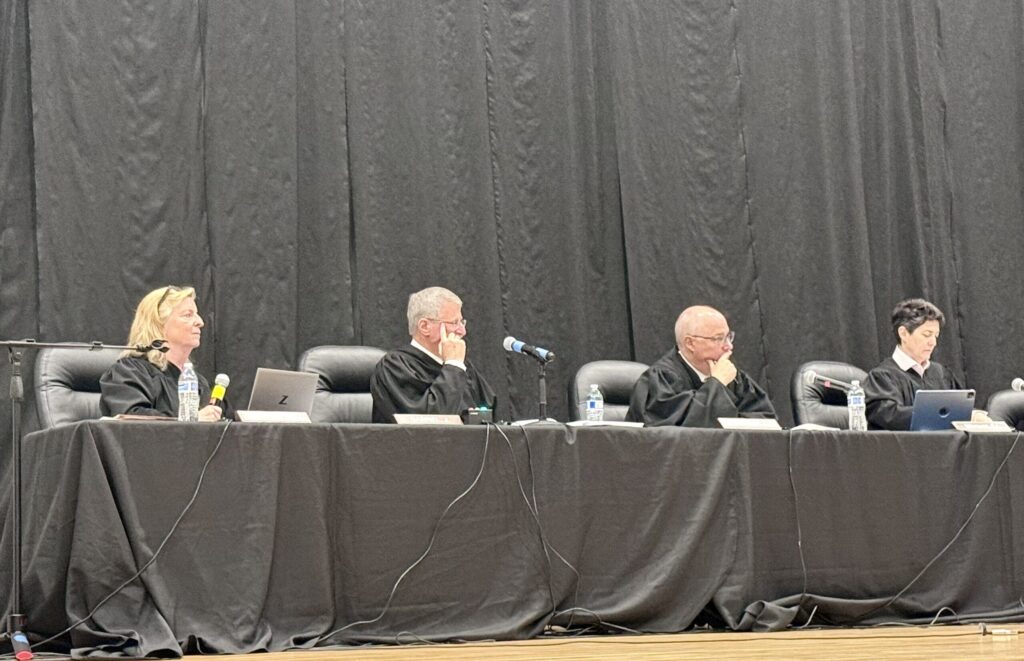
• The Colorado Supreme Court is back in its groove of hearing two days of oral arguments per month. Normally the legal issues take centerstage, but because these were the first in-person oral arguments since the pandemic began, the format was noteworthy as well. Everyone was masked in the Supreme Court chamber, plus the advocates had tiny covers to slip over the microphone when they took to the lectern. Here is what it looked like:
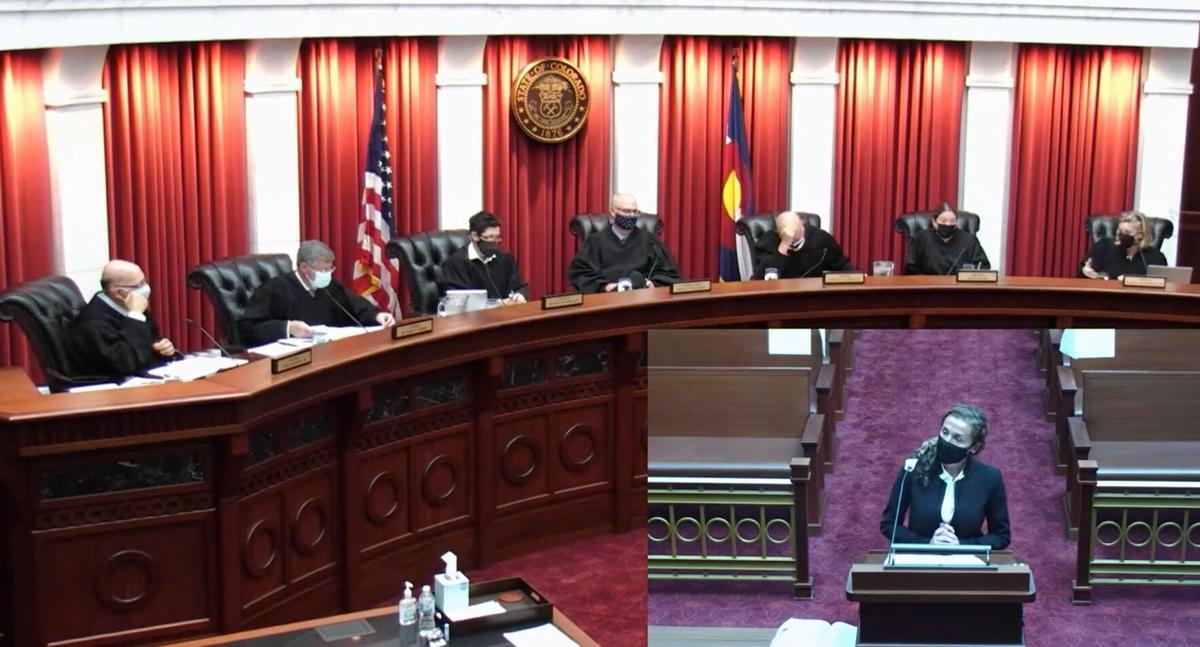
Members of the Colorado Supreme Court participate in oral arguments on Sept. 15, 2021, when COVID-19 protocols still in place.

• Back to the cases: The justices considered the fallout from their ruling last year in Linnebur v. People, which placed a higher burden of proof on felony DUI convictions. The decision had the effect of lowering dozens of convictions to misdemeanors and sending the cases back to the lower courts. But for prosecutors who wanted to score the felony conviction, the Supreme Court didn’t say whether re-prosecuting someone violates double jeopardy. Now, they will get an answer to that question.
• A man in Mesa County was charged with resisting arrest after he was put in handcuffs but before he got into the patrol car. Was he “under arrest” in that window? And did the circumstances of his arrest merit a finding that he put officers at risk of injury?
• Also, the justices heard an appeal involving a “Batson challenge,” so named for the U.S. Supreme Court decision in Batson v. Kentucky that forbade race-based exclusions of potential jurors. In the case of Ray Ojeda, the Denver prosecutor excused a Hispanic man from the jury, but in doing so referenced race multiple times in her explanation. The attorney general’s office argued that her explanation was simply “clumsy,” but not all of the justices saw it that way.
• “You keep calling it clumsy. But wasn’t it just unusually candid?” —Justice William W. Hood III
Paging Judge Robbins
• Sticking with the Ojeda case for a minute, both parties in the oral arguments repeatedly referred by name to the judge who oversaw the trial and who made the decision to exclude the Hispanic juror:
“Judge Robbins did that. Judge Robbins considered the record,” said Senior Assistant Attorney General Kevin E. McReynolds.
“I’m with you on Judge Robbins. I think he was one of the best district court judges that we’ve had. I’ve had other cases with him. This is not really like him, I’d say,” said Deputy State Public Defender Elizabeth Griffin.
• It turns out, there was a reason this was not like Judge Robbins: this wasn’t Judge Robbins’s case. Yes, District Court Judge William D. Robbins, now retired, did not actually handle Ojeda’s trial. And yet, the parties referred to him a whopping 75 times in their briefs to the Supreme Court. (The number of mentions for the actual judge in the trial, Kenneth M. Laff? Zero.)
• The Court Crawl is sympathetic to unintentional mistakes, although it is incredulous that this appeal reached the highest court in the state without anyone noticing the error. Only after Judge Robbins was named repeatedly in open court — and also after Colorado Politics sent inquiries to all parties involved — did the attorney general’s office tell the Supreme Court, in essence, “our bad”:

A notice to the Colorado Supreme Court in the case of People v. Ojeda.

Other Supreme Court news
• The Supreme Court also issued decisions last week in several key cases. First, the justices unanimously decided Colorado Springs police violated the Fourth Amendment by monitoring, without a warrant, a suspected drug dealer’s house continuously for three months using a pole-mounted camera. The ruling does run contrary to other federal and state court decisions around the country, indicating a potential issue for the U.S. Supreme Court to resolve.
• The Court also overturned a man’s racketeering conviction, and said prosecutors need to prove some degree of organizational structure under Colorado’s organized crime law.
• An Aspen lawyer filed 26 frivolous lawsuits over a decade to harass his adversaries, prompting the Supreme Court to take the extraordinary step of blocking him from filing cases on his own.
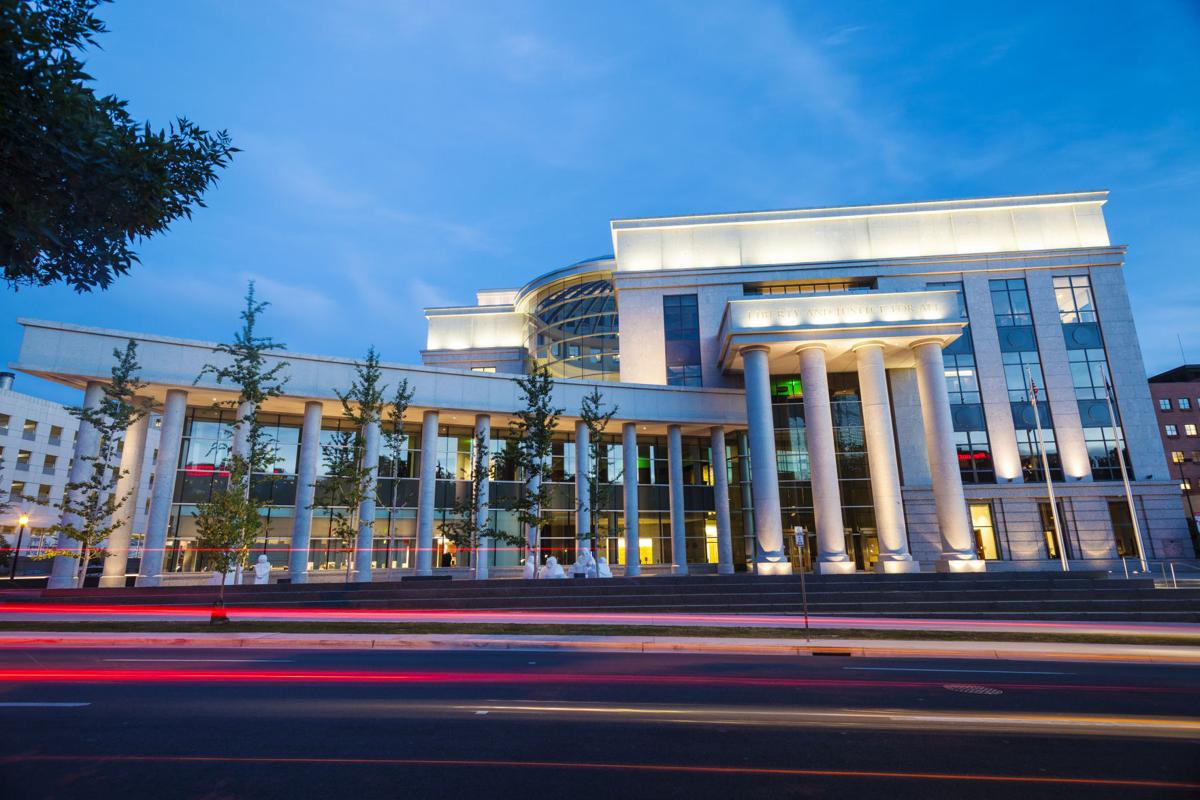
The Ralph L. Carr Colorado Judicial Center in downtown Denver, home of the Colorado Supreme Court.
traveler1116 / iStock

Confirmation watch
• The White House’s judicial nominee for a Colorado-based seat on the U.S. Court of Appeals for the 10th Circuit, public defender Veronica S. Rossman, will receive a final confirmation vote in the Senate today around 3:30 Mountain time.
Upcoming cases of note
• The state Supreme Court has agreed to hear three cases: 1.) Can police perform a forced blood draw on a driver who is only suspected of felony DUI? 2.) Was a La Plata County woman correctly convicted of intending to harm police officers by spitting on them? 3.) Did the Court of Appeals correctly conclude that Arapahoe County waited a decade too long to sue a couple for alleged Medicaid fraud?
Vacancies and appointments
• The governor has appointed estate planning and real estate attorney Joseph D. Findley to the Eighth Judicial District as a district court judge for Larimer and Jackson counties. He succeeds Julie Kunce Field on Oct. 8.
• First Assistant Attorney General Stephanie L. Scoville will also replace retiring Denver District Court Judge Lisa Teesch-Maguire effective Oct. 15.
• Ashley R. Andrews, state public defender, received an appointment to Pitkin County Court to succeed Erin Fernandez-Ely.
• Part-time Saguache County Court Judge Anna Ulrich will resign on Nov. 1, and applicants to the seat must have a high school (or equivalent) education. Applications are due by Oct 1.
Miscellaneous decisions
• A Douglas County judge sentenced a man to life in prison plus 1,200 years for the massacre he perpetrated at STEM School Highlands Ranch in 2019.
• Frontier Airlines does not owe customers refunds for the cancelation of flights due to the pandemic, a federal judge ruled.
• A chief judge in southern Colorado apparently deputized a magistrate to be an “acting” district court judge. That’s not a thing, the Court of Appeals said.
• The 10th Circuit said the state of Colorado has to modify the sentence of a man serving an effective life sentence for crimes he committed as a juvenile, or else he will be released.
• A federal judge was wrong to tell a jury that the defendant was lying on the witness stand, but it didn’t affect his conviction, the 10th Circuit concluded.
Colorado Politics Must-Reads:


Civil rights law firm sues DPS over race-based redistricting
Nico Brambila
nico.brambila@denvergazette.com
Updated 2 hours ago
A civil rights law firm based out of Virginia has filed a lawsuit against Denver Public Schools, alleging Colorado’s largest school district redrew its five district seats with an “illegal racial intent” that violates the Fifteenth Amendment. Filed in U.S....
Trump’s judicial nominee orders bond in wave of cases after 10th Circuit rejects government’s position
Michael Karlik
michael.karlik@coloradopolitics.com
Updated 4 days ago
Within 24 hours of the Denver-based federal appeals court rejecting the government’s expansive view of its immigration detention authority, the lone judge in Colorado to embrace that view ordered bond hearings for detainees in at least 20 cases. U.S. District...
10th Circuit agrees Colorado satisfied jury award after intercepting money for restitution
Michael Karlik
michael.karlik@coloradopolitics.com
Updated 4 days ago
The Denver-based federal appeals court agreed last week that Colorado satisfied its obligations by not paying a man directly for violating his rights, but rather crediting the jury’s multimillion-dollar award toward the crime victim restitution he still owed in his...
Colorado justices ponder whether insurer should save company from asbestos suits
Michael Karlik
michael.karlik@coloradopolitics.com
Updated 4 days ago
Some members of the Colorado Supreme Court appeared skeptical last week that an insurance policy that reaches beyond the limits and coverage of a company’s other policies must “step down into the shoes” of those policies after they become insolvent....
Colorado justices weigh ‘extreme’ proposals for civil jury trial requests
Michael Karlik
michael.karlik@coloradopolitics.com
Updated 5 days ago
Members of the Colorado Supreme Court grappled last week with two vastly different proposals for evaluating when it is appropriate for a civil litigant to ask for a jury trial, as opposed to a bench trial before a judge. The...
Colorado justices weigh ‘extreme’ proposals for civil jury trial requests
Michael Karlik
michael.karlik@coloradopolitics.com
Updated 23 hours ago
Members of the Colorado Supreme Court grappled last week with two vastly different proposals for evaluating when it is appropriate for a civil litigant to ask for a jury trial, as opposed to a bench trial before a judge. The...
10th Circuit reverses perjury conviction, warns prosecutors to watch their questioning
Michael Karlik
michael.karlik@coloradopolitics.com
Updated 5 days ago
The Denver-based federal appeals court reversed a defendant’s perjury conviction last week, warning prosecutors that it is better to follow up on imprecise or unclear answers than to criminally charge a witness for their response. A jury convicted Lori Milliron...
10th Circuit rebuffs government, rules against shift to mandatory immigration detention
Michael Karlik
michael.karlik@coloradopolitics.com
Updated 5 days ago
The Denver-based federal appeals court ruled on Tuesday against the government’s broad assertion of authority to keep people in immigration custody without the opportunity to demonstrate their suitability for release on bond. Although the regional appeals courts have reached different...
Appeals court revives tenants’ lawsuit over landlords’ illegal fee demands
Michael Karlik
michael.karlik@coloradopolitics.com
Updated 6 days ago
Colorado’s second-highest court revived a proposed class-action lawsuit against landlords and other entities last month, concluding that state law did not permit the practice of demanding that tenants pay attorney fees in certain eviction proceedings. In 2021, lawmakers enacted a...
Appeals court reverses Jeffco assault convictions due to omitted jury instruction
Michael Karlik
michael.karlik@coloradopolitics.com
Updated 6 days ago
Colorado’s second-highest court agreed last month that a Jefferson County defendant’s assault convictions could not stand because his jury should have been allowed to consider whether he used force against a bar patron to defend his girlfriend from inappropriate touching....
PREV
PREVIOUS

Life sentence for man convicted in STEM school murder
Judge Theresa Slade sentenced Devon Erickson on Friday to life in prison plus 1,282.5 years for his role in the May 7, 2019 murder of Kendrick Castillo at STEM School Highlands Ranch and the attempted murders of others. A Douglas County jury convicted Erickson in June on nearly four dozen counts after a three-week trial […]

Senate confirms Colorado public defender to be federal appeals judge
Federal public defender Veronica S. Rossman of Colorado became the Biden administration’s 12th confirmed judicial nominee on Monday, as the U.S. Senate voted 50-42 to approve her appointment to the federal appeals court based in Denver. Rossman will be the only public defender on the U.S. Court of Appeals for the 10th Circuit, which hears […]