

Appeals court finds no First Amendment violation in restricting sex offenders’ Internet access

It does not violate the First Amendment for a court to impose broad restrictions on a sex offender’s use of the Internet and social media during his sentence, the Court of Appeals decided on Thursday.
A three-judge appellate panel rejected the claims of Christopher David Landis that such limitations violated Colorado law, as well as federal and state constitutional protections on free speech.
“While we fully acknowledge that, to date, the internet has become one of the most important places, if not the most important place, for people to exchange views and ideas, under the circumstances here, we disagree with both of Landis’s contentions,” wrote Judge Janice B. Davidson in the panel’s opinion.
Landis pleaded guilty in 2017 to touching a 10-year-old girl’s genitals, and received a seven-year sentence of sex offender intensive supervised probation. He disagreed, however, with the condition that he receive approval from his community supervision team to use the Internet and social media. Landis argued he needed to use the Internet for his job.
Mesa County District Court Judge Valerie J. Robison modified the prohibition to make an exception for his employment, but still allowed Landis’ probation officer to conduct searches of the computer used for his job. Landis appealed, arguing the conditions did not have a reasonable connection to his rehabilitation.
Although trial courts have broad discretion to impose probationary conditions, they must be related to the offense and cannot be unnecessarily severe or restrictive. Deputy State Public Defender Jeanne Segil told the appellate panel during oral arguments last year that such a broad curtailment of her client’s online activity – including through apps and smart phones and streaming devices – had no bearing on his original crime.
“Yes, Mr. Landis can access the Internet in the terms of his employment. However, we all have lives outside of our employment,” she told the panel. “While Mr. Landis can reenter society when he goes to work, as soon as he leaves, he’s ostracized.”
Judge Craig R. Welling appeared sympathetic to that argument, as he pressed the government to justify the purpose of the “broadest possible ban that you could impose.”
“There’s no need to stop him from paying his Xcel bill on his home computer,” Welling observed. “Why couldn’t these terms and conditions be more constrained? More targeted toward protecting public safety?”
Landis could challenge the condition in front of the trial court, responded Assistant Attorney General Gabriel P. Olivares. The community supervision team of Landis’ probation officer, treatment provider and polygraph examiner could also take Landis’s specific circumstances into consideration, although Olivares acknowledged it may be unreasonable to maintain the total restriction.
Ultimately, the appellate judges decided probation inherently involves restrictions on a defendant’s liberty.
“To be sure, Landis did not use the internet in attempting to sexually assault” the victim, wrote Davidson, a retired judge who had replaced Welling on the panel by the time the opinion was issued. “However, he engaged in sexual conduct with a child, and it was reasonable to place restrictions on Landis’s use of a medium that easily can be used to facilitate contact with children.”
The court decided the restrictions were not disproportionately severe, given the exception for his employment and the fact that he “may still communicate in person, communicate over the telephone, receive news from television and newspapers, and write to his government representatives.”
In arguing that the conditions on his Internet usage violated the First Amendment, Landis cited the 2017 U.S. Supreme Court decision in Packingham v. North Carolina. In that case, the justices determined a North Carolina law prohibiting registered sex offenders from accessing social media sites where children are known to have accounts was unconstitutional.
But the Court of Appeals declined to use the Packingham case as a reference because the defendant there had already served his sentence, in contrast to Landis. Taken as a whole, the restrictions on Landis served a legitimate governmental interest of protecting children from a sex offender still serving his sentence, the judges concluded.
In response to the ruling, Sandy Rozek, communications director for the National Association for Rational Sex Offense Laws, questioned whether there were any data supporting the notion that a person would reoffend using the Internet even if they had not committed the original offense with a computer.
“It reminds me of a joke about a game warden who was going to give a ticket for fishing without a license to a woman who was sitting in her husband’s boat, tied to the dock, reading a book,” Rozek described. “She said she wasn’t fishing. He said, ‘Boat, rods, bait; you’ve got all the equipment here and could start fishing any minute.’ She then informed him she would be charging him with rape. When he protested that he hadn’t touched her, she said, ‘Yeah, but you’ve got all the equipment. How do I know you wouldn’t start any minute?'”
The case is People v. Landis.


Trump’s 10th Circuit nominee recuses from cases against federal government without explanation
Michael Karlik
michael.karlik@coloradopolitics.com
Updated 18 hours ago
President Donald Trump’s nominee to fill a vacancy on the Denver-based federal appeals court recused himself without a clear explanation from nine cases against the executive branch while he was undergoing vetting by the White House this spring. U.S. District...
Adams County murder conviction reversed due to faulty jury instruction
Michael Karlik
michael.karlik@coloradopolitics.com
Updated 21 hours ago
Colorado’s second-highest court overturned an Adams County defendant’s murder conviction last month because the instruction provided to the jury about a trespasser’s right to use self-defense did not accurately reflect Colorado law. A person is justified in using force to...
Colorado court upholds murder conviction despite jury disobeying instructions
Michael Karlik
michael.karlik@coloradopolitics.com
Updated 2 days ago
Colorado’s second-highest court upheld an Arapahoe County defendant’s murder conviction last month, even though jurors found he was not the one who shot the victim and the evidence suggested he was not present for the shooting. A three-judge Court of...
Divided appeals court reverses conviction after judge declined to define ‘bludgeon’
Michael Karlik
michael.karlik@coloradopolitics.com
Updated 2 days ago
Colorado’s second-highest court reversed a Jefferson County defendant’s felony menacing conviction on Thursday, concluding that the trial judge’s failure to define “bludgeon” for jurors may have affected the outcome. A three-judge Court of Appeals panel divided in unusual ways in...
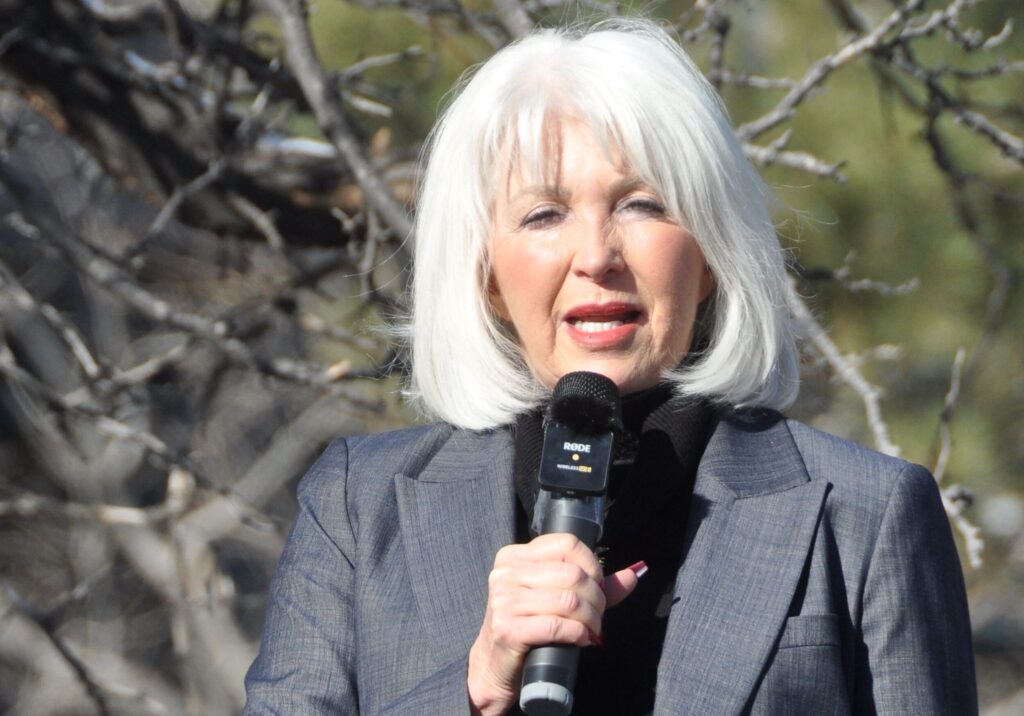
10th Circuit dismisses Tina Peters’ challenge to confinement as moot
Michael Karlik
michael.karlik@coloradopolitics.com
Updated 1 day ago
The Denver-based federal appeals court granted the state’s unopposed request on Wednesday to dismiss former Mesa County clerk Tina Peters’ challenge to her confinement as moot. Although Peters received a commutation of her prison sentence last month from Gov. Jared...
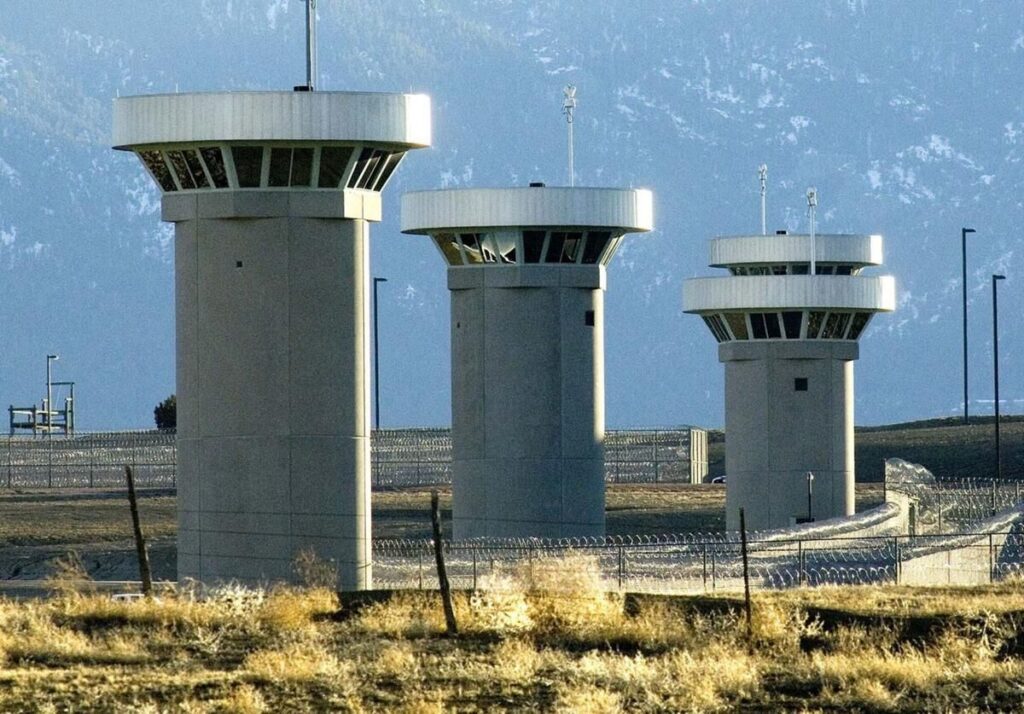
Federal judge declines to recuse from death penalty case after Supermax visit
Michael Karlik
michael.karlik@coloradopolitics.com
Updated 2 days ago
A federal judge declined to recuse herself last month from a death penalty case arising out of Colorado’s “Supermax” prison, finding that her tour of the facility earlier this year did not bias her decision-making. U.S. District Court Judge Charlotte...
Appeals court clarifies offense of impersonating a peace officer
Michael Karlik
michael.karlik@coloradopolitics.com
Updated 3 days ago
Colorado’s second-highest court clarified this month that a person commits the offense of impersonating a peace officer if they engage in “any conduct” while pretending to be law enforcement. In a case out of El Paso County, Richard James Coulier...
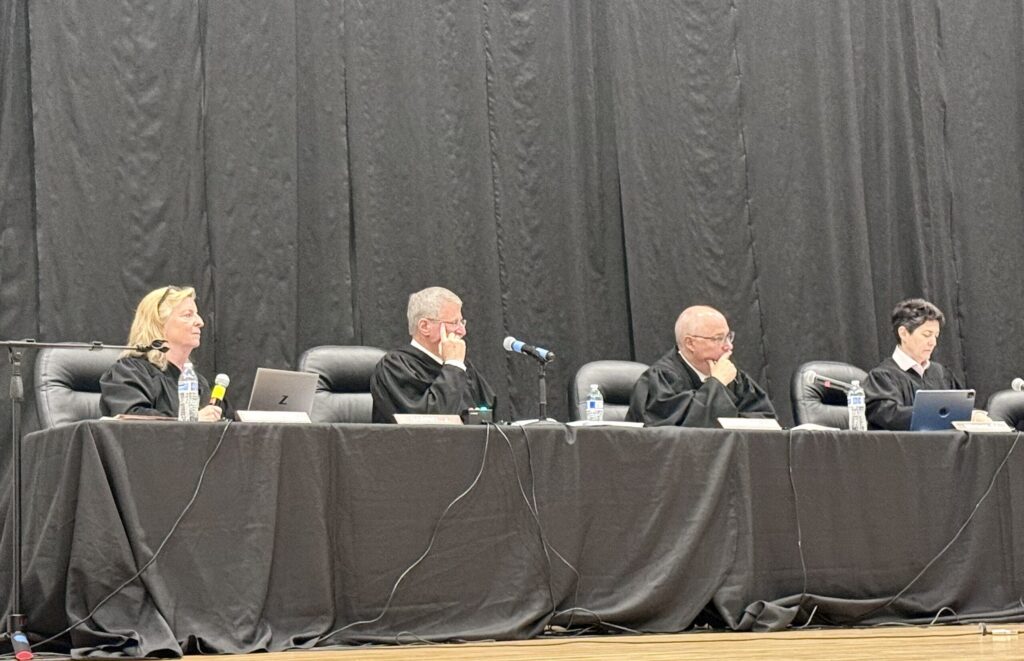
Colorado Supreme Court reverses 2 Chaffee County judges for imposing fee on habeas petitioner
Michael Karlik
michael.karlik@coloradopolitics.com
Updated 4 days ago
The Colorado Supreme Court rejected two separate appeals earlier this month from an incarcerated defendant seeking immediate release from prison, but concluded that two Chaffee County judges incorrectly required him to prepay filing fees for his cases. David J. Gottorff...
Weld County judge wrongly denied bail to murder defendant in gap between law change
Michael Karlik
michael.karlik@coloradopolitics.com
Updated 4 days ago
Colorado’s second-highest court ruled this month that a Weld County judge was wrong to deny bail to a murder defendant in the window between the state Supreme Court’s recognition of the right to bail and the voters’ subsequent overruling of...
Defendants acquitted by insanity are eligible for records-sealing, appeals court says
Michael Karlik
michael.karlik@coloradopolitics.com
Updated 3 days ago
Colorado’s second-highest court clarified last month that defendants who are found not guilty by reason of insanity are eligible to have their criminal records sealed from public view. Judges must seal criminal records if, among other things, a defendant is...
PREV
PREVIOUS

Colorado mosquitos test positive for West Nile virus
Mosquitos collected in Weld County tested positive for the West Nile Virus, according to the Colorado Department of Public Health and Environment on Thursday, marking the first confirmed case of the disease so far this season statewide, the department reported. The infected mosquitos were discovered during a weekly mosquito testing for West Nile virus that began in […]

Gov. Jared Polis ends use of emergency orders tied to pandemic
After 16 months under a declared state of emergency due to the COVID-19 pandemic, Thursday Gov. Jared Polis lifted that order and all other orders tied to it. The original disaster emergency declaration was issued on March 11, 2020. Since then, Polis has issued 115 orders related to the pandemic in 2021 and 271 orders […]