

Kristen Mix, first Coloradan to lead federal judges’ group, explains differences within profession

Kristen L. Mix likens the duties of federal magistrate judges to a restaurant menu, in which someone can experience a little bit of everything or a whole lot of one thing, depending on where they work.
“You learn about the whole menu, and you know that you’re probably going to be eating from certain parts of the menu more than others. But there never has been a situation where I thought, ‘Wow! That’s something I never knew was on the menu,'” she said.
Mix, a U.S. Magistrate Judge for the District of Colorado, will take office later this month as president of the Federal Magistrate Judges Association, the first Coloradan to hold the position in the organization’s 60-year history. She started as the organization’s secretary, then progressed through subsequent leadership roles.
In many ways, magistrate judges are similar to federal district (or trial) court judges. The only things they cannot do are preside over felony criminal trials and sentencing. Otherwise, they can handle judicial matters up to and including presiding over civil trials, albeit with the consent of the parties involved.
“The most interesting thing about magistrate judges in my view is that we are used very differently across the country,” Mix told Colorado Politics in an interview. “The federal judicial system is highly decentralized and each district does things in its own way.”
Magistrate judges are hired by their district courts for eight-year terms. Unlike district and appellate court judges – known as “Article III judges” because their positions are laid out in Article III of the U.S. Constitution – magistrate judges are not subject to presidential nomination and U.S. Senate confirmation.
In some of the 94 federal judicial districts, magistrate judges are paired with an Article III judge for their entire tenure, Mix said. In others, like Colorado, the assignments are random.
“There is a lot of discretion among the district judges around the country as to what tasks they assign the magistrate judges. In some districts, district court judges refer every single motion to a magistrate judge,” she explained. In others, “magistrate judge duties are largely intake of criminal matters.”
For instance, magistrate judges in districts along the southern border tend to handle more criminal immigration-related matters. Mix added that it may be jarring for some magistrate judges to get on the bench, only to be assigned the same repeated task.
Mix, 62, who has served as a magistrate judge in Colorado since 2007, has been involved with the FMJA since then. She first learned about the organization at “baby judge school,” the nickname for the Federal Judicial Center’s orientation of new judges. The association reports a membership of 800 active and retired federal magistrate judges.
“Kris is one of the brightest people that I know, and I know a lot of bright people,” said U.S. Magistrate Judge Kathleen Kay of the Western District of Louisiana. She and Mix attended the orientation together and are still friends.
“The one thing that she’s spoken to me about is to promote awareness and understanding of the public at large about what the role is of a magistrate judge in the federal judiciary, and having it understood that we are judges,” Kay added.
Mix elaborated that magistrate judges bristle at being called simply “magistrates.” In some places, magistrates can be people who handle parking tickets, for example, and may not even have a law degree. A 2019 investigation in South Carolina found the state’s magistrates undergo less training than barbers and need to pass an exam that requires only a sixth-grade reading level.
“It may be an insignificant difference,” acknowledged Kay. “But “it does minimize the extent to which people think what we do is effective.”
Mix said that in Colorado, the magistrate judges do feel respected and heard. At the time of her appointment, she recalled a rigid hierarchy of district and magistrate judges. That changed, Mix said, under former chief judges Wiley Young Daniel and Marcia S. Krieger.
In that time, there have also been several additions to the court. In fact, President Joe Biden’s first nominee for Colorado, Regina M. Rodriguez, took her seat at the court on July 1, and the White House is evaluating candidates for a second vacancy later this year. Magistrate judges can help them adjust to their new jobs on a range of topics, from office technology to more substantive judicial matters.
“I don’t think that any magistrate judge feels necessarily comfortable with going to an Article III judge and saying, ‘Let me help you with this’,” Mix said. “But certainly when asked for help, we consider that to be one of our highest and best uses.”
Among her other side projects, Mix spearheaded the creation of a pro se clinic for Colorado’s district court, which matches self-represented litigants with volunteer lawyers, and created a diversity internship program for second- and third-year law students. In 2019, she won the FMJA’s award for promoting diversity and inclusion in the legal profession.
“She’s probably one of the most experienced in the country on issues like assessing magistrate judge workloads, and she’s just done outstanding work trying to open up the judiciary to a wide array of people, some of whom in the past have been underrepresented,” said Deborah M. Smith, who is the current FMJA president and the chief magistrate judge of Alaska.
Although politics can be a stumbling block to attaining an influential position in the government, Mix recalled her 2007 appointment to be largely nonpolitical – at least compared to her Article III colleagues.
“One of the things that I tell people who aspire to be on any bench is that you have to keep trying. It’s a process,” she said. “Usually, it takes a while for these applications to hit critical mass and get taken very seriously.”


Wrongfully deported man to be returned to U.S., Colorado federal judge orders
Michael Karlik
michael.karlik@coloradopolitics.com
Updated 1 day ago
Colorado’s chief federal judge took the extraordinary step of directing the government on Tuesday to do everything it can to return a man it deported in violation of his order. At the same time, Colorado’s chief magistrate judge has set...
Denver murder, assault convictions reversed due to faulty jury instructions
Michael Karlik
michael.karlik@coloradopolitics.com
Updated 1 hour ago
Colorado’s second-highest court reversed a defendant’s convictions for murder and assault last week after concluding a Denver judge incorrectly omitted key jury instructions that could have affected the verdict and sentencing. Stephen C. Swainson fatally stabbed Israel Casillas in downtown...
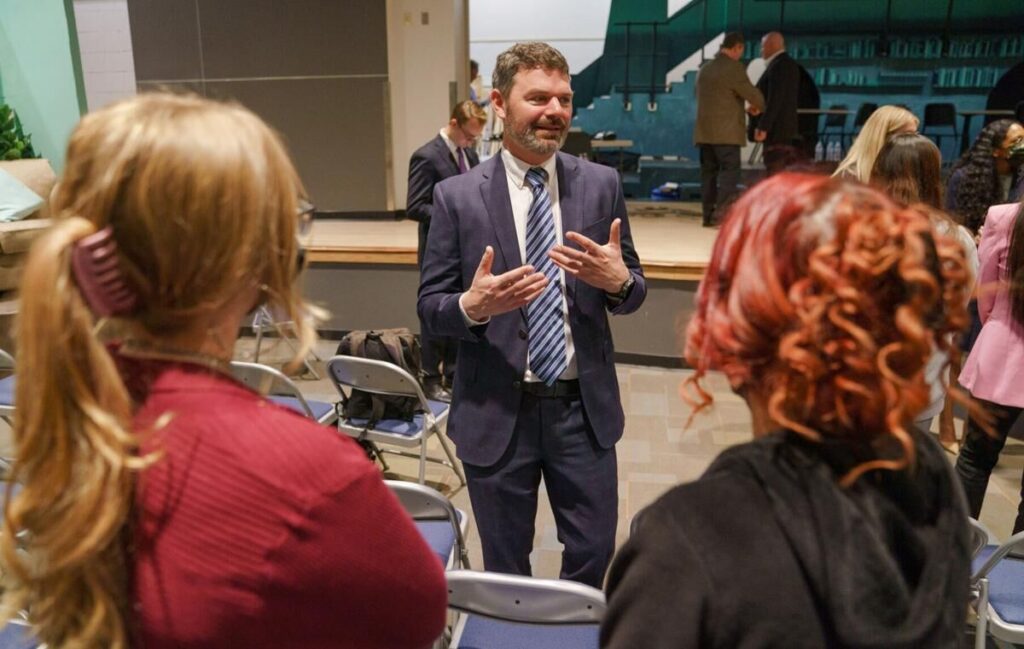
‘Understand people for who they are’: 2 federal judges talk about compassion in courtroom
Michael Karlik
michael.karlik@coloradopolitics.com
Updated 16 hours ago
Before taking the bench in 2022, U.S. District Court Judge Charlotte N. Sweeney was an employment discrimination attorney. While the cases could be emotionally charged, they were different from the criminal proceedings she is now handling. “It wasn’t necessarily affecting...
Denver murder conviction reversed for incomplete self-defense instruction
Michael Karlik
michael.karlik@coloradopolitics.com
Updated 3 days ago
Colorado’s second-highest court reversed a defendant’s murder conviction last week because a Denver judge gave an incomplete instruction to the jury about the man’s right to self-defense. Donald R. Gonzales and Gary McLaughlin met up in a Capitol Hill parking...
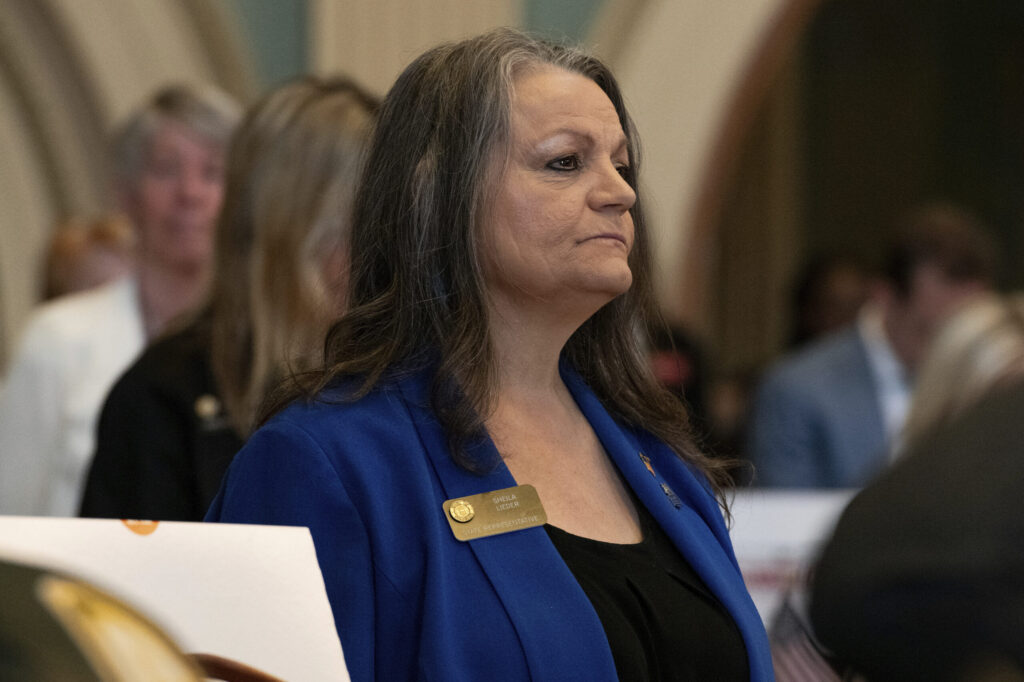
Colorado lawmaker, House leaders named in workplace-retaliation lawsuit
Marianne Goodland
marianne.goodland@coloradopolitics.com
Updated 3 days ago
A former legislative aide has filed a lawsuit alleging she was mistreated, illegally directed to perform campaign work and harmed by a House leadership structure she charged was fragmented, politicized and ineffective at protecting employees. The lawsuit, filed by Jennifer...
Federal judge hears arguments about Colorado’s 3-day gun purchase waiting period
Michael Karlik
michael.karlik@coloradopolitics.com
Updated 3 days ago
A federal judge heard arguments on Monday about the constitutionality of a 2023 Colorado law that generally imposes a three-day waiting period on firearm purchases after the initiation of a background check. The test that the U.S. Supreme Court created...
Colorado Supreme Court intervenes in Weld County prosecution dismissed due to Missy Woods misconduct
Michael Karlik
michael.karlik@coloradopolitics.com
Updated 3 days ago
The Colorado Supreme Court ordered a Weld County trial judge last week to respond to the district attorney’s claim that he improperly dismissed a criminal case because of “outrageous” conduct by the Colorado Bureau of Investigation. Daniel Lee Eatinger stood...
Schoolchildren’s presence at child sex-related trial did not harm Arapahoe County defendant, appeals court says
Michael Karlik
michael.karlik@coloradopolitics.com
Updated 6 days ago
Colorado’s second-highest court decided on Thursday that the presence of a group of schoolchildren on the first day of a child sexual exploitation trial did not violate an Arapahoe County defendant’s constitutional right to a fair trial. Prosecutors charged Jerry...
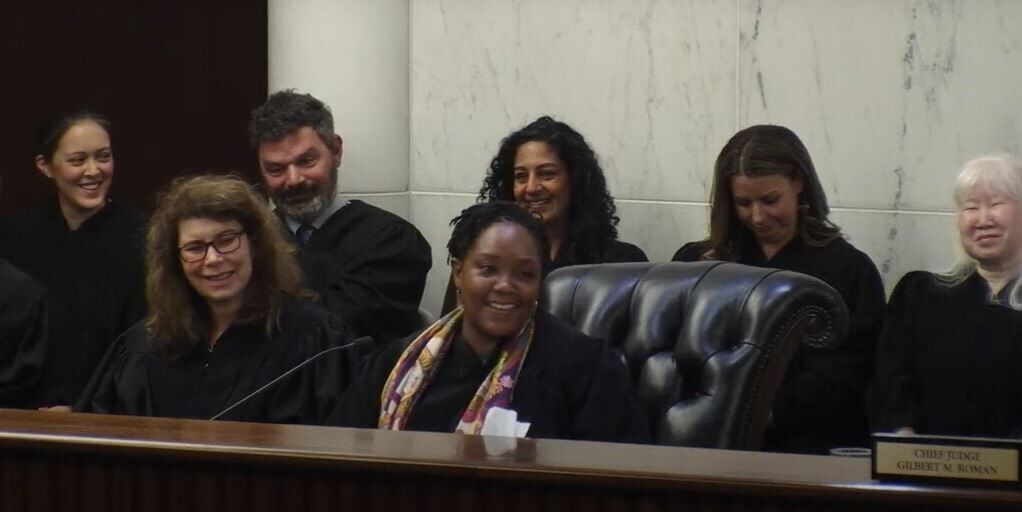
Appeals court cites week-old Colorado law to reinstate child neglect case at child, father’s request
Michael Karlik
michael.karlik@coloradopolitics.com
Updated 6 days ago
Colorado’s second-highest court invoked a new state law for the first time on Thursday and reinstated a child neglect case that both the child and her father wished to reopen. House Bill 1227 took effect on Aug. 12, reversing a...
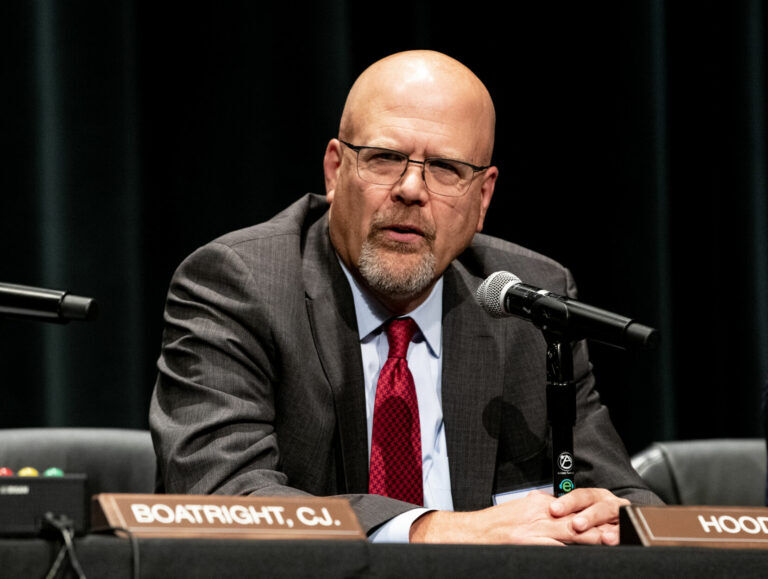
Colorado Supreme Court names William Hood as next chief justice
Michael Karlik
michael.karlik@coloradopolitics.com
Updated 20 hours ago
The Colorado Supreme Court has selected Justice William W. Hood III to be the next chief justice, the judicial branch announced on Friday. Hood will succeed Chief Justice Monica M. Márquez, who took over the role in July 2024. “I...
PREV
PREVIOUS
White House reaching out to Republicans about a second bipartisan infrastructure package
Senior White House officials are holding “informal discussions” with outside experts and congressional officials on how to split off a second, targeted bipartisan package from a larger reconciliation package expected to contain the remainder of President Joe Biden’s infrastructure proposals, multiple individuals involved in the talks tell the Washington Examiner. Work toward a second bipartisan […]

Q&A with Eric Lazzari | Civic Center conservator sees infinite possibility in finite space
Eric Lazzari is a Chicago man who has adopted a Colorado state of mind. The native of the Windy City’s western suburbs is the executive director of the Denver’s Civic Center Conservancy, an organization that raises money to maintain the park, restore historical structures advocate for investment in the city’s most used in-town open space. […]